
What to Wear in Morocco: 12 Best Outfits for Every Month of the Year
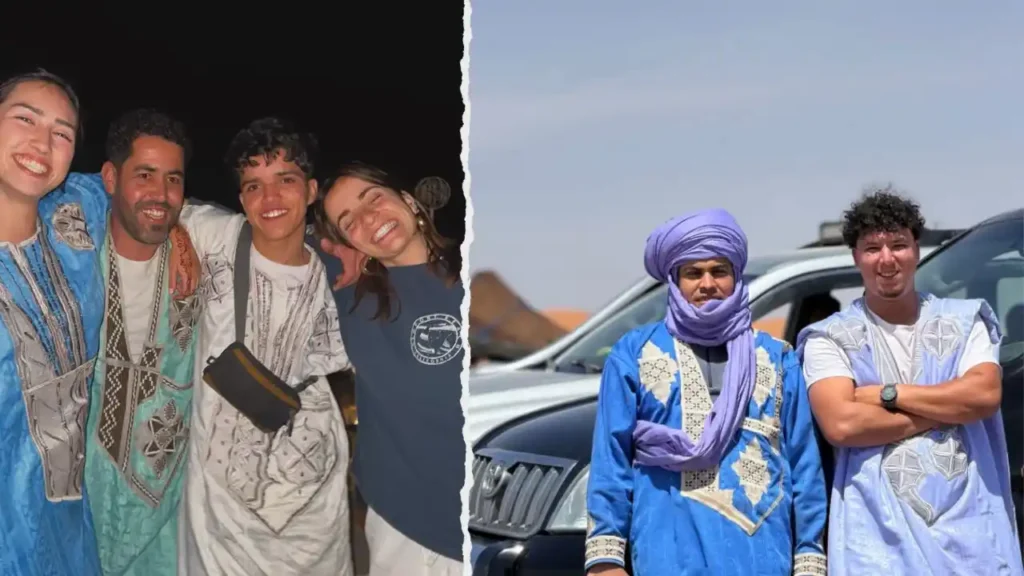
Stepping into the Moroccan Sahara isn’t just a travel milestone; it’s an encounter with one of the most extreme environments on Earth. Whether you are trekking through the Erg Chebbi dunes or spending a night under the stars near M’Hamid, your clothing choices serve as your primary defense against the elements. The desert is a land of contradictions—blistering sun by day and a sharp, biting chill by night.
Table of Contents: What to Wear in Morocco
Prioritize Natural, Breathable Fabrics
The most common mistake travelers make is wearing synthetic “activewear” that traps heat. In the desert, linen and lightweight cotton are your best friends. These fabrics allow air to circulate around your body, helping your sweat evaporate and cooling you down naturally.
-
Loose-fitting trousers: Avoid tight jeans. Choose harem pants or wide-leg linen trousers to prevent chafing during camel treks.
-
Long-sleeved tunics: While it seems counterintuitive to cover up in the heat, a thin long-sleeved shirt protects your skin from UV rays and prevents dehydration.
Mastering the Art of Sun Protection
In the open dunes, there is no shade. Beyond high-SPF sunscreen, your wardrobe needs to act as a shield.
-
The Shesh (Tuareg Turban): You will see locals wearing these long cotton scarves for a reason. They aren’t just for style; when wrapped correctly, they protect your head, neck, and face from both the sun and stinging sand during unexpected wind gusts.
-
Polarized Sunglasses: The glare off the sand can be just as intense as the sun itself. Ensure your eyewear offers full UV protection to avoid “sand blindness” or eye fatigue.
Footwear for the Sahara Dunes and Rocky Paths
When you are planning what to wear in the Morocco desert, your choice of shoes is arguably the most important decision you will make. The terrain in the Sahara is not just soft sand; it often involves crossing the “hammada” (stony desert) before you even reach the big dunes. You need footwear that can handle sharp rocks and shifting sands without causing discomfort.
Why Closed-Toe Shoes are Essential
While you might be tempted to wear flip-flops because of the heat, they are generally a poor choice for the desert. Sand can become incredibly hot during the day, reaching temperatures that can actually blister the soles of your feet. Furthermore, a sturdy pair of lightweight hiking shoes or trail runners provides the stability you need when climbing up steep dunes or mounting a camel.
-
Avoid brand-new shoes: Never bring a pair of shoes you haven’t worn before. The combination of heat, friction, and fine sand creates the perfect recipe for blisters.
-
Sand protection: Look for shoes with a “gusseted tongue” (where the tongue is sewn to the sides). This small detail acts as a barrier, keeping those annoying grains of sand from filling up your shoes every few steps.
Transitioning to Camp Footwear
Once you arrive at your desert camp and the sun begins to set, the sand cools down quickly. This is the only time when trekking sandals or comfortable slip-ons are recommended. After a long day of exploring, letting your feet breathe is vital for recovery.
Mastering the Desert Temperature Swing
A major surprise for many travelers is how quickly the temperature drops once the sun disappears. You can go from sweating in 35°C heat at noon to shivering in 5°C by midnight. If you want a unique blog that truly helps people, you must emphasize the “layering” strategy.
Preparing for Chilly Desert Nights
Regardless of the season, you should always pack a warm fleece or a lightweight down jacket. In the winter months (December to February), temperatures in the dunes can even drop toward freezing.
The Magic of Merino Wool
If you have space in your bag, a merino wool base layer is a secret weapon for desert travel. It is thin enough to wear under your clothes, it doesn’t hold odors, and it regulates your body temperature perfectly.
-
Thermal Leggings: These are a lifesaver if you are sleeping in a traditional Berber tent, as they keep you warm without the need for bulky blankets.
-
Wool Socks: Surprisingly, wool socks are better than cotton in the desert because they wick moisture away from your skin, keeping your feet dry and preventing “sand chafing.”
Accessories and Essential Gear for the Sahara
When finalizing your packing list for what to wear in the Morocco desert, the small details often make the biggest difference in your overall comfort. Beyond your main outfit, the accessories you choose act as your specialized tools for navigating the harsh Saharan environment.
The Versatility of the Cotton Scarf
While many travelers view the traditional Moroccan scarf as a simple souvenir, it is actually a vital piece of equipment. Often referred to as a “Tagelmust” or simply a “Shesh,” these long strips of cotton serve multiple purposes that high-tech gear simply cannot match.
-
Natural Air Conditioning: If you soak your scarf in water and wrap it loosely around your neck, the evaporation process provides a cooling effect that can last for an hour or more in the dry heat.
-
A Shield Against Dust: Sandstorms can kick up without much warning. Having a wide scarf allows you to quickly cover your mouth and nose, ensuring you don’t inhale fine dust particles.
-
Sun Protection for Shoulders: If you are wearing a t-shirt, a draped scarf adds an extra layer of defense against the intense midday sun without adding significant weight or heat.
Protecting Your Electronics and Skin
The desert environment is notoriously “aggressive” toward both human skin and modern technology. The fine sand of the Sahara is almost like a liquid; it finds its way into the smallest crevices.
-
Dry Bags for Cameras: Even if you aren’t near water, a small dry bag or a high-quality zip-lock bag is essential for your phone and camera. A single gust of wind can ruin a lens or a charging port.
-
High-Altitude Sunscreen: People often forget that the desert can feel like high-altitude terrain. The UV index is exceptionally high, so a “sweat-proof” sunscreen is necessary to ensure the protection doesn’t run into your eyes while you are walking or riding a camel.
Respecting Local Traditions Through Your Wardrobe
Morocco is a country where modern style meets deep-rooted tradition. When you are visiting desert villages or stopping at a roadside “fondouk,” showing respect through your clothing choices will lead to more authentic and friendly interactions with the local community.
Balancing Comfort with Cultural Etiquette
In the remote regions near the dunes, the culture is generally more conservative than in cities like Marrakech or Casablanca. Choosing modest clothing isn’t just about respect; it’s about blending in and feeling more comfortable in your surroundings.
What to Avoid in Desert Towns
While there is no “dress code” enforced by law, sticking to a certain standard will help you feel more at ease.
-
Keep Shoulders and Knees Covered: For both men and women, wearing clothes that cover the shoulders and reach below the knees is a good rule of thumb. This is why long tunics and “Aladdin” pants are so popular.
-
The Practicality of Modesty: Interestingly, the modest clothing worn by locals—loose, long, and flowing—is actually the most scientific way to stay cool. By keeping the sun off your skin and allowing air to flow between the fabric and your body, you stay much cooler than you would in shorts and a tank top.

Facing the Deep Winter: What to Wear in Morocco Desert in January
January is the peak of the Saharan winter, offering some of the most stunning, clear blue skies you will ever see. However, it is also the month where the temperature contrast is most extreme. If you are researching what to wear in Morocco in January, you must prepare for a climate that feels like a warm spring day in the sun and a frozen arctic night once the stars come out. This is not the time for light packing; it is the time for smart, heavy-duty layering.
The January Daytime Paradox
During a January afternoon, the sun is actually quite comfortable. If you are hiking the dunes, you might even find yourself stripping down to a single layer. However, the air itself remains cool, and the moment you step into a shadow, you will feel the chill.
-
Thermal Regulation: Start with a high-quality base layer made of synthetic fibers or merino wool. This keeps your core temperature stable. On top of that, wear a long-sleeved shirt.
-
The “Sun-Warmth” Factor: In January, you don’t necessarily need a heavy coat while the sun is high (between 11:00 AM and 3:00 PM), but you do need a fleece or a light softshell jacket ready in your daypack. The air temperature rarely exceeds 18°C (64°F), and the wind can make it feel much colder.
Why January Requires Windproof Fabrics
The desert in mid-winter can be prone to sharp, cold gusts of wind that blow across the flat plateaus. Unlike the warm summer breezes, these winds cut through standard knitted sweaters easily.
-
Outer Shells: A windbreaker or a dedicated trekking jacket is essential. It doesn’t have to be thick, but it must be “wind-blocked” to keep your body heat from being stripped away by the Saharan breeze.
-
The Hood Advantage: If your jacket has a hood, use it. Keeping the wind off your neck and the back of your head prevents the common “desert cold” that many travelers catch during the winter months.
Survival Gear for Frozen Saharan Nights
It surprises many, but January nights in the Morocco desert can actually see frost on the dunes. If you are sleeping in a desert camp, you are essentially living outdoors. Your clothing choice for the evening is your most important “insurance policy” for a good night’s rest.
Preparing for Sub-Zero Temperatures
While it doesn’t happen every night, it is very common for January temperatures to drop to 0°C (32°F) or even -2°C in the deep dunes of Merzouga or Chegaga.
The Essential January Night Kit
-
Heavyweight Down Jacket: This is the month for your “real” winter coat. You will want something insulated with down or high-loft synthetic fill. You’ll wear this while sitting around the campfire and even for the first few minutes after you crawl into bed.
-
Thermal Leggings and Tops: Do not skip the thermals. In January, these are not optional. Wearing a full set of thermal underwear under your clothes will keep you comfortable during the traditional Berber music performances under the stars.
-
Winter Headwear: A thick wool hat or beanie is vital. Since you are sleeping in a tent, a hat prevents massive heat loss through your head during the night.
Footwear and Accessories for the January Freeze
The sand in January is like ice in the morning. If you walk on it with thin shoes, the cold will penetrate the soles and chill your entire body.
Specialized Cold-Weather Tips
-
Insulated Boots: Choose shoes with a thicker sole. This creates a larger buffer between your feet and the frozen ground. Leather boots or sturdy hiking shoes with thick rubber outsoles are the best choice.
-
Heat Packs: A “pro tip” for January is to bring small chemical hand-warmers. You can tuck these into your gloves during a sunrise camel trek or put them at the bottom of your bed to pre-warm the blankets.
-
Heavy Duty Lip Care: The January air is the driest of the year. Without a wax-based lip balm, your lips will likely crack within 24 hours of arriving in the desert.
The Early Spring Shift: What to Wear in Morocco Desert in February
February is a fascinating time to visit the Sahara. It marks the very beginning of the transition from the deep frozen nights of winter toward the gentle warmth of the Moroccan spring. However, do not let the calendar fool you, the desert is slow to wake up. If you are planning your suitcase and wondering what to wear in Morocco in February, you need to prepare for a “split personality” climate. You will experience bright, intense sunshine that feels like summer, alongside crisp, cool air that reminds you winter isn’t quite finished yet.
Managing the February Temperature Fluctuations
In February, the sun starts to regain its strength. By midday, you can expect temperatures to reach a comfortable 20°C to 22°C (68°F – 72°F). This is the perfect weather for trekking, but the air remains dry and thin, meaning you don’t feel the heat in the same way you would at the coast.
-
The “Base-plus-Shell” Combo: A successful February outfit starts with a breathable cotton t-shirt or a long-sleeve linen tunic. On top of this, you should wear a mid-weight fleece or a stylish cardigan. This allows you to “peel off” layers as the sun climbs higher, keeping your body temperature regulated without getting sweaty.
-
Trousers for Mobility: Since February is an excellent month for climbing the high dunes, choose trousers with some stretch. Cargo pants or trekking trousers made of synthetic blends are great because they block the cool breeze but don’t restrict your movement when you are mounting a camel or hiking up Erg Chebbi.
Dealing with February Wind and Dust
February can occasionally bring the “Alize” winds, cool breezes that blow in from the Atlantic and cross the mountains before reaching the desert. These winds can carry fine dust, even on a clear day.
-
Lightweight Scarf (The Shesh): Even though it isn’t scorching hot, the scarf remains your most important accessory. In February, it acts as a wind-blocker for your neck and a filter for your lungs if the breeze picks up the sand.
-
Eye Protection: Because the February sky is often cloudless, the glare from the pale winter sun can be quite sharp. Bring sunglasses with a high category rating to prevent “glare headaches” during your 4×4 desert excursions.
Evening Warmth and Overnight Comfort
The most important thing to remember about February is that once the sun sets, the “winter rules” still apply. The desert floor has not yet had enough time to absorb heat, so the nights remain quite chilly, often hovering around 4°C to 7°C (39°F – 45°F).
Essential Nightwear for February Desert Camps
While you might be wearing a t-shirt at 2:00 PM, by 7:00 PM you will want to be wrapped in something much more substantial. If you are staying in a traditional nomadic tent, your clothing is your primary source of warmth.
The Late-Winter Survival Kit
-
A Packable Down Jacket: A “puffer” jacket that can be compressed into a small bag is perfect for February. It provides the high-level insulation you need for dinner under the stars but doesn’t take up too much room in your luggage during the warm day.
-
Thermal Under-layers: You should still pack at least one set of thermal leggings. These are perfect for wearing under your jeans or trekking pants during the early morning sunrise trek when the temperature is at its lowest point.
-
Heavy Socks: Even if you wear sneakers during the day, switch to thick wool-blend socks for the evening. Cold feet are the most common complaint for travelers in February, and a good pair of socks is a simple fix.
Skincare and Hydration in the February Arid Zone
The transition from winter to spring in the Morocco desert is notoriously dry. The humidity levels can drop significantly, which affects your skin and your energy levels more than you might realize.
-
Barrier Creams: Use a thicker moisturizer than you would at home. The February wind can be “chapping,” especially on your cheeks and forehead. A dedicated face oil or a rich cream will prevent your skin from becoming irritated.
-
Hydration is Key: Even though you aren’t sweating as much as you would in July, the dry February air pulls moisture from your body with every breath. Your “outfit” should always include a reusable water bottle clipped to your belt or bag.
-
Sunscreen is a Must: Don’t be fooled by the cool air. The UV index in the Sahara remains high year-round. Apply a minimum of SPF 30 to your face and neck every morning before you head out into the dunes.

Embracing the Sahara Spring: What to Wear in Morocco Desert in March
March is a month of vibrant change in the Sahara. It is the time when the desert truly begins to heat up, but it is also the season of the “Chergui”—the famous desert wind. When you are deciding what to wear in Morocco desert in March, you need to prioritize protection from both the rising sun and the occasional dust that the spring winds can stir up.
Balancing Warmth and Wind Resistance
In March, daytime temperatures become very pleasant, often reaching 24°C to 26°C (75°F – 79°F). However, the wind can make it feel cooler. This is the time to switch to high-quality, lightweight fabrics that offer a tight weave to keep the dust out.
-
Long-Sleeved Cotton Tunics: These are perfect for March. They allow your skin to breathe while providing a physical barrier against the fine sand particles that might be floating in the air.
-
The Utility Vest: A lightweight vest with many pockets is a “pro” travel tip for March. It keeps your core warm if there is a breeze, and it gives you a place to store your lip balm, camera filters, and sunglasses.
Selecting Trousers for Spring Trekking
Since March is one of the best times for long camel treks and dune hiking, your choice of pants is vital. You want to avoid anything too heavy, like thick denim, which can become uncomfortable if you start to sweat.
-
Chinos or Cargo Pants: These offer the perfect balance. They are thick enough to protect your legs from the coarse hair of a camel but light enough to keep you cool during a midday walk.
-
Neutral Tones: Stick to sand, khaki, or olive colors. Not only do these look great in photos, but they also hide the desert dust much better than dark colors like navy or black.

Entering the High Season: What to Wear in Morocco Desert in April
April is arguably the most popular time to visit the Moroccan dunes. The weather is consistently warm, and the freezing nights of winter are finally a memory. However, the sun begins to show its true power this month. If you are planning what to wear in Morocco desert in April, your focus should shift toward maximum sun reflection and heat management.
Preparing for the April Heat
By mid-April, the mercury can easily hit 30°C (86°F). The air is still dry, which makes the heat feel “cleaner” than in humid climates, but you will dehydrate much faster. Your clothing needs to act as a personal cooling system.
-
Linen Everything: April is the month for linen. Linen trousers and linen shirts are the gold standard for desert travel. The fabric sits away from the skin, allowing for maximum airflow.
-
Light Colors: White, cream, and light grey are your best friends. These colors reflect the solar radiation away from your body, keeping you significantly cooler than dark tones.
Nighttime in April: The Perfect Balance
The great thing about April is that the nights are finally “comfortable.” You no longer need the heavy down jackets of January. Instead, you can enjoy the evening bonfire in much lighter gear.
-
Light Sweaters or Pashminas: A simple cotton sweater or a large wool pashmina is usually all you need for an April evening at a desert camp.
-
Comfortable Loafers or Sandals: Since the sand doesn’t freeze in April, you can spend your evenings in high-quality trekking sandals or light slip-on shoes, allowing your feet to recover from a day of boots.
Essential Accessories for the Spring Desert
Regardless of whether you visit in March or April, there are certain “non-clothing” items that complete your outfit and ensure your comfort in the shifting Saharan environment.
Advanced Sun and Sand Defense
As the spring progresses, the intensity of the light reflecting off the orange dunes of Merzouga or Zagora can be overwhelming for your eyes and skin.
The Spring Checklist
-
Wide-Brimmed Safari Hat: While a scarf is great, a hat with a full brim provides a 360-degree shadow over your face and neck. Look for one with a “vented” crown to allow heat to escape from the top of your head.
-
Wraparound Sunglasses: To prevent sand from getting into your eyes during a windy March day, choose sunglasses that curve slightly around the side of your face.
-
Cooling Neck Wraps: A small tip for April is to bring a microfiber cooling towel. You can wet it with a bit of water and wear it under your shirt to keep your body temperature down during the hottest part of the afternoon.

Transitioning to the Heat: What to Wear in Morocco Desert in May
May is the threshold of the Saharan summer. The landscapes are stunningly clear, but the temperature begins its steady climb into the mid-30s°C (90s°F). When considering what to wear in Morocco desert in May, you are essentially preparing for a dry, intense heat that requires a clever balance of skin protection and ventilation. This is the month where you trade in your heavy layers for high-performance, natural fabrics.
Managing Mid-Spring Solar Intensity
The sun in May is high and powerful. Many travelers make the mistake of wearing less clothing to stay cool, but in the desert, this is actually counterproductive. Leaving skin exposed leads to rapid dehydration and sunburn.
-
Loose-Weave Linen Shirts: A long-sleeved linen shirt is the ultimate May garment. Linen can absorb up to 20% of its weight in moisture before feeling damp, making it perfect for the dry heat.
-
Wide-Leg Cotton Trousers: Avoid anything that clings to your legs. Flowing cotton trousers allow air to circulate around your lower body, which acts as a natural air-conditioning system as you move.
The Importance of a Light "Transition" Layer
Even though May is warm, the desert air is thin. If you find yourself in the shade or resting after a long camel trek, you might feel a sudden “chill” as your sweat evaporates quickly.
-
Cotton Pashmina or Light Scarf: A large, thin scarf is perfect for wrapping around your shoulders during these transition moments. It’s also invaluable for protecting your chest and neck from the direct overhead sun at noon.
Entering the Gateway of Summer: What to Wear in Morocco Desert in June
June is when the Sahara shows its true power. The heat becomes a physical presence, often reaching 40°C (104°F) during the day. If you are planning what to wear in Morocco desert in June, your strategy must shift entirely toward heat reflection and keeping your body’s core temperature stable. This is a month for “slow travel” and very smart clothing choices.
Reflective Clothing and Heat Defense
In June, the color of your clothing is just as important as the material. Dark colors act as heat sponges, absorbing the sun’s energy and transferring it directly to your skin.
-
The “All-White” Strategy: White and very light beige reflect the maximum amount of solar radiation. Look for “crinkle” cotton or gauze fabrics—these have a natural texture that prevents the cloth from sticking to your skin when you sweat.
-
Ventilated Technical Gear: If you prefer modern travel clothes over traditional fibers, ensure they have built-in ventilation “slats” (often found on the back of fishing or hiking shirts). These allow the desert breeze to pass through the garment.
Nighttime in June: Warm and Breezy
June nights are finally warm enough that you don’t need a jacket at all. However, you still need to protect yourself from the environment of the camp.
-
Lightweight Pajamas: Choose a full-length set made of very thin cotton. Even though it is warm, having your arms and legs covered protects you from any evening insects and keeps the dry night air from making your skin feel tight and itchy.
-
Open-Toe Trekking Sandals: While boots are still best for the big dunes during the day (due to hot sand), high-quality sandals are perfect for the evening hours around the campfire in June.
Specialized Accessories for May and June
As the heat intensifies, your accessories need to work harder. In May and June, your gear is less about “fashion” and more about “physical survival” in an arid zone.
Advanced Hydration and Skin Care
In these months, your “outfit” isn’t complete without a way to manage the extreme lack of humidity. The Saharan air will pull moisture from your skin and eyes almost instantly.
The Late-Spring Essential Checklist
-
UV-Rated Sunglasses with Side Shields: The glare off the dunes in June is intense. Sunglasses that block light from the sides will prevent the “sand-glare” headaches that common fashion glasses can’t stop.
-
A Wide-Brimmed Straw or Felt Hat: A hat with a wide brim is essential to keep your face in permanent shadow. Ensure it has a chin strap, as the hot June thermals can create sudden dust-devils that will lift a hat right off your head.
-
Cooling Mist Sprays: While not a piece of clothing, carrying a small spray bottle of mineral water in your pocket is a desert “pro-tip.” Spraying a fine mist over your linen shirt creates an evaporative cooling effect that can lower your skin temperature by several degrees instantly.
Braving the Peak Heat: What to Wear in Morocco Desert in July
July is the heart of the Saharan summer, a time when the desert is at its most powerful and silent. The temperatures can climb significantly, often exceeding 45°C (113°F). If you are looking for advice on what to wear in Morocco desert in July, your strategy must be 100% focused on heat reflection and moisture management. In this environment, your clothing acts as your personal shade.
The "Skin-Covering" Paradox
One of the biggest misconceptions for summer travelers is that less clothing equals more coolness. In the Sahara in July, exposing your skin to the air actually causes your body to heat up faster and dehydrates you within minutes.
-
Ultra-Lightweight Linen Kaftans: A long, flowing kaftan or a “Gandoura” is the perfect July garment. Because it is open at the bottom, it creates a “chimney effect,” where hot air rises and escapes through the neck, pulling cooler air up from the ground.
-
Light-Colored Silk or Cotton Blends: While linen is king, very thin silk or high-thread-count cotton can also feel incredibly cool against the skin. These fabrics don’t hold onto the heat of the sun, allowing you to move comfortably even in the mid-afternoon.
Protecting Your Head from Solar Radiation
In July, the sun is directly overhead, and the thermal impact on your head can lead to heat exhaustion very quickly.
-
The Double-Layer Turban: Using a long cotton “Shesh” (turban) in July is not just for style; it’s a necessity. By wrapping the cloth in several layers around your skull, you create an insulated “air buffer” that keeps the top of your head significantly cooler than if you were wearing a standard baseball cap.

Surviving the Zenith: What to Wear in Morocco Desert in August
August remains intensely hot, but it often brings a slightly different atmosphere with occasional “dry thunderstorms” or sudden shifts in wind. When planning what to wear in Morocco desert in August, you need to be prepared for the highest consistent temperatures of the year. Every piece of fabric you put on your body should serve the purpose of thermal defense.
High-Performance Fabrics for Extreme Heat
In August, even the slightest weight in your clothing can feel burdensome. This is the month to choose the thinnest possible versions of your travel gear.
-
Gauze-Cotton Trousers: Look for “double-gauze” cotton pants. They are incredibly soft, practically weightless, and provide a physical barrier against the stinging heat of the wind without trapping any body warmth.
-
UV-Reflective White Clothing: While we often mention light colors, in August, bright optic white is the most functional choice. It reflects the maximum percentage of the visible light spectrum, ensuring that the sun’s energy bounces off you rather than being absorbed by your clothes.
Footwear for Scorching Sands
In August, the sand temperature can reach a level that is dangerous for bare skin or thin-soled shoes.
-
Thick-Soled Trekking Sandals: While you want your feet to breathe, you need a substantial rubber sole to provide distance between your foot and the hot ground. Look for sandals with leather straps, as synthetic straps can sometimes cause “heat rashes” or friction burns in the August humidity-free air.
-
Cotton “Liner” Socks: Some travelers find that wearing a very thin pair of cotton socks inside their sandals or shoes helps absorb sweat and prevents the “sliding” feeling that happens when feet get hot.
Essential Accessories for the Peak of Summer
When the desert is at its hottest, your accessories are what will keep you moving. In July and August, these items are just as important as your shirt or trousers.
Managing Hydration and Optical Strain
The glare of the August sun against the pale dunes can be blinding. Without the right accessories, you will find yourself squinting constantly, which leads to fatigue and headaches.
The Summer Survival Checklist
-
Professional-Grade Polarized Sunglasses: In the peak of summer, you need Category 4 lenses if possible. These are designed for high-altitude or desert environments where the light intensity is extreme.
-
Handheld Fans and Wet Wraps: A small, manual folding fan is a lifesaver when sitting in the shade of a tent. Additionally, keeping a wet bandana or “cooling towel” around your wrists can help lower your overall body temperature by cooling the blood flowing near the surface of your skin.
-
Salt-Resistant Clothing: Because you will be sweating (even if it evaporates instantly), look for clothes that don’t get “stiff” when they dry. Natural fibers like bamboo or high-quality cotton stay soft even after several days of desert use.

Cooling Down with the Autumn Equinox: What to wear in Morocco desert in September
September is a month of relief in the Moroccan Sahara. The brutal, unrelenting heat of mid-summer begins to lose its edge, making way for a more manageable warmth. However, do not be deceived, it is still very much a summer environment. When you are deciding what to wear in Morocco desert in September, you should focus on fabrics that transition well from a hot, sunny afternoon to a breezy, mild evening.
Balancing Airflow and Sun Shielding
In September, the sun remains quite high in the sky, and the UV index is still significant. The key to staying comfortable is “ventilation.” You want garments that don’t just sit on your skin but allow the desert breeze to pass through the fibers.
-
Vented Hiking Shirts: Many travelers find that shirts with “mesh” panels under the arms or across the back are a godsend in September. These allow for maximum heat escape while keeping your shoulders and arms protected from the sun.
-
Rayon and Viscose Blends: While we often praise linen, high-quality rayon is an excellent September choice. it is a “man-made” natural fiber that feels cool to the touch and drapes beautifully, preventing the fabric from clinging to your body during a camel ride.
The Return of the Comfortable Evening
Unlike July and August, when the nights can feel “heavy” and warm, September brings back the refreshing evening air. As the sun sets over the dunes of Erg Chigaga, the temperature drops to a very pleasant range.
-
Lightweight Cotton Knits: A very thin, long-sleeved knit top is perfect for dinner at the camp. It provides just enough protection against the “first chill” of autumn without making you feel overheated while sitting near the campfire.
-
Convertible Zip-Off Pants: September is the perfect time for these. You can wear them as shorts during the heat of the day (if you aren’t on a camel) and quickly zip the legs back on as the shadows lengthen and the evening air cools down.
Navigating September’s Changing Light and Terrain
As the seasons shift, the quality of light in the desert changes, becoming softer and more golden. This affects not only your photography but also how you should protect your eyes and skin during your daily activities.
Footwear for Soft Sands and Dusty Trails
By September, the sand has been “baked” all summer, making the dunes very fine and soft. Your shoes need to be able to navigate this “powder” without becoming an anchor of weight.
Smart Footwear Choices
-
Desert Boots (Chukkas): These are a classic for a reason. Usually made of suede or thin leather, they have a simple design that doesn’t have many seams where sand can enter. In September, they provide the perfect balance of protection and style.
-
Ankle Gaiters: If you are planning on doing a lot of dune trekking, consider a pair of “sand gaiters.” These small fabric covers go over the top of your shoes and prevent the fine September sand from filling up your boots every few minutes.
-
Moisture-Wicking Socks: Look for socks that contain “Coolmax” or bamboo fibers. Even though it’s getting cooler, your feet will still sweat during the climb up a high dune, and keeping them dry is the best way to prevent friction burns.
The September Accessory Strategy
Your accessories in September should be about “versatility.” You need items that can handle the lingering heat of summer while preparing you for the arrival of the autumn winds.
-
The Medium-Weight Shesh: In the summer, you want the thinnest scarf possible. In September, you can move to a slightly more substantial cotton scarf. It serves as a great pillow for the long drive into the desert and provides better warmth during a sunrise camel trek.
-
Skin Recovery Balms: After a long summer, the desert air in September is very thirsty. Your “outfit” should include a high-quality aloe vera gel or a soothing skin balm to apply after a day in the sun. It helps your skin recover and prevents the “tight” feeling that comes from a day of dry wind and solar exposure.

Seasonal Planning: What to Wear in Morocco Desert in October
October is widely considered the “golden window” for visiting the dunes of the Sahara. The punishing heat of the summer has finally faded, yet the deep frost of winter hasn’t quite arrived. However, this transitional month requires a very specific approach to packing because of the extreme atmospheric clarity, which leads to massive temperature swings between high noon and midnight.
Navigating the October Climate Transition
If you are wondering what to wear in the Moroccan desert in October, the answer lies in high-contrast layering. During the day, you can expect pleasant temperatures hovering around 25°C to 28°C (77°F – 82°F). However, as soon as the sun dips below the horizon, the lack of cloud cover causes the heat to radiate back into space instantly.
-
Mid-Day Essentials: A breathable linen shirt or a long-sleeve cotton tee is perfect. It protects your skin from the October sun, which is still strong enough to cause burns, while keeping you cool.
-
The Sunset Shift: Carry a medium-weight sweater or a denim jacket in your daypack. You will need it the moment you sit down for a sunset tea on the dunes, as the temperature can drop 10 degrees in less than an hour.
Why October Requires Better Wind Protection
October is a month where the “Chergui” (the desert wind) can occasionally pick up. This isn’t necessarily a full sandstorm, but it can create a constant spray of fine grit.
-
Windbreakers: A very thin, packable windbreaker is a smart addition to your bag this month. It doesn’t take up space but provides a vital barrier against the wind-chill that develops during evening camel treks.
-
Lip Balm and Moisturizer: The air in October is incredibly dry. Your “outfit” isn’t complete without a heavy-duty lip balm and a good moisturizer to prevent your skin from cracking in the arid environment.
Adapting to the Autumn Chill: What to Wear in Morocco Desert in November
As the calendar turns to November, the Sahara undergoes a significant transformation. While the afternoons remain bright and clear, the thermal energy of the sun is much weaker than in previous months. If you are researching what to wear in Morocco desert in November, you need to shift your mindset from “heat management” to “thermal insulation.” This is the month where your wardrobe needs to be versatile enough to handle bright sunshine and frosty mornings in a single 24-hour cycle.
The Importance of High-Performance Layers
In November, the daytime temperature usually peaks around 20°C (68°F), which feels like a perfect spring day. However, the air is crisp. Instead of just thin cotton, you should look for slightly denser natural fibers that offer more substance.
-
The Flannel or Heavy Cotton Shirt: A thicker button-down shirt is a fantastic choice for November. It provides enough warmth for a morning hike across the dunes but can be easily unbuttoned or rolled up when the sun reaches its zenith.
-
Gilet or Puffer Vest: A sleeveless vest is one of the most practical items for a November desert trip. It keeps your core warm during the early morning camel trek without restricting your movement or making you overheat as the day warms up.
Surviving the Rapid Temperature Drop
The most striking feature of November in the desert is how quickly the “cold wall” hits. The moment the sun disappears behind the horizon, the temperature doesn’t just fall, it plunges. It is not uncommon for it to drop to 5°C (41°F) or even lower during the night.
-
Thermal Base Layers: If you are staying in a desert camp, November is the time to bring out the long-johns or thermal leggings. Wearing these under your trousers at night will make the difference between a restless, cold night and a comfortable sleep.
-
A Warm Beanie or Hat: We lose a significant amount of heat through our heads. While a scarf is great for the day, a wool beanie is essential for the evening bonfire and for sleeping in the tents.
Footwear and Extremity Protection in Late Autumn
The sand in November feels different; it is cold to the touch for most of the morning. This changes how you should think about your footwear compared to the summer months.
Keeping Your Feet Warm in the Dunes
While summer travelers worry about hot sand, November travelers need to worry about the cold. The sand acts as a massive heat sink, pulling the warmth right out of your feet if you aren’t wearing the right gear.
Choosing the Right Socks and Boots
-
Mid-Weight Hiking Boots: November is the perfect time for a more substantial boot. A leather or gore-tex hiking boot provides the insulation needed to keep your toes warm during the sunrise photography sessions when the sand is at its coldest.
-
Double-Layering Socks: Consider wearing a thin liner sock under a thicker wool sock. This creates an air gap that traps heat, ensuring that even if you are standing still on the dunes waiting for the sun to rise, your feet remain toasty.
-
Gloves: It might sound strange to bring gloves to the Sahara, but for November nights and early morning rides, a pair of lightweight fleece gloves is a lifesaver. Holding onto the metal handle of a camel saddle at 6:00 AM can be a very cold experience without them.
Why "Sun-Smart" Still Matters in November
Don’t let the cooler temperatures fool you into thinking the sun isn’t a threat. The Saharan atmosphere in November is incredibly thin and clear. This means that even though you don’t feel “hot,” the UV rays are hitting your skin with high intensity.
-
Continued Use of Scarves: You should still wrap your head in a cotton scarf. It helps retain your body heat in the cool morning and protects your scalp from the midday sun.
-
Eye Protection: The sun sits lower in the sky during November, meaning the glare can be more direct and piercing. A good pair of wrap-around sunglasses is essential to prevent eye strain during long drives through the desert plateaus.

Winter in the Sahara: What to Wear in Morocco Desert in December
Traveling to the dunes during the final month of the year is a magical experience, but it requires the most strategic packing of all the seasons. December represents the true winter of the Sahara. While the sky remains a brilliant, piercing blue and the sun provides a gentle warmth during the day, the nights are genuinely cold. If you are preparing your list of what to wear in Morocco desert in December, you must prepare for temperatures that can occasionally dip below the freezing mark.
Embracing the "Four-Layer" Strategy
In December, a single thick coat is less effective than several thinner layers. The goal is to create pockets of warm air between your clothes, which you can adjust as the sun moves across the sky.
-
The Base Layer: Start with a high-quality thermal top. Synthetic “heat-tech” fabrics or merino wool work best because they sit close to the skin and trap body heat without adding bulk to your silhouette.
-
The Mid-Layer: A thick flannel shirt or a fleece pullover is ideal. This is what you will likely wear for most of the day from 11:00 AM to 3:00 PM when the sun is out.
-
The Outer Shell: A windproof down jacket or a “puffer” coat is non-negotiable for December. You will need this for the sunrise, the sunset, and the entire night spent at the camp.
-
The Traditional Touch: Many travelers in December choose to buy a “Djellaba” (a long, hooded Moroccan robe) made of heavy wool. It is incredibly warm and is designed specifically to block the biting winter winds of the plateau.
Protecting Your Extremities from the Winter Chill
In the desert, the cold doesn’t just come from the air; it rises from the ground. Since sand doesn’t hold heat, it becomes a frozen surface once the sun goes down.
-
Warm Headwear: A wool beanie is a December essential. Since you lose a large percentage of body heat through your head, wearing a hat while sleeping in a desert tent will keep your entire body significantly warmer.
-
Insulated Gloves: If you are planning a sunrise camel trek, your hands will be exposed to the cold air for an hour or more. A pair of thermal gloves will prevent your fingers from going numb while you try to take photos of the shifting colors of the dunes.
Nighttime Comfort in a December Desert Camp
Many people underestimate how cold it gets inside a traditional tent. While most luxury and standard camps provide plenty of heavy blankets, your choice of sleepwear is the final piece of the puzzle for a successful December trip.
Selecting the Right Sleeping Attire
In December, your pajamas need to be more than just comfortable; they need to be functional. The desert air in a tent is the same temperature as the air outside, so you are essentially sleeping in a cold room.
Key Items for a Warm Night's Sleep
-
Woolen Socks: Keep a dedicated pair of “sleeping socks” that stay dry and clean in your bag. Never sleep in the socks you wore during the day, as any moisture or sweat from trekking will turn cold and make your feet freeze at night.
-
Full-Length Thermals: Wearing a full set of thermal long-johns under your pajamas provides a consistent layer of warmth that blankets alone can’t achieve.
-
A Scarf for your Neck: Even while sleeping, a small silk or cotton scarf wrapped around your neck can prevent drafts from entering your sleeping bag or blanket setup.
Daytime Sunlight and Eye Safety
Even though it is winter, the Saharan sun in December is surprisingly deceptive. Because the air is cold, you might not feel the “burn,” but the UV radiation is still very present.
-
Polarized Eyewear: The winter sun sits lower on the horizon, creating long shadows and intense glinting off the mineral-rich sand. Polarized sunglasses are vital to protect your eyes from this constant glare, which can lead to headaches after a long day of exploring.
-
Skin Hydration: The combination of cold wind and dry air is a recipe for chapped skin. In December, a heavy-duty skin balm or “cold cream” is just as important as your clothing. Apply it to your face and hands every morning and evening to maintain a protective barrier against the elements.

Your Local Experts
I’m Lahcen Saadi from the Exploring Morocco Trips team. We are local guides dedicated to crafting authentic and exceptional Moroccan experiences.
Whether you are planning your first trip to Morocco and need expert advice, or you are a travel professional looking to collaborate on unique itineraries, we are ready to help.
Plan Your Trip: Click any destination to see more
Best Morocco tours
- 3 Days Desert tour From Marrakech to Merzouga
- 3 Days Desert tour From Marrakech to Fes
- 3 Days Desert tour From Fes to Marrakech
- 4 Days Desert tour From Marrakech to Merzouga
- 4 Days Desert tour From Marrakech to Fes
- 4 Days Desert tour From Fes to Marrakech
- 5 Days Desert tour From Marrakech to Merzouga
- 5 Days Desert tour From Fes to Marrakech
Grand Morocco tours
- 7 Days Morocco tour from Marrakech
- 7 Days Morocco tour from Fes
- 7 Days Morocco tour from Casablanca
- 8 Days Morocco tour from Marrakech
- 8 Days Morocco tour from Casablanca
- 9 Days Morocco tour from Marrakech
- 9 Days Morocco tour from Casablanca
- 10 Days Morocco tour from Casablanca
- 12 Days Morocco tour from Casablanca
- 14 Days Morocco tour from Casablanca