
Argan Oil of Morocco: Benefits, Uses & Everything You Need to Know
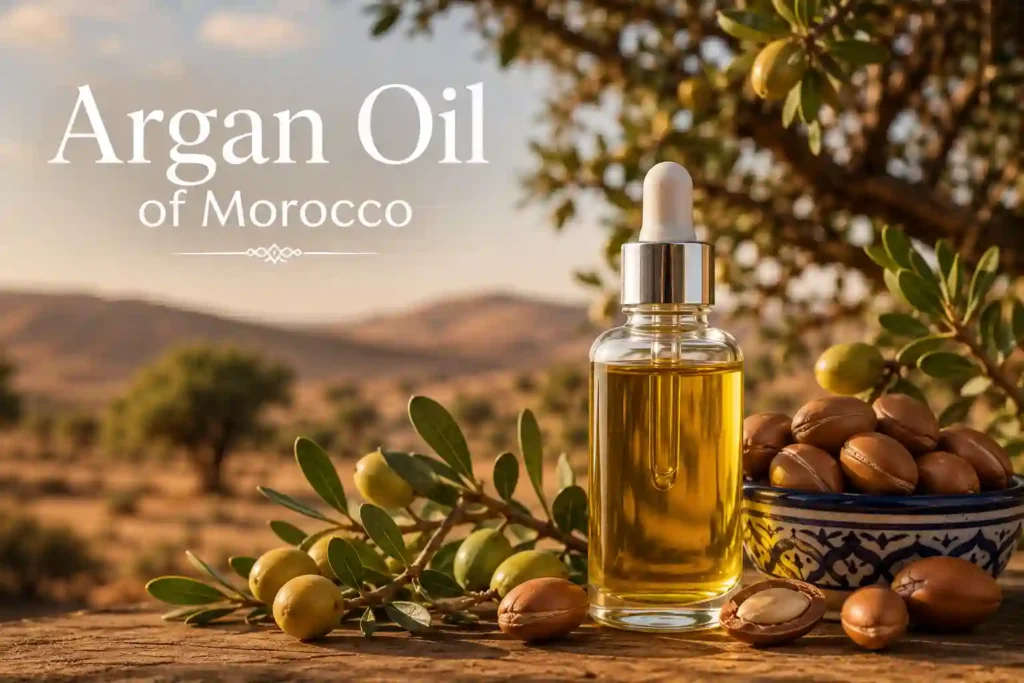
Often referred to as “liquid gold,” Argan Oil of Morocco has captured the hearts of beauty enthusiasts and culinary experts across the globe. Extracted from the kernels of the Argan tree, a species endemic to the arid southwestern regions of Morocco, this rare oil is much more than just a beauty trend. It is a product deeply rooted in Moroccan tradition, harvested through time-honored methods that have been passed down through generations of Berber women.
Whether you are looking to revitalize your hair, deeply nourish your skin, or add a unique, nutty flavor to your favorite gourmet dishes, Moroccan Argan Oil offers unparalleled natural benefits. In this guide, we will explore everything you need to know about this precious resource, from its unique production process and health-boosting properties to tips on how to identify and buy authentic Moroccan Argan oil. Join us as we uncover the secrets behind one of Morocco beauty products‘ most celebrated treasures.
Table of Contents: Argan Oil of Morocco
Is There Olive Oil from the Morocco Desert?
Argan oil of Morocco is a natural, nutrient-dense oil derived from the kernels of the Argania spinosa tree. For centuries, this precious oil has been a staple in Moroccan culture, prized for its versatile applications in both beauty rituals and traditional culinary practices.
Why it’s called “Liquid Gold”: The nickname “Liquid Gold” reflects both its stunning, warm golden hue and its immense value. This reputation is well-earned, as it takes a significant amount of labor and time to produce, making it one of the rarest and most sought-after oils in the world.
Where it comes from: Unlike many other oils that are mass-produced in various climates, Moroccan Argan oil is incredibly exclusive. It is produced solely in the southwestern part of Morocco, where the argan trees are uniquely adapted to the harsh, semi-arid environment. The specific combination of geography and climate found in this region is the only reason the argan tree and its valuable fruit can flourish.
How Is Argan Oil Made?
The production of authentic Moroccan Argan oil is a labor-intensive process that honors ancient traditions while maintaining high quality. The journey from fruit to bottle involves several careful steps:
Harvesting the Argan Fruit: The process begins by collecting the argan fruit once it has ripened and fallen from the tree. While traditionally goats were sometimes involved in the process, today’s high-quality production relies on manual harvesting to ensure the fruit remains clean and high-quality.
Drying and Cracking the Nuts: Once collected, the fruit is dried in the sun. After the outer fleshy pulp is removed—often used as animal feed—the hard nut is carefully cracked open by hand using two stones to extract the inner kernels.
Cold Pressing the Kernels: To create the oil, the kernels are pressed. For cosmetic purposes, the kernels are pressed raw to ensure the oil retains its skin-soothing properties. For culinary oil, the kernels are gently roasted first, which gives the oil its signature nutty aroma and flavor.
Traditional vs. Modern Production: While the manual stone-cracking method remains a vital part of Berber cultural heritage, modern production now frequently employs cold-press machines to ensure higher purity, better hygiene, and longer shelf life.
Types of Moroccan Argan Oil
Understanding the difference between the varieties of this oil is essential for choosing the right product for your needs. There are two primary categories of Moroccan Argan oil:
Cosmetic Argan Oil: This variety is specifically processed for external use on the skin and hair. The kernels are pressed raw without being roasted, which preserves the oil’s natural potency and delicate scent.
Culinary Argan Oil: This version is intended for consumption and offers a delicious, nutty flavor that is perfect for drizzling over salads, bread, or couscous. The kernels are gently roasted before pressing, a step that brings out the deep aroma and changes the oil’s composition slightly compared to the cosmetic version.
Key Differences: The main distinction lies in the preparation process. Cosmetic oil is lighter and milder in scent, optimized for absorption into the skin and hair, while culinary oil is darker and richer in flavor, making it a staple in traditional Moroccan kitchens.
Benefits of Argan Oil
Argan oil of Morocco is highly valued for its dense concentration of beneficial nutrients, making it a powerful addition to your beauty and wellness routine.
Moisturizes Skin: The oil is deeply hydrating and helps lock in moisture, leaving the skin soft and supple.
Nourishes Hair: It works to restore shine to dull hair, tame frizz, and improve overall texture.
Strengthens Nails: Regular application can help fortify brittle nails and soften cuticles.
Rich in Vitamin E: It contains high levels of Vitamin E, which acts as a powerful antioxidant to protect the skin from environmental stressors.
Packed with Antioxidants: Beyond Vitamin E, it is rich in essential fatty acids that support skin elasticity and health.
Supports Healthy Skin: Its natural anti-inflammatory properties can help soothe skin irritation and promote a clear, radiant complexion.
Uses of Moroccan Argan Oil
Because of its versatility, Moroccan Argan oil is a multipurpose staple that can be incorporated into many parts of your daily routine:
Face Care: Use a few drops as a nighttime serum to hydrate the skin and promote a natural, healthy glow.
Hair Care: Apply it to damp hair to add shine and reduce frizz, or use it as a pre-shampoo treatment to nourish the scalp.
Body Care: Massage into dry areas like elbows, knees, and heels for intense moisture that leaves the skin feeling soft.
Beard Care: It serves as an excellent conditioning oil to soften coarse beard hair and soothe the skin underneath.
Massage Oil: Its smooth texture and neutral scent (in the cosmetic version) make it a premium choice for therapeutic body massages.
Cooking: Incorporate culinary-grade argan oil into your diet to add a unique, nutty flavor to salads, dips, or traditional Moroccan dishes.
Where to Buy Authentic Argan Oil in Morocco
Finding truly authentic Moroccan Argan oil requires knowing where to look, especially when navigating busy markets. Here are the most reliable places to ensure you are purchasing high-quality, genuine products:
Women’s Cooperatives: These are the most recommended locations. Buying directly from women-led cooperatives ensures that your money supports local communities and that the oil is produced through traditional, ethical, and high-quality methods.
Local Markets: While vibrant, markets (souks) can be tricky. If you shop here, look for sellers who specialize specifically in natural products rather than general souvenir stalls.
Certified Stores: In major cities, look for boutiques or pharmacies that have clear certifications and branding. They are more likely to provide transparent information about the product’s origin and purity.
Online Retailers: If you are buying from a website, ensure they provide details about their supply chain, organic certifications, and transparent sourcing methods to confirm you are getting pure Argan oil of Morocco.
How to Spot Genuine Moroccan Argan Oil
Distinguishing between high-quality oil and diluted or imitation products is key to ensuring you get the full benefits of argan oil. Keep these tips in mind to identify authentic Moroccan Argan oil:
Check the ingredients: A high-quality cosmetic product should list only one ingredient: Argania spinosa kernel oil. If it contains perfumes, water, or other additives, it is likely diluted.
Smell and color: Cosmetic argan oil should have a very mild, nutty scent that fades quickly; if it has a strong, unpleasant smell or no smell at all, it may be low quality or processed with chemicals. The color should be a pale, golden yellow.
Packaging: Authentic oil is typically packaged in dark-colored glass bottles. Light can degrade the quality of the oil, so avoid products sold in clear plastic containers.
Organic certifications: Look for official seals or labels that certify the oil as organic. These certifications are a strong indicator that the production process meets strict quality and safety standards.
Avoid fake products: If the price seems “too good to be true,” it often is. Because of the labor-intensive production process, pure argan oil cannot be cheap.
Is Argan Oil Worth Buying?
Many travelers wonder if this “liquid gold” is truly worth the investment. Given its unique properties and labor-intensive creation, it remains one of the most valuable natural products you can acquire.
Quality: Pure, cold-pressed argan oil is a high-performance product. Unlike many mass-produced beauty items filled with synthetic fillers, it provides real, noticeable results for skin and hair health.
Value: A little goes a long way. Because it is highly concentrated, a single bottle can last for months, making it a cost-effective addition to your long-term beauty regimen.
Popular Souvenir: Beyond its utility, it is a piece of Moroccan culture. Buying it directly from the source supports traditional Berber craftsmanship and the preservation of the unique Argan forests.
Long-term Benefits: When integrated into your routine, the antioxidant and moisturizing properties offer cumulative benefits, helping to maintain skin elasticity and hair vitality over time.
How to Store Your Argan Oil
To ensure your Moroccan Argan oil remains potent and fresh for as long as possible, proper storage is just as important as choosing the right product.
Keep it away from direct sunlight: Light is the enemy of high-quality oils. Always store your bottle in a cool, dark place, such as a cupboard or a drawer, to prevent the oil from oxidizing and losing its beneficial properties.
Maintain a stable temperature: Avoid storing the oil in places with fluctuating temperatures, like a bathroom that gets steamy or a shelf right next to a sunny window. A consistent, room-temperature environment is ideal.
Seal the bottle tightly: Air exposure can lead to oxidation. Always ensure the cap is screwed on tightly after every use to maintain the oil’s purity and scent.
Check the expiration date: While pure argan oil has a relatively long shelf life due to its high Vitamin E content, it is best used within 12 to 18 months after opening to ensure you are getting the maximum benefits for your skin and hair.
Argan Oil for Hair vs Skin
While Moroccan Argan oil is a versatile “all-in-one” product, it behaves differently depending on how you use it. Understanding these nuances helps you get the best results for your beauty routine.
Using Argan Oil for Skin:
Absorption: When applied to the skin, it is non-greasy and absorbs relatively quickly, making it excellent for hydrating the face, neck, and dry patches like elbows.
Benefits: It works primarily as a powerful moisturizer and an antioxidant shield. It helps improve skin elasticity, balances natural oil production, and can soothe minor irritations.
Pro Tip: Use it as the final step in your skincare routine to “seal in” the moisture from your water-based serums or creams.
Using Argan Oil for Hair:
Application: Unlike skin care where you use just a few drops, hair care may require a slightly larger amount depending on your hair length and texture.
Benefits: It acts as a deep conditioner and a natural styling aid. It helps smooth down the hair cuticle, which reduces frizz, adds a natural shine, and protects hair strands from heat damage when styling.
Pro Tip: For a deep conditioning treatment, apply a generous amount to the ends of your hair and leave it on for 30 minutes before shampooing. For daily use, only a tiny drop on the fingertips is enough to smooth flyaways.
Frequently Asked Questions
Why is Moroccan argan oil so famous?
It is famous for being one of the rarest oils in the world, packed with Vitamin E and antioxidants. Its labor-intensive, traditional production and unparalleled benefits for hair and skin make it a premium beauty essential.
Can you cook with argan oil?
Yes, but only with culinary argan oil. It is roasted to have a delicious, nutty flavor perfect for drizzling over salads, couscous, or dipping bread. Never use cosmetic argan oil for cooking.
Is argan oil good for hair?
Absolutely. It is excellent for hydrating hair, reducing frizz, and adding shine. It acts as a natural conditioner and protects strands from heat damage.
Is argan oil safe for sensitive skin?
Yes, pure, authentic Moroccan Argan oil is generally safe for all skin types, including sensitive skin, because it is non-irritating and non-comedogenic (it won’t clog pores).
How long does argan oil last?
When stored in a dark, cool place in a glass bottle, pure argan oil typically lasts between 12 to 18 months after opening.
Where can I buy authentic argan oil in Morocco?
The best places to buy are reputable women’s cooperatives or certified local pharmacies. Always check the ingredients label to ensure it is 100% pure argan oil.
Does argan oil leave a greasy residue?
If it is 100% pure, Moroccan Argan oil is considered a “dry oil.” It absorbs quickly into the skin and hair, leaving them feeling soft and hydrated rather than oily or greasy, provided you use the recommended amount.
Can I use argan oil on my face if I have oily skin?
Yes! Many people with oily skin find that argan oil actually helps balance their skin’s natural oil production. Because it is non-comedogenic, it provides hydration without clogging your pores.
What is the difference between cold-pressed and refined argan oil?
Cold-pressed oil is the gold standard because it preserves all the natural nutrients, antioxidants, and fatty acids. Refined oil often undergoes chemical processing to remove scent or color, which significantly reduces its overall nutritional value.
Why is the price of argan oil so high?
The price reflects the labor-intensive production process. It takes many hours of manual work by Berber women to crack the nuts and extract the kernels required to produce just one small bottle of pure oil.
Can argan oil help with stretch marks or scars?
While it is not a miracle cure, the high concentration of Vitamin E and essential fatty acids helps improve skin elasticity and may help soften the appearance of fine lines, scars, and stretch marks over time with consistent use.
Conclusion
Argan oil of Morocco is far more than just a trending beauty product; it is a profound testament to Morocco’s natural heritage and the dedication of the Berber women who preserve these ancient traditions. Known globally as “liquid gold,” this versatile oil bridges the gap between luxury self-care and authentic, sustainable living.
Whether you are looking to revitalize your hair, deeply nourish your skin, or add a unique, nutty depth to your culinary creations, incorporating this natural treasure into your daily routine offers tangible, long-term benefits. As you plan your next trip to Morocco, remember that bringing home a bottle of authentic Moroccan Argan oil is more than just purchasing a souvenir; it is supporting a sustainable ecosystem and bringing a piece of Morocco’s golden heart into your own home.

I’m Lahcen Saadi from the Exploring Morocco Trips team. We are local guides dedicated to crafting authentic and exceptional Moroccan experiences.
Whether you are planning your first trip to Morocco and need expert advice, or you are a travel professional looking to collaborate on unique itineraries, we are ready to help.
- 2 Days Desert tours From Marrakech
- 3 Days Desert tour From Marrakech to Merzouga
- 3 Days Desert tour From Marrakech to Fes
- 4 Days Desert tour From Marrakech to Merzouga
- 4 Days Desert tour From Marrakech to Fes
- 5 Days Desert tour From Marrakech to Merzouga
- 5 Days Desert tour From Marrakech to Fes
- 6 Days Desert tour From Marrakech to Casablanca
- 7 Days Morocco tour from Marrakech
- 8 Days Morocco tour from Marrakech
- 8 Days Morocco tour from Marrakech with Imperial Cities
- 9 Days Morocco tour from Marrakech
- 10 Days Morocco tour from Marrakech
- 12 Days Morocco tour from Marrakech
- 14 Days Morocco tour from Marrakech
- 2 Days Desert tour From Fes to Merzouga
- 2 Days Desert tour From Fes to Marrakech
- 3 Days Desert tour From Fes to Merzouga
- 3 Days Desert tour From Fes to Marrakech
- 4 Days Desert tour From Fes to Marrakech
- 5 Days Desert tour From Fes to Marrakech
- 6 Days Desert tour From Fes to Marrakech
- 7 Days Morocco tour from Fes
- 4 Days Morocco tour from Casablanca
- 5 Days Morocco tour from Casablanca
- 6 Days Morocco tour from Casablanca
- 7 Days Morocco tour from Casablanca
- 8 Days Morocco tour from Casablanca
- 9 Days Morocco tour from Casablanca
- 10 Days Morocco tour from Casablanca
- 11 Days Morocco tour from Casablanca
- 12 Days Morocco tour from Casablanca
- 14 Days Morocco tour from Casablanca