
Best Food in Marrakech: 15 Must-Try Moroccan Dishes & Local Food Guide
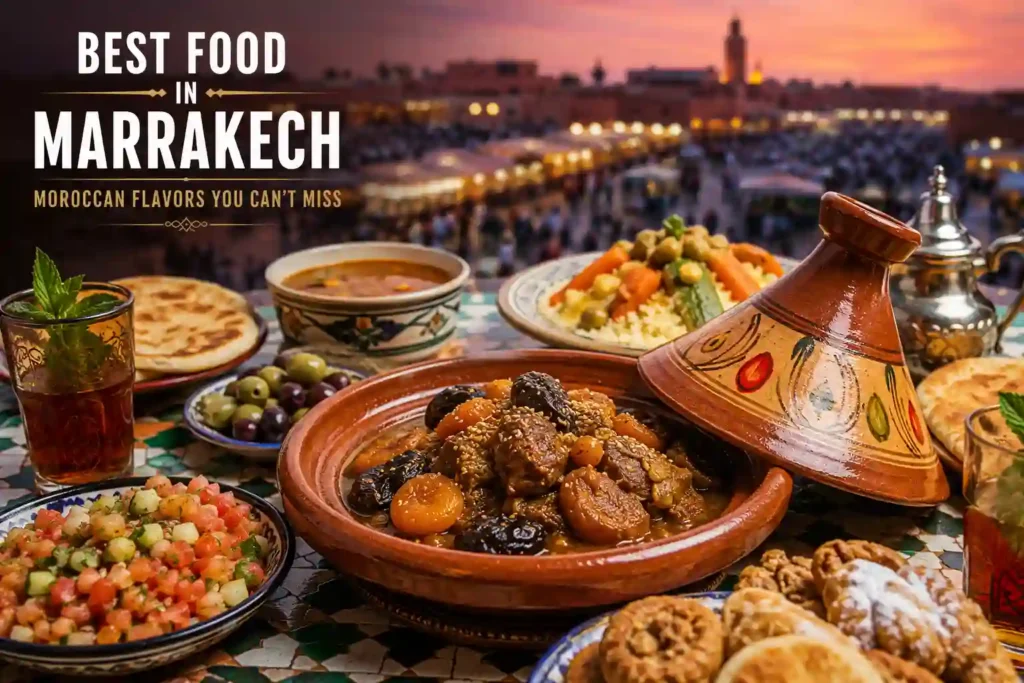
Marrakech is a city that speaks to the soul through its flavors. Stepping into the vibrant souks of the Red City, you are immediately enveloped in a symphony of aromas, the sharp tang of preserved lemons, the earthy warmth of cumin, and the intoxicating sweetness of orange blossom water. For any traveler, deciding what to eat in Marrakech is not just about satisfying hunger; it is a profound exploration of Morocco’s complex cultural tapestry.
The best food in Marrakech is a beautiful reflection of history, blending ancient Amazigh techniques with Arab refinements and Andalusian artistry. Every meal here tells a story. Whether you are grabbing a quick bite at the lively street food in Marrakech stalls at Jemaa el-Fnaa, where the smoke from charcoal grills rises high into the night, or savoring a slow-cooked feast in the quiet, tile-adorned courtyard of a traditional riad, you are participating in a culinary ritual that has been perfected over centuries.
In this Marrakech food guide, we take you deep into the heart of Moroccan cuisine. From the iconic, tender tagines that define the region to the lesser-known delicacies that locals cherish, we have curated a list of traditional Moroccan food you cannot afford to miss. We will navigate through the best Moroccan dishes, uncover hidden culinary gems in local Marrakech restaurants, and help you navigate the rich, spice-filled landscape of this North African jewel. Get ready to experience why Marrakech is consistently ranked as a top destination for food lovers worldwide. Your journey into the authentic, mouth-watering world of local food in Marrakech starts right here.
Table of Contents: Best Food in Marrakech
Why Marrakech Is a Food Lover's Paradise
Marrakech serves as a melting pot where geography and history converge on the plate. It is a city where every meal is an invitation to explore a legacy built over generations.
-
Rich Culinary Traditions: Moroccan cooking is an art form rooted in patience, utilizing slow-cooking methods and complex spice blends that create depth and harmony in every bite.
-
Fresh Local Ingredients: The region benefits from an abundance of fresh produce. From sun-ripened olives and citrus fruits to high-quality lamb and fragrant herbs, the quality of local ingredients is the cornerstone of the city’s unique flavor profile.
-
Street Food and Fine Dining: Marrakech offers a fascinating contrast. You can experience the raw, energetic atmosphere of street food culture in Jemaa el-Fnaa or transition to the refined, opulent setting of a palace-style restaurant, both serving dishes that honor traditional recipes.
-
Amazigh, Arab, and Andalusian Influences: The cuisine is a testament to the city’s diverse heritage. You will taste the earthy, rustic roots of Amazigh traditions, the sophisticated spice usage brought by Arab influence, and the elegant sweetness and floral touches characteristic of the Andalusian culinary legacy.
15 Best Foods in Marrakech
Marrakech is a culinary playground where each dish offers a unique taste of Moroccan culture. Here are the must-try delicacies:
-
Tagine: The quintessential Moroccan slow-cooked stew, prepared in a conical clay pot that creates tender, flavorful results.
-
Tanjia Marrakchia: A local specialty unique to Marrakech, consisting of meat and spices slow-cooked in a clay jar inside the ashes of a hammam furnace.
-
Couscous: The iconic Moroccan staple made of steamed semolina grains, typically served with vegetables and tender meat.
-
Pastilla: A sophisticated savory-sweet pie, usually filled with chicken or seafood, wrapped in thin pastry and dusted with cinnamon and sugar.
-
Harira Soup: A rich, traditional tomato-based soup packed with lentils, chickpeas, and aromatic herbs, often served to break the fast.
-
Mechoui (Roasted Lamb): Whole lamb slow-roasted until it is incredibly tender and literally falls off the bone.
-
Brochettes: Delicious skewers of marinated meat, grilled to perfection over charcoal and seasoned with local spices.
-
Msemen: A popular, flaky, square-shaped Moroccan flatbread that is pan-fried and often enjoyed with honey or butter.
-
Baghrir (Moroccan Pancakes): Known as “thousand-hole pancakes,” these are soft, spongy, and perfect for soaking up honey or syrup.
-
Rfissa: A comforting, soul-warming dish of shredded pancake (trid) topped with chicken, lentils, and a fragrant sauce flavored with fenugreek.
-
Maakouda: A beloved street food snack made of deep-fried, seasoned potato cakes that are crispy on the outside and soft on the inside.
-
Bissara: A hearty, traditional fava bean purée, often drizzled with olive oil and sprinkled with cumin and chili.
-
Moroccan Olives: Marrakech offers an incredible variety of olives, from spicy marinated versions to citrus-infused treats, served as an essential appetizer.
-
Moroccan Pastries: A dazzling array of honey-soaked, nut-filled treats that showcase the country’s mastery of sweets.
-
Fresh Orange Juice: With oranges sourced from the surrounding groves, the juice found in the city is legendary for its vibrant, natural sweetness.
Best Desserts to Try in Marrakech
Moroccan desserts are a delightful blend of nuts, honey, and aromatic spices that are perfect when paired with tea.
-
Chebakia: A beautiful, flower-shaped cookie coated in honey and sesame seeds, often enjoyed during celebrations.
-
Kaab El Ghazal: Known as “Gazelle Horns,” these crescent-shaped pastries are filled with a smooth almond paste and scented with orange blossom water.
-
Sellou: A unique, nutrient-dense sweet made from toasted flour, roasted almonds, sesame seeds, and warm spices—it is a traditional favorite for special occasions.
-
Ghriba: These are classic, soft Moroccan cookies that come in several varieties, such as almond, walnut, or coconut, known for their delicate, crumbly texture.
Traditional Moroccan Drinks
No meal in Marrakech is complete without the perfect drink to accompany it.
-
Moroccan Mint Tea: The national drink of hospitality, this sweet, refreshing tea made with fresh mint leaves is a must-try experience.
-
Avocado Smoothie: A surprisingly popular and rich local treat, often blended with milk and a touch of honey for a creamy delight.
-
Fresh Fruit Juices: Beyond orange juice, look for seasonal pomegranate, melon, or strawberry juices sold at local stalls.
-
Spiced Coffee: Moroccan coffee is often infused with aromatic spices like cardamom, cinnamon, and nutmeg, giving it a distinct and bold flavor profile.
Best Places to Eat in Marrakech
From legendary market stalls to serene hideaways, Marrakech offers a dining experience for every mood:
-
Jemaa el-Fnaa Food Stalls: The beating heart of the city’s food scene, where you can experience the authentic energy of night-time open-air dining.
-
Traditional Riads: Often tucked away in the quiet alleys of the medina, these beautifully restored courtyard homes offer intimate, high-quality, and authentic Moroccan home-cooked meals.
-
Local Restaurants: Perfect for those seeking a balance between a casual atmosphere and a diverse menu featuring the best of regional cuisine.
-
Rooftop Restaurants: Enjoy a meal with a view; many rooftops provide stunning vistas of the Koutoubia Mosque or the Atlas Mountains, making them perfect for sunset dinners.
-
Luxury Dining Experiences: For special occasions, the city features world-class restaurants that blend traditional Moroccan recipes with modern, upscale presentation and service.
Street Food in Marrakech
Exploring the streets is essential for any food lover looking to taste the true soul of the city:
-
Snail Soup: A local specialty served in small bowls, known for its flavorful, herbal broth and unique culinary appeal.
-
Grilled Meats: Freshly skewered meats seasoned with local herbs and grilled over open charcoal fires.
-
Fresh Bread: Watching local bakers pull hot, traditional khobz from communal wood-fired ovens is an iconic part of the daily rhythm.
-
Local Sandwiches: Quick, satisfying, and packed with fresh vegetables, grilled meats, and local condiments, ideal for fueling up while exploring.
-
Sweet Treats: From freshly made msemmen to seasonal fruit preparations, there is always something sweet to discover around every corner.
Vegetarian Food in Marrakech
Moroccan cuisine is incredibly friendly to vegetarians, thanks to a deep appreciation for fresh seasonal produce and legumes.
-
Vegetable Tagine: A delicious, slow-cooked medley of seasonal vegetables like carrots, zucchini, potatoes, and peas, infused with savory spices.
-
Couscous with vegetables: A hearty, traditional preparation featuring a colorful assortment of steamed vegetables served over fluffy semolina.
-
Zaalouk: A smoky, flavorful dip made from cooked eggplant and tomatoes, seasoned with garlic, olive oil, and paprika.
-
Taktouka: A refreshing salad made from roasted bell peppers and tomatoes, perfectly spiced and great as a side dish or appetizer.
-
Lentil dishes: Moroccan lentils are often cooked with aromatic herbs and spices, providing a nutritious and satisfying plant-based protein.
Food Tips for Tourists
To have the best possible experience, keep these simple tips in mind while you explore the city:
-
Eat at busy restaurants: A crowded place is often a sign of fresh food and high turnover, which is a great indicator of quality.
-
Drink bottled water: It is recommended to stick to bottled water throughout your trip to ensure your comfort.
-
Try local specialties: Don’t hesitate to ask locals for recommendations; they often know the best hidden spots for authentic dishes.
-
Respect local dining customs: Remember to eat with your right hand and show appreciation for the meal, as hospitality is a central part of Moroccan culture.
-
Carry cash for street food: Most stalls in the medina and at Jemaa el-Fnaa operate on a cash-only basis.
Eating at Marrakech Airport (RAK)
If you find yourself waiting for a flight at Marrakech Menara Airport, you have several options to grab a bite. While the selection is more limited compared to the city center, it remains a convenient way to get a final taste of Moroccan hospitality before departure.
-
Diverse Options: The airport features a mix of international coffee chains and local cafes that offer sandwiches, pastries, and snacks.
-
Last-Minute Moroccan Flavors: Many of the cafes within the departures area serve classic Moroccan mint tea, fresh orange juice, and local-style pastries, which is perfect for a final souvenir of the country’s flavors.
-
Convenience: Most dining outlets are located after security, allowing you to relax and enjoy your meal once you have completed your check-in and boarding formalities.
-
Quick Bites: You will find options that cater to travelers in a rush, such as pre-packaged salads, wraps, and quick-service snacks, ensuring you don’t go hungry before your flight.
Cost of Food in Marrakech
Marrakech offers a wide range of culinary experiences, and your daily food budget will largely depend on your dining style. On average, many travelers spend around $13 (126 MAD) per person, per day on food.
Budget Breakdown by Dining Style
-
Budget Travelers: By eating mostly local street food (like msemen, sfinge, or harira) and dining at neighborhood restaurants, you can manage on $8–15 (or 12–20 EUR) per day.
-
Mid-Range Travelers: Mixing casual local lunches with more comfortable dinners in tourist-frequented areas typically costs $25–45 (or 30–50 EUR) per day.
-
Luxury Travelers: If you prefer fine dining establishments, rooftop restaurants with wine, and high-end service, budget for $60–120+ (or 60–100+ EUR) per day.
Price Guide for Popular Items (Estimates)
- Street Food Snacks: 2–5 MAD.
- Tagine or Couscous at a Local Cafe: 30–60 MAD.
- Coffee at a Local Cafe: 5–10 MAD.
- Tourist Restaurant Dinner (Main Course): 80–150 MAD.
- Fine Dining Experience: 500–900 MAD per person.
Money-Saving Tips for Foodies
-
Follow the Locals: The price difference between a neighborhood restaurant (often just a chalkboard menu in Darija) and a tourist-oriented one can be 3–5 times higher. The local version is frequently higher quality.
-
Water Costs: Avoid buying water at tourist cafes (20–30 MAD). Buy large 1.5L bottles from supermarkets like Carrefour or Marjane for only 5–7 MAD and refill your own bottle.
-
Check the Location: Dining slightly outside the medina, such as in the Gueliz area, can often provide more competitive pricing for quality meals compared to some heavily touristed spots within the historic center.
Frequently Asked Questions: food in Marrakech
What food is Marrakech famous for?
Marrakech is particularly famous for its Tanjia, a slow-cooked meat dish unique to the city, as well as its vibrant street food scene and traditional tagines.
What is the most popular dish in Marrakech?
Tagine and Couscous are the most widely recognized and popular dishes enjoyed by both locals and visitors.
Is street food safe in Marrakech?
Street food in popular, high-traffic areas like Jemaa el-Fnaa is generally safe, provided you choose busy stalls with a high turnover of customers.
What should tourists eat in Marrakech?
Tourists should make sure to try a variety of dishes, including at least one traditional tagine, fresh local pastries, and a classic Moroccan mint tea.
Where can I find authentic Moroccan food?
You can find authentic meals in family-run riads, well-rated local restaurants in the medina, and at the bustling night stalls of Jemaa el-Fnaa.
Is it expensive to eat out in Marrakech?
Not necessarily; you can enjoy high-quality local food for very reasonable prices if you avoid heavily touristed spots and eat where the locals eat.
Do I need to tip for food in Marrakech?
While not strictly mandatory, leaving a small tip (around 10%) in restaurants is appreciated for good service.
What food is Marrakech famous for?
Marrakech is particularly famous for its Tanjia, a slow-cooked meat dish unique to the city, as well as its vibrant street food scene and traditional tagines.
What is the most popular dish in Marrakech?
Tagine and Couscous are the most widely recognized and popular dishes enjoyed by both locals and visitors.
What should tourists eat in Marrakech?
Tourists should make sure to try a variety of dishes, including at least one traditional tagine, fresh local pastries, and a classic Moroccan mint tea.
Conclusion
Marrakech offers one of the most immersive and memorable food experiences in North Africa. Every meal here is an opportunity to discover the heart of Morocco’s rich culinary heritage, whether you are navigating the bustling, spice-scented souks or enjoying a peaceful dinner in the courtyard of a traditional riad. By embracing the local flavors and venturing into both the iconic market stalls and hidden local gems, you will uncover the true soul of this vibrant city. May your culinary journey through Marrakech be as flavorful and enriching as the culture itself.

I’m Lahcen Saadi from the Exploring Morocco Trips team. We are local guides dedicated to crafting authentic and exceptional Moroccan experiences.
Whether you are planning your first trip to Morocco and need expert advice, or you are a travel professional looking to collaborate on unique itineraries, we are ready to help.
- 2 Days Desert tours From Marrakech
- 3 Days Desert tour From Marrakech to Merzouga
- 3 Days Desert tour From Marrakech to Fes
- 4 Days Desert tour From Marrakech to Merzouga
- 4 Days Desert tour From Marrakech to Fes
- 5 Days Desert tour From Marrakech to Merzouga
- 5 Days Desert tour From Marrakech to Fes
- 6 Days Desert tour From Marrakech to Casablanca
- 7 Days Morocco tour from Marrakech
- 8 Days Morocco tour from Marrakech
- 8 Days Morocco tour from Marrakech with Imperial Cities
- 9 Days Morocco tour from Marrakech
- 10 Days Morocco tour from Marrakech
- 12 Days Morocco tour from Marrakech
- 14 Days Morocco tour from Marrakech
- 2 Days Desert tour From Fes to Merzouga
- 2 Days Desert tour From Fes to Marrakech
- 3 Days Desert tour From Fes to Merzouga
- 3 Days Desert tour From Fes to Marrakech
- 4 Days Desert tour From Fes to Marrakech
- 5 Days Desert tour From Fes to Marrakech
- 6 Days Desert tour From Fes to Marrakech
- 7 Days Morocco tour from Fes
- 4 Days Morocco tour from Casablanca
- 5 Days Morocco tour from Casablanca
- 6 Days Morocco tour from Casablanca
- 7 Days Morocco tour from Casablanca
- 8 Days Morocco tour from Casablanca
- 9 Days Morocco tour from Casablanca
- 10 Days Morocco tour from Casablanca
- 11 Days Morocco tour from Casablanca
- 12 Days Morocco tour from Casablanca
- 14 Days Morocco tour from Casablanca