
The History of Marrakech: A Journey Through Morocco's Red Imperial City
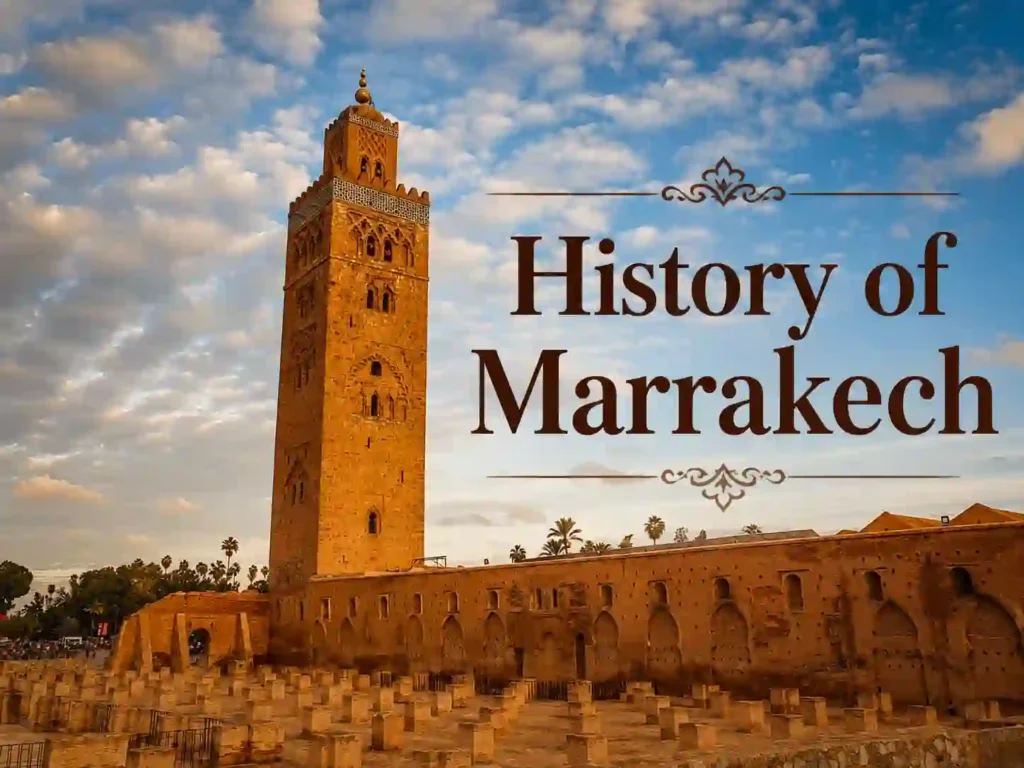
Nestled at the foothills of the snow-capped Atlas Mountains, Marrakech stands as a living museum of Moroccan heritage, imperial grandeur, and timeless traditions. Founded nearly a thousand years ago, this vibrant destination has long served as a crucial crossroads for traders, scholars, and conquerors, leaving behind an extraordinary tapestry of cultural influences. From its iconic red-clay ramparts and bustling Jemaa el-Fnaa square to its magnificent palaces and intricate Islamic architecture, the city invites travelers to step back in time to explore the History of Marrakech and discover the captivating stories that shaped its legendary past.
As one of Morocco’s historic imperial cities, Marrakech boasts a legacy deeply intertwined with successive ruling dynasties, such as the Almoravids and Almohads, that each left their indelible mark on its urban landscape, governance, and artistic identity. Walking through its ancient quarters reveals centuries of architectural evolution, from early defensive fortifications to breathtaking masterpieces of Moorish design. Whether you are exploring the origins of its famous market squares, tracing the routes of ancient caravan trade, or uncovering the spiritual foundations of its old-world Marrakech medina, understanding the historical roots of Marrakech offers a profound appreciation for its enduring global appeal and vibrant modern-day culture.
Table of Contents: History of Marrakech
The Founding of Marrakech
The origins of Marrakech trace back to the mid-11th century, specifically in the year 1070, when it was founded by Abu Bakr ibn Umar, the chieftain and cousin of the Almoravid leader Yusuf ibn Tashfin. Originally established as a humble military encampment and fortified stronghold, the settlement was strategically positioned at a vital crossroads connecting the Sahara Desert trade routes with the fertile plains and mountain passes of northern Morocco.
Under the visionary leadership of the Almoravids, what began as a modest desert outpost quickly transformed into the thriving capital of a vast empire that stretched from sub-Saharan Africa across the Atlas Mountains and deep into the Iberian Peninsula. Yusuf ibn Tashfin and his successors erected massive red-earth defensive ramparts, the iconic walls that still encircle the historic center today, and introduced sophisticated subterranean water supply systems known as khattara, which allowed lush palm groves and agricultural gardens to flourish in an arid climate. This pivotal era laid the solid urban, architectural, and economic foundations that propelled Marrakech onto the global stage as a legendary center of power, commerce, and Islamic scholarship.
The Almohad Dynasty
Following the fall of the Almoravids in the mid-12th century, Marrakech entered a dramatic new chapter under the rule of the Almohad Dynasty. Originating from the rugged Atlas Mountains, the Almohads, led by leaders such as Abd al-Mu’min, captured the city in 1147 and designated it as the brilliant capital of their expanding empire.
This period marked a golden age of monumental architecture, intellectual growth, and urban expansion in Marrakech. The Almohads demolished many of the previous structures to rebuild the city according to their own strict religious and aesthetic visions, most notably constructing the majestic Koutoubia Mosque, whose towering minaret became the ultimate architectural prototype for North Africa and Islamic Spain. They also established the sprawling Menara gardens, enriched the city’s infrastructure, and transformed Marrakech into a powerhouse of philosophy, science, and arts, drawing renowned scholars like Averroes. Through their grand ambitions, the Almohads cemented the city’s status as an enduring imperial capital.
The Saadian Dynasty
In the 16th century, Marrakech experienced another golden age under the Saadian Dynasty. This period brought immense wealth through flourishing trade with Europe and sub-Saharan Africa, transforming the city into a magnificent hub of art, power, and opulence.
Important attractions from this era include:
Saadian Tombs: A breathtaking royal necropolis renowned for its exquisite marble columns, intricate stucco carvings, and gold-honeycombed ceilings where members of the Saadian royal family were laid to rest.
El Badi Palace: Once celebrated as one of the architectural wonders of the Muslim world, this sprawling palace complex was constructed using gold, Italian marble, and turquoise, serving as a grand venue for royal receptions.
Beautiful gardens: The dynasty heavily invested in lush agricultural landscaping and sprawling outdoor retreats, enhancing the city’s green spaces and reflecting Andalusian design principles.
Decorative palaces: Beyond El Badi, the era gave rise to numerous residences adorned with vibrant mosaic tilework, carved cedarwood ceilings, and serene central courtyards that showcased the pinnacle of Moroccan craftsmanship.
Marrakech Under the Alaouite Dynasty
Since the 17th century, Morocco has been ruled by the Alaouite Dynasty, which continues to govern the country today. Although the political capital shifted to other imperial cities like Meknes and Rabat at various points in history, Marrakech remained one of Morocco’s most important cultural, religious, and commercial centers.
During this era, the city continued to evolve, blending its ancient medieval heritage with new architectural additions, royal residences, and bustling marketplaces. Alaouite sultans frequently restored the city’s historic palaces, expanded its vibrant gardens, and supported its thriving artisan guilds and spiritual institutions, ensuring that Marrakech maintained its prestigious status as the beating heart of southern Morocco’s identity and heritage.
Why Is Marrakech Called the Red City?
One of the most famous and striking characteristics of Marrakech is its iconic, warm-colored visual identity, which earned it the legendary moniker “The Red City” (La Ville Rouge). This distinct aesthetic is deeply rooted in the geography and geology of the surrounding region, where local builders, architects, and ancient masons turned to the earth itself to construct the urban landscape.
The vast majority of historic buildings, fortifying ramparts, royal fortifications, and traditional riads across the medina are built using local red clay, pisé (rammed earth), and native sandstone. Sourced directly from the surrounding Haouz plain and the foothills of the Atlas Mountains, this natural red-earth material creates an extraordinary continuity of color throughout the city.
As the blazing North African sun moves across the sky, these warm earthen walls shift in hue from dusty terracotta to vibrant ochre, deep rose, and glowing amber, particularly during sunset. Beyond its aesthetic charm, this traditional construction method served a practical purpose: rammed earth and clay act as natural thermal insulators, helping to keep interior spaces cool during the scorching summer months and retaining warmth when temperatures drop at night. Today, strict urban planning regulations continue to protect this historic color palette, ensuring that the timeless visual identity of Marrakech remains completely preserved for generations of travelers to admire.
Best Historic Places to Visit
If you love history and want to dive deep into the centuries-old legacy of Marrakech, make sure to include these iconic landmarks on your travel itinerary:
Koutoubia Mosque: The crowning architectural achievement of the Almohad era, featuring a towering 77-meter minaret that serves as the ultimate geographical and spiritual landmark of the city skyline.
Bahia Palace: A stunning 19th-century masterpiece of Moroccan architecture, boasting sprawling courtyards, vibrant zellij tilework, intricate stained glass, and hand-painted cedarwood ceilings built for grand viziers.
El Badi Palace: The hauntingly majestic ruins of a 16th-century Saadian palace once celebrated worldwide for its sunken gardens, reflecting pools, and lavish use of imported Italian marble and gold.
Saadian Tombs: A beautifully preserved royal necropolis hidden away behind the Kasbah Mosque, housing ornate chambers carved with fine stucco, intricate calligraphy, and delicate marble columns.
Ben Youssef Madrasa: Once the largest Islamic college in North Africa, this historic center of learning is renowned for its breathtaking central courtyard, exquisite geometric plasterwork, and serene student dormitories.
Jemaa el-Fnaa: The pulsing, UNESCO-protected cultural heart of the city, where centuries of traditional storytelling, open-air food markets, snake charming, and local commerce continue to thrive every single day.
Medina of Marrakech: A sprawling, labyrinthine medieval old town filled with bustling souks, hidden artisan workshops, ancient fountains, and historic riads that transport visitors straight back to the Middle Ages.
Bab Agnaou: An intricately decorated monumental stone gateway built by the Almohads to serve as the grand royal entrance to the fortified Kasbah quarter, showcasing exquisite Koranic friezes and floral motifs.
Frequently Asked Questions
When was Marrakech founded and by whom?
Marrakech was founded in 1070 AD by Abu Bakr ibn Umar, the chieftain and cousin of the Almoravid leader Yusuf ibn Tashfin. It began as a military encampment before rapidly growing into a major imperial capital.
Why is Marrakech called the Red City?
Marrakech earned its nickname “The Red City” (La Ville Rouge) because the vast majority of its historic buildings, ramparts, and traditional homes are constructed using local red clay, pisé (rammed earth), and native sandstone sourced directly from the surrounding region.
Which dynasties ruled Marrakech throughout history?
The city has been shaped by several major ruling dynasties, most notably the Almoravids, the Almohads, the Saadians, and the Alaouite Dynasty, which has ruled Morocco since the 17th century and continues to do so today.
What are the most famous historic landmarks to visit in Marrakech?
Top historical attractions include the Koutoubia Mosque, Bahia Palace, El Badi Palace, Saadian Tombs, Ben Youssef Madrasa, the bustling Jemaa el-Fnaa square, and the labyrinthine Medina of Marrakech.
Is the Marrakech Medina a UNESCO World Heritage site?
Yes! The historic medina of Marrakech, along with the iconic Jemaa el-Fnaa square, was designated as a UNESCO World Heritage Site in 1985 in recognition of its extraordinary medieval architecture, cultural heritage, and traditional urban layout.
What role did Marrakech play in trans-Saharan trade?
For centuries, Marrakech served as a vital commercial hub and northern terminal for trans-Saharan caravan routes. Caravans loaded with gold, salt, ivory, and textiles traveled north across the desert to trade in the city’s bustling markets, fueling the immense wealth of ruling dynasties like the Almoravids and Saadians.
How old are the historic walls surrounding the Marrakech Medina?
The defensive ramparts are nearly a thousand years old, initially constructed by the Almoravids in the 11th and 12th centuries using rammed earth (pisé). Spanning nearly 10 kilometers, these massive walls were built to protect the imperial capital and feature numerous historic gates, such as Bab Agnaou and Bab Doukkala.
What architectural styles define Marrakech's historic buildings?
The city’s architecture is a stunning blend of Moorish, Andalusian, and Islamic design. Key architectural elements include horseshoe arches, intricate geometric zellij tilework, hand-carved cedarwood ceilings, elaborate plaster stucco, and central courtyard layouts designed for privacy and climate control.
Did Marrakech ever serve as the capital of Morocco?
Yes, Marrakech served as the imperial capital of Morocco under multiple dynasties, including the Almoravids, Almohads, and Saadians. While the political and administrative capital eventually shifted to other cities like Rabat, Marrakech remains an undisputed cultural and historical powerhouse.
How did traditional water systems sustain Marrakech in an arid climate?
To overcome the region’s dry climate, ancient engineers developed khattaras, an ingenious network of underground subterranean channels that captured melting snow water from the Atlas Mountains and gravity-fed it to the city’s urban gardens, palm groves, and residential quarters without evaporation loss.
Conclusion
From its humble beginnings as an 11th-century Almoravid military encampment to its grand status as an imperial powerhouse under successive dynasties, Marrakech has continually reinvented itself while fiercely guarding its soul. The city’s legendary red walls, intricate palaces, and bustling market squares are not merely relics of a bygone era; they are the living, breathing heartbeat of a culture that bridges the ancient world with the modern day.
Whether you are tracing the historic trade routes through the labyrinthine alleys of the medina, marveling at the towering minaret of the Koutoubia Mosque, or soaking in the vibrant energy of Jemaa el-Fnaa, every corner of Marrakech tells an unforgettable story. As “The Red City” continues to welcome travelers from across the globe, its extraordinary heritage remains an eternal testament to Moroccan artistry, resilience, and architectural genius, inviting all who visit to step back in time and become part of its continuing history.

I’m Lahcen Saadi from the Exploring Morocco Trips team. We are local guides dedicated to crafting authentic and exceptional Moroccan experiences.
Whether you are planning your first trip to Morocco and need expert advice, or you are a travel professional looking to collaborate on unique itineraries, we are ready to help.
- 2 Days Desert tours From Marrakech
- 3 Days Desert tour From Marrakech to Merzouga
- 3 Days Desert tour From Marrakech to Fes
- 4 Days Desert tour From Marrakech to Merzouga
- 4 Days Desert tour From Marrakech to Fes
- 5 Days Desert tour From Marrakech to Merzouga
- 5 Days Desert tour From Marrakech to Fes
- 6 Days Desert tour From Marrakech to Casablanca
- 7 Days Morocco tour from Marrakech
- 8 Days Morocco tour from Marrakech
- 8 Days Morocco tour from Marrakech with Imperial Cities
- 9 Days Morocco tour from Marrakech
- 10 Days Morocco tour from Marrakech
- 12 Days Morocco tour from Marrakech
- 14 Days Morocco tour from Marrakech
- 2 Days Desert tour From Fes to Merzouga
- 2 Days Desert tour From Fes to Marrakech
- 3 Days Desert tour From Fes to Merzouga
- 3 Days Desert tour From Fes to Marrakech
- 4 Days Desert tour From Fes to Marrakech
- 5 Days Desert tour From Fes to Marrakech
- 6 Days Desert tour From Fes to Marrakech
- 7 Days Morocco tour from Fes
- 4 Days Morocco tour from Casablanca
- 5 Days Morocco tour from Casablanca
- 6 Days Morocco tour from Casablanca
- 7 Days Morocco tour from Casablanca
- 8 Days Morocco tour from Casablanca
- 9 Days Morocco tour from Casablanca
- 10 Days Morocco tour from Casablanca
- 11 Days Morocco tour from Casablanca
- 12 Days Morocco tour from Casablanca
- 14 Days Morocco tour from Casablanca