
Draa Valley Morocco: The Complete Guide to the Valley of the Kasbahs
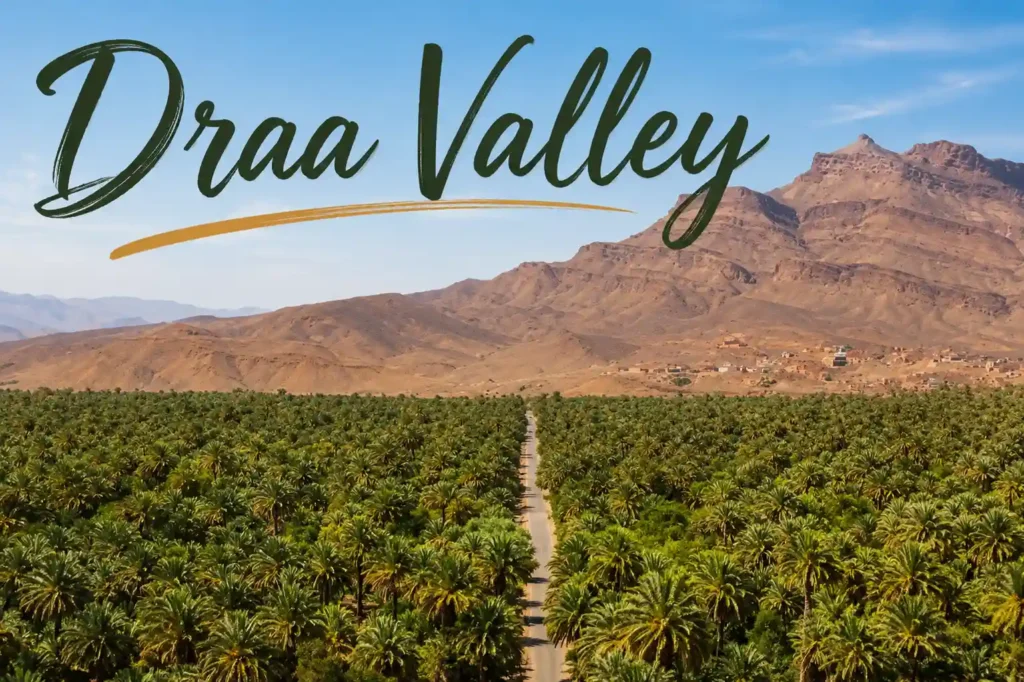
There’s a moment on the road south from Ouarzazate when the landscape suddenly changes. One minute you’re surrounded by dry, rocky hills, and the next you’re driving through a ribbon of green that seems to go on forever, thousands of palm trees, mud-brick kasbahs rising out of the earth, and small villages that look almost unchanged after hundreds of years. That’s the Draa Valley, and it’s one of those places in Morocco that doesn’t get nearly as much attention as it deserves.
If you’re planning a trip through southern Morocco and thinking about adding the Sahara to your route, there’s a good chance you’ll pass through the Draa Valley without even realizing how much there is to stop for. This guide covers everything you need to know: where the valley is, what makes it special, the best towns and kasbahs to visit along the way, when to go, and how to plan your route.
Table of Contents
Where Is the Draa Valley?
The Draa Valley follows Morocco’s longest river, the Draa, which starts in the High Atlas Mountains and winds its way south for well over a thousand kilometers before eventually disappearing into the sands near the Algerian border. The most scenic and accessible stretch runs along the N9 highway between Ouarzazate and Zagora, and it’s this section that most travelers mean when they talk about visiting “the Draa Valley.”
Because of its location, the valley naturally fits into any itinerary that includes Ouarzazate, the Sahara Desert, or a loop through southern Morocco. It’s often called the “Valley of the Kasbahs” or “Valley of a Thousand Kasbahs,” and once you’re driving through it, that nickname makes a lot of sense.
Why the Draa Valley Is Worth the Detour
Most people come to this part of Morocco with the Sahara dunes in mind, and the Draa Valley ends up being the road that gets them there. But treating it as just a drive-through is a mistake. This is one of the last places in Morocco where you can see traditional oasis life still functioning almost exactly as it has for centuries.
Farmers still use ancient irrigation channels, known locally as seguias, to carry water from the river to the palm groves and fields. Villages built from mud brick sit tucked into the greenery, connected by roads that wind past orchards, small markets, and crumbling fortresses that once protected caravan routes stretching all the way to Timbuktu. It’s quiet here in a way that feels rare, and the pace of life is slow enough that a short stop often turns into a much longer one.
The Best Towns and Kasbahs Along the Way
Agdz
Agdz is usually the first real stop heading south from Ouarzazate, and it’s a good introduction to what the rest of the valley has in store. The name comes from the Amazigh word for “resting place,” which fits; this was historically a stopover point on the old caravan route, and it still feels like a natural place to pause. The Kasbah des Caïds sits above the town and offers sweeping views over the palm groves and surrounding ksour (fortified villages). Agdz also holds a lively Thursday souk, worth timing your visit around if you can.
Kasbah Tamnougalt
A short drive from Agdz, Tamnougalt is one of the most impressive kasbahs in the entire valley. It’s a large, fortified complex of mud-brick buildings that once served as an administrative and defensive stronghold. Wandering through its narrow alleys and courtyards gives a real sense of how communities here were built for both daily life and protection.
Kasbah Amridil
Located near Skoura, a bit further north but often included on the same route, Kasbah Amridil is considered one of the finest examples of traditional Moroccan kasbah architecture still standing. Its intricate mud-brick detailing has made it something of an icon, and it’s easy to spend a good hour just exploring its rooms and rooftop.
Zagora
Zagora is the valley’s largest town and a common jumping-off point for desert excursions. It’s famous for an old sign reading “Timbuktu 52 days by camel,” a nod to the trade routes that once passed through here. Beyond the sign, Zagora has a busy weekly market, an old Jewish quarter worth a wander, and enough infrastructure to make it a comfortable base before heading further into the desert.
M'Hamid and Erg Chigaga
If you’re chasing the deep desert experience, the road continues past Zagora to M’Hamid, the last real town before the dunes take over completely. From here, most travelers arrange a 4×4 transfer or camel trek out to Erg Chigaga, a remote set of dunes considerably less crowded than the more famous Erg Chebbi further north. Spending a night camping under the stars out here is, for a lot of people, the highlight of the entire southern Morocco trip.
Smaller Kasbahs Worth a Stop
Between the main towns, the valley is scattered with smaller, lesser-visited kasbahs that rarely make it into guidebooks but are worth a quick stop if you have the time, places like Timiderte, Ksar Tansikht, Igdaoun, and Tinzouline. None of these require more than twenty or thirty minutes, but they add up to a much richer picture of how many fortified villages once lined this route.
Things to Do in the Draa Valley
- Explore the kasbahs – Walking through these mud-brick fortresses is the main draw of the valley, and several are open to visitors or have been converted into guesthouses.
- Walk or bike through the palm groves – The oases here aren’t just scenic backdrops; they’re working agricultural systems that have supported communities for generations. Walking the irrigation paths gives you a much closer look at how it all functions.
- Visit local villages – Stopping in smaller Berber villages along the route is one of the best ways to see everyday life away from Morocco’s bigger tourist centers.
- Camel trekking and desert camps – Multi-day treks from Zagora or M’Hamid toward Erg Chigaga combine the valley with a proper Sahara experience.
- 4×4 and off-road excursions – For a faster-paced alternative to camel trekking, off-road trips head out to fossil beds, nomadic camps, and more remote pockets of desert.
- Try local Berber cuisine – Small family-run restaurants along the route serve tagines and fresh bread, often using produce grown right in the valley.
- Stargazing – Away from any real light pollution, clear desert skies here make for some of the best stargazing in Morocco.
Best Time to Visit the Draa Valley
Spring (March to May) and autumn (September to November) are the most comfortable times to visit. Daytime temperatures are warm without being extreme, and nights are pleasant, especially if you’re camping in the desert.
Summer (June to August) gets very hot, often exceeding 40°C during the day, which can make exploring kasbahs or walking through the palm groves uncomfortable in the middle of the day. Winter is generally mild during the day but can get surprisingly cold at night, particularly out in the desert, so it’s worth packing layers if you’re traveling between December and February.
How to Get to and Around the Draa Valley
Most trips to the Draa Valley start in Ouarzazate, which has its own airport with domestic connections and is also a common stop on overland routes from Marrakech. From Ouarzazate, the N9 highway runs south through the valley toward Zagora and eventually M’Hamid.
Renting a car gives you the most flexibility to stop at the smaller kasbahs and villages along the way, and the road itself is considered one of the more scenic drives in Morocco. If you’d rather not drive, organized tours and shared taxis run regularly between Ouarzazate and Zagora, and many multi-day Sahara tours from Marrakech or Fes route directly through the valley as part of the journey.
Where to Stay in the Draa Valley
Accommodation options range from simple guesthouses to atmospheric stays inside converted kasbahs. Sleeping inside a centuries-old kasbah, many of which now operate as riads or boutique guesthouses, is a memorable way to experience the valley rather than just passing through it. Agdz and Zagora both have a reasonable range of guesthouses and small hotels, while further south near M’Hamid, most travelers stay in desert camps as part of an organized excursion.
How Many Days Do You Need in the Draa Valley?
For travelers passing through on the way to the Sahara, a single day of driving with a few stops is enough to get a taste of the valley’s scenery and main kasbahs. But if you want to actually experience the region rather than just drive through it, two to three days is a better target.
A rough breakdown for a slower visit might look like this: a night in or around Agdz to explore Kasbah Tamnougalt and the surrounding palm groves, a day continuing south through the smaller kasbahs toward Zagora, and a final push to M’Hamid for a night in the desert near Erg Chigaga. This pace leaves room for spontaneous stops, which is often where the best experiences happen.
Nearby Attractions Worth Combining With Your Trip
The Draa Valley sits close to several other major southern Morocco highlights, which makes it easy to build into a longer route:
- Ouarzazate: Known as the gateway to the south, with film studios, the Taourirt Kasbah, and easy access to the valley.
- Ait Benhaddou: One of Morocco’s most famous fortified villages (ksar) and a UNESCO World Heritage Site, usually visited on the way to or from Ouarzazate.
- Dades and Todra Gorges: Dramatic canyon landscapes northeast of the valley, popular for hiking and scenic driving.
- Erg Chebbi: Morocco’s most famous dune field, further east near Merzouga, often compared with the quieter Erg Chigaga at the southern end of the Draa Valley.
What to Eat in the Draa Valley
Food in the valley reflects its agricultural roots. Dates are the star ingredient here, and the region produces some of the best in Morocco: you’ll see them sold fresh at roadside stalls and local markets, especially during the autumn harvest season. Beyond dates, expect hearty Berber staples: slow-cooked tagines, fresh flatbread baked in clay ovens, couscous on Fridays, and mint tea poured with the ceremonial flourish Morocco is known for.
Small family-run restaurants and guesthouse kitchens tend to serve the best, most authentic meals in the valley, often using vegetables and herbs grown right in the surrounding palm groves. If you’re staying in a converted kasbah, ask about a home-cooked dinner; it’s usually far better than anything you’ll find at a roadside tourist stop.
Frequently Asked Questions About the Draa Valley
What is the Draa Valley known for?
It’s known as the “Valley of the Kasbahs” for its dense concentration of historic mud-brick fortresses, along with its lush palm groves, the Draa River, and traditional Berber villages that stretch from the High Atlas Mountains toward the Sahara.
How long does it take to drive through the Draa Valley?
The main stretch from Ouarzazate to Zagora takes around three to four hours without stops, but most travelers spend a full day or more exploring kasbahs and villages along the way.
Is the Draa Valley worth visiting?
Yes. It offers some of the most authentic oasis and kasbah scenery in Morocco, and it’s usually far less crowded than more famous stops like Marrakech or the Fes medina.
What's the best kasbah to visit in the Draa Valley?
Kasbah Tamnougalt and Kasbah Amridil are two of the most impressive and well-preserved, though there are dozens of smaller kasbahs worth a quick stop along the route.
Can you combine the Draa Valley with a Sahara Desert trip?
Definitely. The valley is the natural route toward the dunes near M’Hamid and Erg Chigaga, so most Sahara tours from Marrakech, Fes, or Ouarzazate pass directly through it.
What is the best time of year to visit?
Spring and autumn offer the most comfortable temperatures. Summer can be extremely hot, while winter nights, especially in the desert, can get quite cold.
Do you need a car to visit the Draa Valley?
A rental car gives you the most freedom to stop at smaller kasbahs and villages, but shared taxis, buses, and organized tours also run the route regularly if you’d rather not drive.
Is it safe to travel through the Draa Valley?
Generally, yes. It’s a well-traveled route with regular tourist traffic, though it’s still worth taking normal precautions like carrying cash, keeping fuel topped up, and checking road conditions if you’re traveling further south toward M’Hamid.
Final Thoughts
The Draa Valley isn’t the kind of place that hits you all at once; it’s more of a slow reveal, kasbah by kasbah, palm grove by palm grove, until you realize you’ve been driving through living history for hours. It doesn’t have the fame of Marrakech or the crowds of the Sahara’s most popular dunes, and honestly, that’s exactly what makes it worth visiting. Whether you’re passing through on your way to the desert or planning to linger for a few extra days, the valley rewards anyone willing to slow down and actually look.
If you’re mapping out a bigger southern Morocco route, the Draa Valley pairs naturally with Ouarzazate, the Sahara dunes near M’Hamid or Erg Chigaga, and even a loop back through the Atlas Mountains. It’s a stretch of road that turns a simple desert trip into something much more memorable.

I’m Lahcen Saadi from the Exploring Morocco Trips team. We are local guides dedicated to crafting authentic and exceptional Moroccan experiences.
Whether you are planning your first trip to Morocco and need expert advice, or you are a travel professional looking to collaborate on unique itineraries, we are ready to help.
- 2 Days Desert tours From Marrakech
- 3 Days Desert tour From Marrakech to Merzouga
- 3 Days Desert tour From Marrakech to Fes
- 4 Days Desert tour From Marrakech to Merzouga
- 4 Days Desert tour From Marrakech to Fes
- 5 Days Desert tour From Marrakech to Merzouga
- 5 Days Desert tour From Marrakech to Fes
- 6 Days Desert tour From Marrakech to Casablanca
- 7 Days Morocco tour from Marrakech
- 8 Days Morocco tour from Marrakech
- 8 Days Morocco tour from Marrakech with Imperial Cities
- 9 Days Morocco tour from Marrakech
- 10 Days Morocco tour from Marrakech
- 12 Days Morocco tour from Marrakech
- 14 Days Morocco tour from Marrakech
- 2 Days Desert tour From Fes to Merzouga
- 2 Days Desert tour From Fes to Marrakech
- 3 Days Desert tour From Fes to Merzouga
- 3 Days Desert tour From Fes to Marrakech
- 4 Days Desert tour From Fes to Marrakech
- 5 Days Desert tour From Fes to Marrakech
- 6 Days Desert tour From Fes to Marrakech
- 7 Days Morocco tour from Fes
- 4 Days Morocco tour from Casablanca
- 5 Days Morocco tour from Casablanca
- 6 Days Morocco tour from Casablanca
- 7 Days Morocco tour from Casablanca
- 8 Days Morocco tour from Casablanca
- 9 Days Morocco tour from Casablanca
- 10 Days Morocco tour from Casablanca
- 11 Days Morocco tour from Casablanca
- 12 Days Morocco tour from Casablanca
- 14 Days Morocco tour from Casablanca