
Zagora Desert, Morocco: The Complete Guide to Your Sahara Gateway
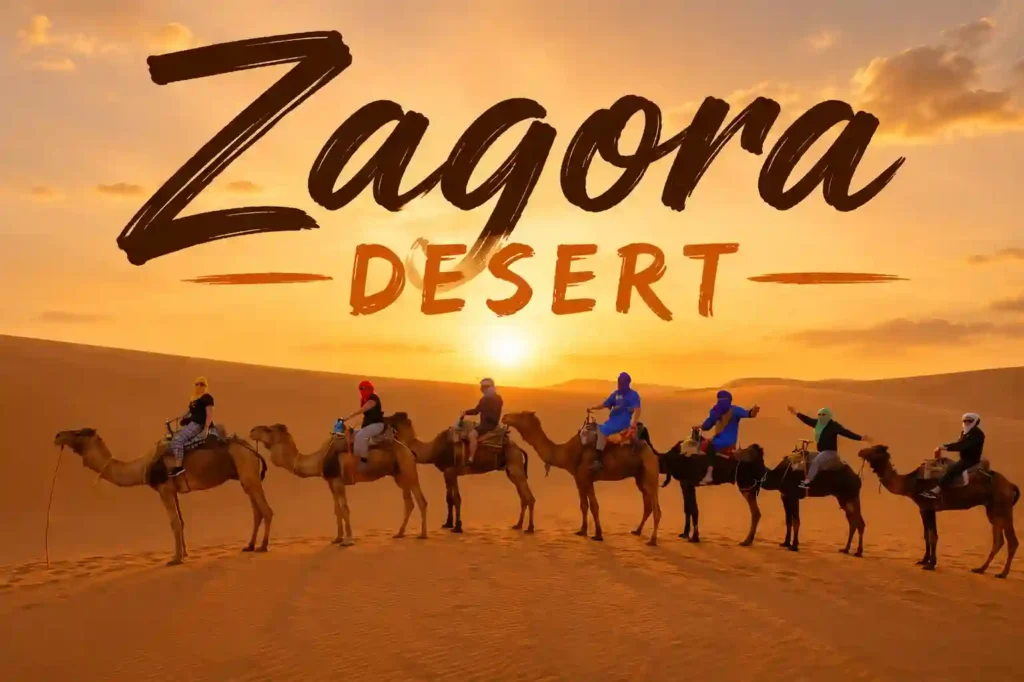
Ask ten travelers what they picture when they think of the Sahara, and most will describe something like Zagora: a wide-open stretch of sand, a camel silhouette against an orange sky, and a night spent under more stars than you knew existed. Zagora isn’t the biggest or most famous desert destination in Morocco, but for a huge number of travelers, it’s the place where they finally get to say they’ve stood in the Sahara.
Tucked at the southern end of the Draa Valley, Zagora has built its reputation as the easiest and quickest way to reach the desert from Marrakech. It’s not trying to compete with the towering dunes further east; it’s offering something different: a shorter trip, a genuine taste of desert life, and a lot less driving to get there. This guide covers everything you need to plan a trip to the Zagora desert, from what to actually expect once you arrive to how it compares with Morocco’s other desert regions.
Table of Contents
Where Is Zagora, and Why Do People Go There?
Zagora sits in southern Morocco, at the far end of the Draa Valley, roughly a six-hour drive from Marrakech. It grew up as a caravan town, a resting point on the old trade routes that once carried salt, gold, and goods across the Sahara toward Timbuktu. That history is still visible today, the town’s most famous landmark is an old road sign reading “Timbuktu 52 days,” a nod to how long that journey once took by camel.
These days, Zagora’s main draw is its role as the closest real entry point into the Sahara for anyone traveling from Marrakech. While it doesn’t have the towering golden dunes you might picture from photos of Merzouga, it makes up for it with convenience: a shorter drive, a more relaxed pace, and a desert experience that fits comfortably into a two or three-day trip rather than requiring a much longer journey east.
What the Zagora Desert Actually Looks Like
It’s worth setting expectations here, because a lot of first-time visitors arrive picturing endless rolling sand dunes and are surprised by what they actually find. The landscape immediately around Zagora is more rocky desert and flat, hard-packed terrain than soft sand, and the dunes themselves, mainly the Dunes of Tinfou, are smaller and more scattered than the massive Erg Chebbi dunes near Merzouga.
That said, the smaller scale doesn’t mean it’s not worth visiting. The Tinfou dunes still offer that classic Sahara scene: soft golden sand, dramatic shadows at sunrise and sunset, and total quiet once you’re away from the road. And if you’re willing to go a little further, the trip toward M’Hamid and Erg Chigaga opens up much bigger dune fields for travelers who want the fuller desert experience without the longer trek to Merzouga.
Camel Trekking in Zagora
For most visitors, a camel trek is the centerpiece of a Zagora desert trip. Rides typically head out from town or a nearby staging point in the late afternoon, timed so you’re arriving at the dunes just as the sun starts to set. Trekking companies here have been doing this for a long time, and the caravans are usually led by experienced local guides who know the terrain well.
A standard trip involves an hour to ninety minutes on camelback out to a desert camp, where you’ll spend the night in traditional Berber-style tents. Dinner is typically a hearty tagine cooked over a fire, often followed by drumming and music around the campfire a small but memorable taste of nomadic desert culture. The next morning usually starts early, with another short camel ride to catch the sunrise over the dunes before heading back.
If you have more time, multi-day camel treks are available, often continuing from Zagora toward M’Hamid and the dunes of Erg Chigaga, passing through smaller oases and nomad camps along the way. These longer treks are a completely different pace from the standard overnight trip: slower, quieter, and much more immersive.
How Zagora Compares to Merzouga
This is one of the most common questions travelers have when planning a Morocco desert trip, so it’s worth breaking down directly.
Distance from Marrakech: Zagora is roughly a six-hour drive, while Merzouga is closer to nine or ten hours. If your trip is short on time, this alone often settles the decision.
Dune size and scenery: Merzouga’s Erg Chebbi dunes are considerably taller and more dramatic, often reaching well over a hundred meters, and they deliver that classic postcard Sahara look. Zagora’s dunes are smaller and the surrounding landscape is rockier, so it’s a gentler introduction to the desert rather than the full dramatic sweep.
Trip length: A Zagora desert tour comfortably fits into two days, making it ideal if you’re short on time. Merzouga generally requires at least three to four days from Marrakech to make the long drive worthwhile.
Best for: Zagora suits travelers who want a real Sahara experience without dedicating half their trip to travel time. Merzouga is the better choice if the dunes themselves are the priority and you have the extra days to spend getting there and back.
Neither option is wrong; it really comes down to how much time you have and what you want out of the desert portion of your trip.
Things to See and Do Around Zagora
Tamegroute and Its Ancient Koranic Library
A short drive from Zagora, the village of Tamegroute is home to a centuries-old Koranic library holding a remarkable collection of ancient manuscripts, some illuminated in gold ink. It’s a fascinating stop for anyone interested in Morocco’s intellectual and religious history, and it’s usually combined with a visit to Tamegroute’s pottery workshops, known for their distinctive green-glazed ceramics.
The Dunes of Tinfou
The closest dunes to Zagora itself, Tinfou is a popular spot for a quick sunset visit even if you’re not doing an overnight camel trek. Some visitors come here specifically for the sand itself; local guides sometimes offer to bury visitors in the warm sand, a traditional practice believed to help with joint and muscle discomfort.
The Road to Timbuktu Sign
It’s a simple thing, but the old road sign marking the distance to Timbuktu by camel has become something of a photo landmark in Zagora. It’s a small but effective reminder of just how significant this route once was for trans-Saharan trade.
Local Kasbahs and Berber Villages
Zagora and the surrounding area are dotted with kasbahs and small Berber villages worth a stop, particularly along the Draa Valley road leading into town. Sharing a meal or a glass of mint tea with a local family, something many tours arrange as part of the itinerary, is often one of the most memorable parts of a Zagora trip.
Onward to M'Hamid and Erg Chigaga
For travelers with extra time, continuing south to M’Hamid opens the door to Erg Chigaga, a much larger and quieter dune field than Tinfou. It’s a longer drive and typically requires an extra day, but it rewards you with a bigger, more dramatic desert landscape without the crowds you’d find near Merzouga.
How to Get to Zagora
Most travelers reach Zagora as part of an organized tour from Marrakech, typically stopping at Ait Benhaddou and Ouarzazate along the way, both worth seeing in their own right. Ait Benhaddou is a UNESCO-listed fortified village and a familiar backdrop from several major films, while Ouarzazate has earned a reputation as Morocco’s film industry hub thanks to its studios and dramatic desert scenery.
If you’d rather travel independently, renting a car gives you full control over the route and lets you stop wherever you like along the Draa Valley. Shared taxis and buses also run between Marrakech, Ouarzazate, and Zagora, though a private or group tour is generally the simplest way to arrange the camel trek and desert camp portion of the trip.
Best Time to Visit the Zagora Desert
Camel treks and desert camping run pretty much year-round, but the most comfortable window is from October through May, when daytime temperatures are far more manageable for walking, riding, and sitting around an evening campfire. Summer in this part of Morocco gets brutally hot, often climbing well past 40°C, which can make daytime activity genuinely uncomfortable.
Winter nights in the desert can get surprisingly cold, even though the days stay mild, so packing warm layers is essential if you’re camping between November and February. Spring and autumn tend to offer the best overall balance: warm days, cool but manageable nights, and generally clear skies for stargazing.
What to Pack for a Zagora Desert Trip
- Comfortable, long pants for the camel ride; shorts tend to chafe against the saddle.
- A warm layer or jacket, even outside of winter, since desert nights cool down quickly after sunset.
- A scarf or turban-style wrap to protect against sand and sun, often provided by tour guides but worth having your own.
- Sunscreen and a hat, since shade is virtually nonexistent once you’re out on the dunes.
- A headlamp or small flashlight for getting around camp after dark.
- A basic overnight bag, since most camps only allow small bags on the camels themselves.
Practical Tips for Visiting Zagora
- Set expectations before you go. If you’re picturing towering golden dunes everywhere, remember that Zagora’s terrain is more mixed; combine your visit with Tinfou or Erg Chigaga for the fuller dune experience.
- Book your camel trek and camp in advance, especially during the busier October-to-April season.
- Bring cash. Smaller villages and desert camps often don’t have card payment options.
- Stay hydrated. Even in cooler months, the dry desert air pulls moisture out of you faster than you’d expect.
- Give yourself buffer time. The drive from Marrakech is long, and rushing it means missing worthwhile stops like Ait Benhaddou and Ouarzazate along the way.
Frequently Asked Questions About the Zagora Desert
Is Zagora worth visiting for the Sahara Desert experience?
Yes, especially if you’re short on time. It offers a genuine desert experience, including camel trekking and an overnight camp, with far less driving than reaching Merzouga.
How far is Zagora from Marrakech?
It’s roughly a six-hour drive, making it a popular choice for a two-day desert trip when a longer journey to Merzouga isn’t practical.
Are the dunes in Zagora as big as Merzouga's?
No. Zagora’s landscape is more rocky desert with smaller, scattered dunes at Tinfou, while Merzouga’s Erg Chebbi dunes are considerably taller and more dramatic. Travelers wanting bigger dunes near Zagora can continue on to Erg Chigaga near M’Hamid.
How long is a typical Zagora desert tour?
Most tours run two days and one night, including a camel trek, an overnight desert camp, dinner, and a sunrise ride back. Longer multi-day treks toward M’Hamid and Erg Chigaga are also available.
What's included in a Zagora camel trek tour?
Standard packages usually include transport, a guide, the camel trek itself, a traditional Berber dinner, an overnight stay in a desert camp, and breakfast the next morning.
What should I wear for a camel trek?
Long pants are recommended to avoid chafing, along with a warm layer for the evening, sun protection for the day, and closed shoes for walking around camp.
Is the Zagora desert trip suitable for families or beginners?
Generally, yes. Camel treks here are beginner-friendly, well-guided, and shorter in duration compared to some of the longer, more remote multi-day treks near Erg Chigaga.
What's the best time of year for a Zagora desert trip?
October through May offers the most comfortable temperatures. Summer can be extremely hot during the day, while winter nights in the desert get cold, so packing accordingly matters either way.
Final Thoughts
Zagora isn‘t trying to be Morocco’s most dramatic desert destination, and that’s part of what makes it work so well. It’s the practical choice for travelers who want a genuine Sahara experience, camel treks, a night in the dunes, a sky full of stars, without giving up half their trip to get there and back. Whether you stick close to town at the Tinfou dunes or push further south toward Erg Chigaga, a night in the Zagora desert has a way of becoming the story people tell first when they get home.
If you’re building out a bigger southern Morocco route, Zagora fits naturally alongside Ait Benhaddou, Ouarzazate, and the wider Draa Valley, turning a single desert night into a full, well-rounded trip through some of the country’s most striking landscapes.

I’m Lahcen Saadi from the Exploring Morocco Trips team. We are local guides dedicated to crafting authentic and exceptional Moroccan experiences.
Whether you are planning your first trip to Morocco and need expert advice, or you are a travel professional looking to collaborate on unique itineraries, we are ready to help.
- 2 Days Desert tours From Marrakech
- 3 Days Desert tour From Marrakech to Merzouga
- 3 Days Desert tour From Marrakech to Fes
- 4 Days Desert tour From Marrakech to Merzouga
- 4 Days Desert tour From Marrakech to Fes
- 5 Days Desert tour From Marrakech to Merzouga
- 5 Days Desert tour From Marrakech to Fes
- 6 Days Desert tour From Marrakech to Casablanca
- 7 Days Morocco tour from Marrakech
- 8 Days Morocco tour from Marrakech
- 8 Days Morocco tour from Marrakech with Imperial Cities
- 9 Days Morocco tour from Marrakech
- 10 Days Morocco tour from Marrakech
- 12 Days Morocco tour from Marrakech
- 14 Days Morocco tour from Marrakech
- 2 Days Desert tour From Fes to Merzouga
- 2 Days Desert tour From Fes to Marrakech
- 3 Days Desert tour From Fes to Merzouga
- 3 Days Desert tour From Fes to Marrakech
- 4 Days Desert tour From Fes to Marrakech
- 5 Days Desert tour From Fes to Marrakech
- 6 Days Desert tour From Fes to Marrakech
- 7 Days Morocco tour from Fes
- 4 Days Morocco tour from Casablanca
- 5 Days Morocco tour from Casablanca
- 6 Days Morocco tour from Casablanca
- 7 Days Morocco tour from Casablanca
- 8 Days Morocco tour from Casablanca
- 9 Days Morocco tour from Casablanca
- 10 Days Morocco tour from Casablanca
- 11 Days Morocco tour from Casablanca
- 12 Days Morocco tour from Casablanca
- 14 Days Morocco tour from Casablanca