
Kalaat M'Gouna, Morocco: The Complete Guide to the Valley of Roses
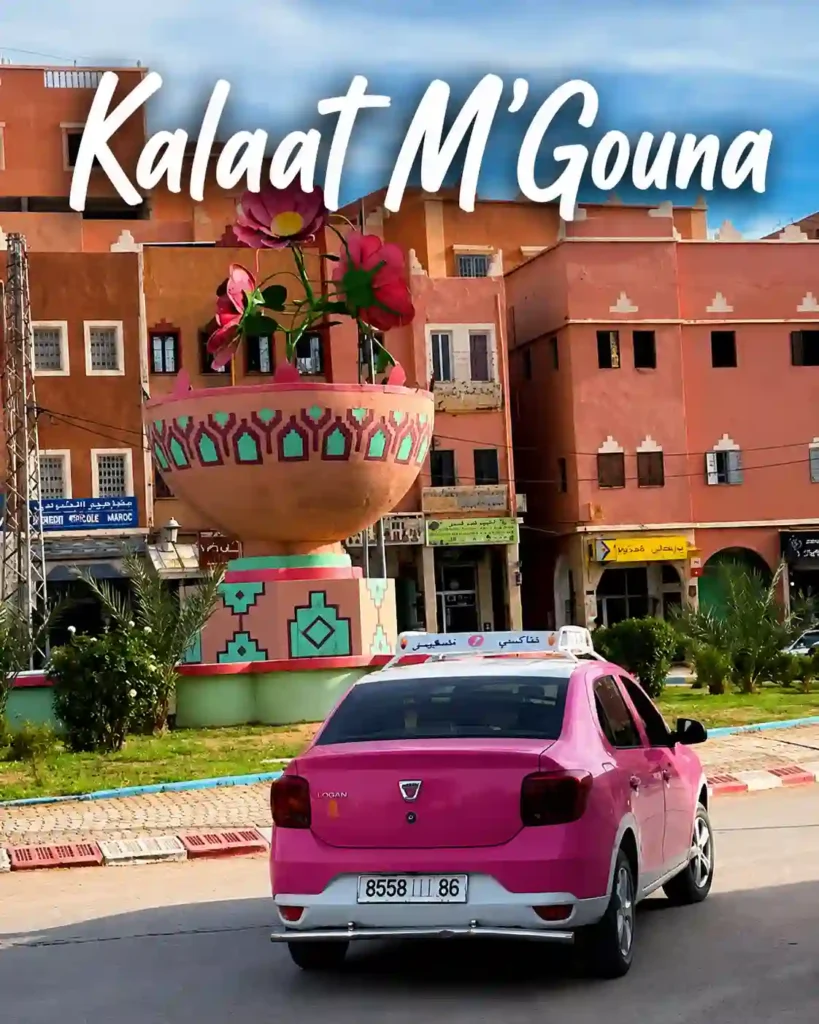
Somewhere along the Route of a Thousand Kasbahs, between the palm groves of Skoura and the towering walls of the Dades Gorge, the landscape does something unexpected. The dusty ochre hills give way to terraced fields blanketed in soft pink, and the air itself changes, carrying a sweet, floral scent that seems to drift for kilometers. That’s Kalaat M’Gouna, Morocco’s Valley of Roses, and it’s one of the more delightfully unusual stops on the southern desert route.
Most travelers driving between Ouarzazate and the Sahara pass through this valley without realizing what they’re missing, especially outside the short spring bloom. But whether you catch it during the famous Rose Festival or simply pass through on an ordinary day, Kalaat M’Gouna has more to offer than most road-trip itineraries give it credit for. This guide covers everything worth knowing: where the valley is, what the Rose Festival is all about, what to do here, and how to fit it into a bigger Morocco trip.
Table of Contents
Where Is Kalaat M'Gouna?
Kalaat M’Gouna sits in the heart of the M’Goun Valley, right along the Route of a Thousand Kasbahs, roughly 90 kilometers northeast of Ouarzazate. It’s a small town, but its location gives it an outsized role in the region’s identity. This stretch of valley is known across Morocco simply as the Valley of Roses, and Kalaat M’Gouna is its unofficial capital.
Most travelers reach the valley by road from Ouarzazate, continuing on toward the Dades Gorge and eventually Tinghir and the Sahara. If you’re coming from Marrakech, it’s roughly a six-hour drive over the dramatic Tizi n’Tichka pass, making Kalaat M’Gouna a natural stopping point on the second half of a longer southern Morocco route.
Why the Valley of Roses Exists
The valley’s rose industry isn’t a tourist gimmick; it’s a genuine agricultural backbone for the region. Thousands of families here cultivate the Damask rose, or rosa damascena, on terraced fields and hedgerows that double as natural fencing between properties. Each spring, typically across April and May depending on the winter rains and how early the season warms up, the entire valley bursts into bloom, and harvesting becomes an all-hands effort involving nearly every household in the area.
The roses themselves are prized for their essential oil, which is distilled into rose water and used in everything from perfumes to cosmetics to culinary flavoring. Kalaat M’Gouna’s rose products have built something of a reputation beyond Morocco’s borders, and the local economy depends heavily on getting the short harvest window right each year.
Things to Do Around Tafraoute Sidi Ali
If there’s one reason travelers specifically plan a trip around this valley, it’s the Rose Festival, known locally as Moussem M’Gouna. Held annually, usually across three to four days sometime in May, the festival marks the end of the harvest season and turns the town into a genuine celebration of Berber culture and rural tradition rather than a staged tourist event.
Exact dates shift from year to year, since the festival is timed to the harvest itself, which depends on rainfall and temperature earlier in the season. It’s worth checking current dates close to your planned travel window, since the festival can move by a couple of weeks depending on how the roses come in.
What Happens During the Festival
The Rose Festival brings the whole valley to life. Streets fill with music, colorful processions, and traditional Amazigh dances like Ahouach and Ahidous, performed by Berber groups in vivid traditional dress. Markets pop up selling rose water, rose oil, dried petals, and handmade cosmetics directly from local producers, often at far better prices than you’d find in Marrakech or Fes.
Several rose water distilleries and cooperatives around town open their doors during the festival, offering a firsthand look at how petals are transformed into rose water and essential oil through traditional distillation methods. Food is a big part of the celebration too; expect classic Moroccan dishes alongside rose-flavored treats like pastries, sorbets, and mint tea infused with rose water for a distinctly local twist on a familiar ritual.
A highlight for many visitors is the crowning of the festival’s “Rose Queen,” a local tradition that draws a large crowd and caps off the celebration with music and festivity late into the evening.
Things to Do in Kalaat M'Gouna Beyond the Festival
You don’t need to time your trip around the festival to get something out of this valley. Even in the off-season, there’s a fair amount worth stopping for.
- Visit a rose cooperative or distillery. Several operate year-round, and many offer tours explaining how rose water and oil are produced, along with the chance to buy directly from the source.
- Drive or walk through the rose fields. Outside of full bloom, the terraced fields and hedgerow plantings are still a striking sight, and the surrounding mountain scenery is worth slowing down for regardless of season.
- Explore local kasbahs and ksour. Like much of the Route of a Thousand Kasbahs, the valley has its share of old fortified villages worth a quick detour if you have time.
- Shop for genuine rose products. Rose water, rose oil, dried buds, and rose-based cosmetics are sold throughout town, and buying directly from small producers tends to get you better quality and prices than souvenir shops elsewhere in the country.
- Take in the drive itself. The road through the M’Goun Valley, framed by the High Atlas on one side and rugged desert hills on the other, is genuinely one of the more scenic stretches of the whole Route of a Thousand Kasbahs.
Best Time to Visit
For the roses themselves, late April through May is the window you want, with the festival typically landing somewhere in the middle of that stretch. This is genuinely the best time to experience the valley at its most vivid, both visually and culturally, though it also means busier roads and accommodation that fills up quickly, so booking ahead matters if your trip lines up with the festival.
Outside of rose season, the valley is still a pleasant stop, particularly in spring and autumn when temperatures are comfortable for wandering around town or visiting a cooperative. Summer gets hot like the rest of this region, and winter can bring cold nights given the valley’s elevation, so packing accordingly is worth keeping in mind whenever you visit.
How Kalaat M'Gouna Fits Into a Bigger Route
Kalaat M’Gouna almost never functions as a standalone destination; it’s a stop along the way, and a genuinely worthwhile one. Coming from Ouarzazate and Skoura, it’s the natural next stage before the Dades Gorge, Tinghir, and the Todra Gorge, eventually continuing toward Merzouga and the Sahara dunes. Because the roads through this corridor are well maintained, a standard rental car handles the route without issue, and there are enough towns along the way for fuel and food stops.
If you’d rather have someone else handle the driving and timing, this exact stretch is built into most multi-day desert tours running from Marrakech or Fes toward the Sahara. A guided route typically includes stops at Ait Ben Haddou, Skoura, Kalaat M’Gouna, the Dades Gorge, and Tinghir before reaching the dunes, which makes it easy to catch the highlights of the Valley of Roses without worrying about logistics. If you’re putting together a route through this part of Morocco, or want help timing a visit around the Rose Festival specifically, you can get in touch with our team and we’ll help build an itinerary that fits your dates.
Where to Stay in Kalaat M'Gouna
Accommodation here is fairly modest compared to bigger stops like Ouarzazate, with a mix of small guesthouses and family-run riads in and around town. During the Rose Festival, rooms fill up quickly, so booking well in advance is genuinely important if your trip is timed around the event. Outside festival season, finding a place to stay is much more relaxed, and many properties can arrange a visit to a nearby rose cooperative directly.
How Rose Water and Oil Are Actually Made
Watching the distillation process, whether during the festival or at a cooperative any other time of year, is one of the more genuinely interesting things you can do in Kalaat M’Gouna. Freshly picked petals, harvested early in the morning while they’re still cool and fragrant, are loaded into large copper stills along with water. As the mixture heats, steam carries the rose’s aromatic compounds upward, where it’s cooled and condensed back into liquid, a process that separates out both rose water and the much more concentrated, valuable rose oil.
It takes an enormous number of petals to produce even a small amount of pure rose oil, which is part of why it commands such a high price compared to rose water. Most cooperatives sell both, along with secondary products like rose-infused soaps, creams, and dried buds, giving visitors a range of price points to choose from depending on what they’re after.
Local Amazigh Culture in the Valley
Beyond the roses themselves, the M’Goun Valley is deeply Amazigh (Berber) in character, and that identity shows up in everything from the local dialect to the traditional dances performed during the festival. Ahouach and Ahidous, the two dance styles most associated with the Rose Festival, aren’t performances staged purely for visitors, they are genuine communal traditions, often involving large circles of dancers, drummers, and call-and-response singing that can go on for hours.
Outside festival time, this same culture is visible in quieter ways: the architecture of local kasbahs, the rhythms of daily agricultural life, and the hospitality extended to visitors who take the time to stop rather than just pass through. It’s worth remembering that the roses, however photogenic, are really just one visible piece of a much older, richer local identity.
Ready to Visit? Tour Options From Different Starting Points
If you would like to build a visit to Kalaat M’Gouna and the Valley of Roses into your Morocco trip, the simplest way is through a multi-day desert tour that already routes through this stretch alongside Skoura, the Dades Gorge, and Tinghir. Depending on where your trip starts, here are a few options worth checking out:
- Marrakech desert tours: the most common starting point, with routes crossing the Tizi n’Tichka pass through Ouarzazate before reaching the Valley of Roses.
- Fes desert tours: a good fit if you’re arriving from the north, with routes that eventually connect through to Kalaat M’Gouna and the wider Route of a Thousand Kasbahs.
- Ouarzazate desert tours: ideal if you’re already in the south and want a shorter route through the Valley of Roses toward the Sahara.
- Morocco desert tours: for a broader look at all our multi-day desert itineraries across different starting cities and trip lengths.
Whichever route fits your trip, these tours take care of the driving and timing, so you can actually enjoy the scenery, the rose cooperatives, and — if your dates line up, the festival itself, instead of worrying about logistics along the way.
Practical Tips for Visiting
- Check festival dates in advance. Since the Rose Festival is timed to the harvest rather than a fixed calendar date, dates shift year to year and are worth confirming close to your travel window.
- Book accommodation early if visiting during the festival. Rooms in and around town go quickly during the event.
- Buy rose products directly from cooperatives or producers rather than tourist shops elsewhere for better quality and prices.
- Bring cash. Smaller markets, cooperatives, and family-run guesthouses often don’t take cards.
- Pack layers, since evenings can be cool even outside of winter, given the valley’s elevation.
- If visiting outside rose season, set expectations accordingly. The valley is still scenic and worth a stop, but the vivid pink blooms are only there for a few weeks each spring.
Frequently Asked Questions About Kalaat M'Gouna
What is Kalaat M'Gouna known for?
It’s known as Morocco’s Valley of Roses, famous for its Damask rose cultivation, rose water and oil production, and the annual Rose Festival celebrating the harvest.
When is the Kalaat M'Gouna Rose Festival?
It typically takes place in May, usually lasting three to four days, though exact dates shift each year based on the rose harvest and can vary depending on rainfall and temperature earlier in the season.
How far is Kalaat M'Gouna from Ouarzazate?
It’s roughly 90 kilometers northeast of Ouarzazate, generally a comfortable drive along the well-maintained Route of a Thousand Kasbahs.
Is Kalaat M'Gouna worth visiting outside of the Rose Festival?
Yes. Rose cooperatives and distilleries operate year-round, and the valley’s scenery and kasbahs are worth a stop regardless of season, even without the full bloom of spring.
Can you buy rose products in Kalaat M'Gouna?
Definitely. Rose water, rose oil, dried buds, and rose-based cosmetics are widely available, and buying directly from local cooperatives generally gets you better quality and prices than shops elsewhere in Morocco.
How do you get to Kalaat M'Gouna?
Most travelers reach it by car or organized tour from Ouarzazate or Marrakech, as part of a longer route toward the Dades Gorge, Tinghir, and the Sahara.
Is Kalaat M'Gouna included in Morocco desert tours?
Yes. Most multi-day desert tours from Marrakech or Fes toward Merzouga route through the Valley of Roses, usually alongside stops at Ait Ben Haddou, Skoura, and the Dades Gorge.
What's the best time of year to see the roses in bloom?
Late April through May offers the best chance to see the valley in full bloom, coinciding with the annual Rose Festival, though exact timing depends on that year’s harvest.
Final Thoughts
Kalaat M’Gouna is proof that some of Morocco’s most memorable stops aren’t the ones with the biggest reputation; they’re the ones that catch you off guard. Whether you time your visit around the Rose Festival’s music and markets or simply pass through on an ordinary day and stop for a cooperative tour, the Valley of Roses adds a completely different texture to a southern Morocco road trip, somewhere between agriculture, tradition, and genuine natural beauty.
If you’re mapping out a route through this part of the country, Kalaat M’Gouna fits naturally between Skoura and the Dades Gorge, and it’s already built into most of our multi-day desert tours. Reach out to us if you’d like help planning a trip that includes the Valley of Roses, whether that’s timed around the festival or simply woven into your route toward the Sahara.

I’m Lahcen Saadi from the Exploring Morocco Trips team. We are local guides dedicated to crafting authentic and exceptional Moroccan experiences.
Whether you are planning your first trip to Morocco and need expert advice, or you are a travel professional looking to collaborate on unique itineraries, we are ready to help.
- 2 Days Desert tours From Marrakech
- 3 Days Desert tour From Marrakech to Merzouga
- 3 Days Desert tour From Marrakech to Fes
- 4 Days Desert tour From Marrakech to Merzouga
- 4 Days Desert tour From Marrakech to Fes
- 5 Days Desert tour From Marrakech to Merzouga
- 5 Days Desert tour From Marrakech to Fes
- 6 Days Desert tour From Marrakech to Casablanca
- 7 Days Morocco tour from Marrakech
- 8 Days Morocco tour from Marrakech
- 8 Days Morocco tour from Marrakech with Imperial Cities
- 9 Days Morocco tour from Marrakech
- 10 Days Morocco tour from Marrakech
- 12 Days Morocco tour from Marrakech
- 14 Days Morocco tour from Marrakech
- 2 Days Desert tour From Fes to Merzouga
- 2 Days Desert tour From Fes to Marrakech
- 3 Days Desert tour From Fes to Merzouga
- 3 Days Desert tour From Fes to Marrakech
- 4 Days Desert tour From Fes to Marrakech
- 5 Days Desert tour From Fes to Marrakech
- 6 Days Desert tour From Fes to Marrakech
- 7 Days Morocco tour from Fes
- 4 Days Morocco tour from Casablanca
- 5 Days Morocco tour from Casablanca
- 6 Days Morocco tour from Casablanca
- 7 Days Morocco tour from Casablanca
- 8 Days Morocco tour from Casablanca
- 9 Days Morocco tour from Casablanca
- 10 Days Morocco tour from Casablanca
- 11 Days Morocco tour from Casablanca
- 12 Days Morocco tour from Casablanca
- 14 Days Morocco tour from Casablanca