
Morocco Solo Travel: The Complete Guide
There is a particular kind of nervous excitement that comes with booking a solo trip to Morocco. It’s a country that shows up on a lot of “intense but incredible” lists, and if you have never traveled here before, it’s natural to wonder whether you’re signing up for something genuinely magical or genuinely stressful. The honest answer, based on what millions of solo travelers experience here every year, is that it’s overwhelmingly the former, as long as you go in with a bit of preparation and a realistic sense of what to expect.
Morocco is one of the more rewarding places in the world to travel alone. The medinas are chaotic in the best way, the mountains and desert offer genuine solitude, and the culture of hospitality here means solo travelers rarely stay strangers for long. This guide covers everything worth knowing before you go: is it actually safe, where to go, how to get around, what to pack, how to meet people, and how to build an itinerary that works whether you have five days or three weeks.
Table of Contents
Is Morocco Safe for Solo Travel?
Yes, generally speaking, and it’s worth separating perception from reality here. Morocco consistently ranks among the safer destinations in Africa and the wider region for tourism, and violent crime against travelers is genuinely rare. The real challenges solo travelers face, especially women, tend to be persistent touts, unwanted attention, and the occasional overwhelming feeling of navigating a busy medina rather than any serious threat to personal safety.
That said, “safe” doesn’t mean “switch off and drift.” Morocco rewards travelers who stay reasonably alert, dress with local norms in mind, and use a bit of common sense around late-night solo wandering in unfamiliar areas, the same way you’d approach any unfamiliar city. Most solo travelers, men and women alike, report that the initial nerves fade fast once they are actually on the ground and realize how manageable it all is.
Is Morocco Safe for Solo Female Travelers Specifically?
This is one of the most searched questions about Morocco, and it deserves a direct answer: yes, with the right preparation. Millions of women travel Morocco solo every year and come home with some of their best travel stories. The most common friction points are catcalling, persistent comments in busy souks, and touts who won’t take a polite “no” the first time, rather than anything more serious.
A few things consistently make the experience smoother for solo women:
- Dress with local norms in mind. Morocco is a Muslim country where modesty is generally read as a form of respect rather than a restriction. Covering shoulders and knees, especially away from resort areas, tends to reduce unwanted attention significantly.
- Book well-reviewed riads rather than random guesthouses. Riads tend to have attentive staff, secure entrances, and a genuinely welcoming atmosphere for travelers on their own.
- Consider a guided day or two in your first city. A local guide handles logistics, deals with touts, and helps you get oriented fast, which takes a lot of the initial stress out of medina navigation.
- Seek out women’s spaces and experiences. Hammams, cooking classes, and argan oil cooperatives run by local women’s collectives are both enjoyable and a great way to connect with other travelers and locals alike.
- Set a check-in routine with someone back home. Even something simple, like a daily message to a friend or family member, adds peace of mind without much effort.
Best Cities and Regions for Solo Travelers
Not every part of Morocco offers the same experience for someone traveling alone, and a few destinations consistently stand out as particularly welcoming.
Marrakech is the classic starting point for most solo trips, well set up for tourism, easy to navigate once you get your bearings, and full of riads, cafés, and tours designed with independent travelers in mind.
Essaouira, a laid-back coastal town a few hours from Marrakech, is often cited as one of the most relaxed and female-friendly cities in the country, with a walkable medina, a strong arts scene, and a noticeably calmer pace than the bigger cities. A day trip to Essaouira from Marrakech is an easy way to sample it even on a shorter trip.
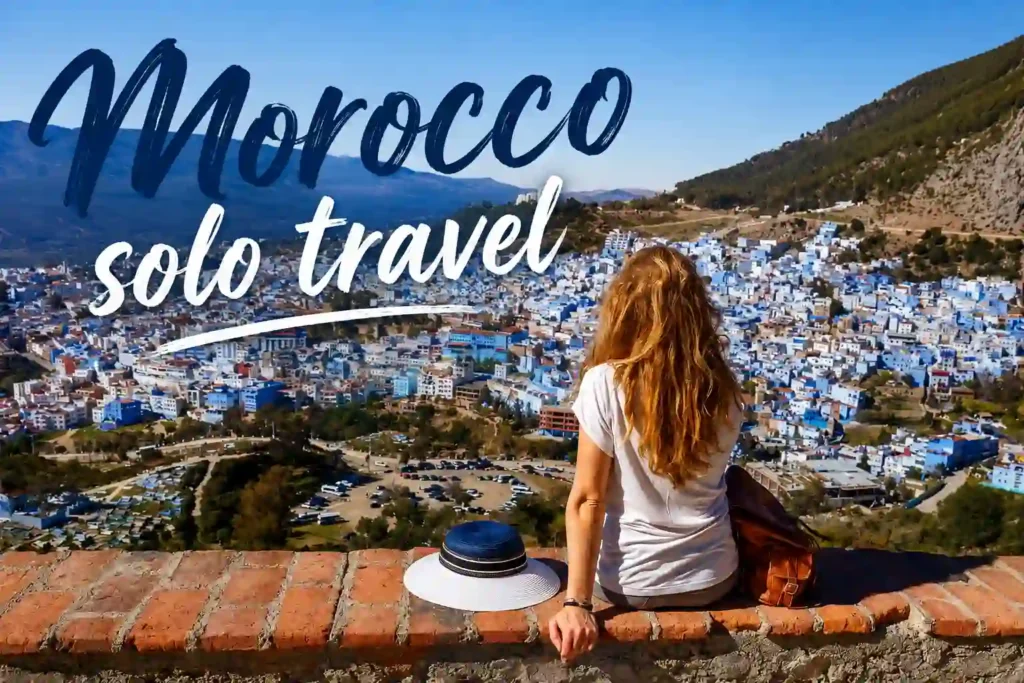
Chefchaouen, the famous blue city in the north, is small, walkable, and generally low-stress, making it a favorite stop for solo travelers looking for a slower, more photogenic few days.
Fes offers a deeper, more traditional medina experience than Marrakech, and while it can feel more maze-like at first, it’s equally manageable with a bit of orientation or a local guide on your first day.
Getting Around Morocco Solo
Morocco’s transport network is genuinely solid for independent travel. Trains connect the major cities comfortably and reliably, particularly the Casablanca-Rabat-Fes corridor, and are a relaxed, low-hassle way to move between destinations without needing to negotiate anything. CTM and Supratours buses fill in the gaps to smaller towns, and both are considered safe, reliable options for solo travelers.
Within cities, official petit taxis are the standard way to get around short distances, and agreeing on a price (or insisting on the meter) before you get in avoids the most common tourist friction point. For day trips outside the main cities, joining an organized excursion is often easier and cheaper than arranging private transport on your own, and it comes with the added benefit of a guide handling logistics for you.
Where Solo Travelers Often Struggle (and How to Handle It)
A few recurring friction points come up again and again in solo traveler experiences, and knowing about them in advance makes a real difference:
- Medina navigation. Old medinas in Fes and Marrakech are genuinely disorienting, even for experienced travelers. Downloading offline maps, asking shopkeepers for directions rather than strangers on the street, and accepting that getting a little lost is part of the experience all help.
- Touts and unsolicited “guides.” Politely declining and continuing to walk, rather than engaging, is the most effective response. If someone follows persistently, walking into a shop or café resets the interaction.
- Haggling in souks. This is expected and part of the culture, not a scam in itself. Agreeing on prices before accepting a service, whether it’s a taxi ride or a henna session, avoids most disputes.
- Feeling overwhelmed early on. Many solo travelers find their first 24 to 48 hours the most intense, before they find their rhythm. Booking a guided day trip or activity for your first full day, rather than diving straight into independent exploring, can ease that transition significantly.
Solo-Friendly Ways to Experience the Sahara
A Sahara excursion is, for a lot of solo travelers, the highlight of an entire Morocco trip, and it’s also one of the easiest parts of the country to do safely without a group of your own. Multi-day desert tours are specifically built for exactly this: solo travelers join a shared group, a professional guide handles the driving and logistics, and camel treks and desert camps are run by experienced local teams.
Options exist depending on where your trip starts and how much time you have:
- Marrakech desert tours: the most popular starting point, with routes of varying lengths heading into the Sahara.
- Fes desert tours: a good fit if your trip starts in the north.
- Fes to Marrakech desert tour: ideal if you want to see both cities and cross the desert in between rather than doubling back.
- 3 day tour from Marrakech to Merzouga: a solid option if you’re short on time but still want the full dune experience.
- Marrakech to Sahara desert tour, 5 days: a slower-paced option that adds in more stops along the way.
Joining a small-group tour also happens to be one of the best ways to meet other travelers on a solo trip, since evenings around a desert campfire have a way of turning strangers into friends fast.
Easy Day Trips for Solo Travelers
If you’re based in Marrakech or Fes for a stretch of your trip, day trips are a low-commitment way to see more of the country without the logistics of changing accommodation every night. A few solo-friendly options worth considering:
- Day trip to Ourika Valley: Atlas Mountains scenery and Berber villages, an easy half-day escape from Marrakech.
- Day trip to Imlil: the gateway to Toubkal National Park, good for a taste of mountain hiking.
- Agafay Desert day trip: a rocky desert landscape close enough to Marrakech for a quick escape.
- Ouzoud Waterfalls day trip: Morocco’s most impressive waterfalls, plus a good chance of spotting wild Barbary macaques.
- Ouarzazate and Ait Ben Haddou day trip: film studios and one of Morocco’s most iconic fortified villages.
- Chefchaouen day trip from Fes: the blue city, without needing to relocate your whole base.
- Meknes and Volubilis day trip: Roman ruins and an underrated imperial city, both manageable in a single day from Fes.
How Long Should a Solo Morocco Trip Be?
This depends entirely on how much you want to cover, but Morocco rewards both short and longer trips well. A 5-day itinerary is enough to cover Marrakech and a taste of the desert, while a 7-day itinerary or 10-day itinerary gives you room to properly explore two or three regions without feeling rushed between them.
If you have more time to work with, a 12-day or 14-day itinerary allows for a genuinely comprehensive loop covering the imperial cities, the Atlas Mountains, the Sahara, and the coast, which is a common route for solo travelers who’ve taken real time off to properly experience the country rather than rushing through it.
What to Pack for Solo Travel in Morocco
- Modest, breathable clothing that covers shoulders and knees, both for cultural comfort and practicality in the heat.
- A scarf or light shawl, useful for covering up at religious sites and doubling as sun or dust protection in the desert.
- Comfortable walking shoes built for uneven medina cobblestones, not just city sidewalks.
- A portable charger and offline maps downloaded in advance, since wifi in older medinas can be spotty.
- A small daypack that zips securely, useful for keeping valuables close in crowded souks.
- A basic first-aid kit and any regular medications, since pharmacies exist but aren’t always easy to locate quickly in unfamiliar towns.
Meeting Other Travelers on a Solo Trip
Morocco makes it easier than a lot of destinations to meet people even while traveling alone. Riads with shared breakfast areas or rooftop terraces are a natural meeting point, as are group activities like cooking classes, guided hikes, and hammam visits. Multi-day desert tours, in particular, tend to be one of the most reliable ways to end up with a small group of fellow travelers by the end of the trip, since a couple of days sharing a 4×4 and a desert camp has a way of building fast friendships.
How Much Does Solo Travel in Morocco Cost?
Morocco is genuinely one of the more affordable places to travel alone, and unlike some destinations, solo travelers don’t get hit as hard by the usual “single supplement” penalty, especially if group-based desert tours are part of the plan.
Budget travelers can comfortably get by on a modest daily amount covering a simple guesthouse room, street food and local restaurants, and public transport. Mid-range travelers who want a bit more comfort, a nicer riad, the occasional taxi, a few paid activities can expect daily costs to sit noticeably higher but still reasonable compared to Europe or North America. The biggest single expense for most solo trips ends up being the multi-day desert excursion, and even that stays affordable when booked as part of a shared group tour rather than a private one.
A few habits keep costs down without sacrificing much: eating where locals eat rather than tourist-facing restaurants near major squares, using trains and buses instead of private transfers between cities, and joining group tours for the desert portion of the trip rather than booking something fully private.
Eating Alone in Morocco
Dining solo in Morocco is easier and more comfortable than a lot of first-time visitors expect. Moroccan food culture leans communal, and it’s completely normal to see solo diners at small local restaurants, rooftop cafés, and street food stalls. Nobody bats an eye at a table for one.
Street food is a great solo option, since it’s quick, social by nature (you’re often eating shoulder-to-shoulder with locals at a stall), and gives you a low-pressure way to strike up conversation if you feel like it. Sit-down restaurants are equally fine solo, particularly at breakfast and lunch, when the atmosphere tends to be more relaxed than a busy dinner service. If you’d rather not eat completely alone every night, riad-hosted dinners are a good middle ground, since they often seat guests together at a shared table.
Staying Connected: SIM Cards and Wifi
Picking up a local SIM card is one of the more useful things a solo traveler can do on arrival, both for navigation and for peace of mind. Moroccan providers like Maroc Telecom, Orange, and Inwi all sell affordable prepaid SIM cards with data at the airport or in any city, and the process is quick as long as you bring your passport.
Wifi is generally reliable in riads, cafés, and hotels in the main cities, though it can be spotty in older parts of the medina or once you’re out in more rural areas, including much of the desert route. Downloading offline maps and saving key information (accommodation addresses, emergency numbers) before you lose signal is a simple habit that saves real stress later.
A Few Extra Safety Habits Worth Knowing
Beyond the general advice already covered, a handful of smaller habits make a noticeable difference for solo travelers specifically:
Share your itinerary with someone back home, even a rough outline of where you’ll be each day, especially before heading out on a multi-day desert tour. Keep a photo of your passport and important documents saved separately from the originals, either on your phone or emailed to yourself, in case anything gets lost. Trust your instincts in social situations. If an interaction feels off, whether it’s an overly insistent “guide” or someone pushing too hard to help, it’s fine to be blunt and walk away without worrying about being polite. Carry a physical copy of your accommodation’s address and phone number, written in both English and, if possible, Arabic or French, so a taxi driver can help even without a shared language. Keep small bills on hand separately from larger cash, so you’re not pulling out a full wallet for small purchases or tips.
Money, ATMs, and Payments
Morocco runs largely on cash, especially outside major hotels and larger restaurants, so it’s worth planning around that rather than assuming cards will cover everything. ATMs are widely available in cities and even smaller towns, and withdrawing Moroccan dirhams locally generally gets a better exchange rate than converting cash before you arrive. It’s worth notifying your bank before the trip so a foreign withdrawal doesn’t accidentally trigger a fraud block at the worst possible moment.
Carrying a mix of small and larger bills makes daily life easier, since small vendors, taxis, and souk purchases often can not break a large note. Credit cards work fine at hotels, larger restaurants, and bigger shops in cities, but they are far less reliable once you’re in smaller towns, rural guesthouses, or anywhere along the desert route, so it’s smart to keep enough cash on hand to cover a few days at a time, particularly heading into the Sahara.
Best Time of Year for Solo Travel in Morocco
Timing your trip well makes a real difference to how comfortable solo exploring actually feels. Spring (March to May) and autumn (September to November) are generally considered the best windows, with warm, pleasant days that make walking medinas and hiking in the Atlas Mountains genuinely enjoyable, plus comfortable evenings for a desert excursion.
Summer brings intense heat, especially inland and in the desert, where daytime temperatures can climb well past 40°C, which can make solo sightseeing during midday hours pretty draining. Winter is mild in most of the country but can turn surprisingly cold at night, particularly in the mountains and the Sahara, so packing warm layers matters even if the days themselves stay pleasant. None of this rules out a summer or winter trip entirely, it’s just worth planning your daily rhythm and packing list around whichever season you end up traveling in.
A Few Basic Language Tips
You genuinely don’t need to speak Arabic or French to travel Morocco solo, but picking up a handful of basic phrases goes a long way, both practically and as a small gesture of respect that locals tend to notice and appreciate. French is widely spoken in cities and tourist areas, and English is common enough in hotels, riads, and tour operations that communication is rarely a serious barrier.
A simple “salam” (hello), “shukran” (thank you), and “la, shukran” (no, thank you) cover a surprising number of everyday interactions, particularly the last one, which is genuinely useful for politely declining persistent offers in souks and near tourist sites. Translation apps with offline language packs downloaded in advance are a solid backup for anything more complicated, especially in smaller towns where English is less common.
Cultural Etiquette Worth Knowing
A little cultural awareness smooths out a lot of small interactions and tends to earn a noticeably warmer welcome from locals. Morocco is a Muslim country, and daily life is shaped by that in ways worth being mindful of as a visitor. If your trip overlaps with Ramadan, expect some restaurants to close during the day, and it’s respectful to avoid eating or drinking in public during fasting hours, even if you are not fasting yourself.
Asking before photographing people, particularly in smaller towns and rural areas, is generally appreciated rather than assumed. Removing shoes before entering someone’s home is customary, and accepting an offer of mint tea, a genuine cornerstone of Moroccan hospitality, is a good way to build rapport even with a language barrier in the way. None of this requires deep cultural study, mostly just the same basic courtesy and observation you’d bring to any country whose customs differ from your own.
Planning Help for Your Solo Trip
If you’re putting together a solo Morocco itinerary and want help figuring out the logistics, whether that’s a desert tour that fits your dates, a day trip to add into your route, or a full multi-day itinerary built around your interests, our team can help. You can browse full itinerary options like our 6-day, 8-day, or 9-day routes, or get in touch with our team directly and we will help build something that fits your travel style and timeline.
Frequently Asked Questions About Solo Travel in Morocco
Is Morocco safe for solo travelers?
Yes, generally. Morocco is considered one of the safer destinations in the region for tourism, and violent crime against travelers is rare. Most challenges solo travelers face are minor, like persistent touts, rather than serious safety threats.
Is Morocco safe for solo female travelers?
Yes, with reasonable preparation. Millions of women travel Morocco solo each year. The main friction points tend to be unwanted attention and persistent touts rather than genuine danger, and dressing modestly, staying in well-reviewed riads, and using licensed guides all help significantly.
What is the best city to start a solo Morocco trip?
Marrakech is the most common starting point thanks to its strong tourism infrastructure, but Essaouira and Chefchaouen are often recommended as especially relaxed, solo-friendly destinations.
Can I visit the Sahara Desert alone as a solo traveler?
Yes, and it’s actually one of the easier parts of a Morocco trip to do solo, since multi-day desert tours are specifically designed for travelers to join a shared group with a professional guide handling logistics.
How many days do I need for a solo trip to Morocco?
It depends on your interests, but 7 to 10 days is a common sweet spot for covering a couple of cities plus a desert excursion without feeling rushed, while trips of 12 to 14 days allow for a fuller loop around the country.
Is it easy to meet other travelers while traveling solo in Morocco?
Yes. Riads with shared common areas, group activities like cooking classes and hammams, and especially multi-day desert tours are all reliable ways solo travelers end up meeting people.
What should solo travelers know about getting around Morocco?
Trains and CTM or Supratours buses connect major cities safely and comfortably, while official petit taxis (with agreed prices or a working meter) handle shorter trips within cities.
Do I need to book guided tours as a solo traveler, or can I explore independently?
Both are possible. Many solo travelers mix independent exploring with a guided day or activity here and there, particularly for medina orientation on arrival and for excursions like the Sahara Desert, where a guide adds both safety and convenience.
Final Thoughts
Morocco has a way of turning first-time nerves into some of the most confident, rewarding travel memories people come home with. The medinas will feel disorienting for about a day, then suddenly make sense. The touts fade into background noise once you find your rhythm. And somewhere between a rooftop breakfast in Marrakech and a night under the stars in the Sahara, most solo travelers realize this is exactly the kind of trip that reminds you what you are capable of on your own.
If you are planning a solo trip to Morocco and want help building an itinerary, adding a desert tour, or figuring out logistics from the moment you land, reach out to us and we will help put together a route that fits your travel dates and comfort level.

I’m Lahcen Saadi from the Exploring Morocco Trips team. We are local guides dedicated to crafting authentic and exceptional Moroccan experiences.
Whether you are planning your first trip to Morocco and need expert advice, or you are a travel professional looking to collaborate on unique itineraries, we are ready to help.
- 2 Days Desert tours From Marrakech
- 3 Days Desert tour From Marrakech to Merzouga
- 3 Days Desert tour From Marrakech to Fes
- 4 Days Desert tour From Marrakech to Merzouga
- 4 Days Desert tour From Marrakech to Fes
- 5 Days Desert tour From Marrakech to Merzouga
- 5 Days Desert tour From Marrakech to Fes
- 6 Days Desert tour From Marrakech to Casablanca
- 7 Days Morocco tour from Marrakech
- 8 Days Morocco tour from Marrakech
- 8 Days Morocco tour from Marrakech with Imperial Cities
- 9 Days Morocco tour from Marrakech
- 10 Days Morocco tour from Marrakech
- 12 Days Morocco tour from Marrakech
- 14 Days Morocco tour from Marrakech
- 2 Days Desert tour From Fes to Merzouga
- 2 Days Desert tour From Fes to Marrakech
- 3 Days Desert tour From Fes to Merzouga
- 3 Days Desert tour From Fes to Marrakech
- 4 Days Desert tour From Fes to Marrakech
- 5 Days Desert tour From Fes to Marrakech
- 6 Days Desert tour From Fes to Marrakech
- 7 Days Morocco tour from Fes
- 4 Days Morocco tour from Casablanca
- 5 Days Morocco tour from Casablanca
- 6 Days Morocco tour from Casablanca
- 7 Days Morocco tour from Casablanca
- 8 Days Morocco tour from Casablanca
- 9 Days Morocco tour from Casablanca
- 10 Days Morocco tour from Casablanca
- 11 Days Morocco tour from Casablanca
- 12 Days Morocco tour from Casablanca
- 14 Days Morocco tour from Casablanca