
Moroccan Spice Blend: The Complete Guide to Ras el Hanout and Morocco's Essential Spice Mixes
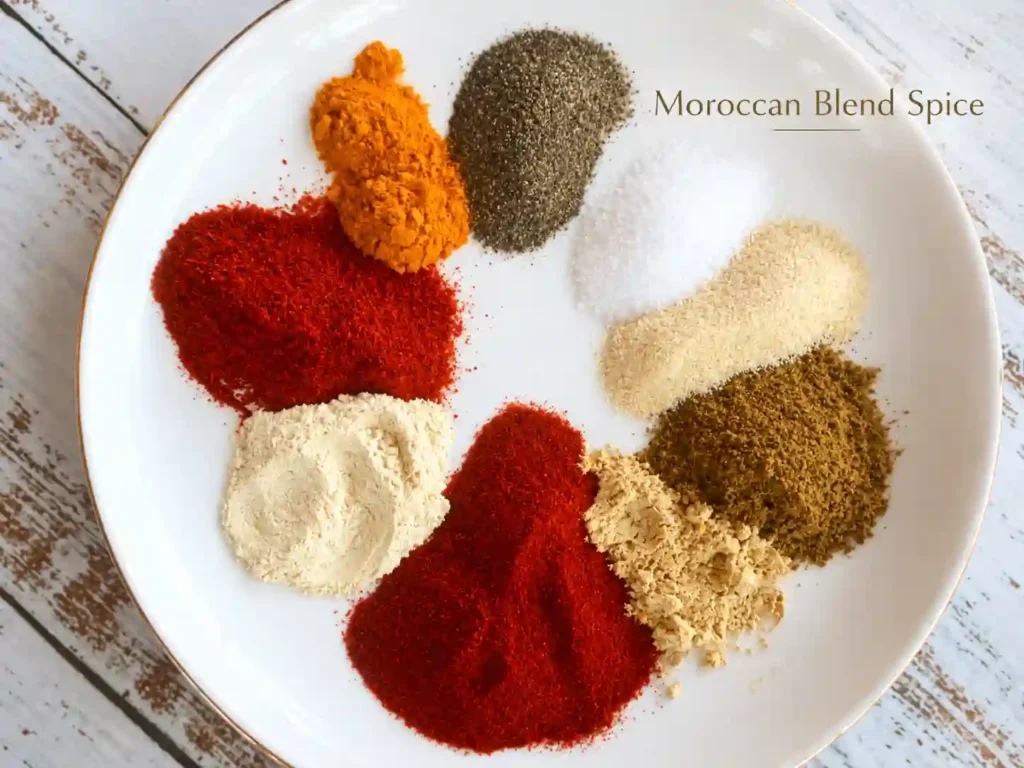
Walk into any spice souk in Marrakech or Fez and you’ll see it before you smell it, towering cone-shaped piles of orange, red, and golden powders stacked behind glass, each one a different blend built up over generations. Moroccan cooking doesn’t lean on a single dominant flavor the way some cuisines do; it layers dozens of spices together into blends so complex that a single jar can carry the flavor of an entire spice route through it.
This guide covers everything you need to know about Moroccan spice blends, starting with the most famous one, ras el hanout, then moving through the other essential mixes every Moroccan kitchen relies on, how to make your own version at home, and how to actually use them once you have them.
Table of Contents
What Is a Moroccan Spice Blend?
A Moroccan spice blend is a pre-mixed combination of dried spices, herbs, and sometimes flowers, designed to build layered, complex flavor into a dish with a single spoonful rather than measuring out ten separate jars every time you cook. Unlike a single spice like cumin or paprika, these blends are built to balance several flavor notes at once, warm, earthy, a little sweet, sometimes floral, and occasionally spicy-hot, all in the same mix.
What makes Moroccan blends distinct is the sheer range of ingredients pulled in from Morocco’s history as a crossroads of trade, spices native to India, the Middle East, and sub-Saharan Africa all show up in Moroccan blends, a direct result of centuries sitting along major spice trade routes.
Ras el Hanout: The King of Moroccan Spice Blends
If there’s one blend that represents Moroccan cooking more than any other, it’s ras el hanout. The name translates roughly to “head of the shop” or “top of the shop” in Arabic, and it refers to a spice merchant’s personal, best blend, traditionally made from the finest spices in their stock, not a fixed recipe passed down unchanged.
That’s the most important thing to understand about ras el hanout: there is no single official version. A simple blend from a home cook or a basic market stall might contain around 10 spices. A high-end version from a specialist merchant in Fez can include 40, 60, or reportedly even more, sometimes including unusual additions like dried rosebuds, orris root, or grains of paradise. Every spice merchant, and often every family, has their own version,l which is exactly why two jars labeled “ras el hanout” can taste noticeably different.
What's Actually in Ras el Hanout?
While recipes vary enormously, certain spices show up again and again across most traditional blends. Here’s a breakdown of the most common core ingredients, along with the rarer additions that show up in more elaborate versions.
| Category | Common Ingredients |
|---|---|
| Core warming spices | Cumin, coriander, cinnamon, cardamom, cloves, allspice |
| Earthy/savory notes | Turmeric, paprika, black pepper, ginger |
| Sweet/floral accents | Nutmeg, mace, dried rose petals, lavender |
| Heat | Dried chili or cayenne pepper (amount varies by blend) |
| Rare/luxury additions | Orris root, grains of paradise, galangal, saffron |
The result is a flavor that’s warm and earthy first, with a gentle sweetness and floral undertone running beneath it, and just enough pepper or chili to give it a subtle kick without turning it into a “hot” spice blend.
Other Essential Moroccan Spice Blends
Ras el hanout gets most of the attention, but it’s far from the only blend that matters in Moroccan cooking. A few others show up constantly in home kitchens and restaurants alike:
| Blend | What’s In It | Typically Used For |
|---|---|---|
| Ras el Hanout | Cumin, coriander, cinnamon, cardamom, cloves, and dozens of possible extras | Tagines, couscous, rice, roasted meats |
| Chermoula | Cilantro, parsley, garlic, cumin, paprika, lemon, olive oil | Marinating fish and seafood |
| Kefta Spice Mix | Cumin, paprika, coriander, cinnamon, black pepper, sometimes cayenne | Seasoning ground meat for kefta (Moroccan meatballs/kebabs) |
| Tagine Spice Blend | Ginger, turmeric, cumin, cinnamon, paprika | The base flavor for most classic tagine recipes |
| Harissa Spice Mix | Dried chili, caraway, coriander, garlic, cumin | Adding heat to stews, grilled meats, and sauces |
Together, these blends cover nearly everything in Moroccan home cooking, from the fiery kick of harissa to the citrusy brightness of chermoula, with ras el hanout sitting at the center as the most versatile of them all.
How to Make Your Own Ras el Hanout at Home
You don’t need 40 rare spices to make a genuinely good version at home. A simple, well-balanced base blend uses ingredients most people already have in their pantry or can find at any grocery store.
| Spice | Approximate Amount |
|---|---|
| Ground cumin | 1 tablespoon |
| Ground coriander | 1 tablespoon |
| Turmeric | 1 tablespoon |
| Paprika | 1 tablespoon |
| Ground cinnamon | 1 teaspoon |
| Ground cardamom | 1 teaspoon |
| Ground allspice | 1 teaspoon |
| Ground ginger | 1 teaspoon |
| Ground cloves | ½ teaspoon |
| Cayenne pepper (optional, for heat) | ½ teaspoon |
Simply combine everything in a bowl and whisk until evenly mixed, then store in an airtight jar. This base is intentionally flexible — feel free to add a pinch of nutmeg, mace, or a small amount of dried rose petals if you want to get closer to the more floral, high-end versions found in Moroccan spice markets.
How to Use Moroccan Spice Blends in Cooking
Once you have a jar of ras el hanout or another blend on hand, here’s where it fits into everyday cooking:
| Dish | How to Use the Spice Blend |
|---|---|
| Tagines | Bloom the spices in oil at the start of cooking, before adding meat and vegetables |
| Couscous | Stir into the couscous while it steams, or mix into the butter used to fluff it |
| Roasted vegetables | Toss vegetables in olive oil and a spoonful of the blend before roasting |
| Grilled or roasted meat | Rub directly onto lamb, chicken, or beef before cooking |
| Soups and stews | Add early in the cooking process so the flavors have time to develop |
| Rice pilafs | Bloom in butter or oil before adding rice, the same way you would with plain spices |
| Yogurt or dressings | Stir a small amount into plain yogurt with lemon juice for a quick sauce or dip |
A little goes a long way, start with a teaspoon or so per dish and adjust up as you get familiar with how strong your particular blend is.
Where to Buy Authentic Moroccan Spice Blends
If you’re in Morocco, the spice souks in Marrakech and Fez are the classic place to buy directly from merchants, many of whom blend their own ras el hanout on-site using recipes passed down through their families. A few tips for buying while you’re there:
- Ask to smell before you buy — a good spice merchant will happily let you smell (and sometimes taste) different blends so you can compare.
- Buy whole or freshly ground when possible — pre-ground spices lose potency faster, so freshly blended is always more flavorful.
- Don’t assume the most expensive jar is the best — price often reflects rare ingredients like saffron or orris root, but a simpler, well-balanced blend can still taste excellent.
- Buy smaller amounts more often — spice blends lose their punch over time, so it’s better to restock in smaller quantities than to buy a huge bag that sits for a year.
Outside Morocco, specialty spice shops, Middle Eastern or North African grocers, and online retailers carry pre-made ras el hanout, though the flavor and complexity can vary widely by brand.
How to Store Moroccan Spice Blends
Proper storage makes a real difference in how long a spice blend stays flavorful:
- Store in an airtight container, away from direct light and heat.
- Keep away from the stove or oven, where heat exposure speeds up flavor loss.
- Use within about a year for best flavor, spice blends don’t necessarily “go bad,” but they do fade and become less aromatic over time.
- If possible, buy or make smaller batches rather than one large one that will sit for months before you finish it.
Moroccan Spice Blend vs. Regular Seasoning: What's the Difference?
A common question from home cooks is how a Moroccan spice blend differs from a regular seasoning mix or a single spice like paprika or cumin. The short answer: a Moroccan spice blend is built for complexity, not just one flavor note. Where a regular seasoning might add saltiness or a single dominant taste, a true Moroccan blend layers multiple warm, sweet, earthy, and sometimes floral spices together, so a single spoonful does the work of five or six separate ingredients. This is also why Moroccan spice blends are often used in smaller amounts than you’d expect, the flavor is concentrated.
Best Moroccan Spice Blend for Chicken
Chicken is one of the most popular proteins to pair with Moroccan spices, since it takes on flavor easily without overpowering the blend. Ras el hanout works beautifully as a dry rub on chicken thighs or a whole roasted chicken, especially when mixed with a little olive oil and lemon juice before cooking. For grilled or skewered chicken, a kefta-style spice mix (cumin, paprika, coriander, and a touch of cinnamon) also works well, giving a slightly smokier, more savory result than the sweeter notes of ras el hanout.
Moroccan Spice Blend for Vegetarian and Vegan Cooking
Moroccan spice blends aren’t just for meat, they’re just as useful in vegetarian and vegan dishes. Ras el hanout pairs especially well with roasted root vegetables like carrots, sweet potatoes, and squash, and it also works well stirred into lentils, chickpeas, or a vegetable tagine. Because the blend itself contains no animal products, it’s naturally vegan-friendly, making it an easy way to add depth to plant-based meals without needing extra ingredients.
Is a Moroccan Spice Blend the Same as Moroccan Seasoning?
You’ll sometimes see products labeled “Moroccan seasoning” instead of “Moroccan spice blend” or “ras el hanout,” and in most cases, they’re referring to the same general idea, a pre-mixed combination of warm, aromatic spices used in Moroccan cooking. That said, “Moroccan seasoning” is sometimes used more loosely by spice companies to describe a simplified, milder version aimed at a wider audience, while a blend specifically labeled “ras el hanout” is more likely to follow the traditional, more complex recipe. If you want the most authentic flavor, look for the name “ras el hanout” specifically rather than a generic “Moroccan seasoning” label.
How to Choose the Best Moroccan Spice Blend to Buy
If you’re buying a pre-made blend instead of making your own, a few things separate a good one from a weak one:
| What to Check | Why It Matters |
|---|---|
| Ingredient list length | A short list (just 4–5 spices) is likely a simplified, less authentic version |
| Whole vs. pre-ground | Blends made from freshly ground spices have stronger, fresher flavor |
| No fillers or anti-caking agents | Pure spice blends without added starch or salt fillers taste more concentrated |
| Packaging date or “best by” date | Fresher blends have stronger aroma and flavor |
| Reviews mentioning aroma | A strong, noticeable smell when you open the jar is a good sign of quality |
Health Benefits of Moroccan Spice Blends
Beyond flavor, many of the spices commonly found in Moroccan blends carry real nutritional value. Turmeric and ginger are widely recognized for their anti-inflammatory properties, cinnamon has been studied for its role in supporting healthy blood sugar levels, and cumin and coriander both contain antioxidants. Because a spice blend combines many of these ingredients at once, a spoonful of ras el hanout brings a small amount of several beneficial compounds together, rather than relying on just one spice. That said, spice blends are a flavorful addition to a healthy diet, not a substitute for medical treatment or a balanced diet on their own.
Moroccan Spice Blend Recipe Variations by Region
Just as regional kaftan styles differ from city to city, Moroccan spice blends often carry a local signature depending on where they’re made:
| Region | Typical Style |
|---|---|
| Fez | Known for the most complex, high-end ras el hanout blends, sometimes with 40+ spices including rare additions like orris root |
| Marrakech | Market blends tend to be simpler and bolder, often with a stronger chili or paprika presence |
| Essaouira | Coastal influence shows up in spice blends leaning toward lighter, herb-forward mixes suited to fish and seafood |
| Rural/family blends | Often simpler, built from whatever spices a household has on hand, passed down with small personal tweaks over generations |
This is part of why asking a Moroccan spice merchant “which is the best ras el hanout” rarely gets a simple answer — regional pride runs deep, and most merchants will tell you their city’s style is the right one.
Moroccan Spice Blend for Soups and Stews
Moroccan spice blends shine especially well in slow-cooked soups and stews, where the spices have time to fully bloom and release their aroma. Harira, Morocco’s famous tomato-based soup, traditionally uses a mix of spices similar to a simplified ras el hanout, cumin, coriander, turmeric, and cinnamon are common. For heartier stews, adding the spice blend early, right after sautéing onions and garlic, gives the flavors the longest time to develop before the liquid and main ingredients go in.
Common Mistakes When Using Moroccan Spice Blends
- Adding the spice blend too late in cooking. Spices need time and heat to release their full aroma, stirring them in at the very end gives a weaker, less developed flavor.
- Using too much at once. Because Moroccan blends are concentrated, a little goes further than expected. Start with less than you think you need and adjust.
- Storing near heat or light. A blend kept next to the stove loses its potency much faster than one stored in a cool, dark cabinet.
- Assuming all jars labeled the same way taste identical. Since there’s no single official recipe, flavor and intensity can vary significantly between brands and blends.
- Skipping the “bloom” step. Briefly cooking the spice blend in oil or butter before adding other ingredients brings out significantly more flavor than adding it directly to a liquid-based dish.
Frequently Asked Questions About Moroccan Spice Blends
What does ras el hanout taste like?
It’s warm and earthy, with a gentle sweetness and floral undertone from spices like cinnamon, cardamom, and sometimes rose petals, balanced by a mild peppery or slightly spicy kick depending on the specific blend.
Is ras el hanout very spicy?
Not typically. Most versions are more about depth and warmth than heat, any chili or cayenne pepper included is usually there for a subtle kick, not to make the blend genuinely spicy-hot.
Can I substitute ras el hanout if I don't have it?
Yes, a simple substitute can be made by combining cumin, coriander, cinnamon, paprika, ginger, and a small amount of cardamom or allspice, it won’t be identical to a traditional blend, but it captures the same general warm, earthy character.
What's the difference between ras el hanout and curry powder?
While both are complex spice blends, ras el hanout leans more toward warm, sweet, and floral notes, while curry powder typically has a stronger turmeric base and more pronounced heat. They’re not interchangeable, though both work well in slow-cooked dishes.
How long does homemade ras el hanout last?
Stored in an airtight container away from heat and light, a homemade blend typically stays flavorful for around 6 months to a year, though it’s best used within the first few months for maximum aroma.
What dishes is ras el hanout best used in?
It’s most associated with tagines and couscous, but it also works well rubbed onto roasted meats, stirred into rice, tossed with roasted vegetables, or mixed into yogurt-based sauces.
Final Thoughts
Moroccan spice blends, and ras el hanout in particular, capture something that’s hard to put into words until you’ve smelled a fresh batch for yourself, centuries of trade, trial, and family tradition, distilled into a single jar. Whether you buy a blend from a merchant in a Marrakech souk or mix your own version at home, the goal is the same one Moroccan cooks have followed for generations: build layers of flavor, balance warmth with a touch of sweetness, and let the spice do the work a long list of separate ingredients never could.

I’m Lahcen Saadi from the Exploring Morocco Trips team. We are local guides dedicated to crafting authentic and exceptional Moroccan experiences.
Whether you are planning your first trip to Morocco and need expert advice, or you are a travel professional looking to collaborate on unique itineraries, we are ready to help.
- 2 Days Desert tours From Marrakech
- 3 Days Desert tour From Marrakech to Merzouga
- 3 Days Desert tour From Marrakech to Fes
- 4 Days Desert tour From Marrakech to Merzouga
- 4 Days Desert tour From Marrakech to Fes
- 5 Days Desert tour From Marrakech to Merzouga
- 5 Days Desert tour From Marrakech to Fes
- 6 Days Desert tour From Marrakech to Casablanca
- 7 Days Morocco tour from Marrakech
- 8 Days Morocco tour from Marrakech
- 8 Days Morocco tour from Marrakech with Imperial Cities
- 9 Days Morocco tour from Marrakech
- 10 Days Morocco tour from Marrakech
- 12 Days Morocco tour from Marrakech
- 14 Days Morocco tour from Marrakech
- 2 Days Desert tour From Fes to Merzouga
- 2 Days Desert tour From Fes to Marrakech
- 3 Days Desert tour From Fes to Merzouga
- 3 Days Desert tour From Fes to Marrakech
- 4 Days Desert tour From Fes to Marrakech
- 5 Days Desert tour From Fes to Marrakech
- 6 Days Desert tour From Fes to Marrakech
- 7 Days Morocco tour from Fes
- 4 Days Morocco tour from Casablanca
- 5 Days Morocco tour from Casablanca
- 6 Days Morocco tour from Casablanca
- 7 Days Morocco tour from Casablanca
- 8 Days Morocco tour from Casablanca
- 9 Days Morocco tour from Casablanca
- 10 Days Morocco tour from Casablanca
- 11 Days Morocco tour from Casablanca
- 12 Days Morocco tour from Casablanca
- 14 Days Morocco tour from Casablanca