
When is the Best Time to Visit Merzouga? A Guide to Sahara Magic
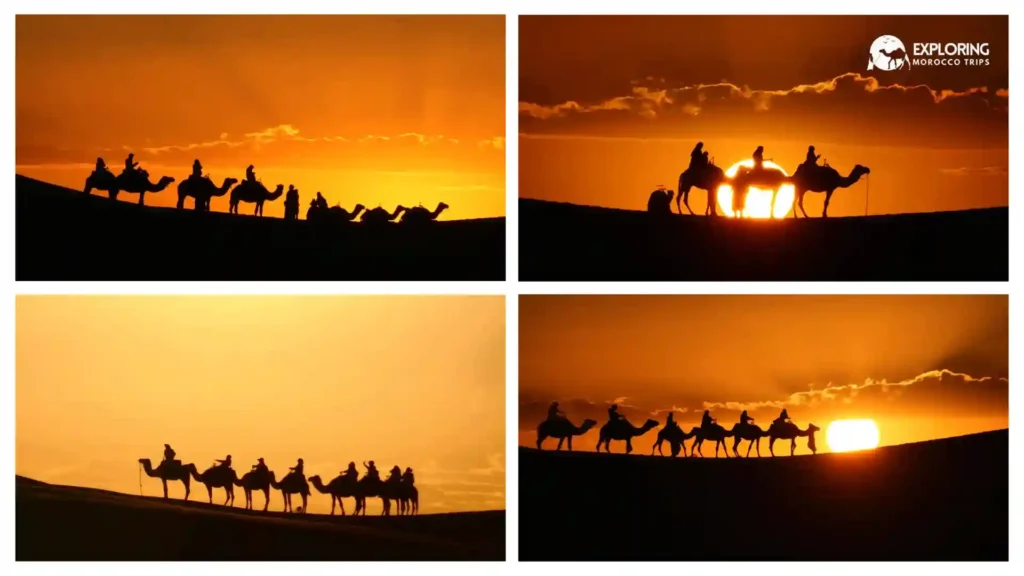
Merzouga serves as the primary gateway to the Erg Chebbi dunes, a vast expanse of Saharan sand located in southeastern Morocco near the Algerian border. Unlike the rocky plateaus found elsewhere, this region is characterized by towering, wind-sculpted golden dunes that rise hundreds of meters above the desert floor.
The village acts as a strategic base for travelers aiming to reach the heart of the Sahara. Because of the extreme shifts in temperature and environmental conditions inherent to this desert ecosystem, the timing of a visit fundamentally changes the nature of the experience. Understanding the climatic patterns and seasonal fluctuations is essential for planning activities, travel logistics, and ensuring the appropriate preparation for the desert climate. This guide details the specific seasonal variations to assist in determining the optimal time for a journey to this region.
Table of Contents: Best Time to visit Merzouga Morocco?
Understanding Seasonal Climatic Shifts
The climate in Merzouga is defined by its arid desert environment, which experiences extreme daily and seasonal fluctuations. These shifts are dictated by the lack of humidity and the physical properties of sand, which absorbs heat during the day and releases it rapidly once the sun sets, creating a massive temperature swing within a single 24-hour cycle.
Spring: The Transitional Winds (March to May)
Spring serves as the shift from the cooler winter months to the intense heat of summer. During this period, daytime temperatures typically climb from 20°C to 30°C. While these temperatures are generally comfortable for travel, spring is technically the most volatile season in terms of weather patterns. It is during these months that the desert is most susceptible to the Chergui, the dry, hot winds blowing from the Sahara. These winds can trigger sudden, intense sandstorms that reduce visibility to near zero and make outdoor travel on quad bikes or camels difficult. Travelers during this time should be prepared for rapid changes in air quality and wind speed.
Autumn: The Season of Stability (September to November)
Autumn is widely recognized as the most predictable season for desert exploration. Following the peak thermal intensity of the summer, the ground cools to a stable, moderate range. Daytime highs usually settle between 22°C and 28°C, providing a reliable window for long-duration outdoor activities. Unlike the spring, the wind patterns in autumn are typically calmer, reducing the likelihood of major sandstorms. The skies during this period are exceptionally clear, offering excellent visibility for photography and landscape observation. This makes autumn a consistent, low-risk season for scheduling complex itineraries.
Summer: Thermal Extremes (June to August)
Summer represents the period of highest thermal radiation in the Sahara. Daytime temperatures frequently exceed 40°C, and in peak heatwaves, can reach 45°C or higher. The solar intensity is direct and harsh, and the surface temperature of the sand can be significantly higher than the ambient air temperature, making prolonged foot traffic dangerous without specialized footwear. Because of these conditions, the daily rhythm of the desert shifts entirely: activities must be strictly confined to the pre-dawn hours (5:00 AM to 8:00 AM) or the late evening (after 6:00 PM). The period between 12:00 PM and 4:00 PM is effectively non-functional for outdoor tourism, requiring indoor accommodation or specialized climate-controlled environments.
Winter: Nighttime Cooling (December to February)
Winter in Merzouga is characterized by a stark contrast between day and night. During the day, the weather is frequently sunny and dry, with temperatures ranging from 15°C to 20°C, conditions that are ideal for physical activities like hiking the dunes or long-distance camel treks. However, the lack of cloud cover and atmospheric humidity allows for rapid radiative cooling after sunset. Once the sun drops below the horizon, temperatures plummet, often reaching near-freezing levels (0°C to 5°C). This cycle necessitates specific logistical planning: while daytime attire should be light and breathable, professional-grade thermal gear is required for all overnight stays in desert camps, as the ambient heat retained by the sand is quickly dissipated into the night air.
Activity Planning Based on Thermal Windows
The feasibility of specific activities in Merzouga is directly dictated by the prevailing thermal and wind conditions of the season. To ensure a productive and safe itinerary, activities must be aligned with the desert’s daily and seasonal cycles.
Camel Trekking and Erg Chebbi Exploration
Camel trekking is the most common method of navigating the dunes, but its success depends on the intensity of the solar radiation.
Optimal Windows: The period from September to November and March to May offers the best balance. During these months, the surface temperature of the sand is manageable, allowing for longer mid-day excursions without the risk of heat exhaustion for both the riders and the animals.
Winter Strategy: During December and February, camel treks are best scheduled for midday when the sun is at its peak. This maximizes comfort, as the ambient air is cool but the solar intensity keeps the saddle area warm.
Summer Limitation: In the summer months, camel trekking is restricted to sunrise and sunset. Moving animals during peak heat (12:00 PM to 4:00 PM) is avoided by professional guides to ensure animal welfare and guest safety.
Off-Road and Motorized Expeditions
Quad biking and 4×4 dune bashing rely on the structural stability of the sand.
Wind Considerations: Spring is challenging for motorized tours because the Chergui winds can shift the surface layers of the sand unexpectedly. This creates “soft” pockets that can complicate vehicle navigation. If you choose to visit during spring, verify that your operator uses high-clearance 4x4s with professional-grade tires, as these are necessary to navigate changing dune profiles.
Mid-Day Efficiency: Unlike trekking, motorized tours can cover significant distances in shorter timeframes. This makes them the most efficient way to see remote parts of the Erg Chebbi during the shoulder seasons (Autumn and Spring) when the weather is clear and the ground is firm.
Stargazing and Night-Time Logistics
The Sahara is globally recognized for low light pollution, making it a primary destination for observational astronomy.
Winter Superiority: While summer nights are warm, the atmosphere often holds more humidity and haze. Winter (December–February) provides the crispest, driest air of the year. This lack of atmospheric moisture results in superior transparency, allowing for higher-resolution visibility of celestial bodies.
The Logistical Requirement: Regardless of the time of year, stargazing requires a stationary position away from the main camp lighting. Travelers should note that winter stargazing requires significant thermal insulation, as the lack of cloud cover, which is great for seeing stars, also accelerates the rate at which heat escapes the desert floor after sunset.
Photography and Landscape Observation
Light Quality: Professional photography in Merzouga relies on the “Golden Hour.” In the summer, this window is extremely brief during the early morning and late evening. In the winter and autumn, the sun’s angle remains lower for longer, extending the window of soft, diffused light that prevents harsh shadows on the dunes.
Stability: If your primary objective is architectural or landscape photography, Autumn (September–November) is the most reliable time to visit. The lower wind speeds minimize the presence of suspended dust particles in the air, resulting in higher contrast and better image clarity across long distances.

Logistical Planning and Essential Preparations
Successful travel to Merzouga requires more than just picking a date; it requires logistical preparation that accounts for the specific demands of a remote desert environment. Regardless of when you choose to visit, the following factors are critical for a seamless experience.
Transportation and Accessibility
Route Reliability: Access to the Erg Chebbi region involves traveling across the High Atlas Mountains. Regardless of the season, these routes can be subject to localized weather events. During the winter, mountain passes can occasionally experience snow or dense fog, which may cause minor delays. Always factor in extra transit time and prioritize reliable, well-maintained vehicles over budget rental options.
The “Last Mile”: Once you arrive in Merzouga, the transition from the village to a desert camp requires specialized transport (4×4 or camels). Ensure your transport arrangements are confirmed with your accommodation in advance, as navigating the dunes independently is not recommended due to the risk of vehicle entrapment and the absence of marked trails.
Thermal Regulation and Clothing
Layering Methodology: The most effective strategy for desert clothing is layering. Even in summer, protect yourself from direct solar radiation with long-sleeved, lightweight linen or cotton garments. In the cooler months (autumn and winter), your outer layers must be wind-resistant.
Thermal Gear: Never underestimate the necessity of a heavy jacket, a warm hat, and gloves during the winter months. Because there is no ambient heat source once the sun goes down, you must rely entirely on your own gear to maintain body temperature during the night.
Health and Environmental Safety
Hydration Dynamics: The desert climate is extremely dry, which can lead to rapid dehydration even if you do not feel thirsty. Establish a mandatory intake schedule. Do not rely solely on feeling thirsty, as this is often a delayed indicator of fluid loss.
The “Cheche” (Desert Turban): This is not merely a cultural accessory; it is a vital piece of survival equipment. A well-wrapped headscarf serves three functions: it protects the scalp from direct UV radiation, provides a filter against fine sand particles during wind gusts, and can be used to mitigate dehydration by covering the mouth and nose to preserve moisture.
Footwear Hygiene: Because sand is abrasive and can reach very high temperatures, open-toed footwear is rarely appropriate for outdoor activities in the dunes. High-quality, closed-toe walking boots or athletic shoes that are well-sealed are necessary to prevent sand ingress and protect feet from the heat of the dune surface.
Communication and Navigation
Network Coverage: While cellular reception is generally available in the village of Merzouga, coverage becomes intermittent or non-existent once you enter the deep dune field. If you are traveling independently, ensure you have offline maps downloaded. However, it is strongly advised to operate within the infrastructure of a known tour provider who utilizes satellite communication or reliable radio systems.
Schedule Integrity: Desert logistics operate on a solar-dependent clock. Activities are scheduled to avoid thermal peaks, and deviations from these schedules can jeopardize safety. Adhering to the timelines provided by your guides is essential, particularly regarding departure times for sunrise or sunset excursions.

Conclusion – Mastering Your Sahara trip
The Erg Chebbi dunes represent a sophisticated natural environment that rewards those who approach it with preparation and respect. Whether you choose the stable clarity of autumn, the stargazing potential of winter, or the high-intensity experience of the summer months, your time in Merzouga is defined by how well you align your itinerary with the desert’s inherent cycles.
A successful desert expedition is not merely about reaching a destination; it is about managing the variables of heat, wind, and terrain to ensure your focus remains on the landscape itself. By understanding the mechanical reality of the Sahara, you transform a potentially challenging trip into a controlled and deeply rewarding encounter with one of the world’s most unique environments.
If you want to know the best things to do in Merzouga Desert, [click here].
Why Choose Exploring Morocco Trips
Navigating the logistics of a desert expedition requires localized knowledge that cannot be replicated by generic travel planning. When you choose to book your adventure with Exploring Morocco Trips, you are engaging a team that understands the specific micro-climates and terrain of the Merzouga region.
Partnering with Exploring Morocco Trips offers distinct advantages for your Saharan trip:
Technical Expertise: We manage the scheduling of your excursions to ensure you are active during the optimal thermal windows, protecting you from extreme heat and unpredictable wind conditions.
Safety and Reliability: From our choice of high-clearance, well-maintained vehicles to our established protocols for camp logistics, we prioritize structural safety in an environment where independent navigation carries significant risk.
Authentic Local Insight: We utilize our deep-rooted knowledge of the Erg Chebbi region to access areas and experiences that remain outside the scope of standardized tours. Our goal is to provide a grounded, professional experience that allows you to engage with the desert environment with total confidence.
The dunes are a constant, unchanging force, but the way you experience them is a choice. Prepare correctly, respect the climatic boundaries, and entrust your itinerary to the professionals who know the Sahara as their own home. Secure your journey with Exploring Morocco Trips today, and experience the depth of the desert with the precision and expertise it demands.

I’m Lahcen Saadi from the Exploring Morocco Trips team. We are local guides dedicated to crafting authentic and exceptional Moroccan experiences.
Whether you are planning your first trip to Morocco and need expert advice, or you are a travel professional looking to collaborate on unique itineraries, we are ready to help.
- 3 Days Desert tour From Marrakech to Merzouga
- 3 Days Desert tour From Marrakech to Fes
- 3 Days Desert tour From Fes to Marrakech
- 4 Days Desert tour From Marrakech to Merzouga
- 4 Days Desert tour From Marrakech to Fes
- 4 Days Desert tour From Fes to Marrakech
- 5 Days Desert tour From Marrakech to Merzouga
- 5 Days Desert tour From Fes to Marrakech
- 7 Days Morocco tour from Marrakech
- 7 Days Morocco tour from Fes
- 7 Days Morocco tour from Casablanca
- 8 Days Morocco tour from Marrakech
- 8 Days Morocco tour from Casablanca
- 9 Days Morocco tour from Marrakech
- 9 Days Morocco tour from Casablanca
- 10 Days Morocco tour from Casablanca
- 12 Days Morocco tour from Casablanca
- 14 Days Morocco tour from Casablanca