
Dades Valley, Morocco: A Traveler's Guide to the Valley of Roses and Its Dramatic Gorges
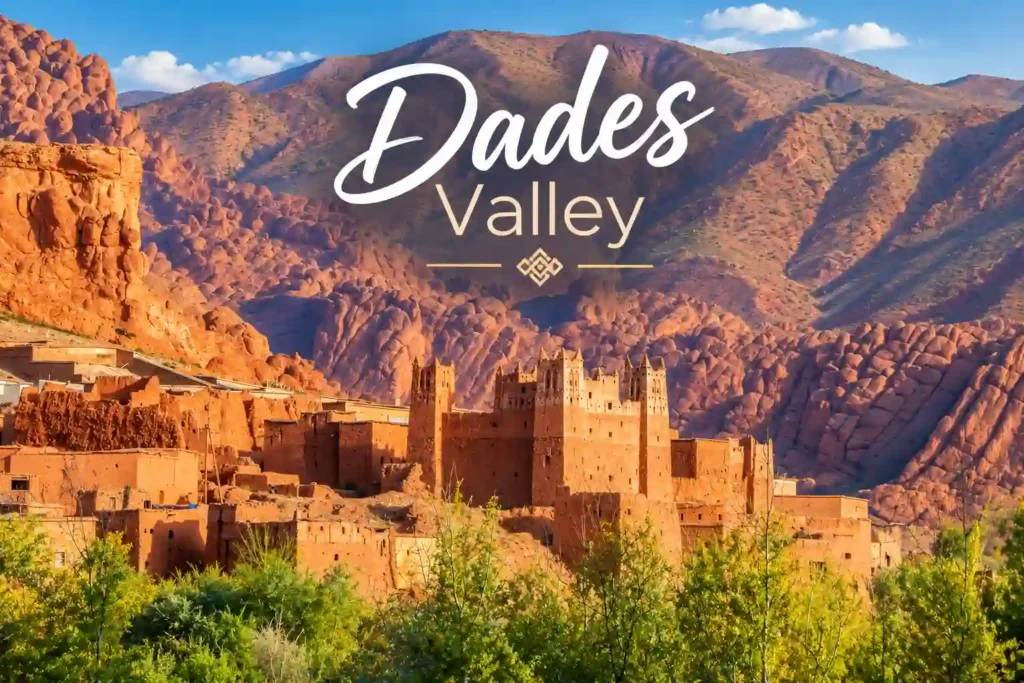
There’s a stretch of road in southern Morocco that locals simply call “the route of a thousand kasbahs,” and if you drive it slowly enough, you’ll understand why almost immediately. Somewhere past Ouarzazate, the landscape starts folding into deep red canyons, almond orchards appear out of nowhere along a riverbed, and the road itself begins to twist through switchbacks so sharp they’ve become famous in their own right. This is the Dades Valley and while most travelers only see it through a car window on the way to somewhere else, it deserves a lot more of your time than that.
This guide covers what actually makes the Dades Valley worth stopping for: the gorges, the rose harvest the region is named after, the villages tucked between orchards, and the practical details you’ll want before you go how to get there, what to pack, and when to time your visit for the best light and the best weather.
Table of Contents
What Is the Dades Valley, Exactly?
The Dades Valley follows the Dades River as it flows down from the High Atlas Mountains, cutting through layers of red rock before opening into a wide, fertile plain dotted with kasbahs and palm groves. The town of Boumalne Dades marks the entrance to the valley proper, and from there, a narrow road climbs alongside the river deep into the gorges, eventually reaching the small Berber village of M’Semrir.
What sets Dades apart from other valleys in the region is the sheer variety packed into a relatively short drive. You’ll pass fields of roses, groves of almond and walnut trees, crumbling kasbah ruins, and rock formations so strange-looking that locals gave them their own nickname. It’s a valley that rewards curiosity the kind of place where every bend in the road reveals something you weren’t expecting.
The Dades Gorges: Where the Valley Gets Dramatic
The real highlight of any Dades Valley trip is the gorge itself, and the drive through it is genuinely one of the more memorable in Morocco. Roughly nine kilometers past Boumalne, near a spot called Tamlalt, the cliffs start closing in and you’ll notice unusual rounded rock formations bulging out of the canyon walls these are known locally as the “monkey fingers,” and they look exactly as strange as the name suggests, especially with the late afternoon sun hitting them.
A little further on, across the river, sit the ruins of an old kasbah, half-swallowed by the landscape around it. From here, the road narrows further and the switchbacks begin in earnest the section most people picture when they think of “that crazy zigzag road in Morocco.” If you’re driving yourself, take it slow. The views are worth pulling over for, and the drop-offs aren’t the place to rush.
Past the switchbacks, the road eventually reaches the village of Aït Oudinar, and continues on to a narrower canyon section locals call the Imdiazen gorge a good spot to stop, stretch your legs by the water, and just take in how tight the walls have become. If you keep going, the road eventually opens back up near M’Semrir, a quiet Berber village that also serves as a jumping-off point for trips into the Todra Valley or deeper into the Atlas Mountains.
The Valley of Roses
The Dades Valley isn’t only known for its rock formations it’s also called the “Valley of Roses,” thanks to the thousands of Damask rose bushes grown here, mostly around the town of Kelaat M’Gouna, on the western edge of the valley. Families here have cultivated roses for generations, using them to produce rosewater, oils, and cosmetics that are sold across Morocco and exported abroad.
If your timing works out, visiting during the rose harvest in May is something special. The hillsides turn pink and fragrant, local women head out early in the morning to pick the flowers by hand before the heat sets in, and the town holds an annual Rose Festival with music, parades, and a rose queen crowning that draws visitors from well beyond the region. Even outside harvest season, it’s worth stopping at one of the local cooperatives to see how rosewater is distilled and pick up a bottle that’s hard to find anywhere else.
Things to Do in the Dades Valley
Hike into the gorge. You don’t need to be an experienced trekker to enjoy a walk along parts of the Dades gorge shorter routes near Boumalne are manageable for most fitness levels, while longer treks toward M’Semrir are better suited to strong walkers and typically take several hours with a local guide.
Explore the kasbahs. Dozens of old kasbahs line the valley, many crumbling and abandoned, others still lived in. A short detour off the main road to walk through one of these mudbrick fortresses gives you a much closer look at traditional Berber architecture than you’ll get from the car.
Go rock climbing. Like its neighbor Todra Gorge, Dades has its own smaller but growing climbing scene, with routes on the limestone walls near the narrowest sections of the canyon. It’s quieter and less developed than Todra, which some climbers actually prefer.
Try rafting or canyoning. In spring, when snowmelt raises the water level, a handful of local operators run rafting and canyoning trips through parts of the gorge a different, more adrenaline-heavy way to experience the same landscape.
Visit a rose cooperative. Especially around Kelaat M’Gouna, small women-run cooperatives welcome visitors to see the distillation process up close and buy rosewater and rose oil directly from the source.
Best Time to Visit the Dades Valley
Spring, from March through May, is widely considered the best season to visit. The almond and rose blossoms are out, the river is flowing at its fullest after the winter snowmelt, and temperatures sit in a comfortable range for hiking and driving the gorge road. If you can time your trip for early-to-mid May, you might catch the Rose Festival in Kelaat M’Gouna.
Autumn (September to November) is a close second, with cooler, clearer days and a valley that’s noticeably quieter than in peak spring. Summer gets hot in the lower valley, though the higher sections near M’Semrir stay more bearable. Winter brings cold nights and occasional snow on the surrounding peaks, so if you’re visiting then, pack accordingly and check road conditions before heading deep into the gorge.
Getting to the Dades Valley
Most travelers reach the Dades Valley from Ouarzazate, about 110 kilometers away along the N10 highway, passing through El Kelaa M’Gouna on the way, a drive of roughly two hours. Coming from Marrakech, expect a longer day, usually 5–6 hours, crossing the Tizi n’Tichka pass before continuing east. The valley also connects naturally with Todra Gorge, about an hour further east, making the two an easy pair to combine on a single southern Morocco route.
Public buses and shared taxis run to Boumalne Dades from the main cities, but once you’re there, getting deep into the gorge, especially past the switchback section, is far easier with a rental car, private driver, or 4×4. The road narrows considerably beyond the bridge near Aït Oudinar, and after heavy rain it can get rough, so a vehicle with decent clearance is worth having if you plan to go all the way to M’Semrir.
How Much Does It Cost to Visit the Dades Valley?
The Dades Valley is an easy place to visit on a modest budget. Here’s roughly what to expect:
- Entrance to the gorge: Free, there’s no ticket, you simply drive or walk in.
- Local hiking guide: Around 200–300 MAD (€20–30) for a half day.
- Rafting or canyoning session (spring only): Roughly 300–600 MAD (€30–60) depending on the operator and length.
- Meals: 30–70 MAD (€3–7) at local cafés and guesthouses.
- Accommodation: From about 150 MAD (€15) a night for a simple room up to 400+ MAD (€40+) for a guesthouse with gorge views and meals included.
- Private taxi from Ouarzazate: Roughly 400–600 MAD (€40–60) one way, often negotiable, and worth splitting between a group.
Even with a guide and a night inside the gorge, most travelers spend less here per day than in Marrakech or Fes.
Sample One-Day Itinerary in the Dades Valley
If you only have a single day, here’s a route that hits the highlights without feeling rushed:
- 8:00 AM – Leave Boumalne Dades early and drive toward the gorge while the light is still soft.
- 9:00 AM – Stop at Tamlalt to see the “monkey finger” rock formations and the kasbah ruins across the river.
- 10:00 AM – Continue through the switchback road, pulling over at viewpoints along the way.
- 11:30 AM – Reach Aït Oudinar and take a short walk along the riverbed, or push on to the narrower Imdiazen gorge if you have more time.
- 1:00 PM – Lunch at a small auberge overlooking the canyon.
- 2:30 PM – If it’s rose season, detour to Kelaat M’Gouna to visit a rose cooperative before heading back.
- 4:30 PM – Return toward Boumalne or continue on toward Todra Gorge if that’s your next stop.
Spending a night at an auberge inside the gorge instead of rushing back the same day turns this into a much richer experience, especially if you catch sunset and sunrise light on the cliffs.
Local Food to Try in the Dades Valley
Food here follows the same rhythm as the rest of rural southern Morocco, but a few things are worth seeking out specifically. Tagines cooked slowly over charcoal are the standard, often made with whatever vegetables and lamb or chicken are on hand that day. Fresh bread, baked in communal ovens, shows up at every meal. If you’re visiting in rose season, keep an eye out for dishes and desserts flavored with rosewater a subtle touch that shows up in everything from pastries to tea. Almonds and walnuts, grown right in the valley, also turn up in local sweets and are sold by the roadside in small bags, a good souvenir that actually comes from where you’re standing.
Nearby Attractions Worth Combining With Your Visit
The Dades Valley sits on one of the most scenic stretches of road in Morocco, which makes it easy to pair with other stops:
- Todra Gorge: About an hour east, offering a narrower, more dramatic canyon walk and a serious rock climbing scene.
- Ouarzazate: Roughly two hours west, known for its kasbahs and film studios, a natural overnight stop before or after the valley.
- Skoura Oasis: A palm grove dotted with historic kasbahs, sitting between Ouarzazate and the Dades Valley.
- Ait Benhaddou: The famous UNESCO-listed fortified village, commonly visited on the same route between Marrakech and the desert.
Building two or three of these into your route turns a quick drive-through into a proper multi-day loop through the High Atlas.
Safety Tips for Visiting the Dades Valley
- Take the switchback section slowly, especially if you’re not used to mountain driving, the road is narrow in places with real drop-offs.
- Check the weather before heading deep into the gorge, since heavy rain can make the road toward M’Semrir difficult or temporarily impassable.
- Carry more water than you think you’ll need, services thin out quickly past Boumalne.
- If you’re hiking or driving toward M’Semrir, let someone know your plan, since phone signal is unreliable in parts of the canyon.
- Respect local communities, ask before photographing people, and be mindful when passing through small villages.
Where to Stay in the Dades Valley
Boumalne Dades itself has a handful of simple hotels and guesthouses, useful if you are just passing through. But the more memorable option, and the one most travelers end up recommending, is staying inside the gorge itself, where a scattering of small auberges cling to the cliffside with rooms overlooking the canyon. Waking up to that view, with the morning light hitting the rock walls, is reason enough to base yourself there for a night rather than rushing through in an afternoon.
Options range from basic rooms with shared bathrooms to slightly more comfortable guesthouses with home-cooked meals included. Booking ahead is a good idea in peak spring and autumn months, since some of the best-positioned auberges are small and fill up quickly.
What to Pack for the Dades Valley
- Comfortable walking shoes for uneven, rocky terrain
- A warm layer, even in spring, nights in the gorge get cold fast once the sun drops behind the cliffs
- Water and snacks, since options thin out the deeper you go into the valley
- Cash, as cards are rarely accepted outside the larger towns
- A camera with a wide lens, if you can manage it, the switchback road and rock formations are hard to capture on a phone alone
Dades Valley vs. Todra Gorge
Travelers often ask whether it’s worth visiting both, and the honest answer is yes, if your schedule allows, they are different enough to justify the extra hour of driving between them. Dades is about the drive itself: the winding road, the monkey-finger rock formations, the kasbah ruins, and a broader, greener valley floor. Todra is more about the walk: a narrow, walkable canyon floor squeezed between much taller cliffs, plus a serious rock climbing scene. Most southern Morocco itineraries pair the two back to back, usually with Dades in the late afternoon and Todra the following morning, which also happens to line up nicely with the best light at each.
Visit the Dades Valley on a Tour with Exploring Morocco Trips
If you’d rather not deal with the switchbacks yourself, or you just want the logistics handled so you can focus on enjoying the drive, Exploring Morocco Trips runs desert tours that pass right through the Dades Valley, no matter which city you’re starting from.
- Marrakech desert tours:the most popular starting point, with the Dades Valley and Todra Gorge included as classic stops on the way to Merzouga.
- Fes desert tours: ideal if you’re doing a northern loop, crossing the Middle Atlas before reaching Dades and continuing south to the dunes.
- Ouarzazate desert tours: the shortest route into the valley, perfect if you’re already on the edge of the desert and want to add the gorges without a long drive.
- Tangier desert tours: a good fit if your trip starts in the north and you want the Dades Valley worked into a longer itinerary heading south.
If you’re still mapping out your route, our Morocco itineraries page breaks down multi-day trips of different lengths, all built around stops like the Dades Valley, Todra Gorge, and the Sahara dunes, so you don’t have to piece the logistics together on your own.
Frequently Asked Questions About the Dades Valley
Why is it called the Valley of Roses?
The nickname comes from the Damask roses grown throughout the valley, especially around Kelaat M’Gouna, where they’ve been cultivated for generations and turned into rosewater, oils, and cosmetics sold across Morocco.
How long does it take to drive through the Dades Gorges?
A straightforward drive from Boumalne Dades to M’Semrir and back takes around 3–4 hours, but most visitors spend closer to half a day once you factor in stops at viewpoints, the kasbah ruins, and the monkey finger rock formations.
Is the Dades Valley worth visiting if I've already seen Todra Gorge?
Yes. The two offer noticeably different experiences, Dades is defined by its winding road and rock formations, while Todra is about walking through a narrow, towering canyon. Many travelers rate the Dades drive as the more dramatic of the two.
Do I need a 4x4 to visit the Dades Valley?
Not for the main gorge road up to Aït Oudinar, which is paved and manageable in a standard car. Beyond that point, toward M’Semrir, the road narrows and can get rough, so a vehicle with higher clearance is a safer bet, especially after rain.
When is the Rose Festival in the Dades Valley?
The Rose Festival takes place in Kelaat M’Gouna, usually in May, timed with the peak of the rose harvest. It features parades, music, and traditional celebrations tied to the local rose industry.
Can you hike in the Dades Gorges without a guide?
Shorter walks near Boumalne are easy to do independently. For longer treks deeper into the gorge or toward M’Semrir, a local guide is recommended, both for navigation and for safety on less obvious paths.
Final Thoughts
The Dades Valley has a way of rewarding anyone willing to slow down for it. It’s easy to treat it as a scenic backdrop on the way to somewhere bigger, the desert, Todra Gorge, the next stop on the itinerary, but spend even one night inside the gorge, watching the light shift across those red cliffs, and it starts to feel like a destination in its own right rather than a detour.
If you’re planning a route through southern Morocco and want to fit the Dades Valley in properly, rather than rushing through it in an hour, we’d be glad to help you build an itinerary that gives it the time it deserves.

I’m Lahcen Saadi from the Exploring Morocco Trips team. We are local guides dedicated to crafting authentic and exceptional Moroccan experiences.
Whether you are planning your first trip to Morocco and need expert advice, or you are a travel professional looking to collaborate on unique itineraries, we are ready to help.
- 2 Days Desert tours From Marrakech
- 3 Days Desert tour From Marrakech to Merzouga
- 3 Days Desert tour From Marrakech to Fes
- 4 Days Desert tour From Marrakech to Merzouga
- 4 Days Desert tour From Marrakech to Fes
- 5 Days Desert tour From Marrakech to Merzouga
- 5 Days Desert tour From Marrakech to Fes
- 6 Days Desert tour From Marrakech to Casablanca
- 7 Days Morocco tour from Marrakech
- 8 Days Morocco tour from Marrakech
- 8 Days Morocco tour from Marrakech with Imperial Cities
- 9 Days Morocco tour from Marrakech
- 10 Days Morocco tour from Marrakech
- 12 Days Morocco tour from Marrakech
- 14 Days Morocco tour from Marrakech
- 2 Days Desert tour From Fes to Merzouga
- 2 Days Desert tour From Fes to Marrakech
- 3 Days Desert tour From Fes to Merzouga
- 3 Days Desert tour From Fes to Marrakech
- 4 Days Desert tour From Fes to Marrakech
- 5 Days Desert tour From Fes to Marrakech
- 6 Days Desert tour From Fes to Marrakech
- 7 Days Morocco tour from Fes
- 4 Days Morocco tour from Casablanca
- 5 Days Morocco tour from Casablanca
- 6 Days Morocco tour from Casablanca
- 7 Days Morocco tour from Casablanca
- 8 Days Morocco tour from Casablanca
- 9 Days Morocco tour from Casablanca
- 10 Days Morocco tour from Casablanca
- 11 Days Morocco tour from Casablanca
- 12 Days Morocco tour from Casablanca
- 14 Days Morocco tour from Casablanca