
Is Marrakech Worth Visiting? The Real Truth About the Red City
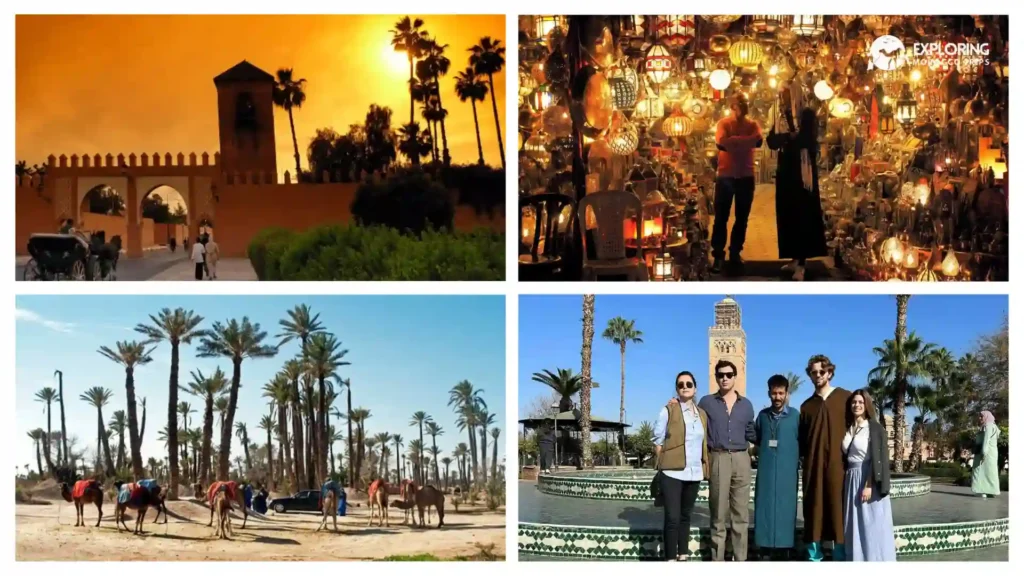
Marrakech is often the first image that comes to mind when travelers dream of Morocco. Known globally as the “Red City” due to its distinct sandstone walls, it serves as a chaotic, vibrant, and sensory-heavy introduction to North African culture. For many, it is a bucket-list destination; for others, it is an intense introduction that can feel overwhelming upon first arrival.
Because of its status as a major tourism hub, Marrakech exists in a state of constant motion. It is a place where ancient traditions, such as the rhythmic calls to prayer and the artisanal crafts of the souks, collide with a modern, fast-paced tourism industry. This dynamic creates a unique travel experience, but it also prompts a common question for those planning their itinerary: Is Marrakech really worth visiting, or is the reality different from the curated images seen online?
In this guide, we will move past the travel brochures to provide an honest, objective look at what it is actually like to spend time in Marrakech. We will analyze the cultural highlights, the logistical challenges, and the specific atmosphere that defines this city. Whether you are a solo traveler seeking adventure, a couple looking for a romantic escape, or a family planning your first Moroccan holiday, this article provides the clarity you need to decide if the Red City deserves a spot on your travel schedule.
Table of Contents:Is Marrakech worth Visiting?
What Makes Marrakech Special?
Beyond the Postcard: The Soul of Marrakech
To understand why Marrakech remains a global focal point for travelers, one must look past the surface-level attractions. The city’s “specialness” is not found in a single monument, but in the constant, rhythmic tension between its history and its contemporary pulse.
At its core, Marrakech is defined by the Medina, a centuries-old walled city that functions as a living, breathing organism. Unlike many modern tourist destinations that have been sanitized for comfort, the Medina retains a raw, authentic energy. Here, the architecture is designed to be inward-facing; behind the modest, ochre-colored street walls lie elaborate riads, traditional homes centered around tranquil courtyards and fountains. This architectural philosophy is a perfect metaphor for the city itself: it is a place that demands patience and curiosity to uncover its true depth.
Furthermore, Marrakech is a sensory landscape. It is the only place where the sound of the muezzin echoing over the rooftops at dawn is accompanied by the scent of cedarwood, orange blossom, and the distinct, earthy aroma of the tanneries. The city acts as a gateway where the ancient Berber traditions of the Atlas Mountains meet the refined, Andalusian-influenced history of imperial Morocco. It is this unique convergence, of the desert, the mountains, and the city, that gives Marrakech a character that cannot be replicated elsewhere.
Why Marrakech is Like Nowhere Else on Earth
What truly sets Marrakech apart from other major cities is the intensity of its human interactions. In most global tourist hubs, the experience is often passive, you observe the sights, eat a meal, and move on. In Marrakech, the city participates in your experience. Whether it is the elaborate negotiation process in the souks, the nightly theatre of Jemaa el-Fnaa, or the persistent, vibrant hospitality of local tea culture, Marrakech is a city that requires you to be present.
The duality of the city is another factor that makes it singular. You can spend your morning navigating the frenetic, narrow alleyways of the old city, where donkey carts and motorbikes share space with pedestrians, and by afternoon, find yourself in the absolute, surreal stillness of the Majorelle Garden or the vast, desert-like outskirts of the Palmeraie.
This is not a destination for those who want a predictable, luxury-resort vacation. Marrakech is for the traveler who wants to be challenged and immersed. Its uniqueness lies in its refusal to be ignored; it is a city that imprints itself on your memory through its vibrant color palette, its unrelenting noise, its quiet courtyards, and the inescapable feeling that you are stepping into a narrative that has been unfolding for nearly a thousand years.
Top Attractions in Marrakech
10 Must-See Landmarks in Marrakech for Your Bucket List
Instead of just checking boxes on a map, think of these landmarks as chapters in the story of Marrakech. Here is how they actually feel to experience:
-
Jemaa el-Fnaa: Forget the “attraction” label, this is a spontaneous, nightly riot of sound and smoke. It is the city’s nervous system, where the air smells of grilled meats and the soundscape changes from snake charmers’ flutes to the rhythmic drumming of Gnaoua musicians.
-
Koutoubia Minaret: This isn’t just a building; it is your “North Star.” Whether you are deep in the maze of the souks or looking out from a rooftop at sunset, this tower grounds you. It is the silent clocktower that dictates the rhythm of the city.
-
Bahia Palace: This is where you learn that walls in Marrakech can be paper-thin or impossibly ornate. It is a puzzle of courtyards. You spend your time looking up at the painted cedar ceilings and down at the floor patterns, realizing that the builders wanted to create a paradise on earth, not just a house.
-
Ben Youssef Madrasa: There is a specific kind of silence here. Even when it’s busy, the high walls and the cool, stone floor seem to absorb the noise of the city. It is a place to study the geometry of the tiles until your eyes get lost in the patterns.
-
Jardin Majorelle: A surreal punch of color. After hours of walking through the dusty, ochre-colored streets, the shock of that specific electric blue is physically jarring. It’s a place for color theory, not just plants.
-
Saadian Tombs: These aren’t just graves; they are the most expensive, elaborate “rooms” in the city. You walk through a narrow passage to find a sudden burst of marble and gold-leaf, showing just how much the old kings valued their legacy.
-
El Badi Palace: This is the “ghost” of Marrakech. The palace is stripped bare, leaving only mud-brick walls and massive footprints of what used to be. It’s the best place in the city to feel the sheer scale of the old imperial ambition.
-
Le Jardin Secret: This is a literal “pause button.” It is built on old, traditional irrigation technology. You sit by the water channels and realize that in a desert climate, water is the ultimate luxury.
-
The Souks: This isn’t a museum; it’s a living workshop. You don’t “visit” the souks; you get swept into them. It’s where you smell the raw leather, the burning incense, and the sharp bite of metal being hammered.
-
Maison de la Photographie: This is the city’s memory bank. Looking at the old black-and-white photos of the tribesmen and the markets gives you a “before” picture that makes the “now” of Marrakech feel much richer.
Exploring the Icons: From Koutoubia to the Saadian Tombs
If you look at the city as a layer cake, the landmarks are the thickest, richest parts of the filling.
You start with the Koutoubia. It’s the visual anchor that helps you navigate the chaos. Once you have that as your reference point, you can dive into the Saadian Tombs. The contrast is what makes Marrakech special. You go from the massive, outdoor presence of the mosque to the tucked-away, intimate, and quiet beauty of the royal graves.
The icons here aren’t about standing back and staring at a facade; they are about entering them. Marrakech architecture is obsessed with the transition, the moment you step from a dusty, noisy street into a cool, tiled, and silent courtyard. That “transition” is the true icon of the city. Whether you are walking through the hidden corridors of the Bahia Palace or sitting on the edge of the fountain in the Ben Youssef Madrasa, you are participating in a tradition of privacy and beauty that has remained unchanged for centuries. You aren’t just visiting a building; you are stepping into a centuries-old experiment in how to live well in a harsh, dry climate.
Food and Culinary Experiences
A Taste of Morocco: The Ultimate Marrakech Food Guide
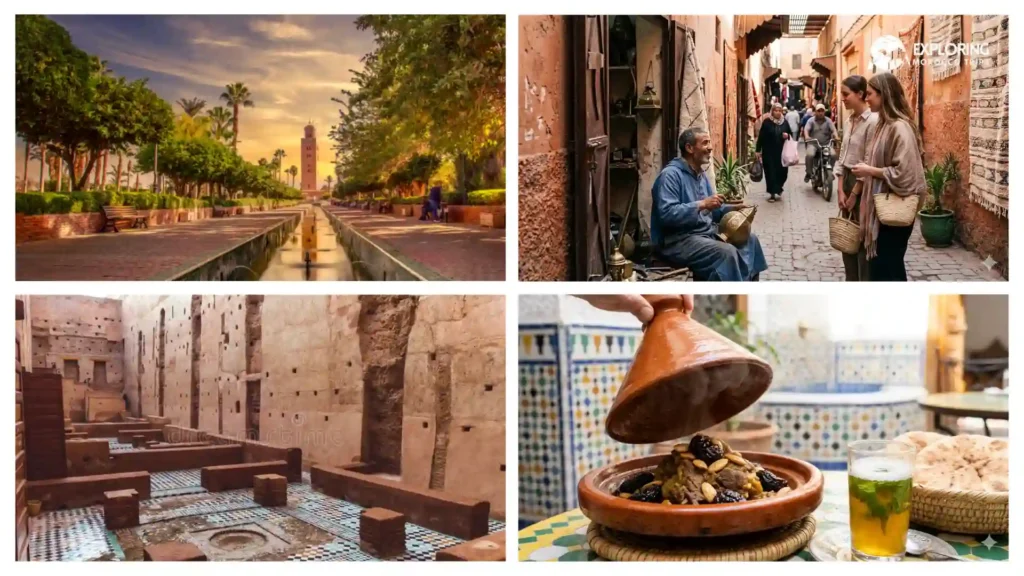
In Marrakech, eating is rarely just about fueling your body; it is a ritual. If you want to understand the city, you don’t look at maps, you follow the smoke and the smell of roasting spices. Here is how to navigate the culinary landscape:
-
The Street-Food Rhythm: Forget sit-down menus for a moment. The real food culture happens on the corners. Look for the small, nameless stalls where locals are queuing for Msemen (flaky, pan-fried bread) or Harira (a thick, nourishing chickpea and lentil soup). It’s about the heat of the griddle and the speed of the service.
-
The Tagine Philosophy: A tagine isn’t just a pot; it’s a slow-cooking method that turns tough cuts of meat and seasonal vegetables into something butter-soft. Whether it’s lamb with prunes or chicken with preserved lemons and olives, the key is the “dip.” You use a piece of Khobz (local bread) as your utensil, and the meal becomes a tactile experience.
-
The Tea Ceremony: Mint tea is the social lubricant of the city. It is served hot, sweet, and poured from a height to create a frothy crown. If you are offered tea, you are being invited into a space of hospitality, it’s considered polite to accept, even if you’re just passing through.
-
The Night Market Transformation: When the sun dips, Jemaa el-Fnaa turns into a massive, open-air kitchen. It’s chaotic and loud, but there is an undeniable electricity in sitting on a wooden bench, shoulder-to-shoulder with strangers, watching the chefs work over open flames.
Beyond the Tagine: Where to Eat in Marrakech Like a Local
To eat like a local in Marrakech, you have to break the habit of looking for “restaurants” with big signs. The best culinary experiences are hidden in plain sight.
The culinary heartbeat of the city is found in the Mechoui Alley. Here, whole lambs are slow-roasted in underground pits filled with wood embers. You don’t get a menu; you order a portion of the meat by weight, which is then served on a piece of butcher paper with nothing but salt and cumin. It is stripped-back, primal, and arguably the most flavorful thing you will eat in Morocco.
You should also look for the Dada, the traditional female cooks who are the keepers of Moroccan home-style cooking. In many riads, the cooking is done by these women using family recipes that aren’t written down but passed through intuition. When you eat in these settings, you aren’t getting a commercialized version of a dish; you are getting a meal that feels like an invitation into a private home.
The secret to Marrakech food is balance. It is the contrast between the intense, sugary sweetness of a dessert like Chebakia (sesame cookies soaked in honey) and the savory, salty punch of a slow-cooked stew. It is a city that keeps your palate awake, constantly pushing you from one extreme to another. If you leave the city without having at least one meal where you use your bread to mop up the remaining sauce at the bottom of a clay dish, you haven’t really been to Marrakech.
Day Trips from Marrakech
Escape the City: The Best Day Trips from Marrakech
While the Red City is magnetic, its true value often lies in its proximity to the diverse landscapes surrounding it. If the density of the Medina starts to feel overwhelming, a single day of travel can transport you into entirely different worlds.
-
The High Atlas Mountains: Just a few hours from the city gates, the landscape shifts from desert plains to dramatic, snow-capped peaks. Visiting the Ourika Valley or the Ouirgane area offers a chance to see how life functions in the rugged mountain villages. It’s a sensory reset, the air is cooler, the oxygen is thinner, and the pace of life slows down significantly.
-
The Atlantic Coast (Essaouira): If you crave the smell of salt air, the journey to Essaouira is essential. This blue-and-white fortified fishing port feels like a gentle exhale compared to the intensity of Marrakech. The rhythm here is defined by the wind, the crashing Atlantic waves, and the slow, deliberate work of the boat-builders in the harbor.
-
Ouarzazate and Ait Benhaddou: For those drawn to the dramatic, cinematic scale of Morocco, the drive over the Tizi n’Tichka pass is legendary. Seeing the ancient, fortified village of Ait Benhaddou, a UNESCO site built entirely from earthen clay, feels like walking onto a film set. It is a striking reminder of how desert civilizations once thrived along these ancient trade routes.
From Mountains to Sahara: Best Desert Tours from Marrakech
Marrakech serves as the ultimate “base camp.” Once you have navigated the souks, the surrounding regions offer a necessary perspective on the sheer scale of the Moroccan landscape.
If you are looking for the most immersive way to reach the dunes, Marrakech desert tours are the premier choice. These specialized desert tours from Marrakech are designed to take you across the rugged High Atlas Mountains, winding through the Valley of a Thousand Kasbahs, and finally dropping you into the absolute silence of the Sahara. These journeys are perfect for travelers who want to witness the dramatic transformation from fertile mountain valleys to the golden, endless expanse of the Erg Chebbi dunes.
These trips are not just about checking off landmarks; they are about understanding the geography that has shaped the culture of the region. By leaving the city for a few days, you gain a renewed sense of wonder when you return to the ochre walls of the Medina. It is this back-and-forth—the oscillation between the frantic, brilliant city and the vast, silent wilderness, that makes a trip to this part of the world so deeply transformative.
If you want more info about Marrakech desert tours, [click here].
Pros of Visiting Marrakech
Why Millions Love Marrakech: The Benefits of a Red City Escape
The magic of Marrakech lies in its ability to force a complete sensory reset. Here are the core benefits:
-
Sensory Awakening: Unlike the sterile environments of most tourist hubs, Marrakech is alive. The blend of constant activity, street-level craftsmanship, and deep-rooted traditions ensures you are always present in the moment.
-
The Riad Sanctuary: The absolute best part of the city is the contrast. You can leave the chaotic, sun-drenched streets and find total silence in a plant-filled Riad courtyard within seconds.
-
The Gateway Effect: Marrakech is the ultimate hub. It is the perfect starting point to bridge the gap between ancient desert trade routes and modern, luxury city life in a single trip.
-
Artisanal Integrity: In an era of mass-produced items, Marrakech is a living workshop. You see the pride and skill of the makers firsthand, which makes every purchase feel more personal and lasting.
The Magic of Marrakech: Top Reasons to Book Your Trip Today
Why do millions keep returning to a city that is notoriously intense? It offers a rare, unfiltered form of discovery:
-
A Labrynthine Adventure: The Medina is built to surprise. You don’t “conquer” Marrakech; you wander through it. Every turn reveals a hidden archway or local workshop you never expected.
-
Genuine Hospitality: The tradition of mint tea is a true social lubricant. It is a genuine offer of connection that frequently pauses the chaos of the city and allows for a moment of calm.
-
Accessible Luxury: Marrakech offers a level of aesthetic beauty and historical depth that would be prohibitively expensive elsewhere. You can live like royalty in a historic merchant house without needing a billionaire’s budget.
-
The Golden Hour: The way the late-afternoon sun catches the red sandstone walls is unmatched. The entire city glows, turning the architecture into a massive, ochre-colored sculpture every single day.
Cons of Visiting Marrakech
The Reality Check: Honest Challenges of Traveling to Marrakech
Marrakech is rewarding, but it is not a “relaxing” city in the traditional sense. To enjoy it, you must be prepared for the friction:
-
Sensory Overload: The Medina is relentless. The narrow streets are shared by pedestrians, donkey carts, and fast-moving motorbikes. If you are sensitive to noise, dust, or constant activity, it can feel draining by midday.
-
Aggressive Touting: You will be approached constantly by shopkeepers and self-appointed “guides” who want to lead you to their businesses. Navigating this requires a thick skin and the ability to say a polite but firm “no” repeatedly.
-
The Maze Factor: Getting lost is part of the charm, but it can also become stressful. The Medina is not grid-based, and GPS often fails within the high, winding walls, making it difficult to find your way back to your Riad.
-
Variable Cleanliness: While many areas are stunning, the older parts of the Medina can be gritty. You will encounter heaps of produce, stray cats, and uneven, unpaved alleyways that require you to watch your step at all times.
Is Marrakech Overrated? Addressing Common Visitor Frustrations
Even the most seasoned travelers have days in Marrakech where the city feels like it is working against them. Here are the most common frustrations:
-
The “Tourist Tax” Mindset: Haggling is a cultural pillar, but it can feel exhausting. You will almost always be quoted a “foreigner’s price,” and the expectation to negotiate every single purchase can feel like a game you didn’t sign up for.
-
Lack of Personal Space: Marrakech is a city of high density. In the souks and the main square, personal space is non-existent. If you prefer quiet, expansive areas, the heart of the city will likely feel suffocating rather than exciting.
-
Aggressive Navigation: Motorbikes are a constant hazard. You will frequently have to press yourself against walls to let them pass. This constant need to be “on guard” makes it hard to truly relax while walking through the city center.
-
The “Hustle” Fatigue: Because tourism is a primary livelihood, there is an intense competition for your attention. This can make interactions feel transactional rather than genuine, which can be disheartening if you are looking for authentic, spontaneous human connection.
Best Time to Visit Marrakech
Perfect Weather, Perfect Trip: When to Visit Marrakech
Choosing the right time to arrive in Marrakech is less about avoiding “bad” weather and more about aligning the city’s climate with your personal travel style. Because of its semi-arid environment, Marrakech behaves differently than a typical coastal city.
-
The Sweet Spots (Spring and Autumn): March through May and September through November are widely considered the ideal windows. During these months, the city exists in a perfect equilibrium. Days are warm enough for light clothing, but evenings bring a crisp, cool air that makes rooftop dining and long walks through the Medina a joy. This is when the gardens, like the Jardin Majorelle, are in their most vibrant state.
-
The Winter Escape: If you want to bypass the crowds, look to December and January. While nights are noticeably cooler and require a light jacket, the days are often bright, clear, and perfectly suited for walking tours and visiting historical sites without waiting in line. It is a quieter, more authentic pace of life.
-
The Summer Challenge: June through August brings intense heat. For many, this is the “off-season,” but for the savvy traveler, it offers a different rhythm. Life slows down during the midday hours, giving you a perfect excuse to embrace the local habit of an afternoon siesta in a cool, tiled Riad before heading out to enjoy the vibrant, high-energy nightlife that only truly wakes up after sunset.
Your Seasonal Planner: Finding the Best Time to Explore Marrakech
Marrakech is a year-round destination, but every season pulls a different “mask” off the city. How you experience the Red City depends entirely on which season you choose to inhabit:
-
For the Sightseer (Spring): If your goal is to cover as much ground as possible, palaces, museums, and mountain excursions—choose the spring. The weather is predictable, the landscapes are at their greenest, and the city is at its most active.
-
For the Riad Lover (Summer): If you view your accommodation as a sanctuary, summer is your season. With fewer tourists and lower rates, you can enjoy the luxury of historical Riad pools and shaded garden retreats at a fraction of the cost. The key to success here is an adjusted schedule: early mornings and late nights are your best friends.
-
For the Photographer (Autumn): October is perhaps the most visually rewarding month. The harsh glare of the summer sun disappears, replaced by a soft, golden light that makes the ochre walls of the city glow. It is the best time for capturing the intricate shadows and deep colors of the souks.
-
For the Cultural Explorer (Winter): With the summer heat a distant memory and the peak-season crowds gone, winter is the time to visit if you want a deeper, more local interaction. You can sit in a café for hours without being rushed, and your conversations with shopkeepers and locals tend to be longer and more relaxed.
Is Marrakech Safe for Tourists?
Safety First: A Candid Guide to Marrakech for Travelers
Safety in Marrakech is often misunderstood. It is not a city of high-level criminal danger; rather, it is a city of “persistent inconvenience.” The primary safety challenge isn’t about physical harm, but about maintaining your boundaries in a space where everyone wants a piece of your time.
-
The “Guide” Trap: The most common safety annoyance involves “faux guides”, individuals who offer directions or “insider” help, only to lead you to a family shop or demand payment for services you didn’t request. The safest way to handle this is a polite, unwavering “no, thank you” and a confident demeanor.
-
Navigation as Safety: Being safe here is largely about knowing where you are. In the labyrinthine alleys, it is easy to become disoriented. If you feel uneasy, walk toward the nearest main road or a crowded area. Never rely solely on an empty phone battery; keep a paper map or a rough idea of your Riad’s location relative to the main landmarks.
-
Petty Theft Awareness: Like any high-density tourist hub, pickpocketing happens in crowded areas like Jemaa el-Fnaa. Keep your bags zipped, in front of your body, and never leave your phone on a café table while you are distracted by the passing street scenes.
Is Marrakech Safe? Everything You Need to Know Before You Land
When people ask if Marrakech is safe, they are often asking if they can be themselves without being targeted. The reality is that Marrakech is a city that values its tourism economy, meaning the streets are generally monitored and populated, which acts as its own security.
-
The Culture of Eyes: Because the Medina is a place of deep-rooted community, there are always eyes on the street. Shopkeepers and neighbors know each other, and this collective sense of “neighborhood watch” creates a surprising level of street-level security. You are rarely truly alone, even in the narrowest alleys.
-
Respecting Local Norms: A large part of feeling safe in Marrakech is minimizing unwanted attention. Dressing in a way that respects local customs, keeping shoulders and knees covered, is not just about cultural sensitivity; it is a practical way to blend in more effectively. When you appear to understand the local flow, you are less likely to be singled out as a target for hassling.
-
The Nighttime Transition: After dark, the city changes. While the main squares remain buzzing with life, the deeper, darker alleys of the Medina can feel more intimidating. Stick to well-lit, populated routes at night, and if you are ever unsure, a simple taxi ride from door-to-door is inexpensive and eliminates the need to navigate the maze after hours.
Why Do Millions of Travelers Visit Marrakech Every Year?
The Magnetic Appeal of Marrakech: Why It Remains a Global Favorite
The pull of Marrakech isn’t found in a brochure; it is found in the way the city demands your full participation. Millions return here annually because the city offers a “living” experience that isn’t filtered through the lens of modern, homogenized tourism.
-
The Human Connection: In a world of automated check-ins and digital interactions, Marrakech remains stubbornly human. Whether it’s the intense, soulful gaze of a spice merchant explaining the nuances of saffron, or the rhythmic storytelling in the main square, travelers come here to feel connected to something primal and ancient.
-
The “Otherworldly” Contrast: Marrakech functions as a psychological bridge. It allows travelers to escape their routine lives and step into a reality that feels more like a film set. The sheer visual impact, the contrast of the red walls against the backdrop of the white-capped Atlas Mountains, provides a sense of scale that satisfies the human need for awe.
-
An Emotional Vocabulary: Travelers don’t just visit Marrakech to see things; they visit to feel things. The city has a unique ability to evoke a full spectrum of emotions in a single afternoon, from the excitement of the bargain to the meditative silence of a garden. It is an emotional workout that keeps people coming back to test their senses again and again.
What Draws Millions to the Red City? Discovering the Marrakech Charm
Why does this specific city hold such a powerful grip on the global imagination? The answer lies in its refusal to be “easy.”
-
The Reward of the Labyrinth: There is a deep, psychological satisfaction in mastering a place that feels impossible to conquer. Travelers are drawn to the Medina because it represents a challenge. When you finally find that hidden courtyard or that specific, quiet tea room after hours of “losing” yourself, the sense of accomplishment is personal and profound.
-
A Masterclass in Atmosphere: Modern life is often described as “flat.” Marrakech is the opposite, it is thick, textured, and loud. Millions are drawn to this density because it reminds them that the world is still big, mysterious, and full of secrets. You can walk the same street ten times and notice something different on the eleventh.
-
The Timelessness: There is a feeling here that you are stepping into a story that hasn’t changed its core plot in centuries. While the motorbikes are a modern addition, the daily rhythm of the souks, the call to prayer, and the art of trade remain grounded in a past that feels completely present. Travelers visit because they are looking for a place where time moves according to the sun and the seasons, rather than a clock.
What Is Marrakech Famous For?
The Red City’s Legacy: What Defines Marrakech’s Global Fame?
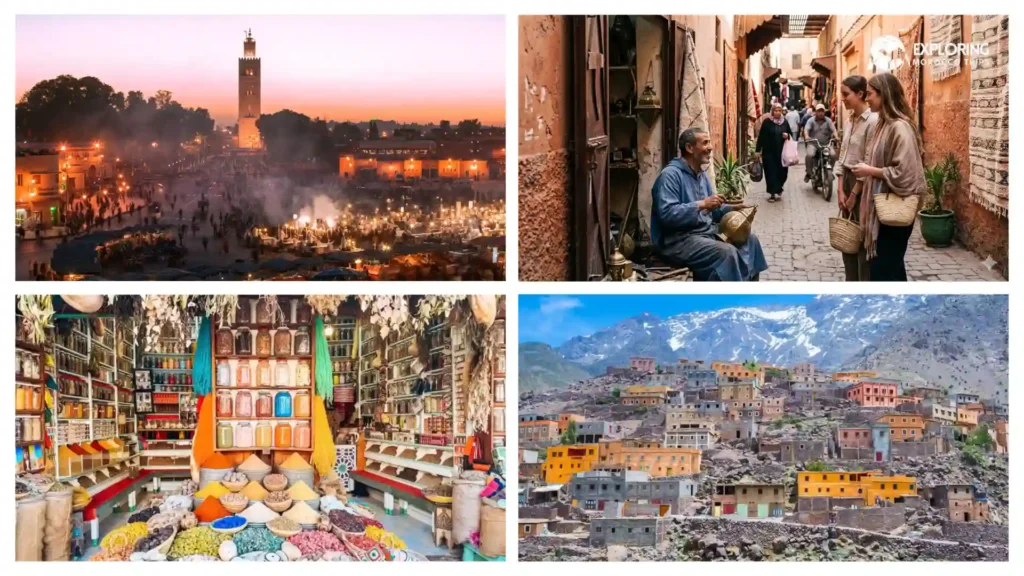
Marrakech is famous for its contradictions. It is a city that managed to preserve its medieval soul while acting as a global magnet for art, design, and culture. Its reputation is built on three pillars that define the visitor experience:
-
The Ochre Aesthetic: The city is world-famous for its color. The city walls, built from beaten clay, shift from dusty pink to burnt orange depending on the angle of the sun. This unique palette gives the city a visual identity that is instantly recognizable and entirely unique in the North African landscape.
-
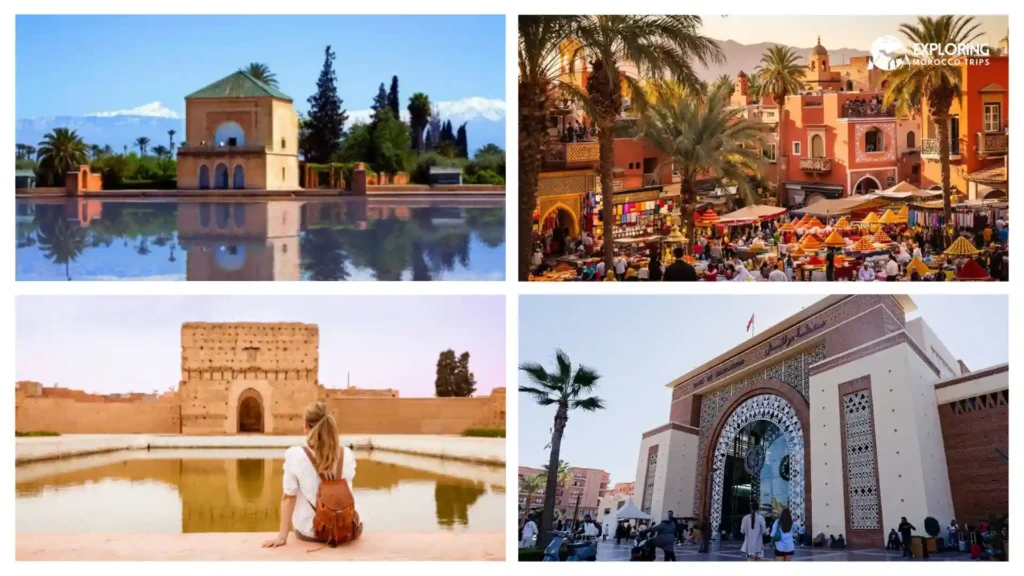
The “City of Gardens”: Despite being a desert gateway, Marrakech is famous for its hidden green oases. The contrast between the dusty, bustling streets and the lush, curated beauty of places like the Majorelle Garden or the Menara gardens is what established the city’s fame as a place of refuge and botanical wonder.
-
The Epicenter of Trade: For centuries, Marrakech has been a famous terminal for trans-Saharan trade. Today, this legacy lives on through its legendary souks. It is world-renowned as a marketplace where the artisan is still the center of the economy, and the skills of weaving, metalwork, and leather tanning have been passed down through generations without industrializing.
Iconic Marrakech: The Landmarks and Traditions That Put the City on the Map
If you peel back the layers of the city’s fame, you find that it isn’t just known for buildings, but for a specific way of life that has turned into a global brand.
-
The Theatre of the Square: Marrakech is arguably most famous for the Jemaa el-Fnaa. It is one of the last places on earth where an oral, public performance culture still dominates. The fame of this square comes from the fact that it isn’t a museum or a monument, it is a living stage where storytellers, healers, and musicians have held court for centuries.
-
The Riad Experience: Marrakech is responsible for popularizing the concept of the “Riad” as an accommodation style. The city is famous for its architectural secret: the way a simple, windowless wall on the street hides a vast, multi-story home built around a central, open-sky courtyard. This specific architectural response to the desert climate has become the city’s most exported cultural concept.
-
The Gateway to the Atlas: Marrakech is famous for its role as the final outpost before the wilderness. It is the natural transition point where the flat plains give way to the rugged, towering peaks of the High Atlas Mountains. This geographical fame has made the city a mandatory stop for anyone looking to traverse the mountains or head deep into the desert sands, cementing its status as the heartbeat of Moroccan travel.
The Best Things to Do in Marrakech
Experience Marrakech: A Curated List of Top Activities
To truly “do” Marrakech, you have to move beyond checking boxes and start engaging with the city’s rhythm. Here are the experiences that define a trip to the Red City:
-
The Sunrise Rooftop Ritual: Before the heat and the crowds set in, find a rooftop terrace overlooking the Medina. Watching the sun climb over the Koutoubia minaret while the city begins its first prayer call is the single most grounding experience you can have. It turns the chaotic sprawl into a quiet, golden-lit masterpiece.
-
Mastering the “Slow” Purchase: Don’t just shop for souvenirs; shop for the experience of the craft. Spend an afternoon in a corner of the souks watching a weaver or a leatherworker. When you find something you love, allow the negotiation to be a conversation. It’s not about the lowest price; it’s about the exchange of energy between you and the artisan.
-
Sunset at the Square: As the light begins to fail, the main square goes through a physical transformation. The smoke from hundreds of food stalls begins to rise, and the entire area hums with the sound of Gnaoua music and storytelling. Don’t look for a “best” stall; walk until the scent of grilled cumin or fresh citrus catches your attention, then pull up a bench and sit with the locals.
-
The Hammam Reset: A traditional Moroccan hammam is not a spa day; it’s a cultural necessity. It is a ritual of scrubbing, steaming, and exfoliating that leaves you feeling lighter than air. It is the most honest way to understand how the city balances its intense exterior with a deep focus on internal well-being.
From Souks to Spas: The Best Things to Do in Marrakech
Marrakech is a city that favors the curious over the structured. If you want to dive deep into the local pulse, try these immersive activities:
Hunting for Architectural Symmetry: Spend a day focusing solely on the city’s hidden geometry. Visit the Ben Youssef Madrasa or the smaller, lesser-known medersas to study the zellige tilework. The closer you look, the more you realize the patterns are designed to induce a meditative state. It is an exercise in focus that provides a welcome relief from Medina’s frantic pace.
The Garden Walk: Escape the ochre walls by spending a few hours in the city’s quieter green lungs. While the famous gardens are beautiful, seek out the smaller, hidden courtyards that act as public parks. Seeing how the city uses water, through small canals and ancient irrigation channels, to fight the desert heat is a testament to the ingenuity of the people who built this city.
The Artisan Workshop Tour: Many local collectives now offer short, hands-on workshops in pottery, calligraphy, or cooking. Instead of just buying a gift, you are learning a movement that has been repeated by hand for centuries. It turns your trip from a passive observation into a collaborative memory.
Navigating by Instinct: Take one afternoon to throw away your phone, stop looking at maps, and simply walk until you feel the “shift.” You will inevitably end up in a neighborhood that is entirely residential, where the streets are quiet and the pace is human. This is where you find the true soul of the city, far from the tours and the touts.
Marrakech Culture and Local Experiences
Diving Deep: How to Truly Experience Marrakech Culture
Culture in Marrakech isn’t behind glass in a museum; it is expressed in the daily movements, social habits, and the way the city honors its history. To experience it, you have to look for the nuances of local life:
-
The Power of the Threshold: In Marrakech, the boundary between the public street and the private home is sacred. Culturally, the city is designed around this contrast. Respecting the privacy of the massive, unassuming doors you pass in the Medina is a cultural lesson in itself, it teaches you that beauty, wealth, and family life are meant to be shielded and cherished rather than put on display.
-
The Ritual of the Tea Table: Mint tea is far more than a drink; it is a social contract. Whether you are finalizing a purchase, greeting a host, or taking a break from the heat, the pouring of the tea is a meditative performance. It signifies the pause, the respect for the person you are with, and the slowing of time. If you want to understand the local pace, sit for tea and let the conversation drift without looking at your watch.
-
Street-Level Community: Take note of the street-level networks. Each neighborhood, or derb, functions like a mini-village. You will see neighbors gathering at the local bakery—the ferran—to have their dough baked, or men gathering at the local fountain. Engaging with these neighborhood hubs, even as a silent observer, reveals a sense of community support that keeps the city functioning.
Authentic Marrakech: Local Traditions and Immersive Experiences
If you want to move beyond the tourist surface, you must immerse yourself in the traditions that dictate the city’s heartbeat:
-
Oral Tradition and Storytelling: The most authentic cultural experience in Marrakech is listening to the stories told in the main square. This is a fading art form that remains alive only because of the dedicated storytellers who maintain the city’s oral history. You don’t need to understand every word of the Arabic or Berber dialect; the rhythm of the delivery, the intensity of the crowd, and the humor in the performance tell you everything you need to know about the local spirit.
-
The Rhythm of the Friday Market: While the souks are busy every day, Friday is the spiritual anchor of the week. Many shops in the deeper parts of the Medina close for midday prayers, and the city shifts into a communal, reflective mood. Visiting on a Friday morning offers a glimpse into a quieter, more observant side of the city that is rarely captured in photographs.
-
The Craft of the “Zellige” and Plaster: Understanding the culture of Marrakech requires appreciating the patience of its artisans. Cultural immersion here means spending time in the artisan quarters, not to shop, but to watch. When you see how a craftsman chips away at a tile to create a perfect geometric shape, or how a plasterer carves intricate calligraphy into a wall, you begin to understand the cultural value placed on precision, longevity, and the glorification of detail. This isn’t just work; it is an act of devotion.
=
Is Marrakech Expensive for Tourists?
The Financial Reality: Navigating Costs in Marrakech
One of the most appealing aspects of the city is its “budget-fluid” nature. You can exist here in two completely different economic realities depending entirely on your personal priorities. Here is the honest breakdown of how money moves in the Red City:
-
The Two-Tiered Economy: Marrakech operates on a dual system. There are the fixed-price environments, like modern cafes, high-end hotel restaurants, and boutique shops, where prices are comparable to major European cities. Then, there is the local economy, the street stalls, public markets, and traditional neighborhood transport, which is remarkably affordable. Your daily spend depends on how often you switch between these two worlds.
-
The “Experience” Premium: Often, you aren’t paying for the product, but for the location. A coffee in the main square will cost significantly more than the same drink just three streets deep into the Medina. The surcharge is for the view and the atmosphere, not the quality of the beans. If you value your budget, stepping just a few minutes away from the main tourist hubs drastically shifts the pricing.
-
The Hidden Costs of Convenience: In Marrakech, comfort comes at a price. Taxis, private tours, and English-speaking guides are essentially a luxury add-on. If you are willing to learn the local bus routes, walk the extra mile, and handle your own negotiations, you can significantly lower the overhead of your trip.
Budgeting for the Red City: Finding Value Without Sacrificing Experience
Marrakech is neither inherently “cheap” nor “expensive”, it is a place that rewards those who understand the value of their own time versus their money.
-
The Riad Advantage: The best value in the city is the mid-range Riad. For the price of a standard, characterless hotel room in a western city, you can often secure a stay in a historic, restored merchant house with breakfast included. This is where the city offers the most “bang for your buck,” as the environment itself provides the luxury.
-
The Haggling Tax: It is a reality of the market: as a visitor, you will be quoted a higher starting price. Rather than viewing this as “expensive,” view it as a cultural transaction. The cost of an item is almost never the price tag, it is the price you and the vendor agree upon after a conversation. If you hate negotiating, you will likely feel the city is expensive; if you embrace the process, you will find the items are reasonably priced.
-
Prioritize Your Splurges: The best way to manage your budget is to identify the one or two things that matter to you. If you want a world-class dining experience, go for it, the quality is world-class. If you are happy eating tagine at a simple, local stall, you can save enough on food to afford a private driver for a day trip to the mountains. The city is designed to allow you to balance your ledger in real-time.

Packing Tips for Marrakech
What to Pack for the Red City: A Practical Guide
Packing for Marrakech requires a strategy that balances the desert heat, the conservative local culture, and the practical demands of navigating a medieval city. Forget the typical vacation wardrobe; think in terms of layers and durability.
-
Footwear for the Labyrinth: Leave the heels and thin-soled flats at home. The Medina is a landscape of uneven cobblestones, dust, and discarded trade materials. You need a sturdy, comfortable walking shoe with a grip. Your feet will thank you after three hours of navigating the souks.
-
Respectful Layers: While the city is accustomed to visitors, dressing with intentionality is a sign of respect and a practical safeguard. Pack lightweight, breathable natural fabrics like linen or cotton that cover your shoulders and knees. A high-quality, lightweight scarf is the most versatile tool in your bag, use it to shield yourself from the sun, cover up when entering religious sites, or ward off the evening chill.
-
The “Dust” Protection: Marrakech is a desert city. Between the constant movement of donkeys and the dry heat, fine dust is everywhere. Bring a small, dedicated bag for your electronics to keep them clean, and consider a packable, lightweight day bag that keeps your valuables close to your body and secure from the bustle of the crowd.
Packing Smart: Essential Gear for Your Marrakech Adventure
When packing, remember that you are visiting a place that lives outdoors. Your kit should reflect that you are moving between intense sunlight and cool, shaded interiors.
Sun Defense Beyond Sunscreen: The sun in the desert climate is more direct than you might expect. A wide-brimmed hat is essential, not just for style, but for creating your own personal patch of shade. Pair this with high-quality sunglasses to navigate the transition between the bright, open squares and the dark, shaded alleyways of the souks.
The “Riad” Kit: Because you will likely be spending time in the serene courtyards of a Riad, pack a pair of stylish but comfortable slip-on sandals. It is the local standard for relaxing in these beautiful, cool spaces. Additionally, if you plan on visiting a traditional hammam, bring your own pair of rubber flip-flops, it makes the experience much more personal and comfortable.
The Minimalist Carry: The key to a good day in Marrakech is keeping your hands free. Avoid oversized, dangling totes that are difficult to manage in narrow, busy streets. A slim, cross-body bag or a compact, secure backpack allows you to navigate the crowds, browse the markets, and drink your mint tea without constantly adjusting your gear. Remember: the less you carry, the more you see.
Etiquette and Cultural Norms
The Unspoken Rules: Navigating Social Etiquette in Marrakech
Marrakech operates on a distinct set of social cues that are rarely written down but are essential for a smooth experience. Understanding these small gestures can transform you from a standard tourist into an appreciated guest.
-
The Right-Hand Rule: In Moroccan culture, the right hand is for eating, shaking hands, and giving or receiving items. The left hand is traditionally reserved for personal hygiene. While locals are very forgiving of visitors, making an effort to use your right hand when exchanging money, accepting tea, or picking up bread from a communal dish is a gesture that is quietly noticed and highly respected.
-
The Art of the “No”: You will be approached by many people offering help, services, or directions. The local way to handle this is not to ignore them, which can be seen as rude, but to offer a smile, a hand over your heart, and a firm “la, shukran” (no, thank you). This acknowledgment is polite, final, and keeps the interaction respectful.
-
Photography with Intention: It is common to want to capture the beauty of the markets, but remember that the people working there are doing exactly that, working. Before pointing a camera at a shopkeeper, a craftsman, or a performer in the square, simply ask with a gesture or a smile. This small moment of permission often leads to a more genuine interaction, and sometimes, even an invitation to talk.
Respectful Exploration: How to Align with Local Norms
Marrakech is a deeply traditional city where hospitality is a core value. Your etiquette should focus on reciprocity, if you are being treated with warmth, show that same respect back through your behavior.
-
Mindful Presence in Prayer Spaces: While you likely won’t enter the interior of mosques, you will be passing them constantly. During the call to prayer, be mindful of your volume and behavior. It is a moment of communal reflection, and lowering your voice or stopping for a moment to observe the atmosphere shows a level of sensitivity that sets you apart from the crowd.
-
Personal Space and Modesty: The culture here is built on modesty, not just in dress but in movement. Loud, boisterous behavior or public displays of affection are generally frowned upon. By maintaining a calm, composed demeanor, you align yourself with the local pace and avoid drawing unnecessary, unwanted attention to yourself.
-
Gratitude as a Language: You don’t need to be fluent in the local dialects to show appreciation. Learning basic phrases like “salam alaykum” (a greeting) or “baraka Allahu fik” (a way to say thank you) goes a long way. When you use these phrases, it signals that you aren’t just passing through, you are an active participant in the city’s social ecosystem, which usually results in a much friendlier and more welcoming experience.
Local Customs and Traditions
The Rhythms of Life: Understanding Marrakech’s Traditions
To grasp the soul of the city, you must look past the monuments and observe the rituals that anchor daily life. These aren’t tourist performances; they are the gears that keep the city turning.
-
The Bakery Ritual: Every morning, you will see people carrying wooden boards laden with raw dough toward the neighborhood farran (a communal, wood-fired oven). This is a centuries-old tradition where the baker acts as the custodian of the neighborhood’s bread. It is a quiet, rhythmic dance that happens before the sun is fully up, ensuring that the day starts with fresh sustenance.
-
The Friday Afternoon Pause: Friday is the backbone of the week. You will notice a profound shift in the city’s energy: the streets grow quieter, shops close for the afternoon, and families gather for a traditional couscous meal. It is a day of reflection and community. Seeing the city transition from the high-octane pace of the week to this communal stillness is the most authentic look at local life you will get.
-
The Power of the Public Fountain: You will notice small, beautifully tiled, and often intricate fountains tucked into the walls of the Medina. These are sebayas, which were traditionally used by locals to collect water. While many homes now have modern plumbing, these fountains remain communal touchpoints. They serve as a reminder that in this climate, water is a gift to be shared, not just a commodity to be hoarded.
Cultural Pillars: Traditions That Define the Red City
The heritage of Marrakech is defined by how people interact with their environment and each other. Here are the customs that truly define the local experience:
-
The Hospitality Code: If you are invited for tea, you have been invited into the local social hierarchy. The process of pouring the tea, from a height to create the “turban” of foam on top, is a show of skill and honor. The custom dictates that you never refuse the first glass, as it is a gesture of welcoming a guest into a space of safety and mutual respect.
-
The “Baraka” Mentality: You will often hear the concept of baraka (a form of divine blessing or grace) referenced in conversation. It is a belief that certain things, a hardworking artisan, a well-prepared meal, or a hospitable host, carry a special quality of goodness. When you treat your interactions with patience and humility, you are participating in this local philosophy of recognizing the “blessing” in everyday human encounters.
-
The Evening Social: The city really comes alive after the sun goes down. Unlike many places where the evening is for hunkering down inside, the custom here is to pour out into the streets. The night is for movement, strolling, debating in cafes, and participating in the constant, evolving theater of the squares. It is a tradition of visibility; in this city, you are part of the landscape, and being “out” is a way of saying you are part of the communal life.
Interesting Facts About Marrakech
Beyond the Souks: The Hidden Truths of the Red City
Marrakech is often painted as a simple destination, but beneath the surface lies a complex history and a unique urban logic. Here are some of the most fascinating aspects of the city that don’t make it into standard guides:
-
The Architecture of Mystery: The city is famous for its “inward-looking” architecture. This wasn’t just a design choice; it was a social necessity. In the old way of life, your home was a sanctuary for family, and the heavy, unassuming outer doors were designed to keep the private life entirely hidden from the public gaze. You are literally walking past thousands of secret gardens and palaces hidden behind blank, windowless walls.
-
A Living Library of Scents: If you pay attention, the city is segmented by fragrance. The souks are not just a mix of chaos; they are organized by olfactory zones. One alley is dedicated to the sharp, earthy scent of raw leather, another to the sweet, floral notes of dried rosebuds, and a third to the aggressive, woody smell of cedarwood chips. It is a sensory map that has helped traders navigate the labyrinth for generations.
-
The “Invisible” Engineering: The cooling system of the city is an ancient marvel. Many of the old buildings in the Medina utilize a traditional ventilation system that pulls cool, subterranean air into the courtyard, acting as a natural air conditioner. It is why you can walk in from a scorching afternoon and instantly feel the temperature drop by several degrees as soon as you step inside a Riad.
Marrakech Unveiled: Surprising Realities of the Red City
What makes Marrakech truly unique is how it defies modernization in favor of its own, deeply rooted internal rules.
-
The City of Storks: Look up at the high walls of the ruins of the Badi Palace, and you will see massive nests perched on the ramparts. Marrakech is a long-standing haven for storks. Local legend holds them in high regard, and they are essentially the city’s official feathered citizens, returning to the same spots every season to raise their young high above the chaos of the streets.
-
The Language of Color: The iconic “Marrakech Red” isn’t just a pigment; it’s a living material. The color comes from the local earth, which is rich in iron and clay. Because it is a natural finish, the buildings effectively “breathe.” Over time, the city’s walls change color as they weather, meaning the city is constantly, albeit slowly, changing its skin to match the elements.
-
The Clockless Rhythm: While the city keeps up with the modern world, its internal heartbeat is still governed by the five daily calls to prayer. You will notice that business deals, lunch breaks, and even the pace of walking through the square sync up with these moments. It is one of the few global hubs that refuses to move entirely to the tick of a digital watch, choosing instead to be paced by the sun and the communal call.
Best Marrakech Souvenirs
Collecting Memories: Authentic Treasures from the Red City
The best items to bring home from Marrakech aren’t mass-produced trinkets; they are objects that carry the tactile history of the craftsmen who made them. When you shop for these, look for signs of the human hand, minor irregularities that prove the object was shaped by tradition rather than an assembly line.
-
Hand-Beaten Copper and Brass: Visit the artisan quarters to see how metalworkers heat and strike copper into intricate lamps and plates. These pieces are not just functional decor; they are designed to cast specific shadows on your walls, bringing the “light of the Medina” into your own home. Choose pieces that feel substantial and heavy.
-
Hand-Woven Berber Textiles: The artistry in Moroccan rugs is entirely mathematical and symbolic. Every pattern tells a story of the weaver’s tribe, geography, and personal history. Look for wool that feels dense and oily, a sign of quality and traditional processing. Unlike high-street rugs, these are built to last for generations.
-
Essential Oils and Botanical Extracts: Marrakech is famous for the distillation of rose and orange blossom water. You can find small-batch distillers who produce these in pure forms. They are potent, fragrant, and a small way to capture the distinct, floral essence of the city’s hidden gardens.
Beyond the Souk: What to Buy for Lasting Quality
To bring a piece of Marrakech home, focus on items that rely on local materials and ancient techniques. The value here is in the raw honesty of the products.
-
Leatherwork with a Narrative: Marrakech is a hub for leather, but skip the flashy, bright-dyed bags. Look for the natural, uncolored leather (or traditional saffron-dyed pieces) that still carries the faint, earthy scent of the tan-pit. These pieces develop a “patina” over time, darkening and softening with age, effectively becoming a visual record of your own travels.
-
Hand-Painted Ceramics: The traditional pottery from this region uses a specific palette of earth tones. Seek out pieces that are clearly hand-painted; you can spot them by the slight variations in the geometric lines. Each pot, plate, or bowl serves as a canvas for a style of geometry that has remained essentially unchanged for centuries.
-
Traditional Spices: You cannot replicate the scent of the Medina, but you can get close with the spice mixtures. Ask for “Ras el Hanout,” a complex blend that differs from shop to shop based on the merchant’s own secret recipe. It is the ultimate souvenir because it is a portable, edible piece of the city’s culinary soul.

I’m Lahcen Saadi from the Exploring Morocco Trips team. We are local guides dedicated to crafting authentic and exceptional Moroccan experiences.
Whether you are planning your first trip to Morocco and need expert advice, or you are a travel professional looking to collaborate on unique itineraries, we are ready to help.
- 3 Days Desert tour From Marrakech to Merzouga
- 3 Days Desert tour From Marrakech to Fes
- 3 Days Desert tour From Fes to Marrakech
- 4 Days Desert tour From Marrakech to Merzouga
- 4 Days Desert tour From Marrakech to Fes
- 4 Days Desert tour From Fes to Marrakech
- 5 Days Desert tour From Marrakech to Merzouga
- 5 Days Desert tour From Fes to Marrakech
- 7 Days Morocco tour from Marrakech
- 7 Days Morocco tour from Fes
- 7 Days Morocco tour from Casablanca
- 8 Days Morocco tour from Marrakech
- 8 Days Morocco tour from Casablanca
- 9 Days Morocco tour from Marrakech
- 9 Days Morocco tour from Casablanca
- 10 Days Morocco tour from Casablanca
- 12 Days Morocco tour from Casablanca
- 14 Days Morocco tour from Casablanca