
Is Morocco Safe for Solo Female Travellers? Your Ultimate Guide

Morocco is a country that captures the imagination like no other. From the jagged peaks of the Atlas Mountains to the golden dunes of the Sahara and the labyrinthine alleyways of ancient medinas, it is a destination that promises adventure at every turn. However, for women, the decision to embark on solo travel to Morocco often comes with a flurry of questions and concerns. The most pressing among them: How safe is Morocco for solo female travellers?
In this exhaustive guide, we will peel back the layers of Moroccan society, tourism infrastructure, and local customs. We will explore everything from the Morocco dress code for female tourists to the specific scams to avoid in Marrakech for solo women. Whether you are planning your first solo female travel to Morocco experience or you are a seasoned globetrotter looking to compare Morocco vs Egypt for solo female travel, This guide is here to help you feel strong and ready to explore Morocco in a safe and real way.
Table of Contents: Solo female travel to Morocco
Part 1: What to Expect When Traveling Alone in Morocco
To understand safety in Morocco, one must first understand that Morocco is a land of contrasts. It is a place where traditional Islamic values meet modern global influences. For a woman traveling alone, this means that your experience will be dictated largely by how well you navigate these two worlds.
Is Morocco Safe for Solo Female Travellers?
The short, honest answer is yes. Statistically, violent crime against tourists in Morocco is extremely low. The government places a high priority on tourism security, and you will often see a visible police presence in major cities. However, “safety” for a solo woman often refers to something else: verbal harassment for Morocco tourists. While you are unlikely to face physical danger, you are likely to experience persistent attention, catcalling, and “hustling” from shopkeepers.
Moroccan Culture and Etiquette for Female Visitors
Understanding the social fabric is the best way to ensure a smooth trip. Morocco is a patriarchal society where the public sphere is traditionally dominated by men. When you see men sitting in “tele-boutiques” or sidewalk cafes, you might notice a lack of local women in those same spaces. Understanding this dynamic helps you realize that as a solo female traveler, you are an anomaly in certain local contexts.
Table 1: Cultural Do’s and Don’ts for Solo Women
| Feature | The “Do” | The “Don’t” | Why it Matters |
| Interactions | Be polite but firm with strangers. | Don’t feel obligated to keep talking out of politeness. | Prevents long, unwanted “guided” walks. |
| Eye Contact | Wear sunglasses in busy markets. | Avoid prolonged eye contact with men you don’t know. | Eye contact can be misinterpreted as an invitation to talk. |
| Photography | Ask permission before clicking photos of people. | Don’t take photos of government or military buildings. | Respects local privacy and avoids legal issues. |
| Greetings | Use “Salam Alaykum” (Peace be upon you). | Avoid overly physical greetings (hugs/kisses) with men. | Maintains a respectful social distance. |
The Psychological Aspect of Solo Female Travel
The biggest challenge of Morocco solo female travel isn’t the physical environment, it’s the mental fatigue of being “on” all the time. In cities like Marrakech and Fes, you will be approached constantly. People will offer you directions, try to sell you carpets, or simply want to strike up a conversation.
How to handle catcalling in Morocco:
The most effective strategy is intentional ignoring. In Western cultures, we are taught that ignoring someone is rude. In the context of Moroccan street life, responding to a catcall, even to say “no”, is seen as engagement. By wearing sunglasses and walking with a purposeful stride (even if you are totally lost), you signal that you are not a target for “hustling.”
Part 2: What to Wear and How to Pack
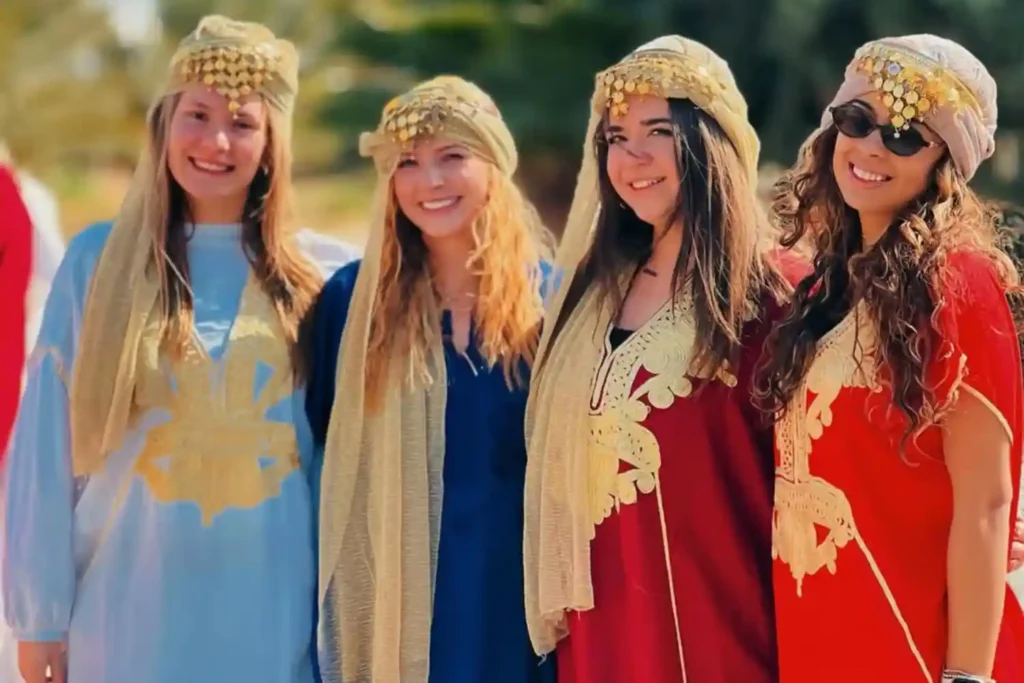
Continuing our journey into solo female travel in Morocco, we move from cultural theory to practical preparation. Your wardrobe is more than just a fashion choice; in North Africa, it serves as your “social armor.” Following the Morocco dress code for female tourists is the most effective way to blend in, show respect, and significantly reduce the frequency of verbal harassment for Morocco tourists.
The Logic Behind the Dress Code
Moroccan society is modest. While you will see local youth in Casablanca or Marrakech wearing modern clothing, as a visitor, adhering to traditional expectations of modesty signals that you understand and respect the local culture. This respect is usually returned with better treatment and less “hustling.”
When deciding what to wear in Morocco for solo female travellers, the general rule is to keep your shoulders, chest, and knees covered. Loose-fitting clothing is superior to tight clothing, not only for cultural reasons but because it allows for better airflow in the Moroccan heat.
Table 2: The Solo Woman’s Packing Essentials
| Item | Why You Need It | Style Tip |
| Maxi Skirts & Dresses | Provides full coverage while staying cool. | Choose breathable fabrics like cotton or rayon. |
| Linen Trousers | Professional and modest for city walking. | Wide-leg styles are trendy and culturally perfect. |
| Lightweight Pashmina | The most versatile tool in your bag. | Use it to cover your head in mosques or shoulders in the shade. |
| Tunic Tops | Covers the hips and chest area effectively. | Long-sleeved tunics protect you from the sun and dust. |
| Comfortable Flats | For navigating uneven Medina stones. | Avoid high heels; stick to sturdy sandals or sneakers. |
Simple Style Strategies for Different Settings
Your clothing needs will shift depending on whether you are sipping mint tea in a chic Marrakech cafe or trekking through a rural village in the Atlas Mountains.
1. The Busy Medinas (Marrakech and Fes)
In the crowded souks, the energy is high, and the space is tight. This is where you are most likely to encounter verbal harassment for Morocco tourists. Wearing a long kimono or a lightweight duster coat over your outfit adds an extra layer of “shielding.” It hides the silhouette of your body, which often leads to a more peaceful walking experience.
2. The Coastal Towns (Essaouira and Agadir)
These areas are generally more relaxed. You can get away with slightly shorter skirts (just at the knee) or sleeveless tops, but it is always wise to keep a scarf in your bag just in case you decide to wander away from the beachfront and into the residential quarters.
3. Rural Villages and the Desert
In the countryside, people are much more traditional. If you are exploring solo female travel Sahara desert safety, you’ll find that modesty is even more appreciated here. Long sleeves are also functional in the desert to protect your skin from the intense sun and wind-blown sand.
Managing Practical Safety with Your Gear
Beyond clothing, how you carry your belongings matters for solo travel to Morocco.
- The Cross-Body Bag: Always use a bag with a sturdy strap that goes across your body. Keep the zipper facing toward you. This prevents easy “snatch-and-grab” thefts in crowded areas.
- The “Fake” Wedding Ring: Many women find that wearing a simple band on their ring finger helps. When asked if you are married (a common icebreaker), you can simply say, “Yes, my husband is meeting me later.” It provides an easy exit from unwanted flirtation.
- Sunglasses: As mentioned in Part 1, sunglasses are a safety tool. They allow you to observe your surroundings and navigate without making accidental eye contact that might be misinterpreted by persistent touts.
Common Questions About Appearance
Do I need to cover my hair?
No. Unless you are entering a mosque (and many mosques in Morocco are closed to non-Muslims anyway), you do not need to cover your hair. However, having a scarf to wrap around your head can be helpful during a sandstorm in the Sahara or to keep dust out of your hair in the city.
Can I wear jeans?
Yes, skinny jeans are very common among Moroccan women. However, for a visitor, they can be quite hot. If you wear jeans, try to pair them with a longer tunic that covers your hips to maintain the Moroccan dress code for female tourists.
Part 3: Visiting the Big Cities – Marrakech, Fes, and Chefchaouen

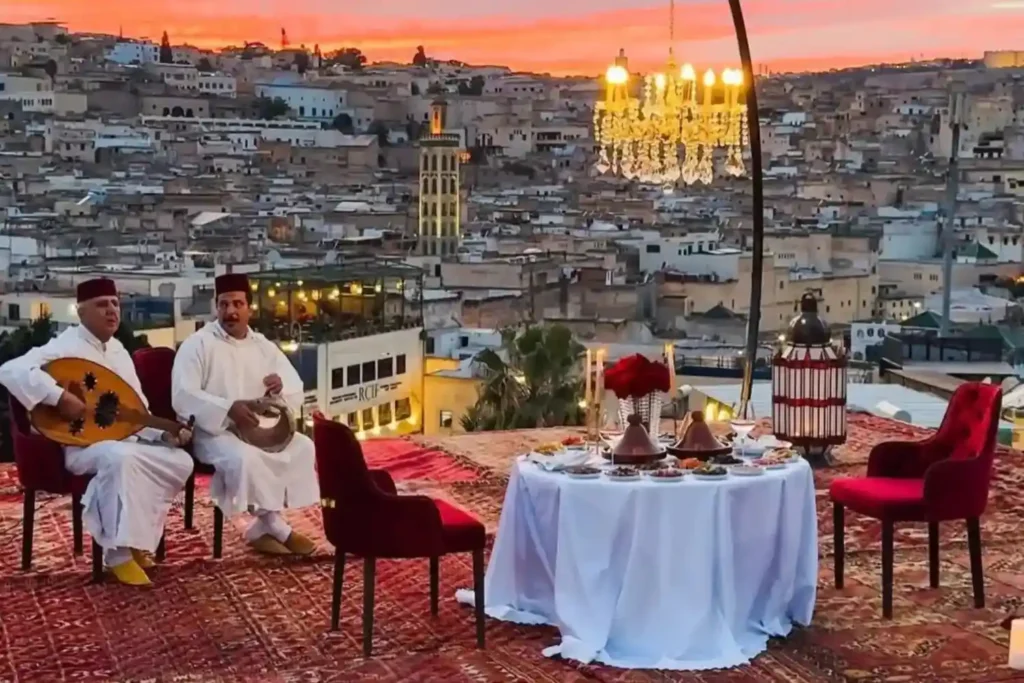
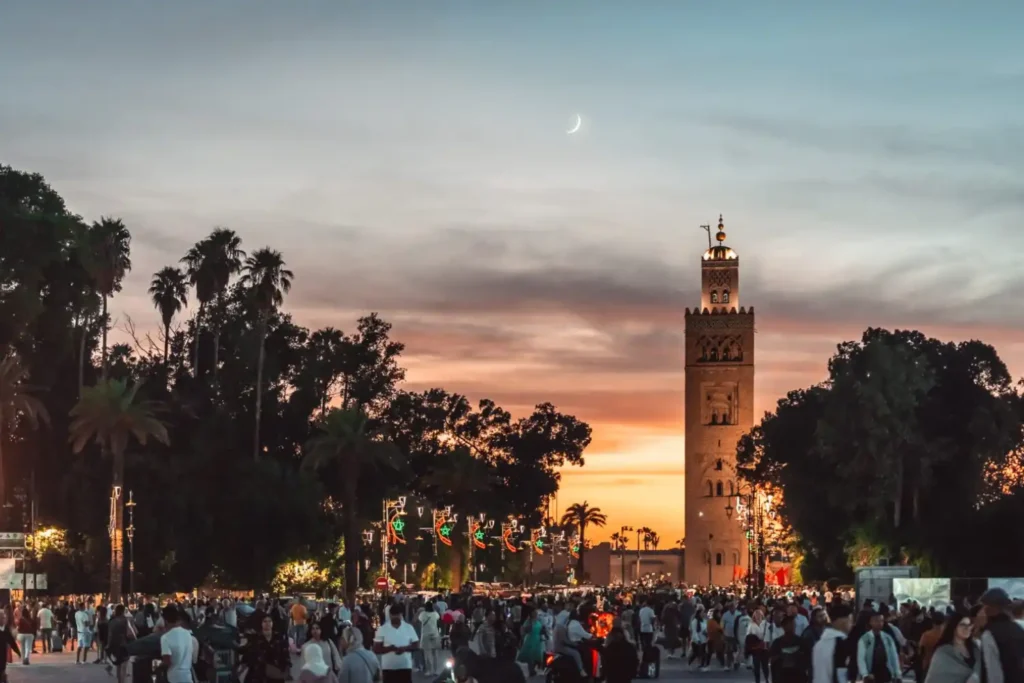
After preparing your mindset and your wardrobe, it is time to look at the map. In Morocco, safety is not a flat line; it changes depending on which city you are walking through. For a woman on a solo travel to Morocco, understanding the “personality” of each city allows you to adjust your vigilance levels accordingly.
In this section, we will compare the safest cities in Morocco for solo women and provide specific survival tips for the most famous hubs: Marrakech, Fes, and Chefchaouen.
1. Marrakech: The Energetic Red City
Marrakech is often the first stop for many, but it can also be the most overwhelming. It is a city of high sensory input, where motorbikes zip through narrow alleys and street performers vie for your attention.
Is Marrakech safe for solo female travellers at night?
Generally, the answer is yes, provided you stay in well-trafficked areas. The famous Jemaa el-Fnaa square remains lively until midnight and is heavily patrolled by both regular and tourist police. However, the deep residential “derbs” (alleys) of the Medina can become dark and deserted. If your Riad is deep in the labyrinth, aim to be back by 10:00 PM or ask your Riad host if they can meet you at the nearest taxi drop-off point.
Common Scams to Avoid in Marrakech for Solo Women:
- The “Closed Road” Scam: You will inevitably be told that the street you are walking on is “closed” or “forbidden for tourists.” This is almost always a lie intended to divert you toward a specific shop or to get you lost so the person can charge you for “help.”
- The Henna Grab: In the main square, some henna artists may grab your hand and start drawing without your consent, then demand a high price. Keep your hands tucked in or simply keep walking with a firm “No.”
- The Tannery Scam: Someone may tell you there is a “Berber festival” or a special opening at the tanneries today only. They will lead you there, give you a “tour,” and then demand an exorbitant fee at the end.
2. Fes: The Ancient Labyrinth
Fes is older, more traditional, and significantly more confusing than Marrakech. The Fes El Bali medina has over 9,000 streets, and even GPS struggles to keep up.
Safety in Fes Medina for Women:
Fes requires a slightly higher level of cultural awareness. It is a conservative city where the Morocco dress code for female tourists is particularly important. Because the streets are so narrow, physical space is limited, which can sometimes feel intimidating.
Pro-Tip for Fes: For your first day, hire a licensed guide in Morocco for solo women. Having an official guide allows you to learn the layout of the city without being constantly approached by “faux guides” (unlicensed guides). Once you understand the main “artery” streets (Tala’a Kebira and Tala’a Sghira), you will feel much more confident exploring on your own.
3. Chefchaouen: The Blue Haven
If you are looking for a break from the hustle, head north to the Rif Mountains. Is Chefchaouen safe for solo female travel? Many women describe it as the safest-feeling city in the entire country.
Unlike the imperial cities, Chefchaouen has a small-town atmosphere. The vendors are much less aggressive, and the blue-painted streets are incredibly peaceful. It is the perfect place to practice your photography and wander without the constant weight of verbal harassment for Morocco tourists. While you should still use standard travel precautions, you can generally relax your guard here.
Summary Table: Comparing the Big Three
| City | Safety Vibe | Navigation Difficulty | Key Advice |
| Marrakech | Intense / High Energy | Moderate | Stay alert to scams; return to Riad by 10 PM. |
| Fes | Traditional / Introspective | High (Labyrinthine) | Hire a guide for Day 1; dress very modestly. |
| Chefchaouen | Calm / Welcoming | Low | Perfect for solo wandering and photography. |
How to Navigate Safely in Any City
Regardless of which city you are in, use these three universal “Navigation Rules” for Morocco solo female travel:
- Walk with Purpose: Even if you are 100% lost, walk as if you have a destination. Pulling out a giant paper map is like putting a neon sign over your head that says “I am a tourist.” Instead, step into a cafe or a shop to check your phone.
- Use Offline Maps: Download the city map on Google Maps or use Maps.me, which works without data and is surprisingly accurate in the twisting Medinas.
- Ask the Right People: If you need help, don’t ask the young men hanging out on the corners. Instead, ask a woman, a shopkeeper inside their store, or an older man. They are less likely to expect a tip for their assistance.
Part 4: Getting Around – Using Trains, Buses, and Going to the Desert


Once you have mastered the cities, your solo travel to Morocco will likely lead you toward the majestic landscapes of the Atlas Mountains and the golden dunes of the Sahara. Moving between these regions requires a solid plan for logistics. For a woman traveling alone, the mode of transport you choose can significantly impact your comfort and stress levels.
1. Solo Female Travel Morocco Desert Safety
The Sahara is a highlight for almost every traveler, and it is surprisingly one of the most peaceful experiences for a solo woman. Because the desert is sparsely populated and relies heavily on a “guest-first” culture, the environment feels very secure.
Is it safe to go to the desert alone?
While you shouldn’t wander into the dunes literally alone, joining a camp near Merzouga or M’Hamid is very safe. The Berber guides in the Sahara are famous for their hospitality and professionalism. Most luxury desert camps provide private tents with locking doors and dedicated hosts who ensure you are well-fed and comfortable.
Key Tips for the Desert:
- Arrival Time: Try to arrive at your desert gateway (like Merzouga) before sunset. Navigating small desert towns in the dark can be confusing.
- Book Ahead: Avoid “street touts” at bus stations who offer cheap desert treks. Book a reputable camp online in advance to ensure high standards of safety and service.
- Stay Hydrated: The dry air is deceptive. Always carry more water than you think you need.
2. Choosing Your Route: Top Marrakech and Fes Desert Tours for Solo Women
Based on your travel goals, choosing between Marrakech Desert Tours and Fes Desert Tours depends on your starting point and whether you want to end your journey in a new city. Both routes offer deep immersion into the Sahara, but the right choice can save you hours of travel time.
Here are the top-rated itineraries tailored for solo female travellers:
1. Most Popular: Marrakech to Fes (One-Way)
These tours are perfect if you want to see the desert as a bridge between the two most famous imperial cities.
- 3 Days Desert Tour from Marrakech to Fes: This is the classic “best of” route, covering the High Atlas Mountains and the Dades Gorges before a night in the Merzouga dunes.
- 4 Days Desert Tour from Marrakech to Fes: A slower-paced option that allows for extra time exploring the Ouarzazate film studios or an additional night in the desert.
2. Returning to the Start: Marrakech Round-Trip
Best for those who have a return flight from Marrakech.
- 3 Days Desert Tour from Marrakech to Merzouga: A fast-paced journey to the Erg Chebbi dunes and back.
- 4 Days Desert Tour from Marrakech to Merzouga: Highly recommended for solo women as it reduces the daily driving time, making the trip much more relaxing.
3. The Northern Route: Tours Starting from Fes
If you are already in the north, these tours provide a stunning transition toward the south.
- 3 Days Desert Tour from Fes to Marrakech: The most efficient way to see the dunes and end in the “Red City”.
- 3 Days Desert Tour from Fes to Merzouga: A round-trip focusing purely on the desert experience and the Middle Atlas cedar forests.
- 4 Days Desert Tour from Fes to Marrakech: A comfortable, balanced route that offers extra time to relax in the Dades Valley and explore Ait Benhaddou without feeling rushed.
- 5 Days Desert Tour from Fes to Marrakech: The ultimate “slow travel” experience featuring short drives, visits with nomadic families, and discovery of hidden Kasbahs off the main track.
Comparison of Desert Experiences
| Tour Type | Best For | Safety Benefit |
| Marrakech Desert Tours | Travelers with more time for the Atlas Mountains. | Uses well-traveled routes with many stop options. |
| Fes Desert Tours | Seeing the Middle Atlas and Barbary Macaques. | Shorter initial driving day to reach the desert. |
Whether you choose a 3 Days desert tour from Marrakech to Fes or a longer 5 days desert tour from Fes to Marrakech, joining a small group or hiring a private driver ensures high solo female travel Sahara desert safety.
3. Public Transport Safety for Women in Morocco
If you are on a budget, you will likely use the national rail or bus systems. Public transport safety for women in Morocco is generally high, but there are a few “unwritten rules” to make your journey smoother.
- Trains (ONCF): This is the gold standard for solo women. The trains connect Tangier, Rabat, Casablanca, and Marrakech. Always book a First Class ticket; it is only a few dollars more but provides a reserved seat in a more spacious, air-conditioned cabin.
- Buses: For long-haul trips where trains don’t go (like to the desert or Chefchaouen), use CTM or Supratours. These are premium bus lines with dedicated stations, luggage tracking, and professional drivers. Avoid “local” buses at the central Gare Routière unless you are a very experienced traveler, as they can be crowded and chaotic.
4. Private Drivers vs. Public Transit
Many women ask: Is it better to hire a private driver in Morocco for solo women? The answer depends on your budget and your desire for “social shielding.”
| Feature | Trains & Premium Buses | Private Driver / Guide |
| Cost | Very Affordable ($10–$30) | Higher Investment ($100–$150/day) |
| Safety | High (Publicly monitored) | Highest (Personal protection) |
| Hassle Factor | Moderate (Navigating stations) | Zero (Door-to-door service) |
| Flexibility | Fixed schedules | Stop anywhere for photos or tea |
Hiring a private driver means you have a local ally. They handle the haggling, the directions, and the luggage. For many solo women, this “buffer” against the outside world makes the trip much more relaxing, especially on the long 9-hour drive from Marrakech to the Sahara.
5. Taxis: Petit vs. Grand
Within the cities, you will use “Petit Taxis” (small cars for 3 people) and “Grand Taxis” (larger cars for 6 people for inter-city travel).
- Petit Taxis: Always ensure the driver turns on the meter (le compteur). If they refuse, simply get out and find another one. After dark, it is better to take a taxi than to walk through quiet Medina streets.
- Grand Taxis: These function like shared shuttles. If you don’t want to sit squeezed between strangers, you can pay for two seats or “buy the whole car” for a private trip.
Part 5: Choosing a Place to Stay and Comparing Other Countries
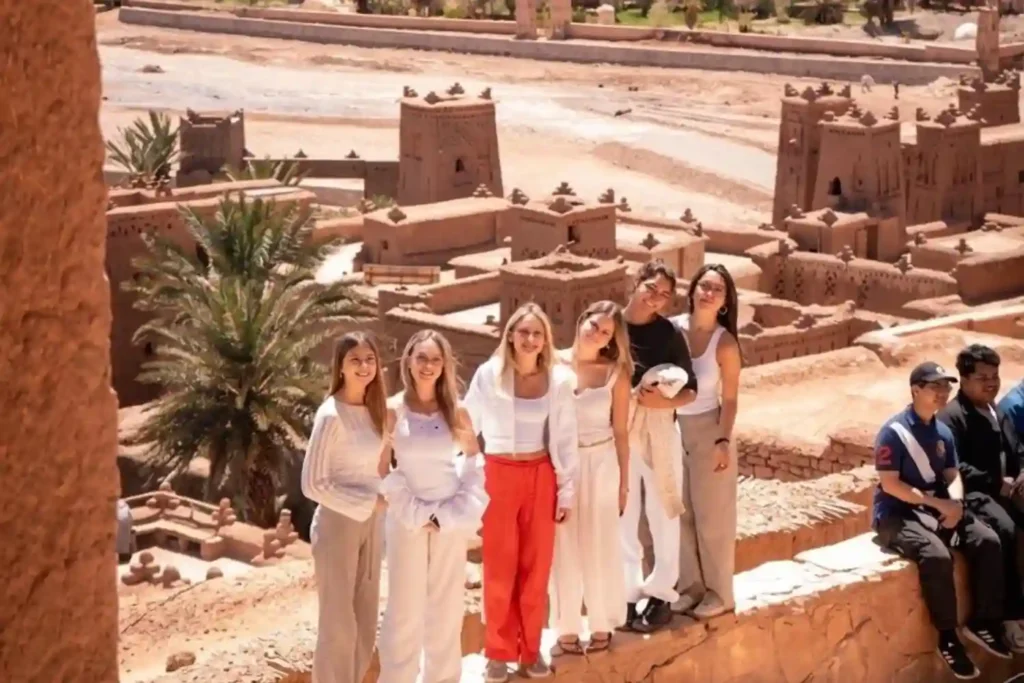
Finding your “home base” is a critical step in ensuring how safe Morocco is for solo female travellers. Unlike standard hotels, Morocco offers a unique form of accommodation called a Riad, a traditional house with an interior garden or courtyard. For a woman on a solo travel to Morocco, staying in a Riad isn’t just about the beautiful tiles; it is about having a family-style support system.
1. The Magic of Riads for Solo Women
The best Riads in Morocco for solo female travellers are usually small, boutique properties with only 5 to 10 rooms. This intimate setting means the staff will quickly get to know you.
- Security: Most Riads have a heavy front door that remains locked. You usually have to ring a bell to be let in, which keeps the busy street energy outside.
- The “Host” Advantage: Riad managers often act as unofficial concierges. They can draw you hand-written maps, walk you to a nearby restaurant at night, or help you negotiate a fair price for a rug you liked.
- Rooftop Sanctuaries: If you feel overwhelmed by the verbal harassment for Morocco tourists in the streets, Riads offer a private rooftop terrace. You can sunbathe, read, or enjoy the call to prayer in complete privacy.
2. Comparison: Morocco vs Egypt for Solo Female Travel
Many women looking for an “Exotic North African” experience find themselves choosing between Morocco and Egypt. While both are incredible, the safety experience for a solo woman differs.
| Feature | Morocco | Egypt |
| Independent Ease | High. Many women travel entirely solo. | Lower. Many prefer group tours. |
| Hassle Factor | High in souks, but usually verbal only. | Can be very intense at major monuments. |
| Accommodation | Diverse (Riads, Hostels, Luxury). | Mostly large international hotels. |
| Vibe | “Boutique” and atmospheric. | Grand, historical, and monumental. |
Generally, solo female travel in Morocco is considered more accessible for first-timers because the “Riad culture” provides a safe, welcoming environment that is harder to find in Egypt’s larger, more anonymous hotel scene.
3. Group Tours for Solo Women in Morocco
If the idea of navigating the Medinas alone still feels a bit daunting, you are not alone. Many women choose group tours for solo women in Morocco for the first half of their trip to get their “bearings.”
- Safety in Numbers: Traveling with a group eliminates almost all street hassle.
- The Best of Both Worlds: Many best Morocco tours for solo travellers allow for “free time” in the afternoons, so you can still explore a bit on your own while knowing your group is nearby.
- Shared Costs: Group tours make expensive experiences, like a private trek through the High Atlas, much more affordable.
Part 6: FAQs (Frequently Asked Questions)
Is it safe to drink the tap water in Morocco?
It is generally recommended for travelers to stick to bottled or filtered water. While tap water is treated in major cities, the mineral content can be tough on sensitive systems. Always check that the seal on bottled water is intact when purchasing it in the souks.
What should I do if I feel unwell while traveling alone?
Morocco has a high standard of private clinics, particularly in cities like Marrakech and Casablanca. If you are staying in a Riad, the staff are your best allies; they can call a doctor to your room or escort you to a pharmacy. It is highly recommended to carry a basic “travel kit” with rehydration salts and stomach settlers.
How do I handle menstrual hygiene while on a desert tour?
While major cities have modern supermarkets (like Marjane or Carrefour) stocked with supplies, the desert and rural areas may only have basic shops. It is best to pack enough supplies for your entire trip. In the desert, luxury camps have private bathrooms, making hygiene much easier than in basic camps.
Is there a specific emergency number for tourists?
Yes. You can dial 19 for the police in urban areas and 177 for the Gendarmerie Royale in rural areas. There is also a dedicated “Tourist Police” (Brigade Touristique) in major hubs like Fes and Marrakech specifically trained to assist visitors with issues like theft or harassment.
What should I do if a “faux guide” follows me?
If someone persists in following you despite a firm “No, thank you,” the best strategy is to walk toward a high-end hotel, a bank with a security guard, or a shop with an older owner. Often, simply asking a uniformed officer for the time or directions will cause a persistent tout to vanish.
Is it okay to go to a local “Hammam” (public bath) as a solo woman?
Absolutely! For many, this is a highlight of solo female travel in Morocco. You can choose a “Spa” style Hammam for a private experience, or a local public Hammam for a more authentic, social experience with local women. It is one of the few places where you will see the strictly female side of Moroccan social life.
Will my phone work everywhere?
While roaming works, it is much cheaper to buy a local SIM card (Inwi or Maroc Telecom) at the airport for a few dollars. Having a local number and data is a massive safety boost, allowing you to call your Riad or use live GPS at any time.
Are ATMs safe for solo women to use?
Yes, but try to use ATMs attached to a bank during business hours. Avoid using isolated ATMs at night. Morocco is a cash-based society, so always ensure you have enough Dirhams (MAD) for small purchases, as many souk vendors do not accept cards.
Can I travel to Morocco during Ramadan?
Yes, but it requires extra sensitivity. During the holy month, most locals fast from sunrise to sunset. While you aren’t expected to fast, eating or drinking conspicuously in public is considered disrespectful. Most Riads and tourist restaurants will still serve food, and the evening “Ftour” (breaking of the fast) is a beautiful, festive time to experience.
Should I tip for everything?
Tipping (Baksheesh) is a part of the culture. A few Dirhams for a cafe waiter or someone who helps with your bags is standard. However, you do not need to tip someone who gives you unsolicited directions; doing so can sometimes encourage more “hustling.”
Part 7: How to Feel Safe and Strong During Your Morocco Trip
To have the best time while doing solo travel to Morocco, you need more than just a map. You need a confident mindset. Traveling alone as a woman is a great way to grow your confidence. In this final part, we will talk about how to feel powerful and relaxed while you explore.
1. The “Confident Walker” Trick
In the big cities, the way you walk tells people a lot about you. To avoid verbal harassment for Morocco tourists, you should practice “active walking.”
- Walk with a Plan: Even if you are lost, keep walking like you have an important meeting. If you need to check your phone, step inside a shop or a cafe first.
- Body Language: Keep your head up and your shoulders back. When you look like you know the city, people are less likely to bother you with scams to avoid in Marrakech for solo women.
- The Power of Sunglasses: Wearing sunglasses is a great trick. It stops people from making eye contact, which can sometimes be seen as an invitation to start a long conversation.
2. Making Real Friends
While it is important to be careful, don’t forget that most Moroccans are very kind. Moroccan culture and etiquette for female visitors is built on being nice to guests.
- Talk to Other Women: If you have a question or need help, try to find a local woman. Whether she is a shop owner or a mother at a park, she will often give you the best advice.
- Accepting Tea: If a shopkeeper offers you mint tea, it is usually just a friendly gesture. It is okay to say yes and sit for a few minutes. If you feel uncomfortable, just say “La, Shukran” (No, thank you) and walk away.
3. Your Daily Safety Checklist
Use this simple table every morning before you leave your Riad to make sure you are ready for Morocco solo female travel.
| What to Check | Why it is Important |
| Phone Battery | You need your GPS to find your way back to your Riad. |
| Dress Code | Make sure your Morocco dress code for female tourists is correct for the area you are visiting. |
| Riad Card | Always carry the business card of your hotel so a taxi can take you back easily. |
| Small Cash | Carry small coins for tips or water so you don’t have to show a big wallet. |
4. Is the Effort Worth It?
You might worry about how to handle catcalling in Morocco, but remember that these are small moments. The big moments, like seeing the stars in the Sahara or eating fresh tagine, are much more important.
How safe is Morocco for solo female travellers? It is safe enough for thousands of women to visit every year and fall in love with the country. If you want a little extra help, look for the best Morocco tours for solo travellers. These tours let you see the beauty of the country while someone else handles the difficult parts.
5. Final Thoughts
Solo female travel in Morocco is a life-changing adventure. You will learn that you are braver than you thought. By dressing modestly, staying in the best Riads in Morocco for solo female travellers, and being firm with your “No,” you will have a wonderful trip.
Morocco is a beautiful place full of colors, music, and friendly faces. Now that you have all the tips and tricks, you are ready to go. Pack your bags, stay confident, and enjoy every minute of your Moroccan story!