
The Complete History and Legacy of the Moroccan Empire
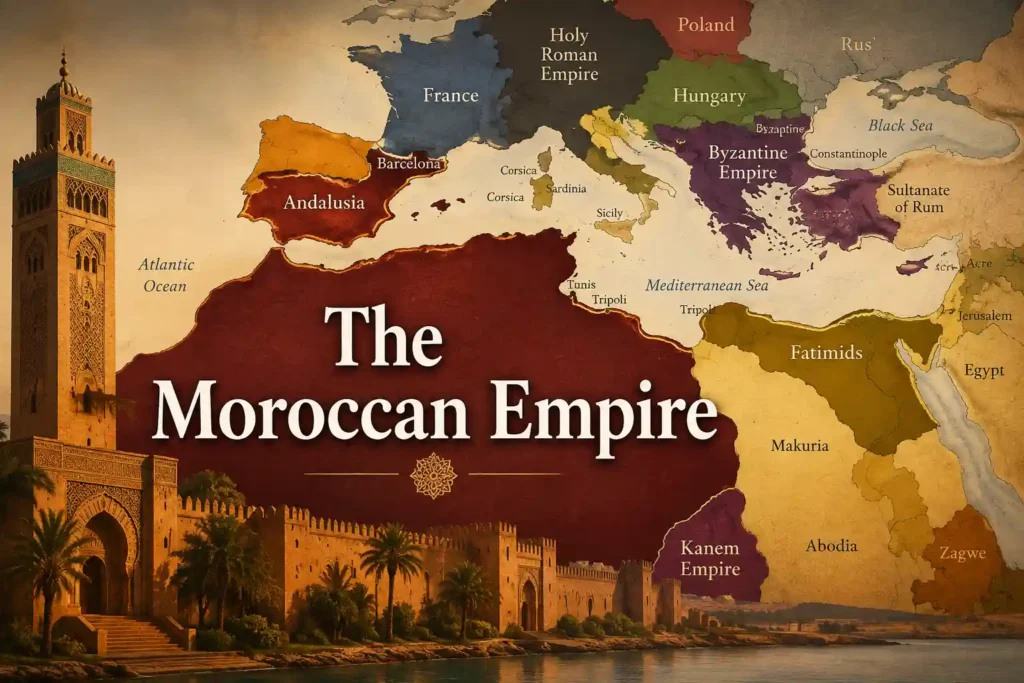
The Moroccan Empire boasts one of the most vibrant, complex, and enduring histories in all of North Africa. Delving deep into the comprehensive history of the Moroccan Empire reveals a captivating narrative of resilience, strategic expansion, and profound cultural evolution. Over many centuries, a succession of influential Moroccan dynasties forged vast, powerful kingdoms that stretched far beyond contemporary borders, bridging Sub-Saharan Africa, the Mediterranean, and parts of Europe.
These rulers established vital trade networks across the Sahara Desert and fostered unprecedented advancements in scholarship, science, and the arts. They also left behind an awe-inspiring architectural legacy, featuring grand mosques, ornate palaces, fortified kasbahs, and bustling ancient medinas within the legendary imperial cities of Morocco, that continues to capture the imagination of millions of global visitors today. Whether you are uncovering the deep roots of Morocco history, studying the foundational milestones of ancient Morocco, tracing the distinct chapters of Marrakech history and Fes history, or simply browsing a detailed Morocco travel guide, understanding this rich imperial tapestry brings extraordinary context and depth to the vibrant tapestry of Moroccan culture.
Table of Contents
What Was the Moroccan Empire?
The Moroccan Empire refers to the succession of powerful, sovereign kingdoms and Islamic dynasties that ruled Morocco from the 8th century onward. Unlike a centralized, static state with fixed borders, the empire evolved dynamically across generations, at various times extending far beyond modern-day national boundaries into parts of Algeria, Mauritania, Western Sahara, southern Spain, and deep into West Africa.
At its greatest territorial heights, the empire served as a pivotal geopolitical and economic bridge connecting the Mediterranean basin, the Middle East, and Sub-Saharan Africa. Governed by a succession of influential ruling houses, it combined military strength with religious authority, administrative organization, and thriving trans-continental trade networks. This rich heritage laid the permanent political, spiritual, and cultural foundations of ancient Morocco, shaping the identity of the imperial cities of Morocco and leaving a profound footprint on Morocco history and Moroccan culture that endures to this day.
The Great Moroccan Dynasties
The historical trajectory of the Moroccan Empire is defined by a sequence of remarkable ruling houses, each contributing uniquely to Morocco history, Islamic civilization, and Moroccan culture:
Idrisid Dynasty (788–974): Founded by Idriss I, this dynasty established the first independent Moroccan Islamic state and transformed Fes into an essential regional center for religious scholarship and culture.
Almoravid Dynasty (1040–1147): Emerging from the desert, the Almoravids built one of the most formidable empires in North Africa, laying down foundational urban roots across ancient Morocco. Key milestones include founding Marrakech, expanding territorial control into southern Spain, dominating vital Sahara trade routes, and fiercely strengthening Islamic scholarship.
Almohad Dynasty (1121–1269): Succeeding the Almoravids, the Almohads unified vast territories across North Africa and Al-Andalus while advancing monumental architecture that still defines the imperial cities of Morocco today. Famous architectural achievements from this era include the Koutoubia Mosque in Marrakech and the iconic Hassan Tower in Rabat.
Marinid Dynasty (1244–1465): The Marinids further elevated intellectual life across the realm, elevating Fes into one of the greatest centers of learning in the medieval Islamic world through the construction of architectural masterpieces like intricate madrasas and public libraries.
Saadian Dynasty (1549–1659): Renowned for major military triumphs—including the historic Battle of the Three Kings—and unprecedented economic prosperity driven by the trans-Saharan sugar trade. Their legacy is permanently stamped into the landscape through breathtaking architectural landmarks like the Saadian Tombs and the ruins of El Badi Palace in Marrakech history.
Alaouite Dynasty (1666–Present): Representing the current royal house, the Alaouite Dynasty has ruled Morocco for centuries, successfully preserving national sovereignty and maintaining one of the oldest continuing monarchies in the world today.
The Moroccan Empire and the Sahara Desert
Beyond the fortified walls of the imperial cities, the expansion and prosperity of the Moroccan Empire were deeply tied to the vast expanses of the Sahara Desert. For centuries, the empire maintained firm control over the major trans-Saharan caravan routes that served as the commercial arteries of the region. These grueling yet immensely lucrative trade paths connected Morocco directly with West Africa, transforming the realm into a thriving hub of international commerce.
Caravans laden with precious commodities crossed the desert dunes, transporting vital goods that fueled the empire’s economic power and supported the growth of ancient Morocco. Merchants and traders exchanged valuable assets, including:
Gold from West African fields that anchored the currency and wealth of successive dynasties.
Salt from desert mines, which was essential for food preservation and highly prized across the region.
Spices that enriched local cuisine and traded heavily in bustling markets.
Textiles and fine fabrics crafted or imported through Mediterranean networks.
Ivory and other rare materials sought after by royal artisans and nobility.
This continuous flow of trade not only filled the royal treasuries and funded magnificent architectural projects across the imperial cities of Morocco, but it also fostered deep cultural, religious, and social exchanges between North Africa and sub-Saharan communities, cementing the Sahara’s central role in the broader history of the Moroccan Empire.
Famous Historic Cities of the Moroccan Empire
The enduring glory of the Moroccan Empire lives on through its magnificent urban centers, famously known as the imperial cities. Each of these historic destinations preserves an extraordinary collection of royal palaces, lush gardens, grand mosques, and sprawling ancient medinas that reflect centuries of imperial power and artistry:
Marrakech: Founded during the Almoravid era, this vibrant city served as a pivotal political and cultural capital, leaving a profound stamp on Marrakech history through iconic landmarks like the Koutoubia Mosque, historic ramparts, and bustling traditional souks.
Fes: Established as the country’s spiritual and intellectual heart during the Idrisid and Marinid dynasties, Fes history is anchored by its world-renowned ancient medina, stunning medieval madrasas, and traditional tanneries that preserve ancient crafts.
Meknes: Transformed into a majestic fortified capital under the early Alaouite Dynasty, Meknes boasts monumental city gates, expansive royal stables, and grand defensive walls that showcase imperial grandeur.
Rabat: Serving as both an ancient stronghold and a modern capital, Rabat features architectural treasures from the Almohad period, including the soaring stone majesty of the Hassan Tower and the historic Kasbah of the Udayas.
Together, these legendary cities offer a living museum of Moroccan culture, preserving the breathtaking architecture, intricate tilework, and vibrant traditions born from the legacy of the empire.
Legacy of the Moroccan Empire
The sweeping influence of the Moroccan Empire extends far beyond historical texts and ancient chronicles, remaining vividly alive in everyday life across the nation. This profound legacy can still be seen and experienced in:
Traditional architecture, which showcases master stonework, carved stucco, and geometric mastery handed down through generations.
Islamic art, characterized by intricate tile mosaics, brilliant calligraphy, and sophisticated design principles.
Moroccan cuisine, blending exotic spices, sweet and savory profiles, and time-honored cooking techniques rooted in diverse historical influences.
Handmade crafts, featuring master weaver carpets, hammered brass, pottery, and leather goods crafted using ancient methods.
Ancient kasbahs, standing resiliently as earthen fortresses guarding mountain passes and desert fringes.
Historic medinas, where winding pedestrian alleys and bustling marketplaces pulse with the same commercial and social rhythm as centuries past.
Cultural festivals, celebrating music, heritage, and spiritual traditions that connect modern generations to their imperial roots.
Why Visit Morocco's Imperial Cities?
For modern travelers seeking an immersive journey through time, exploring the tangible remnants of the Moroccan Empire is an unforgettable experience. Stepping into these historic regions allows visitors to witness the living architecture and enduring traditions that have shaped North Africa for over a millennium.
You can experience this legacy firsthand by exploring:
Ancient medinas, where labyrinthine streets and bustling traditional souks immerse you in centuries-old daily commerce and local artisanship.
Royal palaces, showcasing breathtaking courtyards, intricate woodwork, and exquisite zellige tile mosaics crafted by master artisans.
Historic kasbahs, standing tall as majestic earthen and stone fortresses that once guarded vital trade routes and mountain passes.
UNESCO World Heritage Sites, which officially recognize and protect the architectural brilliance and cultural importance of Morocco’s historic hubs.
Traditional souks, overflowing with spices, handmade crafts, textiles, and vibrant local goods.
Desert caravan routes, following the historic paths where merchants once crossed the dunes to link North Africa with West Africa.
The Spiritual and Intellectual Evolution Under the Merenids and Saadians
Building upon the monumental foundations laid by their predecessors, successive rulers continually reshaped the intellectual and spiritual landscape of the region. During the Marinid era, scholarship reached unprecedented heights, transforming Fes into a globally renowned magnet for scholars, theologians, and astronomers from across the Mediterranean and Islamic worlds. The construction of sprawling madrasas, such as the Bou Inania and Al-Attarine, introduced a new architectural pinnacle characterized by intricate cedar woodwork, carved stucco, and exquisite zellige tilework. These institutions functioned not only as centers of religious learning but also as active administrative hubs that sustained the intellectual vitality of the empire.
As power shifted to the Saadian Dynasty, the focus expanded toward grand artistic patronage and military defense, financed heavily by the golden yields of trans-Saharan commerce. This golden age witnessed the creation of breathtaking artistic masterworks, most notably the El Badi Palace in Marrakech, which was designed to dazzle foreign ambassadors with pavilions adorned in Italian marble, gold leaf, and sunken reflecting pools. Simultaneously, the development of specialized royal libraries and private manuscript collections preserved centuries of scientific, mathematical, and philosophical knowledge, ensuring that the intellectual output of the empire matched its formidable political and economic dominance.
The Architectural Masterpieces and Strategic Fortifications of the Imperial Era
The physical landscape of the Moroccan Empire stands as a breathtaking testament to the engineering genius and aesthetic vision of its ruling dynasties. Beyond the residential quarters of the imperial capitals, monarchs poured vast resources into monumental defensive and civic structures designed to project authority and withstand prolonged sieges. Massive ramparts constructed from compressed earth and lime, known locally as pisé, encircled sprawling urban centers, punctuated by monumental stone gates adorned with intricate horseshoe arches and geometric carved reliefs. These architectural fortifications were not merely functional barriers; they served as potent symbols of imperial sovereignty, carefully engineered to control vital urban entry points and regulate internal commerce.
Furthermore, the integration of water management systems through sophisticated underground qanats, ornate public fountains, and expansive royal gardens demonstrated an advanced mastery of urban planning in arid environments. Palaces featured sprawling riads centered around tranquil courtyards, where cooling water features, citrus trees, and symmetrical tile pathways created microclimates of refuge for royalty and foreign dignitaries alike. This synthesis of defensive might and refined interior luxury established a distinctive design vocabulary that continues to define the historical prestige and timeless aesthetic appeal of Morocco’s enduring urban centers.
The Global Trade Networks and Economic Diplomacy of Moroccan Sultans
The enduring economic power of the Moroccan Empire relied heavily on sophisticated international trade agreements, diplomatic diplomacy, and strategic maritime ports that linked African resources with European and Middle Eastern markets. Imperial sultans actively negotiated commercial treaties with foreign maritime powers, including European mercantile nations, to regulate customs duties, secure safe passage for merchant fleets, and project royal authority far beyond domestic borders. Ports such as Essaouira, Salé, and Tangier functioned as bustling international crossroads where European merchants, Ottoman traders, and African caravan leaders exchanged goods under strict imperial oversight.
This complex commercial apparatus extended deep into the administration of state finances, where royal mints issued stable currencies backed by the steady influx of trans-Saharan gold and Mediterranean trade tariffs. The wealth generated from these international networks enabled rulers to fund permanent standing armies, maintain elaborate royal courts, and finance public infrastructure projects such as expansive granaries, roadside caravanserais (funduqs), and fortified bridges. By carefully balancing maritime commerce with traditional land routes, the empire sustained its economic resilience across centuries, cementing its status as a vital global trading partner and safeguarding its political independence in a fiercely competitive Mediterranean arena.
The Role of Sufi Orders and Religious Brotherhoods in State Stability
Beyond military might and economic trade networks, the social cohesion and political resilience of the Moroccan Empire were deeply sustained by the influence of Sufi orders and religious brotherhoods (tariqas). Throughout successive dynasties, spiritual leaders and marabouts established local lodges, known as zawiyas, which served as vital centers for spiritual guidance, education, and social welfare across both urban centers and remote rural regions. These brotherhoods provided food and shelter to travelers, mediated tribal disputes, and organized communal solidarity networks that reinforced the central authority of the sultan by fostering a shared religious identity that transcended regional and ethnic divisions.
Many reigning monarchs actively patronized these spiritual networks, funding the construction of mausoleums and granting tax exemptions to zawiyas in exchange for moral backing and regional stability. This symbiotic relationship between political power and religious leadership created a unique social fabric where spiritual devotion reinforced state loyalty, helping the empire weather external threats, succession crises, and political transitions while preserving the deep-rooted spiritual traditions that remain a cornerstone of Moroccan heritage today.
Frequently Asked Questions
What was the Moroccan Empire?
The Moroccan Empire refers to the succession of powerful sovereign kingdoms and Islamic dynasties that ruled Morocco and extended their influence across North Africa, parts of southern Spain, and West Africa from the 8th century onward.
Which dynasty founded Marrakech?
The Almoravid Dynasty founded Marrakech in the 11th century, establishing it as a major political, military, and cultural capital.
What are Morocco's four imperial cities?
The four historic imperial cities of Morocco are Marrakech, Fes, Meknes, and Rabat, each serving as a capital during different ruling dynasties.
Does Morocco still have a monarchy?
Yes. Morocco is a constitutional monarchy ruled by the Alaouite Dynasty, making it one of the oldest continuing monarchies in the world.
Why is the Moroccan Empire important?
It profoundly shaped Morocco’s unique culture, monumental architecture, spiritual traditions, trans-Saharan trade networks, and political history, leaving a lasting global legacy.
How did the trans-Saharan trade routes impact the Moroccan Empire?
The trans-Saharan trade routes served as the economic backbone of the empire, allowing merchants to transport valuable goods like gold, salt, and spices between West Africa and the Mediterranean, which funded royal treasuries and massive architectural projects.
Which dynasty turned Fes into a center of learning?
Both the Idrisid Dynasty, which originally founded Fes as an Islamic capital, and later the Marinid Dynasty, which built magnificent medieval madrasas and libraries, transformed the city into a world-renowned center of scholarship and theology.
What architectural features define the imperial cities of Morocco?
The imperial cities are characterized by massive earthen and stone ramparts, monumental fortified gates with horseshoe arches, intricate zellige tile mosaics, carved cedar woodwork, and sprawling palace complexes centered around tranquil riads.
What role did Sufi brotherhoods play in Moroccan history?
Sufi orders and local zawiyas provided crucial social welfare, education, and dispute resolution across rural and urban areas, while fostering a shared spiritual identity that reinforced national stability and supported central authority.
What territories did the Moroccan Empire control at its peak?
At its greatest territorial extents under powerful ruling houses like the Almoravids, Almohads, and Saadians, the empire stretched far beyond modern Morocco into parts of modern Algeria, Mauritania, Western Sahara, southern Spain (Al-Andalus), and deep into West Africa.
Conclusion
The Moroccan Empire stands as one of the most remarkable and enduring civilizations in North African history, defined by a succession of visionary dynasties, flourishing trade networks, and magnificent architectural achievements. From the intellectual prominence of Fes and the grand ramparts of Marrakech to the strategic desert caravan routes and the enduring spiritual traditions of Sufi brotherhoods, the legacy of this imperial past continues to shape the vibrant culture and identity of modern Morocco. Exploring its history offers a profound window into a rich heritage that bridges continents and continues to captivate travelers from around the world.

I’m Lahcen Saadi from the Exploring Morocco Trips team. We are local guides dedicated to crafting authentic and exceptional Moroccan experiences.
Whether you are planning your first trip to Morocco and need expert advice, or you are a travel professional looking to collaborate on unique itineraries, we are ready to help.
- 2 Days Desert tours From Marrakech
- 3 Days Desert tour From Marrakech to Merzouga
- 3 Days Desert tour From Marrakech to Fes
- 4 Days Desert tour From Marrakech to Merzouga
- 4 Days Desert tour From Marrakech to Fes
- 5 Days Desert tour From Marrakech to Merzouga
- 5 Days Desert tour From Marrakech to Fes
- 6 Days Desert tour From Marrakech to Casablanca
- 7 Days Morocco tour from Marrakech
- 8 Days Morocco tour from Marrakech
- 8 Days Morocco tour from Marrakech with Imperial Cities
- 9 Days Morocco tour from Marrakech
- 10 Days Morocco tour from Marrakech
- 12 Days Morocco tour from Marrakech
- 14 Days Morocco tour from Marrakech
- 2 Days Desert tour From Fes to Merzouga
- 2 Days Desert tour From Fes to Marrakech
- 3 Days Desert tour From Fes to Merzouga
- 3 Days Desert tour From Fes to Marrakech
- 4 Days Desert tour From Fes to Marrakech
- 5 Days Desert tour From Fes to Marrakech
- 6 Days Desert tour From Fes to Marrakech
- 7 Days Morocco tour from Fes
- 4 Days Morocco tour from Casablanca
- 5 Days Morocco tour from Casablanca
- 6 Days Morocco tour from Casablanca
- 7 Days Morocco tour from Casablanca
- 8 Days Morocco tour from Casablanca
- 9 Days Morocco tour from Casablanca
- 10 Days Morocco tour from Casablanca
- 11 Days Morocco tour from Casablanca
- 12 Days Morocco tour from Casablanca
- 14 Days Morocco tour from Casablanca