
Moroccan Wedding Traditions: The Complete Guide to Morocco’s Most Spectacular Celebration
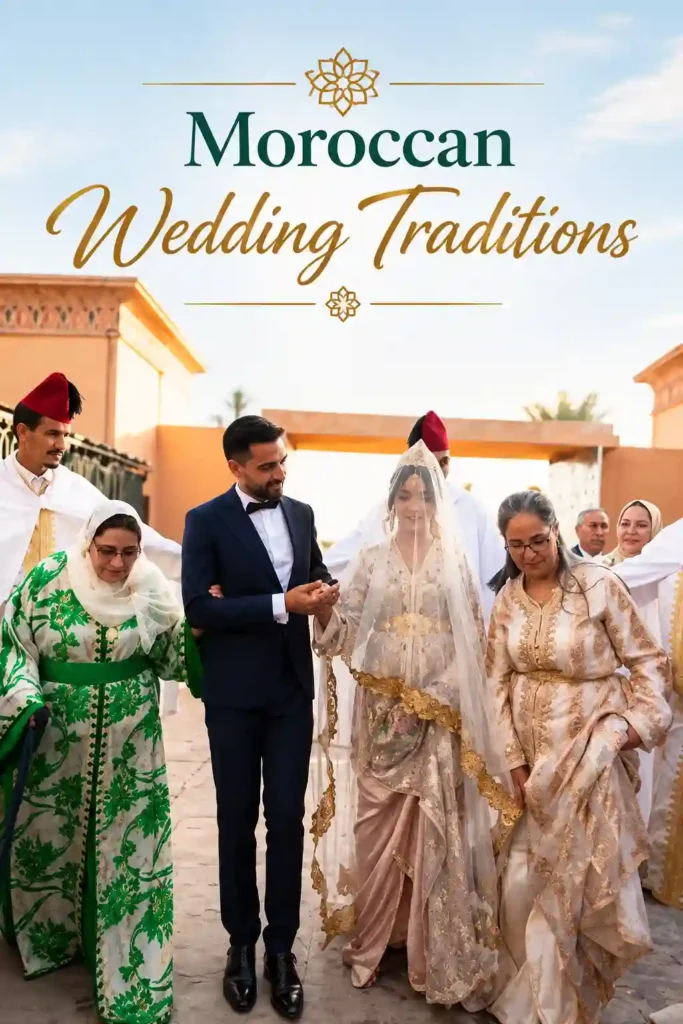
A Moroccan wedding isn’t a single event, it’s a multi-day production built around centuries-old rituals, elaborate outfits, and enough food and music to celebrate for days rather than hours. If you’ve ever seen a photo of a bride lifted above a crowd on an ornate golden throne, or heard about henna nights that last until dawn, you’ve caught a glimpse of one of the most visually striking wedding traditions in the world. This guide breaks down exactly what happens at a Moroccan wedding, stage by stage, what each ritual actually means, and what to expect if you’re lucky enough to attend one yourself.
Quick Facts About Moroccan Weddings
| Fact | Detail |
|---|---|
| Typical length | 3 days (traditionally up to 7) |
| Key pre-wedding ritual | The henna ceremony (Laylat Al Henna) |
| Bride’s outfit changes | Often 5 to 7 different caftans/takchitas per wedding |
| Signature entrance | The Amariya, an elevated ceremonial throne |
| Traditional bridal dresser | The Neggafa |
| Wedding day start time | Around 8 PM, often continuing until sunrise |
| Symbolic color for henna night | Green, representing the henna plant and paradise |
The Khotba: How It All Begins
Before any of the celebration begins, a Moroccan wedding starts with the khotba, the formal engagement stage where the groom’s family visits the bride’s family to ask for her hand. This is followed by Al Kaghet (also called the Helel), the religious signing of the marriage contract, a legal and religious step that officially recognizes the union even before the larger celebration takes place. In many families, this stage is treated with real seriousness, and it can happen weeks or even months before the wedding festivities themselves.
The Hammam Day: Purification Before the Celebration
In the days leading up to the wedding, the bride traditionally visits the hammam, Morocco’s communal bathhouse, accompanied by close female relatives and friends. This isn’t just a spa day, it’s considered a purification ritual, a way of preparing the bride physically and symbolically before the henna night and the wedding itself. Many modern brides now recreate this tradition at upscale riads and spas rather than a public hammam, though the symbolic purpose remains the same.
The Henna Ceremony: Morocco’s Most Symbolic Wedding Ritual
If there’s one Moroccan wedding tradition most people have heard of, it’s the henna ceremony, known locally as Laylat Al Henna. Held on the eve of the wedding, this ceremony is dedicated almost entirely to the bride, and it’s considered one of the most emotional, intimate parts of the entire celebration. The bride traditionally wears green, symbolizing both the henna plant itself and, in Islamic tradition, paradise. A skilled henna artist, called a neqqasha, applies intricate designs to her hands and feet, geometric patterns, floral motifs, and symbols tied to fertility, protection, and good fortune. The ceremony genuinely symbolizes purification, protection, and fertility for the marriage ahead, and the longer and darker the henna stain sets, the more it’s traditionally believed to reflect the depth of the couple’s future happiness.
It isn’t only about the bride. In many families, the groom holds his own smaller henna gathering with male relatives, receiving a single dot of henna on each palm, followed by a shared meal and time together before the big day. During or shortly after the henna ceremony, the bride also receives the hdiyya, gifts from the groom’s family presented on decorative trays, caftans, jewelry, perfumes, and symbolic offerings like sugar and milk, representing the respect and generosity between the two families.
The Neggafa: The Woman Behind the Scenes
Few outsiders know about the neggafa, but she’s genuinely central to how a Moroccan wedding runs. The neggafa is a professional bridal dresser and event coordinator who manages the bride’s many outfit changes throughout the night, ensures each transition happens smoothly, and oversees much of the traditional staging of the event. Given how many times a Moroccan bride changes clothes in a single evening, often five to seven times, the neggafa’s role is far more demanding than a typical wedding planner, she’s essentially directing a live, multi-act fashion show woven into the celebration itself.
The Bride’s Wardrobe: A Wedding With Multiple Outfits
Unlike many Western weddings, where the bride wears a single gown, a Moroccan bride changes outfits multiple times throughout the wedding night, often five to seven times, with each caftan or takchita representing a different region or style within Morocco. These outfits are elaborate, heavily embroidered, and paired with statement jewelry, tiaras, and ornate belts, and the final outfit of the night is sometimes a Western-style white dress, a modern addition layered onto the older tradition. Watching the bride move through these changes over the course of the evening is, for many guests, one of the most anticipated parts of the whole event.
The Amariya: The Wedding’s Most Iconic Moment
If a single image defines a Moroccan wedding, it’s the Amariya, an ornate, throne-like platform used to carry the bride above the crowd, lifted by several men who move in rhythm with the music while guests erupt in ululations, drumming, and traditional songs. Being raised on the Amariya symbolizes the bride’s honor and status as, quite literally, the queen of the celebration. In some weddings, a related platform called the Mida or Tyafer is used to carry both the bride and groom together later in the evening, a larger structure designed for the added weight and requiring more attendants to lift safely. The groom often makes his own grand entrance too, sometimes on horseback or leading his own procession, though the spotlight on this particular moment belongs almost entirely to the bride.
The Big Day: Morocco’s All-Night Celebration
The wedding day itself, often simply called “the big day,” typically begins around 8 PM and can continue until 5 or 7 AM, sometimes later. Guests arrive in elegant traditional clothing and jewelry, are welcomed with Moroccan tea and pastries, and settle in for a night built around music, dancing, and a truly grand banquet. Food plays a central role throughout, with shared meals reinforcing the sense of community that runs through the entire event, and traditional Moroccan wedding music keeps the celebration moving well past midnight. As one wedding planner in Morocco put it, for the big day, everything has to be big, especially, notably, the cost, since Moroccan weddings are known for being lavish, carefully planned productions that some families spend up to a year preparing for.
How Long Do Moroccan Weddings Really Last?
Traditionally, a full Moroccan wedding could stretch across seven days, though modern celebrations have generally condensed this into a more manageable three-day structure: the hammam day, the henna ceremony, and the big day itself. In some regions, the celebration continues even after the main event with the dfou3, along with a family meal the following day, extending the festivities a little further for those closest to the couple.
Regional Variations: Berber vs. Arab Wedding Customs
Not every Moroccan wedding follows an identical script. Berber (Amazigh) wedding traditions, particularly in rural and mountain communities, often include their own distinct music, dress, and rituals shaped by local Amazigh heritage rather than the more urban, Arab-influenced customs seen in cities like Fes or Marrakech. Regional differences show up in everything from the specific songs played to the exact structure of the henna night, which is part of why “a Moroccan wedding” can look meaningfully different depending on which part of the country, and which community, is hosting it.
Can Tourists Attend a Moroccan Wedding?
If you’re traveling in Morocco and happen to be invited to a wedding, whether through a host family, a guide, or a local friend, it’s a genuinely rare and memorable opportunity, and attending respectfully is entirely welcome. Dressing modestly but festively, bringing a small gift if appropriate, and following the lead of local guests on when to eat, dance, or hang back are the easiest ways to enjoy the celebration without feeling out of place. Some riads and cultural tour operators in Morocco also offer curated experiences that recreate elements of a traditional wedding, henna application, traditional dress, and a staged Amariya moment, for travelers who want a taste of the tradition without needing an actual invitation.
The Music That Drives the Celebration
Music isn’t background noise at a Moroccan wedding, it genuinely drives the entire evening, and most families hire more than one band to cover the full range of styles expected across the night. Chaabi, Morocco’s popular folk genre built on driving percussion, tends to dominate the dance floor and gets even reluctant guests up and moving. Andalusian music, more elegant and melodic, is often reserved for dinner and tends to reflect the couple’s regional roots, while a separate traditional band is frequently hired specifically to welcome guests and accompany the bride’s entrance. In some regions, especially in the south and along the coast, Gnawa music adds its own spiritual, trance-like rhythms to the mix. Every time the couple enters the room throughout the night, it’s traditional for the whole gathering to respond with a shared blessing, a small but meaningful ritual repeated again and again as the celebration unfolds.
Traditional Dances: From Chaabi to Ahwach
Dancing at a Moroccan wedding varies enormously depending on the region and the family’s cultural background. In cities, professional dancers performing shikhat, a traditional, expressive dance style, sometimes entertain guests alongside the general dancing. In Amazigh (Berber) communities, particularly in the Atlas Mountains and Rif region, the ahwach and ahidous take over instead, collective circle dances built around synchronized clapping, foot-stamping, and call-and-response singing that can last long into the night under open skies. In Soussi (southern Berber) weddings specifically, this dancing is described as less about glamor and more about a genuine rhythmic connection between people and place, a spiritual offering as much as entertainment. Whichever style takes over, dancing at a Moroccan wedding is participatory rather than a performance to watch from the sidelines; guests are very much expected to join in.
What’s on the Menu: Moroccan Wedding Food
Food is treated as seriously as any other part of a Moroccan wedding, and the meal is generally a multi-course affair designed to showcase the country’s culinary heritage rather than a single simple dinner. Lavish dishes like mechoui (slow-roasted lamb), multiple varieties of tagine, and pastilla, a sweet-and-savory pie traditionally made with pigeon or chicken, cinnamon, and almonds, are common centerpieces. Couscous, sometimes made with barley in more traditional or rural celebrations, frequently rounds out the meal, alongside a spread of Moroccan pastries and sweets served throughout the evening. Because feeding often several hundred guests across multiple courses is such a significant undertaking, catering and menu planning are treated as a major part of wedding preparation, sometimes involving tastings and decisions made months in advance.
Symbolic Gifts Between the Two Families
Gift-giving carries real symbolic weight in a Moroccan wedding, both before and during the celebration. Early in the process, the groom traditionally presents gifts to the bride’s family, milk to symbolize purity, sugar to represent a sweet and happy life, along with dates, flowers, or more elaborate items like fine cloth, perfume, and jewelry, all typically presented in a large, decorative silver-toned container with a conical lid. Later, during or after the henna ceremony, the bride receives further gifts, the hdiyya, from the groom’s side, another visible expression of respect and generosity between the two families rather than a private exchange between just the couple. Even the celebration’s ending carries this same spirit in some families, with small symbolic favors, sugared almonds, gift boxes, or handcrafted items, distributed to guests as a parting gesture of gratitude.
Regional Wedding Styles Across Morocco
Beyond the broad Berber-versus-Arab distinction, wedding customs shift noticeably from one region of Morocco to another. In the Souss region in the south, Soussi (Amazigh) weddings favor Tachelhit-style bridal garments, often rich in red and orange and paired with amber and coral jewelry, alongside hearty, local food like lamb tagine and barley couscous rather than the more elaborate urban wedding feast. In the Atlas Mountains and Rif villages further north, the handira, a traditional sequined wedding blanket, plays a central ceremonial role, and tribal music with chants and percussion specific to each community accompanies collective dances performed in large circles under the stars. In northern cities like Fez and Tétouan, by contrast, Andalusian musical influence tends to shape a more refined, urban wedding atmosphere. These regional differences are part of why no two Moroccan weddings look quite the same, even though they’re all recognizably built from the same core traditions.
What Happens the Day After the Wedding
A Moroccan wedding doesn’t necessarily end when the music stops. In many families, the day after the main celebration, sometimes referred to locally as the dfou3, is set aside as a quieter, more intimate gathering, typically a family meal bringing together close relatives from both sides. After the scale and intensity of the wedding night itself, this final stage is far more serene, a chance for the two families to settle in together before the newlyweds’ married life officially begins.
Moroccan Jewish Wedding Traditions
Morocco’s Jewish community, one of the oldest in the diaspora, developed its own rich wedding traditions that blend Jewish religious customs with the same regional influences shaping Muslim Moroccan weddings. Central to this tradition is the mikveh, a ritual bath the bride visits with a group of women a few nights before the wedding, described in Jewish wedding guides as, in many ways, even more significant to the process than the ceremony itself. Following this “night of the bath,” the women hold a lively celebration together, singing traditional Moroccan songs and eating in honor of the bride’s purity.
The Jewish henna party, known locally as the hina, closely parallels the Muslim henna ceremony but carries its own distinct symbolism, protecting the couple from the evil eye while blessing them with luck, health, and fertility. Henna dye is traditionally applied by the bride’s mother or grandmother in a circular shape, first to the bride and groom’s palms and then to the guests’, often accompanied by a hamsa (a hand-shaped amulet) and the ululating “lililili” sound associated with Sephardic and Mizrahi celebrations more broadly. In many communities, the couple is even lifted up and carried into the celebration much like the Amariya tradition, dressed in caftans and fez-style headwear, underscoring just how deeply intertwined Jewish and broader Moroccan wedding customs became over centuries of shared history. Though most of Morocco’s Jewish community emigrated in the mid-20th century, this henna tradition has traveled with them, and it’s now celebrated by Moroccan Jewish families across the diaspora, from Montreal to Los Angeles, as a way of keeping that heritage alive.
Frequently Asked Questions About Moroccan Wedding Traditions
What is the Amariya? The Amariya is an ornate, throne-like platform used to carry the bride (and sometimes the groom) above the crowd during her grand entrance, symbolizing her honor and status during the celebration.
Why is henna used at Moroccan weddings? Henna symbolizes purification, protection, and fertility. It’s applied to the bride’s hands and feet in intricate designs during a dedicated pre-wedding ceremony known as Laylat Al Henna.
How many outfits does a Moroccan bride wear? Typically five to seven different caftans or takchitas throughout the wedding night, each representing a different regional style, with a Western-style white dress sometimes included as a modern final outfit.
How long does a Moroccan wedding last? Modern Moroccan weddings typically span three days: the hammam day, the henna ceremony, and the wedding day itself, though traditional celebrations could stretch across a full week.
What time does a Moroccan wedding start and end? The main wedding celebration usually starts around 8 PM and often continues until 5 AM or later.
Who is the Neggafa? The Neggafa is a professional bridal dresser and event coordinator who manages the bride’s multiple outfit changes and oversees the traditional staging of the wedding.
Can foreigners or tourists attend a Moroccan wedding? Yes, if invited. Dressing modestly but festively and following local guests’ lead on customs is generally all that’s expected of an outside guest.
Final Thoughts
A Moroccan wedding is far more than a ceremony; it’s a layered, multi-day cultural performance built on centuries of ritual, from the quiet symbolism of the henna night to the theatrical spectacle of the Amariya entrance. Whether you’re planning your own Moroccan-inspired wedding, researching the culture out of curiosity, or hoping to attend one during a trip to Morocco, understanding these traditions adds real depth to what can otherwise look like simply a beautiful, colorful party, when in reality, every outfit, every ritual, and every dish carries meaning that’s been passed down for generations.
Ready to Experience Moroccan Culture Yourself?
The best way to really understand Moroccan traditions, weddings included, is to experience the culture firsthand, and a trip through Morocco offers plenty of chances to see traditional dress, music, and hospitality up close.
- Morocco desert tours covering the full range of routes and experiences across the country.
- Marrakech desert tours for travelers starting in Marrakech.
- Fes desert tours for a route through the imperial cities and beyond.
- Ouarzazate desert tours for a shorter path into the south.
- Tangier desert tours for trips starting in the north.
Not sure which route fits your trip best? Check our Morocco itineraries page, or contact us and we’ll help you plan a trip that brings you closer to the culture and traditions that make Morocco so unforgettable.