
Morocco Cities: The Complete Guide to Every Major Destination
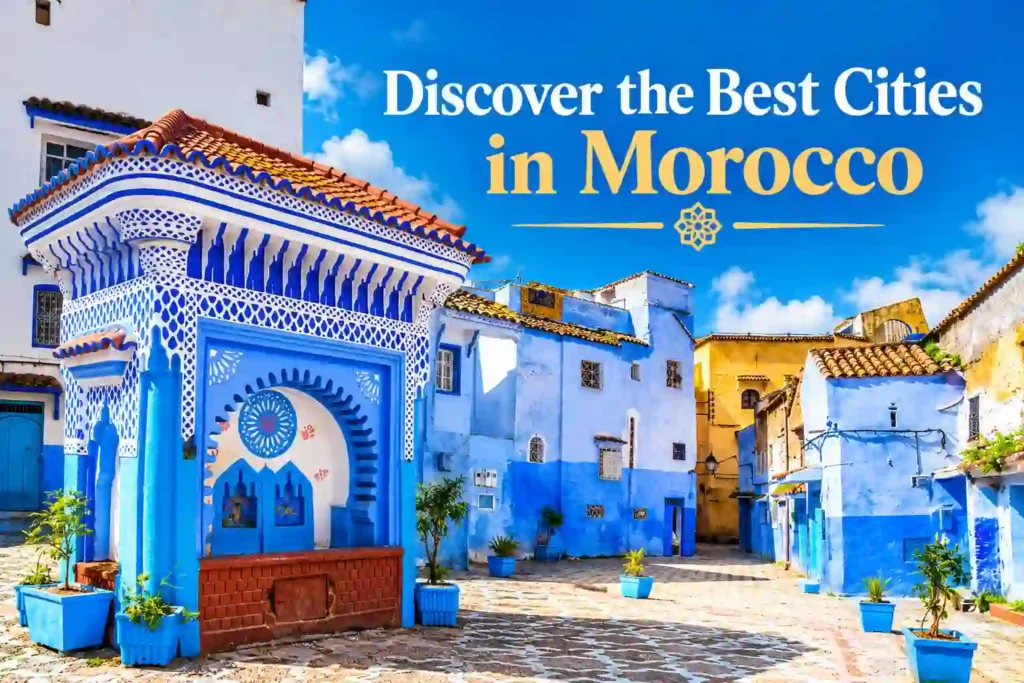
Morocco packs an almost unreasonable amount of variety into one country. Within a few hours of each other, you can go from a snake charmer’s flute echoing through a medieval medina, to waves crashing against Atlantic ramparts, to blue-washed mountain alleyways, to a red kasbah glowing at the edge of the Sahara. Each city here has its own personality, shaped by centuries of history, geography, and the different empires and cultures that passed through, and no two feel remotely alike.
This guide walks through Morocco’s major cities one by one, what each one actually feels like, what it’s known for, and who it tends to suit best, so you can figure out which combination of cities makes sense for your own trip, rather than just following whatever route shows up first in a search.
Table of Contents
Morocco's Cities at a Glance
| City | Region | Known For | Best For |
|---|---|---|---|
| Marrakech | Central, near Atlas | Souks, palaces, Jemaa el-Fnaa | First-time visitors, desert gateway |
| Casablanca | Atlantic coast | Hassan II Mosque, modern skyline | Business travel, arrival hub |
| Fes | Northern interior | Fes el Bali medina, Al Quaraouiyine | History, traditional culture |
| Rabat | Atlantic coast | Kasbah des Oudayas, government seat | Relaxed capital city visit |
| Tangier | Northern tip | Meeting of two seas, Kasbah | Gateway to Spain, coastal charm |
| Chefchaouen | Rif Mountains | Blue-washed medina | Photography, slow travel |
| Essaouira | Atlantic coast | Ramparts, wind sports, seafood | Beach relaxation, artsy atmosphere |
| Meknes | Northern interior | Bab Mansour, Volubilis nearby | Imperial history, quieter pace |
| Agadir | Southern coast | Beaches, modern resorts | Sun-and-sand holidays |
| Ouarzazate | Desert gateway | Kasbahs, film studios | Desert route, cinematic scenery |
| Merzouga | Sahara | Erg Chebbi dunes | Desert camping, stargazing |
Marrakech: The Red City
Marrakech is the city most people picture when they imagine Morocco, and it earns that reputation. Its red sandstone walls, sprawling medina, and endlessly theatrical Jemaa el-Fnaa square make it feel like stepping into a living, breathing storybook. Beyond the souks, Marrakech offers palaces like Bahia and El Badi, the striking Majorelle Garden, and a modern Gueliz district with its own café culture and boutiques. It’s also the most common launch point for a Sahara excursion, sitting a scenic drive from the High Atlas Mountains and the desert beyond. If you can only visit one Moroccan city, most travelers, and most guides, will point you here first.
Casablanca: Morocco's Modern Metropolis
Casablanca is Morocco’s largest city and its economic engine, a place defined less by ancient history and more by wide boulevards, Art Deco architecture, and a genuinely modern, cosmopolitan energy. The Hassan II Mosque, built dramatically over the Atlantic, is one of the largest mosques in the world and a genuine architectural highlight on its own. Beyond that, Casablanca functions more as a working city than a tourist destination, which is exactly its appeal for travelers who want a glimpse of everyday Moroccan life away from a heavily tourism-driven economy. Most visitors treat it as a one or two-day stop, often bookending a longer trip centered elsewhere.
Fes: Morocco's Spiritual and Cultural Heart
Fes holds a different kind of weight than Marrakech, older, denser, and arguably more historically significant. Fes el Bali, its ancient medina, is one of the largest car-free urban zones in the world and widely considered the best-preserved medieval city in the Arab world. It’s home to the University of Al Quaraouiyine, recognized as the oldest continuously operating educational institution on the planet, along with centuries-old tanneries, madrasas, and a maze of alleyways that have barely changed in generations. Fes rewards travelers who want a deeper, slower dive into Moroccan history and craftsmanship rather than a quick highlight-reel visit.
Rabat: The Understated Capital
As Morocco’s political capital, Rabat carries itself with a noticeably calmer, more orderly energy than Marrakech or Fes. The Kasbah des Oudayas offers sweeping views over the Atlantic and the Bou Regreg River, the Hassan Tower and Mausoleum of Mohammed V showcase the city’s royal history, and the medina, while smaller than its counterparts, is easy to explore without the intensity of touts found elsewhere. Rabat tends to fly under the radar for international visitors, which is exactly why travelers who do stop here often come away pleasantly surprised by how relaxed and walkable it feels.
Tangier: Where Two Seas Meet
Tangier occupies a genuinely unique spot on the map, sitting at the exact point where the Atlantic Ocean meets the Mediterranean Sea, with Spain visible across the strait on a clear day. This position shaped centuries of international influence, and the city carries a cosmopolitan, layered character as a result, part Moroccan, part European, entirely its own. Its medina is smaller and easier to navigate than Fes or Marrakech’s, and the Kasbah quarter, Cap Spartel, and the lively Corniche round out a city that works well as either a first stop coming from Europe or a northern bookend to a longer Morocco route.
Chefchaouen: The Blue Pearl
Tucked into the Rif Mountains, Chefchaouen is instantly recognizable for its blue-washed medina, a color scheme that turns every alley into a photograph. Beyond its visual appeal, Chefchaouen offers a noticeably slower pace than Morocco’s bigger cities, mountain air, small artisan shops, and a genuinely relaxed, low-pressure atmosphere compared to the more intense tourist economies of Marrakech or Fes. It works best as a couple of unhurried days rather than a rushed day trip, letting you actually settle into its particular calm.
Essaouira: The Windswept Coastal Town
Essaouira offers Morocco’s most laid-back coastal experience, a fortified medina, a busy fishing port, and steady Atlantic winds that have made it one of the world’s better-known wind sports destinations. Its blue and white streets have a distinctly artsy, bohemian feel, shaped in part by decades of musicians and creatives drawn to the town’s relaxed rhythm. Fresh grilled seafood along the port and sunset walks on the ramparts make Essaouira a favorite add-on for travelers looking to balance Marrakech’s intensity with something quieter and cooler.
Meknes: The Overlooked Imperial City
Often eclipsed by its more famous neighbor Fes, Meknes is an imperial city in its own right, home to the monumental Bab Mansour gate, extensive royal stables, and a well-preserved medina that sees a fraction of the crowds found elsewhere. Its proximity to Volubilis, an impressively intact Roman archaeological site, makes it easy to combine into a single day. Meknes suits travelers who want the historical weight of an imperial city without the more intense tourism pace of Fes just down the road.
Agadir: Morocco's Beach Resort City
Agadir stands apart from Morocco’s other major cities, rebuilt in a modern, resort-oriented style after a major earthquake in the 1960s. Its wide sandy beaches, reliable sunshine, and resort infrastructure make it a straightforward choice for travelers prioritizing a relaxed sun-and-sand holiday over historic medinas and souks. It lacks the old-world atmosphere of Fes or Marrakech, but that’s often exactly the point for visitors looking for a simpler, beach-focused stay.
Ouarzazate: Gateway to the Desert
Known as Morocco’s own “Hollywood of the desert” thanks to its film studios, which have hosted major international productions, Ouarzazate sits at the edge of the Sahara and serves as a key stop on the route toward Merzouga or Zagora. Its kasbahs, including the dramatic Taourirt Kasbah, and the nearby UNESCO-listed Ait Ben Haddou make it worth a stop in its own right, not just a pass-through point on the way to the dunes.
Merzouga: The Sahara's Golden Gateway
Merzouga isn’t a city in the traditional sense, more a small desert town, but it functions as the entry point to the towering dunes of Erg Chebbi and one of Morocco’s most iconic experiences: a night camping in the Sahara. Camel treks across the dunes, sunset and sunrise over an endless golden horizon, and a sky full of stars far from any city lights make this the destination a huge number of Morocco trips are ultimately built around, whichever city you start from.
Which Morocco Cities Should You Visit First?
For a first Morocco trip, Marrakech is the near-universal starting recommendation, followed closely by a desert excursion if time allows. Travelers with a week or more often add Fes for its historical depth, or Essaouira and Chefchaouen for a change of pace between the bigger, more intense cities. Casablanca and Rabat work well as practical arrival or departure stops given their airport connections, rather than destinations most travelers linger in for long. Tangier suits itineraries that either start or end in the north, particularly if a ferry crossing to Spain is part of the plan.
Building a Multi-City Morocco Itinerary
Most well-rounded Morocco trips combine a handful of these cities into a loop rather than trying to see everything in one go. A common structure looks like Marrakech as the core stay, a Sahara excursion via Ouarzazate, then either Essaouira or Chefchaouen added on depending on whether you want coast or mountains, with Casablanca or Tangier bookending the trip based on flight logistics. If you’re mapping this out for yourself, our full Morocco itineraries page breaks down routes of different lengths built around exactly this kind of city combination.
Connecting Morocco's Cities to the Sahara Desert
Nearly every major Moroccan city connects to the desert in some way, though the routes and travel times differ considerably. Marrakech and Ouarzazate offer the shortest path to the dunes, while Fes and Tangier require longer, multi-day routes heading south through the Middle Atlas. Whichever city your trip is centered on, a desert night is worth building in given how consistently travelers describe it as the highlight of their entire Morocco trip.
If a Sahara excursion is on your list, Marrakech desert tours and Ouarzazate desert tours offer the shortest southern routes, while Fes desert tours and Tangier desert tours work well for trips starting further north. Our full Morocco desert tours page covers every route and starting point we offer.
Coastal, Inland, and Desert Cities: Three Different Kinds of Trips
It helps to think of Morocco’s cities in three simple groups, since each group gives you a different kind of trip:
- Coastal cities: Casablanca, Rabat, Tangier, and Essaouira sit along the Atlantic or Mediterranean. They’re cooler, breezier, and often more relaxed, with seafood, beach walks, and a slower pace.
- Inland cities: Marrakech, Fes, and Meknes sit further from the coast. They’re warmer, drier, and packed with history, souks, and old medinas. This is where most people picture “classic Morocco.”
- Desert gateway towns: Ouarzazate and Merzouga sit at the edge of the Sahara. They’re hot and dry, with dramatic scenery and the country’s most memorable nights under the stars.
A trip that mixes all three usually feels the most complete, since each type of city gives you something the others don’t.
How to Travel Between Morocco's Cities
Getting around Morocco is easier than a lot of people expect. Here’s a simple breakdown of your options:
- Train: The most comfortable way to move between coastal and inland cities like Casablanca, Rabat, Fes, and Tangier. Trains are clean, affordable, and run several times a day.
- Bus: Cheaper than the train and covers more places, including smaller towns the train doesn’t reach. Good if you’re on a tighter budget.
- Domestic flights: Useful for longer distances, like Tangier to Marrakech, where a flight can save you several hours compared to driving or taking the train.
- Private driver or organized tour: The easiest option if your route includes the desert or mountain roads, since it takes care of the tricky logistics and lets you stop along the way for photos or small towns.
Local Food to Try in Each City
Food is a big part of what makes each Moroccan city feel different, and a few dishes are worth seeking out specifically where they’re best known:
- Marrakech: Tagines, fresh orange juice from the square, and grilled meats from the food stalls at Jemaa el-Fnaa
- Fes: Known for its refined, traditional cooking, especially pastilla, a sweet-and-savory pie usually made with pigeon or chicken
- Essaouira: Fresh grilled fish and seafood straight from the port, some of the best in the country
- Casablanca: A mix of traditional Moroccan food and modern international restaurants, plus great seafood along the Corniche
- Chefchaouen: Simple, home-style mountain cooking, along with goat cheese from the surrounding Rif hills
- Ouarzazate and the desert: Hearty, simple meals like couscous and tagine, often cooked slowly over charcoal at desert camps
Best Time of Year to Visit Each Type of City
Timing your trip well makes a real difference in comfort, and it depends on which type of city you’re visiting:
- Inland cities (Marrakech, Fes, Meknes): Spring (March-May) and autumn (September-November) are best, avoiding the intense summer heat.
- Coastal cities (Casablanca, Rabat, Tangier, Essaouira): Comfortable almost year-round, thanks to the ocean keeping temperatures milder, though summer is still the most popular season for beach time.
- Desert towns (Ouarzazate, Merzouga): Spring and autumn again, since summer daytime heat can be intense, while winter nights get cold, especially in the dunes.
A Simple Guide to Daily Costs by City
Costs vary a bit from city to city, but here’s a simple, general idea of what a mid-range day tends to look like:
- Marrakech and Fes: Generally the most budget-friendly, thanks to affordable riads, cheap street food, and competitive prices in the souks.
- Casablanca and Rabat: Slightly higher, especially for hotels, since these cities cater more to business travelers.
- Essaouira and Chefchaouen: Similar to Marrakech, often even cheaper, since both are smaller and less geared toward high-end tourism.
- Ouarzazate and Merzouga: Costs here often come bundled into a desert tour package, which usually covers transport, meals, and the overnight camp in one price.
Frequently Asked Questions About Morocco's Cities
What are the four Imperial Cities of Morocco?
Fes, Meknes, Marrakech, and Rabat are traditionally known as Morocco’s Imperial Cities, each having served as the country’s capital at different points in history.
Which Moroccan city should I visit if I only have a few days?
Marrakech is the most common choice for a short trip, offering the widest range of sights, souks, and easy access to a desert excursion if time allows.
Is Casablanca worth visiting?
Yes, though usually for a day or two rather than an extended stay. The Hassan II Mosque alone makes it worth a stop, especially if it lines up with your flight arrival or departure.
Which Moroccan city is best for beaches?
Agadir and Essaouira are the top choices, with Agadir offering resort-style beaches and Essaouira known for its wind sports and more laid-back coastal atmosphere.
How many cities should I include in a Morocco itinerary?
For a week-long trip, three to four cities plus a desert excursion generally works well without feeling rushed. Longer trips can comfortably add one or two more stops.
Which city is closest to the Sahara Desert?
Ouarzazate and Marrakech offer the shortest routes to the dunes near Merzouga or Zagora, typically covered in a day or less of driving.
Final Thoughts
Morocco’s cities each offer a genuinely different window into the country, historic and theatrical in Marrakech, deep and traditional in Fes, modern and coastal in Casablanca, blue and unhurried in Chefchaouen, windswept and artsy in Essaouira. Rather than trying to squeeze in every city on this list, picking a handful that match the kind of trip you actually want, paired with a proper Sahara excursion, tends to make for a far more memorable Morocco experience than rushing through as many stops as possible.
If you’re planning a Morocco trip and want help deciding which cities to include, or building in a desert excursion that fits your route, feel free to get in touch with us. We help travelers piece together routes like this regularly and are happy to help you plan one that fits exactly what you’re looking for.

I’m Lahcen Saadi from the Exploring Morocco Trips team. We are local guides dedicated to crafting authentic and exceptional Moroccan experiences.
Whether you are planning your first trip to Morocco and need expert advice, or you are a travel professional looking to collaborate on unique itineraries, we are ready to help.
- 2 Days Desert tours From Marrakech
- 3 Days Desert tour From Marrakech to Merzouga
- 3 Days Desert tour From Marrakech to Fes
- 4 Days Desert tour From Marrakech to Merzouga
- 4 Days Desert tour From Marrakech to Fes
- 5 Days Desert tour From Marrakech to Merzouga
- 5 Days Desert tour From Marrakech to Fes
- 6 Days Desert tour From Marrakech to Casablanca
- 7 Days Morocco tour from Marrakech
- 8 Days Morocco tour from Marrakech
- 8 Days Morocco tour from Marrakech with Imperial Cities
- 9 Days Morocco tour from Marrakech
- 10 Days Morocco tour from Marrakech
- 12 Days Morocco tour from Marrakech
- 14 Days Morocco tour from Marrakech
- 2 Days Desert tour From Fes to Merzouga
- 2 Days Desert tour From Fes to Marrakech
- 3 Days Desert tour From Fes to Merzouga
- 3 Days Desert tour From Fes to Marrakech
- 4 Days Desert tour From Fes to Marrakech
- 5 Days Desert tour From Fes to Marrakech
- 6 Days Desert tour From Fes to Marrakech
- 7 Days Morocco tour from Fes
- 4 Days Morocco tour from Casablanca
- 5 Days Morocco tour from Casablanca
- 6 Days Morocco tour from Casablanca
- 7 Days Morocco tour from Casablanca
- 8 Days Morocco tour from Casablanca
- 9 Days Morocco tour from Casablanca
- 10 Days Morocco tour from Casablanca
- 11 Days Morocco tour from Casablanca
- 12 Days Morocco tour from Casablanca
- 14 Days Morocco tour from Casablanca