
Travel Morocco: A Complete Guide to the Moroccan People and Culture
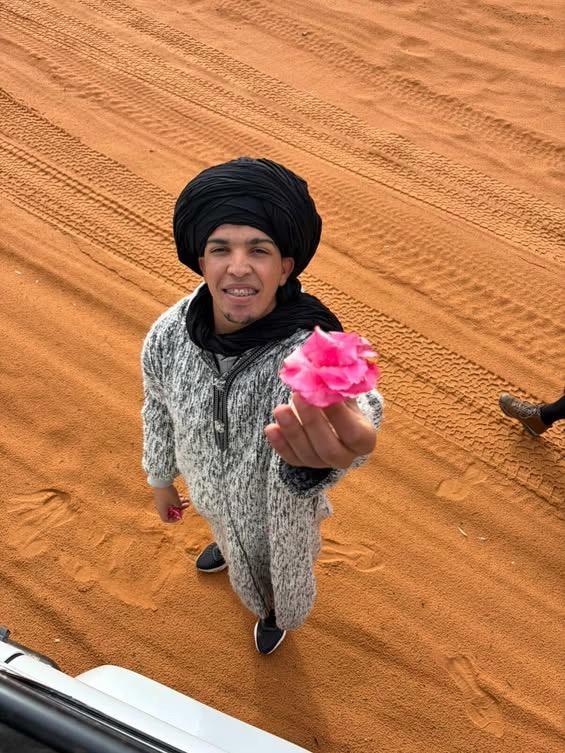
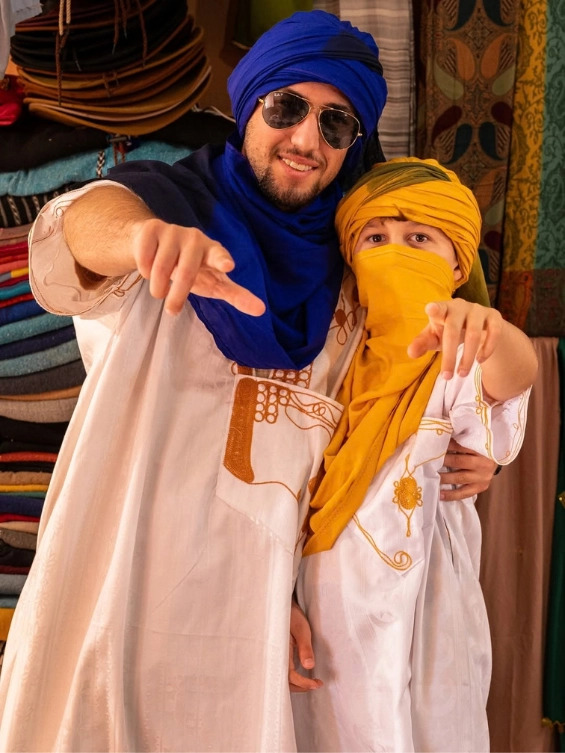
Table of Contents
Morocco is more than its vibrant spice markets and sprawling deserts; it is a living tapestry woven by its inhabitants. To truly understand this North African gem, one must look closely at the Moroccan people, a population defined by a unique blend of ancient heritage and modern openness.
Who are the Moroccan People?
The identity of Morocco is rooted in a fascinating demographic mix. As of early 2026, the population of Morocco is estimated at approximately 38.8 million people. The vast majority of citizens (around 99%) identify as Arab-Berber.
This dual identity is a result of centuries of history. While the Arab influence arrived with the spread of Islam in the 7th century, the Berber people of Morocco, who call themselves Imazighen (meaning “free people”), are the indigenous inhabitants of the land, with roots stretching back over 4,000 years.
A Mosaic of Identity: What do Moroccan people look like?
Because of its position at the crossroads of Africa, Europe, and the Middle East, there is no single “look” for a Moroccan. You will find a beautiful spectrum of features:
- Many Moroccans have Mediterranean features with olive skin and dark hair.
- In the Rif and Atlas Mountains, it is not uncommon to see people with fair skin and light-colored eyes.
- Are Moroccan people black? Yes, Morocco has a significant and diverse Black population, including the Gnawa and Haratin communities, who have contributed immensely to the nation’s music, spirituality, and history.
Languages of the Land
If you’re wondering what language people speak in Morocco, the answer is as diverse as the people themselves.
- Darija: The Moroccan dialect of Arabic. It is the “language of the heart” used in daily life.
- Amazigh (Berber): An official language with its own unique script (Tifinagh), spoken in various dialects like Tachelhit and Tamazight.
- French: While not an official language, it remains the primary language of business, government, and higher education.
- English & Spanish: English is rapidly growing among the youth, while Spanish is widely understood in the northern regions.
Living Tradition: Morocco People and Culture
Moroccan culture is famous for its hospitality. If you are invited into a home, expect a warm welcome centered around a ceremony of mint tea (often jokingly called “Moroccan Whiskey”).
Traveler’s Tip: When eating communal meals like couscous or tagine, it is customary to use your right hand, as the left is traditionally reserved for personal hygiene.
From the rhythmic beats of Gnawa music to the intricate craftsmanship of Berber rugs, every aspect of life here is a tribute to a shared past. Whether you are navigating the bustling streets of Casablanca or the quiet trails of the High Atlas, the spirit of the Imazighen and the warmth of the Arab world ensure that every visitor feels like a guest, not just a tourist.
To make this blog even more comprehensive and authoritative for your readers, here are additional sections that dive deeper into the daily life, traditions, and the modern identity of Morocco.
The Heart of the Community: The Souks and Riads
To understand Moroccan people and culture, you have to look at how they live and trade. The “Souk” (market) is the social engine of every city and village.
- Social Hubs: The souk isn’t just for shopping; it’s where people meet to discuss news, politics, and family.
- The Riad Philosophy: Traditional Moroccan houses, or Riads, are designed with an interior courtyard. This reflects a cultural value of privacy and humility; the exterior is often plain and unassuming, while the interior is a lush, decorated sanctuary.
Deep Dive: The Berber People of Morocco (The Imazighen)
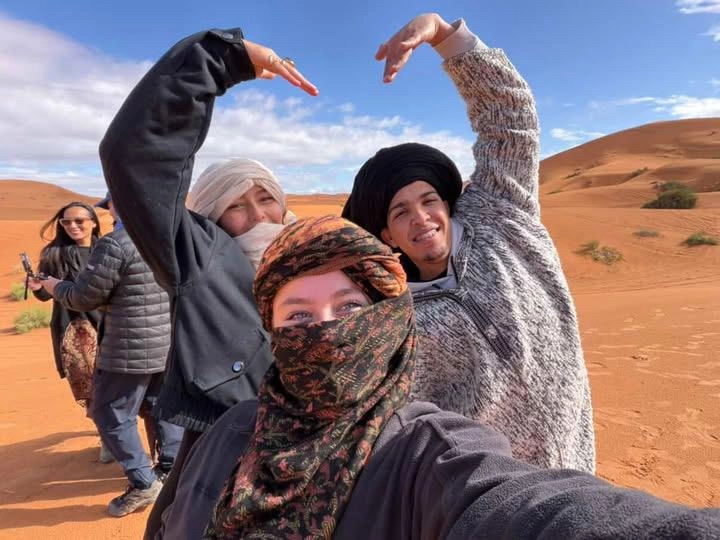
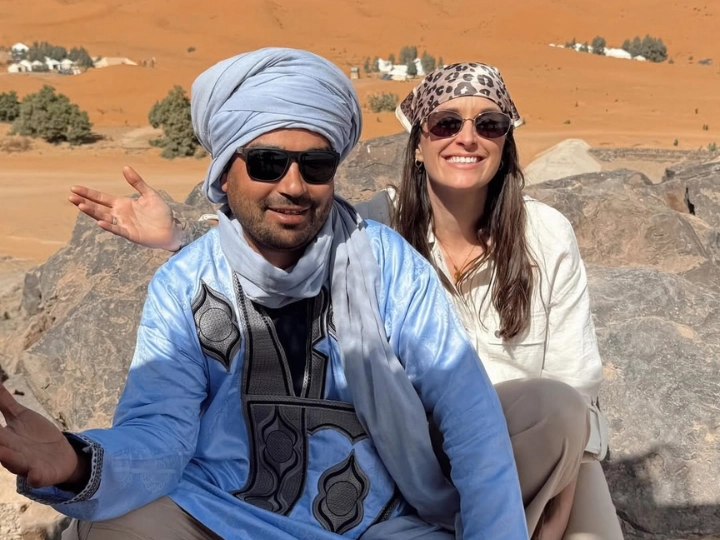
The Berber people of Morocco are famous for their resilience and artistry.
- Tribal Diversity: There are three main groups: the Riffians in the north, the Chleuh in the High Atlas and Souss, and the Central Atlas Tamazight speakers.
- Symbolism: You will often see the Yaz symbol (ⵣ) on flags and jewelry. It represents the “Free Man” and the connection between the land and the spirit.
- Tattoos: While fading among the younger generations, many elderly Berber women bear facial tattoos. These aren’t just decorative; they are “blueprints” of tribal history, fertility, and protection.
Modern Morocco: A Young and Growing Nation
If you are wondering how many people live in Morocco today, the 2026 estimate of 38.8 million shows a young, vibrant population.
- Digital Nomads & Youth: Over 25% of the population is under the age of 15. This younger generation is tech-savvy, often trilingual, and is rapidly changing the artistic and startup scene in cities like Casablanca and Marrakech.
- The Role of Religion: Islam is the state religion and deeply influences the rhythm of life. The “Adhan” (call to prayer) echoes five times a day, creating a shared spiritual pulse across the kingdom.
A Note on Diversity: Are Moroccan People Black?
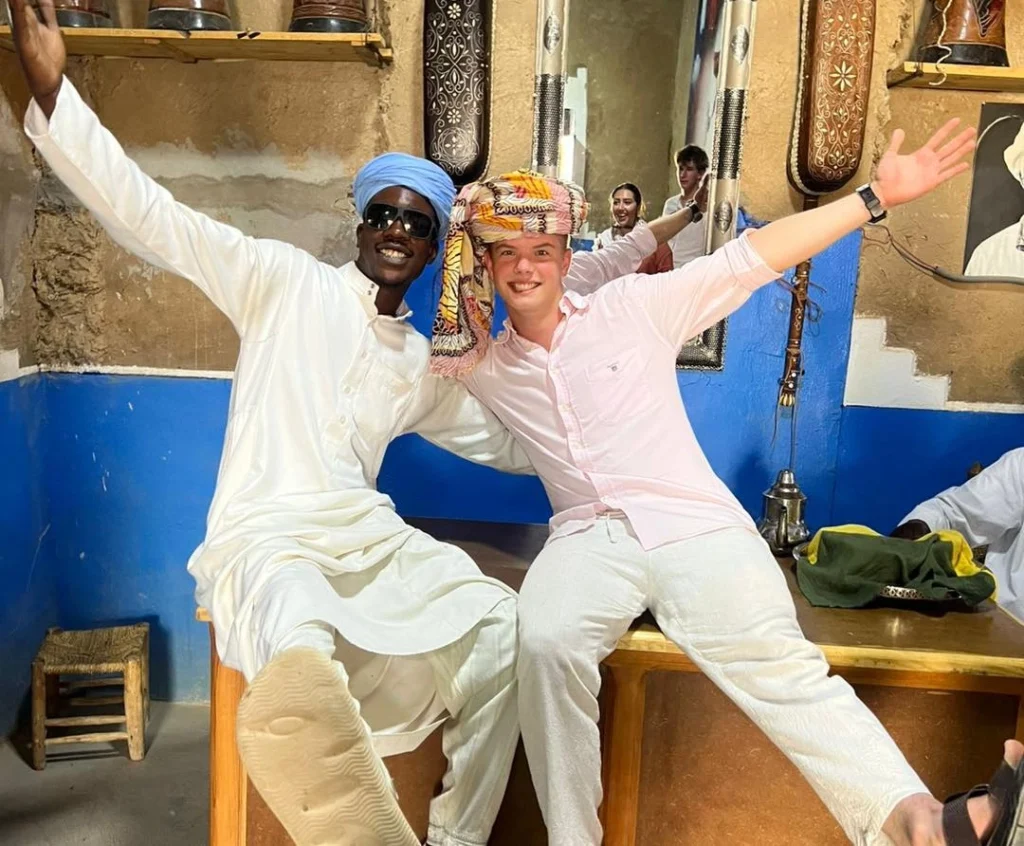
To answer this fully, one must look at the Gnawa heritage. The Gnawa are descendants of enslaved people from West Africa (Mali, Guinea, Sudan) who integrated into Moroccan society centuries ago.
- They brought with them a spiritual music style that is now world-famous.
- Today, Morocco’s “Black identity” is a proud and inseparable part of the national fabric, especially in southern regions near the Sahara.
What do Moroccan people look like in different regions?
- The North: Influence from Andalusia (Spain) often results in lighter skin and Mediterranean features.
- The South: Near the dunes of Erg Chebbi and the Draa Valley, you will see deeper skin tones and the distinct indigo-blue robes of the Sahrawi “Blue Men.”
Practical Language Tips for Travelers
While many ask what language do people speak in Morocco, knowing just a few words of Darija or Tamazight will open doors:
| English | Darija (Moroccan Arabic) | Tamazight (Berber) |
| Hello | Salam | Azul |
| Thank You | Shokran | Tanmirt |
| Please | ‘Afak | ‘Alahak |
| Welcome | Marhaba | Ansuf |
Celebration and Joy: The Festivals (Moussems)
Beyond the daily rhythm, Moroccan life is punctuated by large-scale celebrations called Moussems.
- The Gnaoua World Music Festival: Held in Essaouira, this celebrates the heritage of Black Moroccan people and their spiritual music, drawing performers from all over Africa.
- The Rose Festival: In Kelaat M’Gouna (the Valley of Roses), the Berber people of Morocco celebrate the harvest with song, dance, and a parade of roses.
- Marriage Festivals: The Imilchil Marriage Festival is a famous gathering in the Atlas Mountains where tribes meet to celebrate Berber union and tradition.
The Art of Dress: Djellaba and Kaftan
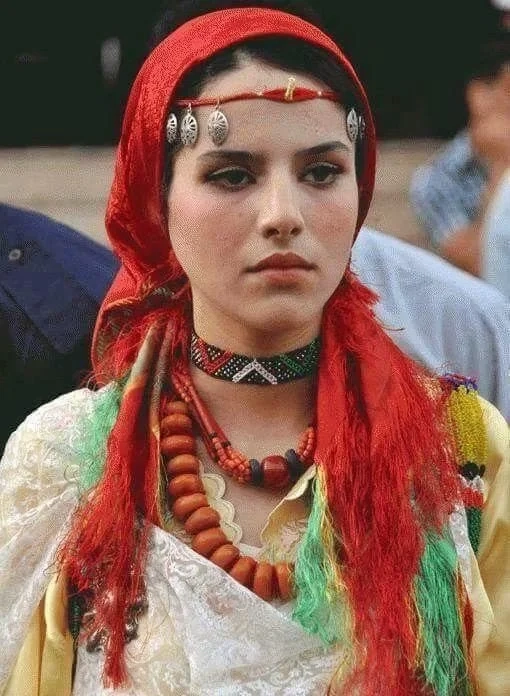
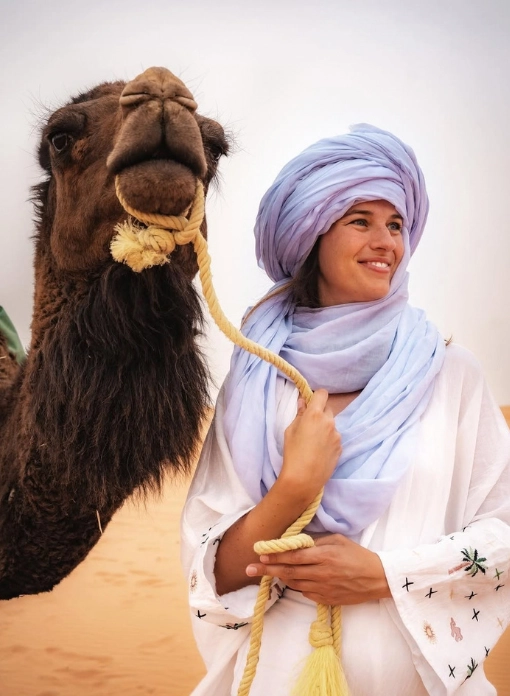
What Moroccan people look like is often defined by their elegant traditional attire, which is still worn daily.
- The Djellaba: A long, loose-fitting unisex robe with a hood (the qob). It protects the wearer from the sun and the desert wind.
- The Kaftan: Unlike the daily Djellaba, the Kaftan is an elaborate, hand-embroidered gown worn by women at weddings and formal events. It is a masterpiece of Moroccan tailoring.
- The Tagelmust: In the south, the Saharan men often wear this long indigo turban to protect their faces from the sun and sand.
Social Etiquette: Navigating the Culture
Understanding Morocco people and culture means knowing the unspoken rules:
- The Art of the Bargain: In the souks, negotiation is not just about price; it is a social ritual. Expect to spend 15 minutes talking and drinking tea before reaching a “fair” price.
- Photography: While most people are friendly, always ask permission before taking a photo of a person, especially in rural Berber villages. A simple “S’il vous plaît?” or “Afak?” goes a long way.
- Friday is for Couscous: Friday is the holy day. After midday prayers, families across the nation gather to eat a massive platter of couscous. Many shops may close for a few hours in the afternoon to honor this tradition.
Education and Progress
With how many people live in Morocco (38.8 million), the government has invested heavily in education.
- University of al-Qarawiyyin: Founded by a woman, Fatima al-Fihri, in Fes in 859 AD, it is the oldest continuously operating university in the world. This is a point of immense pride for all Moroccans.
- Literacy & Youth: While older generations in remote mountains might only speak Tamazight, the youth are increasingly fluent in multiple languages, making Morocco one of the most linguistically gifted nations in the region.
The Modern Cultural Pulse: Youth and Progress
The face of Morocco is changing rapidly, driven by a new generation that balances tradition with global innovation.
- The Digital Generation: Morocco has one of the youngest populations in the region. This “Gen Z” and Millennial demographic is driving a massive boom in creative arts, tech startups, and environmental activism, making cities like Casablanca and Marrakech true hubs of innovation.
- Empowerment of Women: Morocco continues to make significant strides in legal reforms (such as the Moudawana) to strengthen women’s rights in marriage, inheritance, and employment. While traditional roles remain respected, women are increasingly leading the way in business and national politics.
- Urban vs. Rural Dynamics: With the majority of the population now living in urban centers, there is a fascinating contrast between the fast-paced modern lifestyle of the cities and the ancient, slower rhythms of the Berber villages in the mountains.
Icons of the Kingdom: Famous People in Morocco
Morocco has produced world-class talent that represents the nation on the global stage. Some of the most famous people in Morocco include:
- Achraf Hakimi: The world-renowned football star who led the Moroccan national team to a historic World Cup semi-final.
- Gad Elmaleh: A beloved stand-up comedian and actor who is a household name in both Morocco and France.
- RedOne: The Grammy-winning music producer behind some of the world’s biggest hits.
- Nawal El Moutawakel: The first female Muslim athlete to win an Olympic gold medal, a true pioneer for Moroccan women.
Annual “Must-See” Cultural Events
Morocco’s calendar is filled with spiritual and cultural milestones. While some dates shift based on the lunar calendar, these are the traditions you should experience:
- Amazigh New Year (Yennayer): Celebrated every January 14th, this is a beautiful time to see the Berber people of Morocco honoring their heritage with traditional “Tagola” (a corn-based dish) and vibrant street parades.
- The Holy Month of Ramadan: During this sacred month, the atmosphere is quiet and reflective during the day and electric at night. Witnessing the “Iftar” (the breaking of the fast) at sunset is a profound cultural experience that happens across the entire country.
- Eid al-Fitr: This grand celebration marks the end of Ramadan. The streets fill with families dressed in their finest traditional clothes, sharing sweets and joy.
- The Gnaoua World Music Festival: Held annually in Essaouira, this world-class event celebrates the heritage of Black Moroccan people and their spiritual music.
Quick “Do’s and Don’ts” for Your Visit
| Do | Don’t |
| Do greet shopkeepers with a “Salam” before asking for a price. | Don’t use your left hand to eat or hand over money. |
| Do dress modestly in rural areas (covering shoulders and knees). | Don’t take photos of people without asking “Moumkin?” (Is it possible?). |
| Do accept at least one glass of mint tea when offered. | Don’t feel pressured to buy; a polite “La, Shokran” is always respected. |
The Heart of the Red City: Marrakech Morocco People
If you want to see the modern pulse of the country, look no further than the Marrakech Morocco people. Known as “Marrakshis,” the locals here are famous for their quick wit, sense of humor, and “Bahja” (joyous) lifestyle. In the Jemaa el-Fnaa square, you will see the perfect mix of urban Moroccans, mountain Berbers bringing goods to market, and Gnawa musicians. The people of Marrakech have a unique talent for making a city of millions feel like a welcoming village.
Experience the Magic: Join Our Morocco Tours
If the stories of the Berber people and the vibrant Moroccan culture have inspired you, there is no better way to experience it than by standing among the golden dunes yourself.
We invite you to read more about our Marrakech desert tours to see how we bring these cultural stories to life. Whether you are looking for a deep dive into history or a quick escape to the Sahara, you can explore our full range of Morocco itineraries designed to show you the authentic heart of the Kingdom.
Our Best-Selling Morocco Sahara Adventures:
- 3 Days Tour from Marrakech to Merzouga: The classic Sahara experience visiting Ait Ben Haddou and the Erg Chebbi dunes.
- 4 Days Tour from Marrakech to Merzouga Desert: A relaxed pace with more time in the Dades Valley and hidden oases.
- 5 Days Tour from Marrakech to Merzouga: The ultimate “Deep Desert” journey with extra time to meet nomadic families.
Our Best-Selling Grand Itineraries:
For those who want to see the full diversity of our country, from the imperial cities to the coast, explore our most popular extended routes:
- Morocco Itinerary 7 Days: A perfect week covering the highlights of the north and the desert.
- Morocco Itinerary 8 Days: Our most popular loop for travelers who want a balanced mix of culture and adventure.
- Morocco Itinerary 10 Days: A deep dive into the hidden gems of the Atlas Mountains and the Sahara.
- Morocco Itinerary 12 Days: The ultimate Grand Tour, taking you from the bustling souks to the quietest corners of the Kingdom.
Frequently Asked Questions about Moroccan People and Culture
How many people live in Morocco currently?
The population of Morocco is approximately 38.8 million. It is a young and vibrant nation, with a significant portion of the population under the age of 30, contributing to a growing scene in tech and the arts.
Are Moroccan people black?
Yes, Morocco is a diverse nation with a significant Black population. Groups like the Gnawa and Haratin are deeply rooted in Moroccan history, particularly in the southern regions and the Sahara. Their influence is central to Morocco’s music, spiritual life, and national identity.
What language do people speak in Morocco?
The most common language is Darija (Moroccan Arabic). Amazigh (Berber) is also an official language spoken by millions. For business and education, French is widely used, while English is becoming very popular among the youth, and Spanish is common in the north.
What do Moroccan people look like?
Because Morocco is at the crossroads of Africa and Europe, there is no single look. You will see a beautiful range of Mediterranean features, fair skin and light eyes in the mountains, and deeper, Saharan skin tones in the south.
Who are the Berber people of Morocco?
The Berber people, or Imazighen, are the indigenous inhabitants of North Africa. They have lived in Morocco for over 4,000 years and are known for their distinct languages, rich traditions in weaving and jewelry, and their deep connection to the Atlas Mountains and the Sahara.
Is it easy to find Spanish-speaking guides for tours?
Absolutely! Due to historical ties and proximity to Spain, many Moroccans, especially in the north and within the tourism industry, speak Spanish fluently. This is a great advantage for travelers from Spain or Latin America.
Are people in Marrakech friendly to tourists?
Yes! Marrakech Morocco people are world-renowned for their hospitality. While the souks can be busy and energetic, the locals are generally very helpful and love sharing their culture with visitors.
Conclusion: Why Morocco Never Truly Leaves You
Travelers often arrive in Morocco with their cameras ready for the golden dunes of the Sahara or the blue walls of Chefchaouen, but they leave with something far more valuable: a different perspective on humanity. The true magic of this land isn’t found in its monuments, but in the quiet moments, the steam rising from a shared glass of tea, the nod of a Berber elder in the High Atlas, or the laughter of a shopkeeper in the Medina.
In Morocco, “You are welcome” is not just a phrase; it is a sacred promise of hospitality that has been kept for thousands of years. You may come as a stranger, but the Moroccan people will ensure you leave as a friend. We invite you to step into this living tapestry and discover the warmth that stays in your heart long after the sand has been brushed from your shoes.