
Ouarzazate and Skoura, Morocco: The Complete Guide to the Gateway of the Sahara
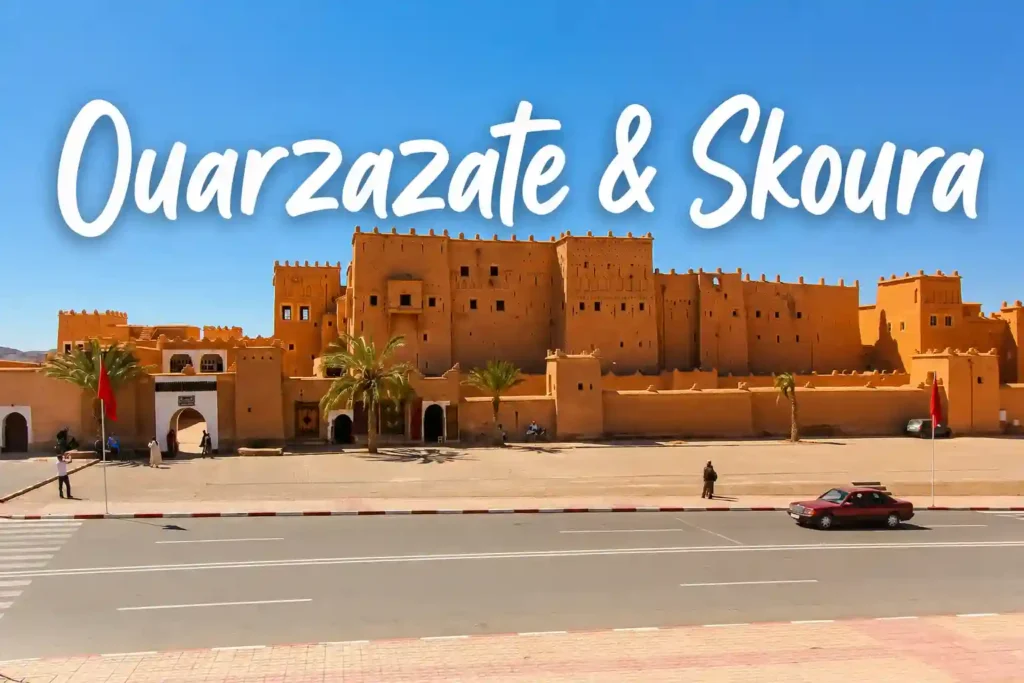
There’s a stretch of southern Morocco where movie history, ancient kasbahs, and the edge of the Sahara all sit within about an hour of each other. That stretch runs through Ouarzazate and Skoura, and if you’re planning any kind of desert trip from Marrakech, there’s a very good chance you’ll pass through both, whether you realize it or not.
Ouarzazate has earned the nickname “the Hollywood of Morocco” for hosting some of the biggest film productions of the last few decades, while Skoura, just down the road, offers something completely different: a quiet, sprawling palm oasis dotted with centuries-old kasbahs. Together, they make one of the most rewarding stops on the route between Marrakech and the desert, and yet a lot of travelers rush through both on their way to somewhere else. This guide covers everything worth knowing about Ouarzazate and Skoura, from film studios and kasbahs to day trips, where to stay, and how to fit them properly into your Morocco itinerary.
Table of Contents
Where Are Ouarzazate and Skoura?
Ouarzazate sits in southern Morocco, on the far side of the High Atlas Mountains from Marrakech, reached by the dramatic Tizi n’Tichka mountain pass, a roughly four-hour drive that’s considered one of the most scenic road trips in the country. Sitting at an elevation of around 1,160 meters, Ouarzazate marks the point where the green north gives way to the ochre plains and desert landscapes of the south, which is exactly why it’s long been known as the “door to the desert.”
Skoura lies about 40 kilometers east of Ouarzazate, along what’s sometimes called the “Road of a Thousand Kasbahs.” It’s less a single town and more a sprawling network of villages, palm groves, and cultivated land spread across roughly 25 square kilometers, fed by two seasonal rivers that keep the oasis green even as the surrounding desert stays dry.
Ouarzazate: The Hollywood of Morocco
Atlas Film Studios
Ouarzazate’s biggest claim to fame is its film industry, and the Atlas Film Studios are the reason why. At an enormous size, it’s considered one of the largest film studios in the world, and its low production costs combined with dramatic, otherworldly scenery have drawn major international productions here for decades. Films and shows shot in and around Ouarzazate include Gladiator, Lawrence of Arabia, The Mummy, Kingdom of Heaven, Prince of Persia, Black Hawk Down, and Game of Thrones, among many others.
Visiting the studios means walking through leftover sets, some carefully preserved, others in various states of being dismantled to make way for the next production, which gives the whole place a strange, half-real quality. It’s a genuinely fun stop even if you’re not a die-hard film buff, and there’s a small Cinema Museum nearby if you want to dig deeper into the city’s film history.
Kasbah Taourirt
Right in Ouarzazate itself, Kasbah Taourirt is a historic fortified palace that once served as a residence for local governors and remains one of the city’s most visited sites. Its maze-like interior of rooms and courtyards gives a genuine sense of traditional kasbah architecture and daily life, and it’s an easy, walkable stop if you’re spending even a single afternoon in the city.
A Day Trip to Ait Ben Haddou
No visit to Ouarzazate feels complete without a stop at Ait Ben Haddou, a UNESCO World Heritage-listed fortified village (ksar) about half an hour outside the city. Its dramatic mud-brick architecture has made it one of the most filmed locations in Morocco, appearing in productions ranging from Gladiator to Game of Thrones. Wandering its narrow lanes, especially early or late in the day when the light hits the clay walls just right, is one of the most photographed experiences in southern Morocco.
Fint Oasis
A lesser-known but rewarding stop just outside Ouarzazate, the Fint Oasis offers a peaceful contrast to the city’s cinematic energy. It’s a small, quiet valley where locals still wash clothes by the river and gather for mint tea, and it makes for an easy half-day escape by taxi or bike if you want to see a slower side of the region.
Skoura: Morocco's Hidden Palm Oasis
Kasbah Amridil
Skoura’s most famous landmark, Kasbah Amridil, is a 17th-century structure built by the Nassiri family and remains one of the best-preserved examples of traditional southern Moroccan architecture anywhere in the country. It’s recognizable enough to have appeared on Morocco’s 50-dirham banknote, and inside you’ll find original details like bread ovens, wells, and old olive oil presses that offer a genuine glimpse into how families here once lived. Climbing to the rooftop rewards you with sweeping views over the surrounding palm grove and the Atlas Mountains beyond, a detail some visitors miss simply because they don’t realize the stairs are there.
Walking or Cycling the Palm Grove
Beyond Kasbah Amridil, Skoura’s real charm is in its palmery itself, thousands of date palms crisscrossed by narrow irrigation channels known as khettara or seguias, an ancient water system that still keeps the oasis alive today. Wandering these shaded paths on foot, or covering more ground by bike, lets you see farmers tending their date palms, small orchards of figs and pomegranates, and crumbling kasbah facades peeking out from behind the greenery. If your visit lines up with October, you might catch the date harvest, when families climb the palms to bring in the season’s crop and the whole oasis buzzes with activity.
Other Kasbahs Worth Seeking Out
Kasbah Amridil gets most of the attention, but Skoura is scattered with dozens of other kasbahs, some still occupied, others slowly fading with age. Dar Ait Sidi el-Mati, Kasbah el-Kabbaba, and Kasbah Ait Ben Abou are all worth a look if you have the time, and a local guide can help you find the smaller, less obvious ones that don’t sit right along the main road.
Berber Hospitality and Local Crafts
The Amazigh (Berber) communities that have shaped Skoura for centuries are woven into nearly everything here — the rammed-earth architecture, the rhythm of the agricultural calendar, and above all the hospitality. It’s common to be welcomed with a proper mint tea ceremony under the palms, and local markets and workshops offer a chance to see traditional crafts like rug weaving and pottery up close.
Day Trips From Ouarzazate and Skoura
If you’re basing yourself in either town for a night or two, there’s more than enough nearby to fill several days.
- Ait Ben Haddou: The single most essential day trip from Ouarzazate, and one of Morocco’s most iconic sights.
- The Valley of Roses (Kalaat M’Gouna): A short drive from Skoura, known for its rose gardens, rose-water cooperatives, and (if your timing is right) the annual Rose Festival.
- Dades Gorge: A dramatic canyon drive northeast of Skoura, with striking rock formations and small villages tucked into the cliffs.
- Todra Gorge: Further along the same route, this narrow canyon with towering limestone walls is one of the most popular hiking and photography stops in the region.
- The Draa Valley: South of Ouarzazate, a long ribbon of palm groves and kasbahs stretching toward Zagora, sometimes called the “Valley of the Kasbahs.”
- Lake El Mansour Eddahbi: A large reservoir near Ouarzazate offering a rare stretch of open water against the desert backdrop, popular for a quiet detour or a picnic stop.
Most of these can be combined into a single well-planned day, especially the Skoura, Valley of Roses, and Dades Gorge combination, which is a common route for travelers spending a night in the area before continuing toward Merzouga.
Where to Stay
Ouarzazate has the widest range of accommodation in the area, from budget guesthouses to comfortable mid-range hotels, making it a practical base if you want easy access to restaurants, shops, and the film studios. Staying near Ait Ben Haddou itself, just outside Ouarzazate, is a popular alternative for travelers who want to see the ksar glow at sunrise or sunset without the crowds that arrive later in the day.
Skoura, on the other hand, is where a lot of travelers choose to actually spend the night rather than just pass through. Several small kasbah-style guesthouses sit right inside or beside the palm grove, some of them former family homes converted into atmospheric places to stay, offering a much quieter, more immersive experience than a standard hotel in Ouarzazate.
How Much Time Do You Need?
If you’re truly short on time, a single day is enough to hit the essentials in Ouarzazate: the film studios in the morning, Kasbah Taourirt in the afternoon, and a stop at Ait Ben Haddou on your way in or out. But if you can spare two to three days across both towns, you’ll get a much richer experience: a proper wander through Skoura’s palm grove, a night in a kasbah guesthouse, and time to add on the Valley of Roses or Dades Gorge without feeling rushed.
Best Time to Visit
Spring (March to May) and autumn (September to November) offer the most comfortable weather for exploring on foot, whether you’re wandering film sets, kasbah interiors, or the shaded paths of Skoura’s palmery. Summer temperatures regularly climb past 40°C, which pushes most outdoor activity to early morning or late afternoon. Winters are generally mild during the day, though evenings can turn surprisingly cold, especially given Ouarzazate’s elevation.
How to Get to Ouarzazate and Skoura
Most travelers arrive by organized tour or rental car from Marrakech, crossing the Atlas Mountains via the Tizi n’Tichka pass, a journey that’s worth doing slowly, since the mountain scenery along the way is a highlight in its own right. Ouarzazate also has its own small airport with domestic connections if you’d rather skip the drive one way.
From Ouarzazate, Skoura is a short, easy drive of well under an hour, making it simple to visit as a day trip or an overnight stop on the way toward the Dades Valley, Todra Gorge, or the Sahara dunes further east.
Practical Tips for Visiting
- Give yourself more than a rushed afternoon. Both Ouarzazate and Skoura reward a slower pace, especially the palm grove walks in Skoura.
- Visit Ait Ben Haddou early or late in the day. Midday sun flattens the light and brings the biggest crowds.
- Bring cash for smaller sites and local markets, especially in Skoura, where card payment options are limited.
- Ask about the rooftop at Kasbah Amridil. Some visitors miss the upstairs views entirely, and they’re some of the best in the oasis.
- Pack layers. Ouarzazate’s elevation means evenings can be noticeably cooler than you’d expect from a desert-adjacent town.
Frequently Asked Questions About Ouarzazate and Skoura
Is Ouarzazate worth visiting?
Yes, especially as a stop on the way to the Sahara. Its film studios, Kasbah Taourirt, and proximity to Ait Ben Haddou make it one of the more interesting stops in southern Morocco, even for travelers who only have a day to spare.
What is Ouarzazate known for?
It’s best known as Morocco’s film industry hub, hosting productions like Gladiator and Game of Thrones at the Atlas Film Studios, along with its historic Kasbah Taourirt and its role as the gateway to the Sahara Desert.
How far is Skoura from Ouarzazate?
Skoura sits about 40 kilometers east of Ouarzazate, roughly a 30 to 45-minute drive, making it an easy day trip or a natural overnight stop on the way toward the Dades Valley and Merzouga.
What is Skoura best known for?
Skoura is known for its sprawling date-palm oasis and its well-preserved 17th-century Kasbah Amridil, one of the finest examples of traditional southern Moroccan architecture.
Can you visit Ouarzazate and Skoura as day trips from Marrakech?
It’s possible but rushed, given the roughly four-hour drive each way over the Atlas Mountains. Most travelers include both as part of a multi-day desert route rather than a single-day round trip.
Is Kasbah Amridil open to visitors?
Yes. It functions as a small museum and still-inhabited family home, with entrance fees typically well under 100 MAD, and it’s one of the most visited sites in the Skoura oasis.
How many days should I spend in Ouarzazate and Skoura?
A single rushed day covers the essentials, but two to three days lets you properly explore Skoura’s palm grove, add nearby stops like the Valley of Roses or Dades Gorge, and enjoy a night in a kasbah-style guesthouse.
What's the best time of year to visit?
Spring and autumn offer the most comfortable temperatures for walking and exploring. Summer gets extremely hot, while winter evenings can be surprisingly cold given Ouarzazate’s elevation.
Final Thoughts
Ouarzazate and Skoura don’t always get the attention that Marrakech or the Sahara dunes do, but together they offer one of the most well-rounded stops on any southern Morocco route: film history and fortified kasbahs in Ouarzazate, and a slower, greener, more contemplative pace in Skoura’s palm groves. Whether you’re passing through for a single day or building in a proper two-night stop, this stretch of road is where southern Morocco really starts to show its character.
If you’d rather have the logistics handled for you, routes through Ouarzazate and Skoura are built into most of our southern Morocco itineraries, including multi-day trips toward Merzouga and the Sahara. You can get in touch with our team to build a route that fits your schedule, whether that’s a quick overnight stop or a slower few days exploring the kasbahs and oases along the way.

I’m Lahcen Saadi from the Exploring Morocco Trips team. We are local guides dedicated to crafting authentic and exceptional Moroccan experiences.
Whether you are planning your first trip to Morocco and need expert advice, or you are a travel professional looking to collaborate on unique itineraries, we are ready to help.
- 2 Days Desert tours From Marrakech
- 3 Days Desert tour From Marrakech to Merzouga
- 3 Days Desert tour From Marrakech to Fes
- 4 Days Desert tour From Marrakech to Merzouga
- 4 Days Desert tour From Marrakech to Fes
- 5 Days Desert tour From Marrakech to Merzouga
- 5 Days Desert tour From Marrakech to Fes
- 6 Days Desert tour From Marrakech to Casablanca
- 7 Days Morocco tour from Marrakech
- 8 Days Morocco tour from Marrakech
- 8 Days Morocco tour from Marrakech with Imperial Cities
- 9 Days Morocco tour from Marrakech
- 10 Days Morocco tour from Marrakech
- 12 Days Morocco tour from Marrakech
- 14 Days Morocco tour from Marrakech
- 2 Days Desert tour From Fes to Merzouga
- 2 Days Desert tour From Fes to Marrakech
- 3 Days Desert tour From Fes to Merzouga
- 3 Days Desert tour From Fes to Marrakech
- 4 Days Desert tour From Fes to Marrakech
- 5 Days Desert tour From Fes to Marrakech
- 6 Days Desert tour From Fes to Marrakech
- 7 Days Morocco tour from Fes
- 4 Days Morocco tour from Casablanca
- 5 Days Morocco tour from Casablanca
- 6 Days Morocco tour from Casablanca
- 7 Days Morocco tour from Casablanca
- 8 Days Morocco tour from Casablanca
- 9 Days Morocco tour from Casablanca
- 10 Days Morocco tour from Casablanca
- 11 Days Morocco tour from Casablanca
- 12 Days Morocco tour from Casablanca
- 14 Days Morocco tour from Casablanca