
Tafraoute Sidi Ali, Morocco: The Complete Guide to This Remote Sahara Frontier
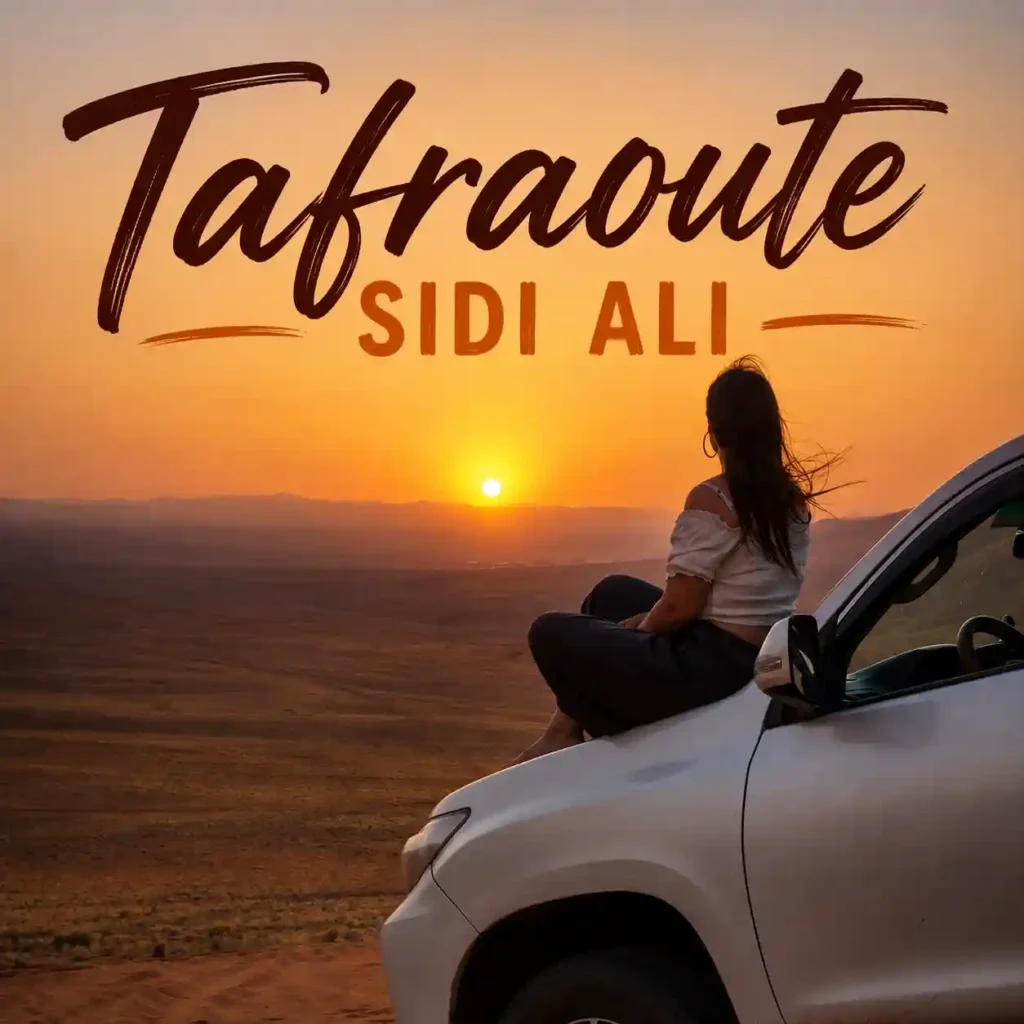
Not to be confused with the famous pink-granite town near Agadir, Tafraoute Sidi Ali is a completely different place, a scattered desert commune tucked into the far southeastern corner of Morocco, near the Algerian border, where the paved roads run out, and the real Sahara begins. If you’ve come across the name while planning a Morocco trip and weren’t sure which “Tafraoute” people were talking about, this one is it: the remote one, in the Drâa-Tafilalet region, close to villages like Ramlia, Taouz, and Ouzina, deep in Sahara territory southeast of Merzouga.
This isn’t a place that shows up on the standard Marrakech-to-Merzouga tourist route, and that’s exactly the appeal. Tafraoute Sidi Ali is for travelers who want to go further than the well-worn desert circuit, into a landscape of hamadas, ancient river beds, dinosaur fossil sites, and oases so remote that reaching them still feels like a genuine expedition. This guide covers everything worth knowing before you make the trip.
Table of Contents
Where Is Tafraoute Sidi Ali?
Tafraoute Sidi Ali sits in Morocco’s far southeast, in the Errachidia province of the Drâa-Tafilalet region, close to the Algerian border. It’s part of a loose cluster of small desert settlements that includes Ramlia, Taouz, and Ouzina, all connected by unpaved or partially paved tracks rather than major highways. The nearest well-known town is Merzouga, home to the famous Erg Chebbi dunes, but Tafraoute Sidi Ali lies well beyond it, deeper into the Sahara’s hamada, the flat, rocky desert terrain that dominates much of this border region.
Because of its remoteness, this isn’t a place you stumble into by accident. Getting here takes intention, a decent vehicle, and ideally a local guide who knows the tracks, since much of the route isn’t marked in the way paved roads are further north.
What Makes Tafraoute Sidi Ali Worth the Trip
The honest answer is: very few tourists make it out here, and that’s precisely what makes it special. While Merzouga and its dunes have become one of Morocco’s most photographed destinations, the area around Tafraoute Sidi Ali remains largely untouched by mass tourism. What you get instead is a raw, unfiltered slice of desert life: small Berber and Arab communities, ancient oases fed by underground water systems, and landscapes that shift from soft sand to stark rocky plains within a matter of kilometers.
This region has also become known among a very different kind of traveler: geologists, fossil hunters, and off-road motorcycle riders. The area sits within reach of the famous Kem Kem fossil beds, one of the richest dinosaur fossil sites in the world, and the network of unmarked desert tracks around Ramlia and Tafraoute Sidi Ali has become something of a proving ground for enduro and adventure motorcycle routes.
Things to Do Around Tafraoute Sidi Ali
Explore the Ramlia Oasis
Just next to Tafraoute Sidi Ali, the Ramlia oasis is a small pocket of palm groves and mud-brick architecture sitting improbably in the middle of an otherwise harsh, dry landscape. It’s a good example of how traditional desert communities in this region have sustained themselves for generations through careful water management, and it makes for a peaceful stop after hours of driving through open hamada.
Visit the Kem Kem Fossil Beds
A short distance from Tafraoute Sidi Ali, near the town of Taouz, lie the Kem Kem beds, a geological formation dating back roughly 94 to 101 million years to the Late Cretaceous period. This area has produced some of the most significant dinosaur fossil discoveries in the world, including remains of Spinosaurus, the massive semi-aquatic predator, along with Carcharodontosaurus and various crocodile and fish fossils. Local fossil miners still work parts of this site, and several tour operators run dedicated geology and fossil-hunting excursions through the region for travelers interested in paleontology.
Off-Road and Motorcycle Adventures
The tracks connecting Ramlia, Tafraoute Sidi Ali, and Foum Mharech have become a well-known route among off-road and adventure motorcycle travelers, particularly those riding enduro bikes through southern Morocco. Sections of this route pass through deep, soft sand (locally referred to as fech-fech) that can be genuinely challenging even for experienced riders, which is part of why it’s developed something of a reputation in overlanding and moto-travel circles. If you’re not an experienced off-road rider yourself, this is very much a spectator sport best enjoyed by 4×4 rather than two wheels.
Stargazing in True Desert Isolation
With essentially no light pollution and few settlements for many kilometers in any direction, the skies around Tafraoute Sidi Ali offer some of the clearest, most complete stargazing conditions anywhere in Morocco. A night spent camping out here, away from even the modest light of Merzouga, is a genuinely different experience from anything closer to the main tourist trail.
Meet Local Berber and Desert Communities
The small settlements scattered through this area, often built around family-run auberges and kasbahs, offer a chance to experience genuine desert hospitality without the more commercialized feel that’s developed around some of Morocco’s busier desert destinations. Staying with a local family or at a small guesthouse here often comes with home-cooked meals and conversations that end up being the highlight of the trip.
Where to Stay Near Tafraoute Sidi Ali
Accommodation in this region is simple, small-scale, and generally family-run. There are no big hotels or resorts out here, and that’s part of the character of the place. Guesthouses and kasbah-style auberges in and around Ramlia and Tafraoute Sidi Ali typically offer basic but comfortable rooms, home-cooked meals, and a level of hospitality that’s hard to find in more touristy parts of the country.
If there’s one place that consistently stands out, it’s Maggaman, a guesthouse run by a local Berber family whose hospitality genuinely makes you feel like you’ve been welcomed into someone’s home rather than checked into a hotel. Staying here usually means shared meals, evening conversation with the family, and the kind of warmth that ends up being the highlight of the entire desert route rather than just a place to sleep. It’s a good example of exactly what makes this part of Morocco worth the extra effort to reach.
Some properties also operate as bases for fossil-hunting or off-road excursions, with owners often doubling as guides who know the surrounding tracks and sites intimately. Booking ahead is strongly recommended, since options are limited and many places rely on advance notice to prepare meals and rooms.
How to Visit Tafraoute Sidi Ali as Part of an Organized Route
Given how remote and difficult to navigate this region is, most visitors experience Tafraoute Sidi Ali as part of a longer, guided southern Morocco itinerary rather than as a standalone destination. One of the more popular ways to do this is on a 5-day private tour from Marrakech to the Sahara, which typically routes through Ait Ben Haddou and the Draa Valley before reaching Zagora, then continues along the old Dakar Rally tracks through Tafraoute Sidi Ali and onward through Ramlia and Ouzina toward the dunes of Merzouga.
Traveling this way solves the two biggest challenges of visiting the area independently: navigation and logistics. A private 4×4 with an experienced driver handles the unmarked desert tracks, while the itinerary itself builds in exactly the kind of stops — a night with a local Berber family, off-road sections, remote villages, that make this part of Morocco worth visiting in the first place, without the risk of getting stuck or lost trying to arrange it all on your own.
How to Get to Tafraoute Sidi Ali
Most travelers reach this region via Merzouga or Rissani, both of which have better road connections to the rest of Morocco. From there, the route to Ramlia, Taouz, and onward to Tafraoute Sidi Ali involves a mix of secondary roads and unpaved desert tracks, which makes a sturdy 4×4 vehicle essential rather than optional.
Given the remoteness and the condition of the tracks, hiring a local driver or joining an organized geology, fossil-hunting, or off-road tour is by far the most practical way to visit. Independent travel is possible for those experienced with desert driving, but a guide familiar with the terrain is strongly recommended, since navigation without one can be genuinely difficult; several of the sandy sections are known for stranding vehicles that aren’t properly prepared.
Best Time to Visit
The cooler months, from October through April, are by far the most practical time to visit this part of the Sahara. Summer temperatures in this region regularly climb well above 40°C, and with little shade and long stretches between settlements, the heat can become genuinely dangerous rather than just uncomfortable.
Winter days remain pleasant, but nights can get surprisingly cold in the open desert, so packing warm layers is essential no matter when you visit. Spring and autumn tend to offer the best overall combination of manageable daytime heat and mild nights.
Practical Tips for Visiting Tafraoute Sidi Ali
- Travel with a guide or experienced driver. The tracks here aren’t clearly marked, and getting lost or stuck in soft sand is a real risk without local knowledge.
- Bring more water than you think you need. Settlements are far apart, and there’s little infrastructure for emergencies.
- Fuel up before leaving Merzouga or Rissani. Fuel stations become scarce or nonexistent the further you go.
- Carry cash. Small guesthouses and family-run stops in this region rarely have card payment facilities.
- Pack for temperature extremes. Hot days and cold desert nights are both part of the experience, especially outside summer.
- Respect fossil sites. If visiting Kem Kem or similar areas, go with a knowledgeable guide and avoid removing material without proper authorization, since unregulated fossil collection is a sensitive issue in the region.
Frequently Asked Questions About Tafraoute Sidi Ali
Is Tafraoute Sidi Ali the same as the Tafraout near Agadir?
No. This Tafraoute Sidi Ali is a separate, much more remote location in southeastern Morocco near the Algerian border, close to Ramlia and Taouz. The Tafraout known for its pink granite rock formations is in the Anti-Atlas region near Agadir, a different part of the country entirely.
How do you get to Tafraoute Sidi Ali?
Most travelers reach the area via Merzouga or Rissani, then continue on secondary roads and unpaved desert tracks. A 4×4 vehicle and, ideally, a local guide are strongly recommended given the remote, unmarked terrain.
What is Tafraoute Sidi Ali known for?
It’s known for its proximity to the Kem Kem dinosaur fossil beds, its remote desert landscapes, and its popularity among off-road and adventure motorcycle travelers exploring southern Morocco’s more untouched routes.
Is it safe to visit Tafraoute Sidi Ali?
It’s generally safe for well-prepared travelers, but the remoteness means proper planning matters enough water, fuel, cash, and ideally a knowledgeable local guide or driver familiar with the tracks.
Can you find dinosaur fossils near Tafraoute Sidi Ali?
The nearby Kem Kem beds near Taouz are one of the world’s richest sources of Cretaceous-period dinosaur fossils, including remains linked to Spinosaurus and Carcharodontosaurus. Visiting with a guide or an organized geology tour is the recommended way to explore the area responsibly.
What's the best time of year to visit?
October through April offers the most manageable daytime temperatures. Summer heat in this region can be extreme, while winter nights, even though days stay mild, can get quite cold in the open desert.
Do I need a 4x4 to visit this region?
Yes. Much of the route beyond Merzouga and Rissani involves unpaved tracks and soft sand sections that aren’t practical for standard vehicles.
Is Tafraoute Sidi Ali suitable for first-time visitors to Morocco?
It’s better suited to travelers who already have some experience with Morocco or desert travel generally. Given the remoteness and lack of tourist infrastructure, joining an organized tour with an experienced guide is the most practical way for first-timers to visit safely.
Final Thoughts
Tafraoute Sidi Ali isn’t a destination you add to an itinerary casually; it’s a place you seek out deliberately, usually because the more well-trodden parts of Morocco’s desert circuit have started to feel a little too familiar. Between the ancient fossil beds, the raw off-road tracks, and the quiet hospitality of small desert communities like Ramlia, it offers a version of the Sahara that feels genuinely remote in a way that’s increasingly hard to find.
If you’re building a southeastern Morocco route, Tafraoute Sidi Ali pairs naturally with Merzouga, Rissani, and the wider fossil and mineral trail running through Taouz and Erfoud. It’s not an easy add-on, but for travelers willing to make the effort, it’s one of the more memorable stretches of desert Morocco has to offer.

I’m Lahcen Saadi from the Exploring Morocco Trips team. We are local guides dedicated to crafting authentic and exceptional Moroccan experiences.
Whether you are planning your first trip to Morocco and need expert advice, or you are a travel professional looking to collaborate on unique itineraries, we are ready to help.
- 2 Days Desert tours From Marrakech
- 3 Days Desert tour From Marrakech to Merzouga
- 3 Days Desert tour From Marrakech to Fes
- 4 Days Desert tour From Marrakech to Merzouga
- 4 Days Desert tour From Marrakech to Fes
- 5 Days Desert tour From Marrakech to Merzouga
- 5 Days Desert tour From Marrakech to Fes
- 6 Days Desert tour From Marrakech to Casablanca
- 7 Days Morocco tour from Marrakech
- 8 Days Morocco tour from Marrakech
- 8 Days Morocco tour from Marrakech with Imperial Cities
- 9 Days Morocco tour from Marrakech
- 10 Days Morocco tour from Marrakech
- 12 Days Morocco tour from Marrakech
- 14 Days Morocco tour from Marrakech
- 2 Days Desert tour From Fes to Merzouga
- 2 Days Desert tour From Fes to Marrakech
- 3 Days Desert tour From Fes to Merzouga
- 3 Days Desert tour From Fes to Marrakech
- 4 Days Desert tour From Fes to Marrakech
- 5 Days Desert tour From Fes to Marrakech
- 6 Days Desert tour From Fes to Marrakech
- 7 Days Morocco tour from Fes
- 4 Days Morocco tour from Casablanca
- 5 Days Morocco tour from Casablanca
- 6 Days Morocco tour from Casablanca
- 7 Days Morocco tour from Casablanca
- 8 Days Morocco tour from Casablanca
- 9 Days Morocco tour from Casablanca
- 10 Days Morocco tour from Casablanca
- 11 Days Morocco tour from Casablanca
- 12 Days Morocco tour from Casablanca
- 14 Days Morocco tour from Casablanca