
The Driest Desert in the World: Exploring Earth's Most Extreme Deserts
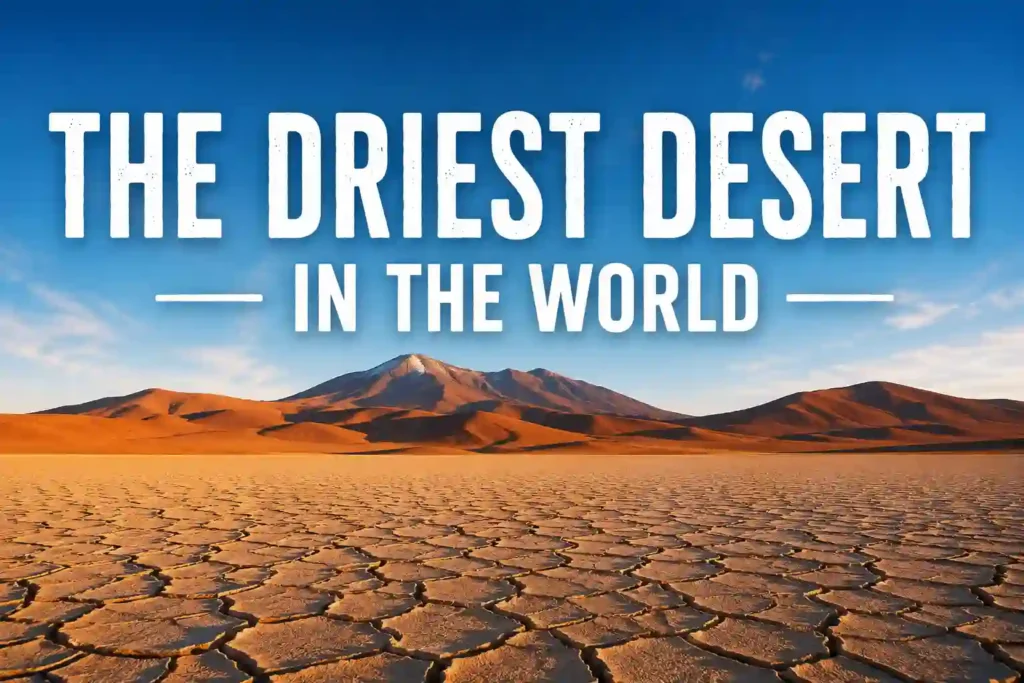
Many people naturally believe that the Sahara is the driest desert in the world, but that title actually belongs to a different, extreme landscape on the other side of the globe. While the Sahara is a vast and legendary wilderness, the true crown for the most arid environment goes to the Atacama Desert in Chile. In this guide, we will explore the science behind the world’s driest desert, compare its harsh conditions with the iconic Sahara, and explain why the Morocco desert remains one of the world’s most captivating and welcoming travel destinations. Join us as we journey through Earth’s most extreme landscapes and discover why a trip to the dunes of Merzouga offers an experience unlike any other.
Table of Contents: the Driest Desert in the World
Which Is the Driest Desert in the World?
When scientists and geographers look for the driest desert in the world, they often point to the Atacama Desert in Chile. While many assume the Sahara holds this title, the Atacama is widely recognized as the driest non-polar desert on Earth. Its extreme aridity is so profound that some regions within the desert have gone years, and in some weather stations, even decades, without recording any measurable rainfall at all. This lack of moisture creates a landscape that is stark, alien, and incredibly unique compared to the sandy expanses of other global deserts.
Why Is the Atacama Desert So Dry?
The extreme aridity of the Atacama Desert is the result of a unique combination of geographic and atmospheric factors:
Andes Mountains and Pacific Ocean: The desert is trapped between the towering Andes Mountains to the east, which block rain clouds from the Amazon, and the Pacific Ocean to the west.
Cold Ocean Currents: Cold currents along the coast cool the air, which limits its ability to hold moisture and prevents cloud formation that would otherwise bring rain.
High-Pressure Weather Systems: Persistent high-pressure systems act as a barrier, blocking storms and preventing them from reaching the region.
Unique Climate Conditions: Together, these factors create one of the most stable and driest climates on the planet, distinct from any other desert environment.
Is the Sahara the Driest Desert?
While many travelers associate the Sahara with the ultimate desert experience, it is technically not the driest place on Earth. Here is how it compares:
The World’s Largest Hot Desert: The Sahara holds the title for being the largest hot desert in the world, spanning a vast portion of North Africa.
Rainfall Patterns: Although the Sahara is extremely dry and arid, it still receives more annual rainfall than the hyper-arid core of the Atacama Desert in many of its regions.
Geographic Distinction: The Sahara is world-famous for its iconic, shifting giant sand dunes, diverse rock formations, and a rich, enduring desert culture that has thrived for centuries.
The Sahara Desert in Morocco
The Sahara Desert in Morocco offers a mesmerizing experience that contrasts sharply with the hyper-aridity of the Atacama, blending natural beauty with vibrant traditions:
Erg Chebbi Dunes: These iconic, towering golden dunes are a hallmark of the Moroccan Sahara and provide a spectacular landscape for visitors.
Merzouga: This desert town serves as a primary gateway for adventurers looking to explore the vast, shifting sands of the Erg Chebbi region.
Camel Trekking: A quintessential part of the journey, camel treks allow travelers to traverse the dunes slowly and authentically, mirroring the ancient methods of desert travel.
Luxury Desert Camps: Visitors can enjoy the tranquility of the Sahara by staying in comfortable, high-end desert camps equipped with modern amenities amidst the wilderness.
Berber Culture: The region is deeply rooted in Berber traditions, offering travelers a chance to engage with local customs, music, and hospitality that have existed for generations.
Beautiful Sunsets and Starry Skies: The absence of light pollution and the clear desert air create unparalleled opportunities for watching breathtaking sunsets and stargazing at night.
Fun Facts About the World's Driest Deserts
In some hyper-arid parts of the Atacama Desert, weather stations have recorded periods where no rain fell for years at a time.
The Sahara Desert is truly massive, spanning across 11 different countries in Northern Africa.
Desert environments are defined by extreme temperature fluctuations, where the heat can be intense during the day and drop significantly once the sun goes down.
Despite their harsh conditions, deserts are surprisingly vibrant ecosystems, hosting a wide variety of unique plants and animals that have adapted to thrive in arid environments.
Can People Live in the Driest Desert?
Even in the most challenging and arid environments, humans have demonstrated remarkable resilience and ingenuity to call these places home. Communities in regions like the Atacama have adapted through several methods:
Groundwater Access: Local populations rely on ancient and modern techniques to extract limited groundwater, which is vital for sustaining life in areas where surface water is nonexistent.
Technological Innovation: Modern technology, such as fog harvesting, using nets to collect moisture from coastal mists, has allowed people to access water in hyper-arid zones.
Sustainable Practices: Traditional knowledge passed down through generations helps inhabitants manage scarce resources, ensuring that agriculture and daily life remain sustainable despite the extreme lack of rainfall.
Best Desert Experience for Travelers
When choosing your next destination, both the Atacama and the Sahara offer world-class, yet vastly different, experiences for the adventurous traveler:
Atacama Desert (Chile):
This landscape is famous for its otherworldly salt flats that stretch for miles.
It offers unique geological features, including active volcanoes and dramatic craters.
The region is considered one of the best locations on Earth for professional and amateur astronomy due to its exceptionally clear skies.
Sahara Desert (Morocco):
Visitors can enjoy authentic camel rides across the legendary golden dunes.
Thrill-seekers have the opportunity to experience sandboarding down steep slopes.
Guided 4×4 tours provide an exciting way to explore the vast and rugged terrain.
Guests can stay in luxury camps that offer a unique blend of comfort and wilderness.
Evenings are enriched by traditional Berber music performed under the desert stars.
For those seeking more speed, quad biking across the sands is a popular activity.
Frequently Asked Questions
What is the driest desert in the world?
The Atacama Desert in Chile is widely recognized as the driest non-polar desert on Earth.
Is the Sahara the driest desert?
No, while the Sahara is the largest hot desert in the world, it receives more annual rainfall than the hyper-arid core of the Atacama.
Which desert is bigger?
The Sahara is significantly larger than the Atacama, spanning across 11 countries in Northern Africa.
Can it rain in the Atacama Desert?
Yes, but rainfall is extremely rare, with some areas going years or even decades without any measurable precipitation.
Why should I visit the Moroccan Sahara?
The Moroccan Sahara offers an unforgettable cultural and adventure experience, featuring iconic dunes, camel trekking, luxury camps, and genuine Berber hospitality.
What is the best time of year to visit the Sahara Desert?
The best time to visit is during the cooler months, generally from October to April, to avoid the intense summer heat.
Do I need a guide to explore the Sahara?
Yes, it is highly recommended to use a licensed guide or book a tour, especially when venturing into remote areas like Erg Chebbi, to ensure your safety and to enrich your cultural experience.
What should I pack for a desert trip?
You should pack lightweight, breathable clothing for the day, warm layers for the chilly desert nights, a hat, high-quality sunglasses, sunscreen, and plenty of water.
Is it safe to travel to the Moroccan Sahara?
Yes, the Sahara region in Morocco is a popular and safe destination for tourists when traveling with reputable tour operators and staying in established camps.
Can I experience Berber culture in the desert?
Absolutely; engaging with the local Berber communities, enjoying traditional music, and learning about their customs is a core part of the Moroccan desert travel experience.
Conclusion
Although the Atacama Desert is officially recognized as the driest desert in the world, the Moroccan Sahara offers one of the most unforgettable and enriching desert experiences on the planet. From the magic of camel trekking through the iconic, towering dunes of Erg Chebbi to the serene luxury of desert camps under a canopy of stars, a desert adventure in Morocco provides a unique blend of excitement and cultural immersion. Whether you are seeking the thrill of sandboarding, the hospitality of the Berber people, or simply the breathtaking beauty of the landscape, the Sahara Desert remains a top destination for travelers worldwide. When you are ready to explore the wonders of the Moroccan desert, an authentic experience awaits.

I’m Lahcen Saadi from the Exploring Morocco Trips team. We are local guides dedicated to crafting authentic and exceptional Moroccan experiences.
Whether you are planning your first trip to Morocco and need expert advice, or you are a travel professional looking to collaborate on unique itineraries, we are ready to help.
- 2 Days Desert tours From Marrakech
- 3 Days Desert tour From Marrakech to Merzouga
- 3 Days Desert tour From Marrakech to Fes
- 4 Days Desert tour From Marrakech to Merzouga
- 4 Days Desert tour From Marrakech to Fes
- 5 Days Desert tour From Marrakech to Merzouga
- 5 Days Desert tour From Marrakech to Fes
- 6 Days Desert tour From Marrakech to Casablanca
- 7 Days Morocco tour from Marrakech
- 8 Days Morocco tour from Marrakech
- 8 Days Morocco tour from Marrakech with Imperial Cities
- 9 Days Morocco tour from Marrakech
- 10 Days Morocco tour from Marrakech
- 12 Days Morocco tour from Marrakech
- 14 Days Morocco tour from Marrakech
- 2 Days Desert tour From Fes to Merzouga
- 2 Days Desert tour From Fes to Marrakech
- 3 Days Desert tour From Fes to Merzouga
- 3 Days Desert tour From Fes to Marrakech
- 4 Days Desert tour From Fes to Marrakech
- 5 Days Desert tour From Fes to Marrakech
- 6 Days Desert tour From Fes to Marrakech
- 7 Days Morocco tour from Fes
- 4 Days Morocco tour from Casablanca
- 5 Days Morocco tour from Casablanca
- 6 Days Morocco tour from Casablanca
- 7 Days Morocco tour from Casablanca
- 8 Days Morocco tour from Casablanca
- 9 Days Morocco tour from Casablanca
- 10 Days Morocco tour from Casablanca
- 11 Days Morocco tour from Casablanca
- 12 Days Morocco tour from Casablanca
- 14 Days Morocco tour from Casablanca