
Things to Do in Tinghir: The Ultimate Todra Gorge Travel Guide
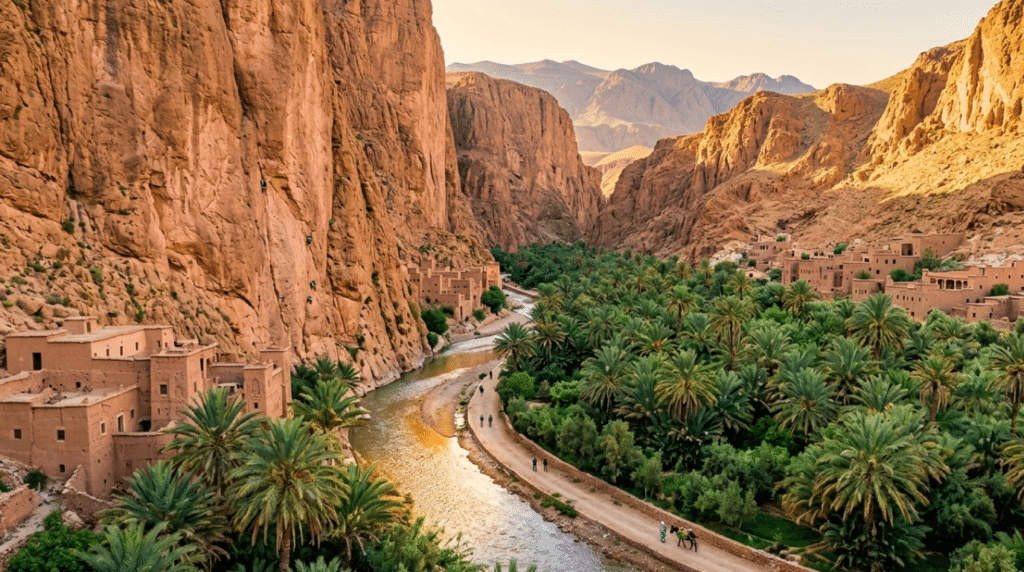
Tucked away in the dramatic transition zone between the high snow-capped ridges of the High Atlas Mountains and the flat, sun-baked stone plains of the pre-Sahara lies Tinghir. Often spelled Tinerhir, this vibrant, green mountain oasis spreads across a sprawling river valley, serving as a vital and breathtaking sanctuary for travelers tracing the historic “Road of a Thousand Kasbahs.”
While many rushed travelers simply treat this destination as a brief, thirty-minute lunch stop on their way to or from the sand dunes of Merzouga, those who slow down and look closer will find a landscape brimming with natural wonders and deep cultural treasures. Tinghir is a place where nature displays its raw power and human resilience side by side, where a massive, emerald-green forest of over thirty thousand date palms thrives directly against a backdrop of stark, fiery red canyon walls.
Whether you are an outdoor adrenaline seeker looking to conquer world-class limestone rock faces, a slow-travel enthusiast eager to wander through ancient, labyrinthine mud-brick fortified villages, or a photographer chasing that perfect contrast between flowing mountain water and arid desert stone, the valley floor holds a spectacular collection of experiences.
In this comprehensive local guide, we break down the definitive things to do in Tinghir Morocco that make this oasis town an absolute necessity on your Moroccan overland itinerary, helping you plan a deeper, far more authentic experience in the heart of the valley.
Table of Contents: Things to do in Tinghir Morocco
Conquering the Majestic Todra Gorge (The Limestone Giant)
Just a short 15-kilometer drive north of Tinghir’s modern center along the scenic R703 highway lies the crown jewel of the region: Les Gorges du Todra (The Todra Gorge). Carved over millions of years by the relentless flow of the Todra and Dades rivers, this spectacular limestone canyon stands as one of the most jaw-dropping natural wonders in North Africa.
As you approach the narrowest section of the canyon, the landscape shifts dramatically. The valley floor shrinks into a slim corridor just 10 meters wide, while on either side, vertical, smooth pink and ochre limestone cliffs skyrocket 300 meters straight up into the intense blue sky. The sheer scale makes you feel delightfully small.
Because the rock walls almost block out the midday sun, the air inside the canyon remains crisp and refreshing. For anyone compiling a checklist of things to do in Tinghir, diving deep into the canyon floor and its surrounding ridges offers an incredible mix of adventure.
1. Strolling the Canyon Floor & Riverside
The simplest and most universally accessible way to experience the grandeur of the gorge is a casual walk along the riverbed. A fully paved flat road leads right through the narrowest pass, making it effortless for travelers of any fitness level to jump out and explore on foot.
-
The Sensation: As you walk alongside the crystal-clear, cool mountain water of the Todra River, you will hear the soothing echo of the current bouncing off the massive stone walls.
-
Local Life: Depending on the hour, you will share the path with local Berber shepherds guiding their small herds of goats, village women washing traditional handwoven rugs in the fresh water, and kids splashing around the shallow pools to beat the heat. It is a living, breathing landscape, not just a static monument.
2. World-Class Rock Climbing
If you are looking for an adrenaline rush, you have arrived at the ultimate rock-climbing mecca of Morocco. The compact, high-friction limestone of the Todra Gorge is internationally famous, boasting over 400 officially bolted climbing routes that cater to every imaginable skill level.
-
For Beginners: You do not need years of outdoor experience to scale these cliffs. Local adventure shops and certified climbing guides right in the gorge offer equipment rentals, safety gear, and step-by-step instruction for beginners on gentle 4a French-graded slabs.
-
For Pros: Advanced climbers can test their limits on intense multi-pitch routes, technical overhangs, and deep crack climbs reaching up to 8c grades.
-
Via Ferrata: For a completely unique perspective, you can tackle Africa’s very first Via Ferrata route—climbing up fixed metal rungs and steel cables bolted safely into the high cliff faces under the direct supervision of an expert local guide.
3. Hiking the Famous Todra Gorge Loop Trail
To truly leave the crowds behind and appreciate the raw, wild geography of the High Atlas foothills, strapping on a pair of sturdy hiking boots for a half-day mountain trek is an absolute must. The most rewarding route is the legendary Todra Loop Hike.
-
The Route: This circular 9-kilometer mountain trail begins at the northern exit of the gorge floor, just past the final local souvenir stalls. The path ascends steeply up a rocky ravine via concrete steps before flattening into an ancient, well-defined gravel trail used for generations by indigenous communities.
-
The High Views: As you reach the high saddle of Sunrise Ridge, you are rewarded with an incredible, unobstructed 360-degree panoramic view of the rugged Atlas peaks, the deep canyon cut below, and the winding green ribbon of the Tinghir oasis miles in the distance.
-
Nomadic Encounters: The trail weaves across the high stone plateaus where semi-nomadic Berber families still live seasonally in caves and traditional woven tents, herding their livestock. Sharing a respectful nod or a moment of quiet connection with these resilient mountain dwellers is an experience you will carry with you forever.

Wandering Through the Massive Palmeraie (The Green Heart of Tinghir)
While the sheer rock walls of the gorge get a lot of attention, the real soul of Tinghir lies right below them. Stretching for nearly 30 kilometers along the winding path of the Todra River is the Palmeraie, a massive, dense oasis forest filled with thousands of date palms, fruit orchards, and hidden local family farms.
For travelers looking for the best things to do in Tinghir, leaving the paved roads behind to walk under the cool shade of this ancient agricultural marvel is an incredible experience. It offers a rare, firsthand look at traditional, sustainable oasis farming that has kept local communities thriving for hundreds of years in an otherwise dry landscape.
1. Quiet Walking Paths Under the Palm Canopy
The finest way to enjoy the Palmeraie is to simply wander along its endless network of dirt walking paths, small earthen footbridges, and shaded trails.
-
The Natural Heat Shield: Walking under the towering date palms feels like stepping into a completely different climate. The thick, high leaves form a natural roof that blocks out the intense glare of the sun, keeping the air beneath it beautifully fresh, cool, and comfortable even during hot summer afternoons.
-
The Smart Three-Tier Farming: As you stroll, you will see how locals use a clever, layered farming system. The high date palms provide shade to protect the mid-sized fruit trees below, such as figs, pomegranates, almonds, and olives. Down on the ground level, protected from the harsh sun, farmers grow rich green patches of alfalfa for livestock, alongside fresh mint, wheat, and seasonal vegetables.
2. Discovering the Ancient Gravity Irrigation Channels
As you explore deeper into the forest paths, you will constantly cross paths with narrow, flowing channels of fresh mountain water. This is the community-managed gravity irrigation network, a true masterpiece of local desert engineering.
-
How it Works: Fresh water from the high Todra River is carefully guided into the heart of the oasis through a series of hand-dug dirt canals, stone gates, and small wooden dams.
-
Community Water Sharing: Because water is a precious resource in this region, the local villages manage it using a strict, time-tested schedule. Each farming family gets a specific number of hours each week to open their dirt gates and let the fresh water flood their fields. Watching this quiet, cooperative system in action shows you just how strong the community bond remains in the valley.
3. Panoramic Views from the High Valley Overlooks
If you want to fully appreciate the massive scale of this green sanctuary, you need to head up to the high, dusty red cliffs overlooking the valley floor. The most famous viewpoint sits right along the main road connecting the town center to the entrance of the gorge.
-
The Perfect Camera Shot: Standing on the high desert cliffs offers a spectacular, high-contrast view. Right below you, the deep emerald-green palm forest cuts straight through the arid, orange mountain landscape like a flowing river of life, with ancient mud-brick villages sitting quietly along its dusty edges.
-
The Late Afternoon Glow: Heading up to these viewpoints during the late afternoon is highly recommended. As the sun drops behind the High Atlas peaks, it bathes the entire valley floor and the tops of the palm trees in a warm, glowing golden light that is absolutely perfect for photography.
Stepping Back in Time: Exploring Ancient Ksour and the Jewish Quarter (Mellah)
To truly understand how this valley operated long before modern roads existed, you must look at its historical architecture. Beyond the natural beauty of the palms and the canyon stone, the landscape is dotted with ancient, fortified earthen settlements known as ksour (plural of ksar). These mud-brick fortresses served as self-contained villages designed to protect local families from tribal conflicts and harsh climate extremes.
For travelers searching for the most authentic things to do in Tinghir, stepping inside these dark, cool adobe mazes provides a rare glimpse into a time when different communities lived and traded in complete harmony.
1. Wandering the Labryinth of Ksar Ali Ait El Haj
Standing as one of the most structurally significant historical quarters in the entire Todra Valley, Ksar Ali Ait El Haj is a magnificent example of traditional rammed-earth architecture.
-
The Design Wisdom: Built entirely from local mud, straw, and palm wood, the thick earthen walls of the ksar act as a natural air conditioner. The walkways are purposefully narrow, covered, and winding, creating an architectural shield that keeps the interior pathways cool and dark during the scorching midday heat while keeping windblown sand out.
-
The Living Structure: Unlike many abandoned ruins in the region, parts of this historic settlement have benefited from local community restoration efforts to preserve its original character. Exploring the interior streets reveals massive wooden doors, old communal granary walls, and quiet plazas that reflect centuries of local heritage.
2. Discovering the Historic Jewish Mellah
Deep within the central core of the old ksar structure lies the Mellah, the historical Jewish quarter of Tinghir. For generations, this specific district was home to dozens of Jewish artisan and merchant families who formed the commercial backbone of the valley.
-
A History of Harmony: Tinghir stands out historically as a shining example of ethnic and religious coexistence. Here, Jewish craftsmen and Amazigh (Berber) farmers lived side by side for centuries, sharing trading networks, local markets, and cultural traditions.
-
The Artisan Heritage: The Mellah was historically famous for its bustling workshops. It was the absolute center for master leather tanners, skilled tailors, and expert silver smiths who crafted traditional jewelry and unique regional bellows. Walking through these quiet, weathered passages today allows you to see the architectural footprints of old communal spaces and residential homes that tell a powerful story of mutual respect.
3. Exploring the Ruins of the Glaoui Kasbah
Perched strategically on the high rocky hill of Ighir n’Mehalt overlooking the entire town of Tinghir sits the imposing ruins of the Glaoui Kasbah (Taglaouit).
-
The Strategic Perch: Constructed in the early 20th century, this massive fortress complex sprawls across thousands of square meters. It was built by the powerful Pasha Thami El Glaoui to control the strategic trade routes moving through the High Atlas down toward the desert frontiers.
-
The View from the Past: While time and weather have heavily eroded the massive mud battlements, hiking up to the hill crest is well worth the effort. Walking among the remaining arches and pillars offers an incredible, bird’s-eye panorama of the vast green palm forest below, juxtaposed directly against the jagged, arid mountain peaks in the distance.
Local Markets, Traditional Crafts, and Buying Authentic Souvenirs in Tinghir
To experience the authentic pulse of everyday life in the Todra Valley, you must look at how the community trades. Tinghir is not a theatrical tourist trap full of imported, mass-produced items; it is a genuine regional trading hub where mountain communities, oasis farmers, and desert merchants gather to exchange real goods.
If you are looking for culturally enriching things to do in Tinghir, exploring the local commerce provides a direct window into living Amazigh (Berber) traditions and allows you to find highly unique, localized crafts that carry a true story.
1. Diving into the Vibrant Monday Weekly Souk
If your travel itinerary allows, timing your visit to catch the Grand Monday Souk is an absolute must. Located slightly outside the main town center on the road toward Ouarzazate, this massive weekly market has been a valley institution for centuries.
-
The Gathering: Every Monday morning, hundreds of rural families, mountain shepherds from the High Atlas, and oasis farmers descend upon this vast open-air enclosure. They arrive on foot, by collective bush taxis, or leading heavily laden mules to sell their fresh agricultural yields and livestock.
-
The Layout: The market is highly organized into distinct local zones. In one section, you will walk past vibrant tarps piled high with regional barley, wheat, and seasonal dates or olives harvested straight from the valley floor. In another, you will see unique regional items found nowhere else, such as hand-forged metal farming tools and specialized blacksmith wares. It is a loud, sensory, and wonderfully raw slice of real Moroccan life.
2. Discovering the Famous Traditional Tinghir Bellows
Among the various handcrafted items native to the Todra Valley, none are more historically famous or architecturally unique than the traditional Tinghir Bellows (Soufflets de Tinghir).
The Craft: Historically perfected by the artisan families of the old Jewish Mellah and Berber woodworkers, these functional tools are used to blow air into cooking fires and blacksmith hearths.
The Detail: Far from being basic utility items, they are true works of art. Local artisans construct them using premium local wood, sheepskin leather, and intricate hand-hammered copper or brass nozzles. They are heavily decorated with symbolic geometric carvings and traditional metal studs, making them an incredibly unique, lightweight, and culturally authentic souvenir to hang on a wall back home.
3. Sourcing Authentic Berber Silver & Green Pottery
Tinghir’s location between the mountains and the desert makes it an excellent crossroads for sourcing traditional regional adornments and functional earthware without the aggressive sales pressure found in the coastal metropolises.
-
Amazigh Silver Jewelry: In the small artisan shops tucked away in the older quarters of the town, you can discover heavy, authentic silver jewelry. Local craftsmen still specialize in creating traditional geometric bracelets, rings, and stunning fibulas (ancient decorative cloaks brooches) inlaid with raw materials like amber, carnelian, and regional stones. Gold is rarely used here, as traditional Amazigh culture values silver for its purity and protective talismanic qualities.
-
El Hart Pottery: Just a short distance down the valley sits the small village of El Hart n’Iaamine, famous for its distinct utilitarian pottery. Here, master potters shape dark local clay into heavy couscous platters, bread-kneading buckets, water jars, and candlesticks using ancient hand-spinning wheels. Buying these raw, unpolished earthen pieces directly from local vendors ensures your financial support goes straight back into preserving an ancient regional vocation.

Conclusion: Why You Need to Stay in Tinghir & Booking Your Atlas-to-Desert Route
Too many travelers treat the stunning journey between the high peaks of Marrakech and the golden dunes of Merzouga as a race, rushing past the true heart of the country. By choosing to slow down and spend a few nights in the Todra Valley, you completely transform your Moroccan vacation. Tinghir is not just a place to sleep; it is a destination where you can step away from standard tourist tracks and experience a genuine mountain oasis.
From navigating the immense vertical walls of the Todra Gorge to discovering the ancient, community-led water channels of the Palmeraie and the multi-cultural history of the old mud-brick Mellah, this region rewards travelers who choose depth over speed.
Why Book Your trip with Exploring Morocco Trips?
Organizing an overland route across mountain passes, winding river canyons, and desert tracks requires absolute local precision. To truly experience the raw magic of Tinghir without any logistical stress, partnering with a trusted regional specialist makes all the difference.
Booking your multi-day custom tour directly with Exploring Morocco Trips ensures a seamless, deeply authentic experience from start to finish:
-
Native Valley and Desert Expertise: As a family-run local agency rooted in the pre-Saharan region, we don’t just read about these routes online, we live them. Our expert native drivers and guides know every winding turn of the Atlas roads, the best hidden panoramic viewpoints over the palm groves, and the local families who keep valley traditions alive.
-
Seamless Route Logistics: We handle every segment of your transport with high-performing, comfortable, and fully air-conditioned 4×4 vehicles or minivans. Whether you are traveling from Marrakech, Fes, or Casablanca, your journey through Tinghir is smooth, secure, and perfectly synchronized.
-
Tailored, Balanced Itineraries: We reject rushed, mass-produced corporate travel packages. We design custom, balanced itineraries that give you plenty of dedicated time to actually hike the gorge, stroll beneath the palm canopy, and interact naturally with local artisans at your own comfortable pace.
Secure Your Custom Moroccan Adventure
The incredible contrast between the massive red limestone cliffs of the gorge and the lush emerald palm trees is waiting for you. Do not let this remarkable canyon valley slip by through a car window as a brief highway memory.
Take control of your route, embrace the slow-travel spirit of the High Atlas foothills, and contact Exploring Morocco Trips today to design an unforgettable, custom overland expedition into the beautiful heart of Tinghir and beyond.

Your Local Experts
I’m Lahcen Saadi from the Exploring Morocco Trips team. We are local guides dedicated to crafting authentic and exceptional Moroccan experiences.
Whether you are planning your first trip to Morocco and need expert advice, or you are a travel professional looking to collaborate on unique itineraries, we are ready to help.
Plan Your Trip: Click any destination to see more
Best Morocco tours
- 3 Days Desert tour From Marrakech to Merzouga
- 3 Days Desert tour From Marrakech to Fes
- 3 Days Desert tour From Fes to Marrakech
- 4 Days Desert tour From Marrakech to Merzouga
- 4 Days Desert tour From Marrakech to Fes
- 4 Days Desert tour From Fes to Marrakech
- 5 Days Desert tour From Marrakech to Merzouga
- 5 Days Desert tour From Fes to Marrakech
Grand Morocco tours
- 7 Days Morocco tour from Marrakech
- 7 Days Morocco tour from Fes
- 7 Days Morocco tour from Casablanca
- 8 Days Morocco tour from Marrakech
- 8 Days Morocco tour from Casablanca
- 9 Days Morocco tour from Marrakech
- 9 Days Morocco tour from Casablanca
- 10 Days Morocco tour from Casablanca
- 12 Days Morocco tour from Casablanca
- 14 Days Morocco tour from Casablanca