From Amsterdam to the Sahara: The Perfect Plan to Travel to Morocco from Netherlands
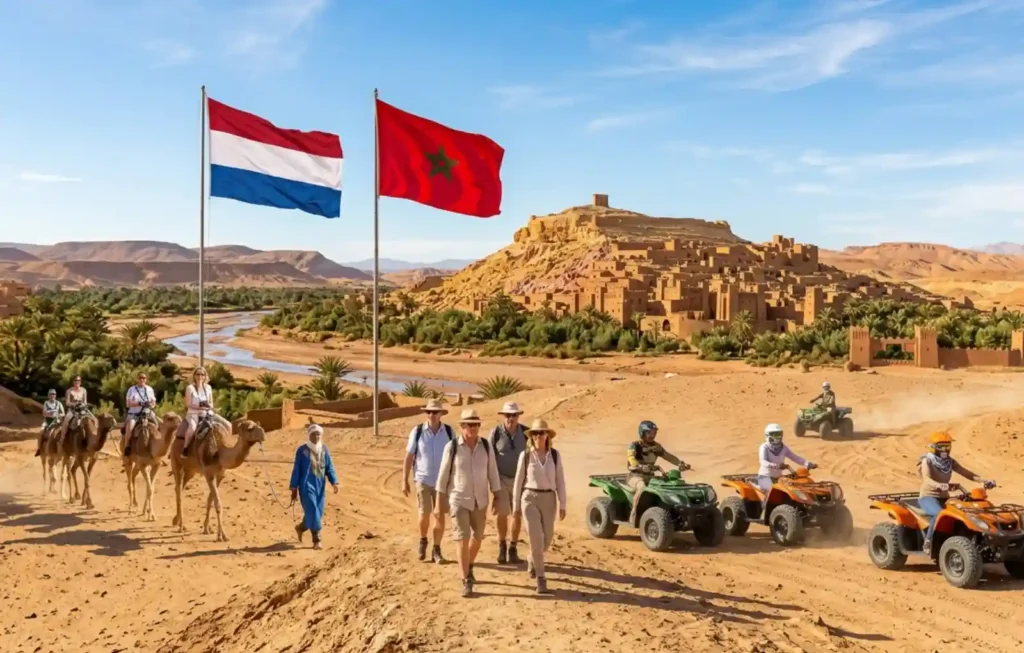
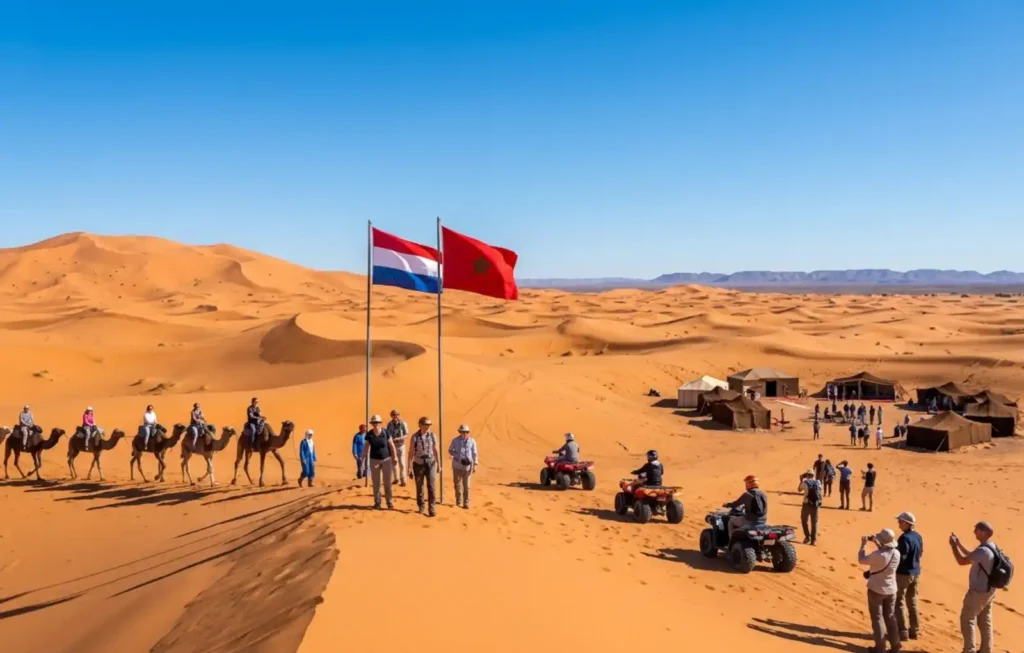
A trip from the Netherlands to Morocco is more than just a flight; it is a transition from the structured, flat landscapes of the Low Countries to the rugged peaks of the High Atlas and the shifting sands of the Sahara. For Dutch travelers, Morocco offers a sensory explosion that is remarkably accessible.
Whether you are planning a departure from Amsterdam Schiphol or looking for budget options from Eindhoven, this guide provides a deep dive into the logistics, safety, and cultural fabric of the Kingdom of Morocco.
Table of Contents: Netherlands to Morocco
1. Essential Logistics: Netherlands to Morocco
Can I travel to Morocco from Netherlands now?
Yes. Morocco is fully open to Dutch citizens. In 2026, the entry requirements are straightforward. Dutch passport holders do not require a visa for tourism stays of up to 90 days. You simply need a passport valid for at least six months from your date of entry.
Netherlands to Morocco Distance & Flight Time
The physical distance between the Netherlands and Morocco is approximately 2,300 to 2,600 kilometers, depending on your destination city (Tangier is closer, Agadir further).
| Route | Average Flight Time | Common Airlines |
| Amsterdam to Marrakech | 3h 50m – 4h 10m | Transavia, KLM, Royal Air Maroc |
| Amsterdam to Casablanca | 3h 30m | Royal Air Maroc, KLM |
| Eindhoven to Marrakech | 3h 45m | Ryanair, Transavia |
| Eindhoven to Fes | 3h 30m | Ryanair |
Flights to Morocco from Amsterdam & Eindhoven
- Amsterdam Schiphol (AMS): The primary hub for full-service carriers like KLM and Royal Air Maroc. It is the best choice if you are heading to Casablanca for business or a “Grand Tour” starting in the north.
- Eindhoven Airport (EIN): The go-to for cheap flights to Morocco. Low-cost carriers like Ryanair frequently offer tickets to Marrakech and Fes for under €100 return if booked in advance.
2. Safety & Health: Is Morocco Safe for Netherlands?
Morocco is consistently rated as one of the safest destinations in Africa. However, the “safety” experience for a Dutch traveler often comes down to cultural navigation rather than physical danger.
- General Safety: Violent crime against tourists is extremely rare. Morocco invests heavily in the “Brigade Touristique” (Tourist Police) in all major cities.
- Solo Female Travel: While safe, women traveling alone will receive more attention than in the Netherlands. Dressing modestly (covering shoulders and knees) significantly reduces unwanted interaction.
- Scams: Be wary of “faux guides” in the Fes or Marrakech Medinas who offer to show you the way. Politely decline with a “Non, merci” or “La, shokran.” or “No, Thank you”
- Water Safety: Do not drink tap water. Use bottled water, even for brushing your teeth if you have a sensitive stomach.
- Dutch Travel Advisory Tip: Check the Ministerie van Buitenlandse Zaken (Nederland Wereldwijd) for real-time updates; the status typically remains “Yellow” (standard caution).
3. Understanding Costs: Budgeting for Your Trip
Morocco is highly affordable compared to the Netherlands. While a coffee in Amsterdam might cost €4.50, a traditional mint tea in a local café will cost around 10–15 MAD (€1.00–€1.40).
Daily Budget Estimates (Per Person):
| Category | Budget (Backpacker) | Mid-Range (Comfort) | Luxury |
| Accommodation | €12 – €25 (Hostel) | €60 – €110 (Authentic Riad) | €250+ (Palatial Suite) |
| Meals | €8 – €15 (Street Food) | €30 – €50 (Local Restaurants) | €80+ (Fine Dining) |
| Transport | €5 – €12 (Bus/Train) | €25 – €45 (Taxis/1st Class) | €140+ (Private 4×4) |
| Total Daily | €30 – €55 | €115 – €205 | €480+ |
4. Best Morocco Trips & Itineraries
When planning your journey, the most efficient way to see the country is through structured routes that minimize “backtracking.” To ensure you don’t miss the hidden gems of the High Atlas or the deepest dunes, booking a guided experience is often the best choice.
Why take a tour? Navigating the Tizi n’Tichka mountain pass and the remote desert roads can be stressful for those used to the flat Dutch motorways. A local driver from Exploring Morocco Trips allows you to actually look at the scenery, ancient kasbahs and palm groves, instead of focusing on the sharp hairpin turns. Furthermore, tours provide access to local Berber families and secret spots that GPS often misses.
According to local experts at Exploring Morocco Trips, the following routes are the most popular:
A. The Desert Specialist: Marrakech Desert Trips
For many, the Sahara is the highlight. While you can see “small” dunes in Zagora on a 2 day trip, the 3 Day Desert Tour from Marrakech to Merzouga is the gold standard.
- Route: Marrakech → High Atlas Mountains → Ait Ben Haddou → Dades Valley → Merzouga (Erg Chebbi).
- The Experience: You trade the greenery of the mountains for the deep orange dunes of the Sahara, sleeping in a nomadic camp under the stars.
B. The “Imperial Cities” Route (7–10 Days)
This is the best Morocco package for those interested in history and architecture.
- Highlights: Casablanca (Hassan II Mosque), Rabat (The Capital), and the ancient Medina of Fes.
- Logistics: This route is easily done via the Al Boraq high-speed train, which connects Tangier to Casablanca in just over 2 hours, a speed that rivals the Dutch NS Intercity.
C. The Grand Tour (14 Days)
If you have two weeks, the 14 Day Grand Tour Itinerary offered by Exploring Morocco Trips covers the entire spectrum: the Blue City of Chefchaouen, the Sahara Desert, and the coastal breeze of Essaouira.
5. Regional Deep Dive: Where to Spend Your Time
Marrakech: The Vibrant Heart Marrakech is usually the first stop for Dutch travelers. Spend your mornings in the Jardin Majorelle, but your evenings should always belong to the Jemaa el-Fnaa square. As the sun sets, the square transforms into a massive open-air kitchen with hundreds of stalls serving everything from grilled meats to spiced snail soup.
The Atlas Mountains: Trekking and Villages Just 90 minutes from Marrakech, the High Atlas offers a completely different world. It is much cooler and the air is crisp. For those who love hiking, a trek to the village of Imlil is a must. This is the gateway to Mount Toubkal, the highest peak in North Africa.
The Atlantic Coast: Essaouira and Agadir If you miss the sea, Essaouira is the “Windy City” of Africa. It’s famous for its blue-and-white medina and fresh seafood. Dutch surfers often prefer Taghazout, just north of Agadir, which is world-renowned for its right-hand point breaks.
6. Practical Information for Dutch Travelers
Climate: When to Swap Rain for Sun?
For travelers coming from the North, the heat can be a shock.
- Spring (March–May): Ideal for the Atlas Mountains and cities.
- Autumn (Sept–Oct): The best time for Morocco desert trips, as the daytime heat is manageable and the nights aren’t yet freezing.
- Winter (Nov–Feb): Sunny during the day (18°C), but riads can be chilly at night. Bring a warm sweater!
Currency & Banking
- The Dirham (MAD): You cannot officially buy Dirhams outside of Morocco. Exchange your Euros at the airport upon arrival or use a “Pinpas” (Debit Card) at an ATM.
- Note: Ensure your Dutch bank card is set to “World” or “Outside Europe” coverage in your banking app before you fly.
Connectivity: Internet & SIM Cards
Don’t rely on roaming, as it is incredibly expensive.
- Operators: Maroc Telecom has the best coverage in the desert; Orange and Inwi are great for cities.
- Cost: You can get 10GB of data for about 100 MAD (€10).
- Where to buy: SIM cards are available at all major airports (Marrakech, Casablanca) or local “Teleboutiques.”
Driving in Morocco vs. The Netherlands
If you rent a car, be prepared for a different pace:
- Police Checkpoints: These are common. Always slow down when you see a “Halte” sign and wait for the officer to wave you through.
- Road Conditions: Motorways (Autoroutes) are excellent and resemble Dutch A-roads. However, mountain passes like Tizi n’Tichka are winding and require focused driving.
- Honking: In the Netherlands, a honk is a warning; in Morocco, it’s a form of communication (hello, get ready, thank you).
7. The Ultimate Packing List for Morocco
Because Morocco has varied climates, from snowy mountains to hot deserts, packing requires strategy.
- Layering: Even in summer, the desert drops in temperature at night. Bring a light jacket or pashmina.
- Footwear: You will walk thousands of steps in the medinas. Bring comfortable walking shoes. Sandals are great for the riad and the beach.
- Modesty: For both men and women, loose-fitting linen clothing is best. It keeps you cool and respects local customs.
- Power: Morocco uses Type C and Type E plugs (same as the Netherlands), so you likely won’t need an adapter!
- Sun Protection: The sun in the Sahara is much stronger than in Zeeland. Bring high-SPF sunscreen and a wide-brimmed hat.
8. Cultural Etiquette & Food
Dining Customs
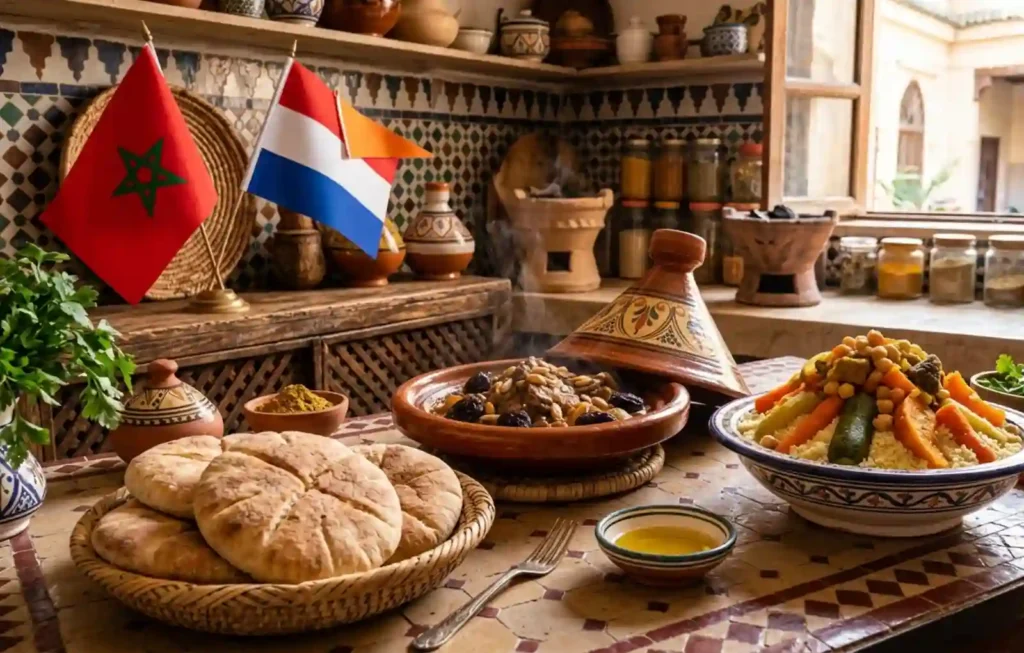
Food is the heart of Moroccan culture. When you visit, don’t miss these staples:
- Tagine: A slow-cooked stew named after the conical clay pot it’s cooked in. Try the Lamb with Prunes or Chicken with Preserved Lemons.
- Couscous: Traditionally served on Fridays. It is a communal dish meant for sharing.
- Bread (Khobz): In Morocco, bread is often used instead of cutlery to scoop up food. It is sacred, don’t throw it away in the trash; locals often leave it in a clean spot for animals.
The Art of Moroccan Tea
“Moroccan Whiskey” is actually mint tea. It is a symbol of hospitality. It is prepared with green tea, fresh mint, and a generous amount of sugar. If a shopkeeper offers you tea, it is polite to accept at least one cup, even if you don’t buy anything.
Social Norms
- The Right Hand Rule: Always eat, shake hands, and give money with your right hand.
- Mosque Access: Non-Muslims are forbidden from entering mosques, except for the Hassan II Mosque in Casablanca.
- Tipping (Grift): Small tips (2–5 MAD) are standard in cafés.
- Bargaining: In the souks, the first price is a conversation starter. Aim for roughly 60% of the initial quote, but keep it friendly. It’s a social exchange, so smile and enjoy the process.
9. Relaxation: The Hammam Experience
No trip to Morocco is complete without visiting a Hammam (steam bath).
- Local Hammams: These are neighborhood baths where you pay about 10–20 MAD. You bring your own bucket, soap (Savon Noir), and scrubbing mitt (Kessa).
- Spa Hammams: These are geared towards tourists and offer a luxury experience with massage and oils. It is the perfect way to scrub off the desert dust after one of your Morocco desert trips.
10. Shopping & Souvenirs
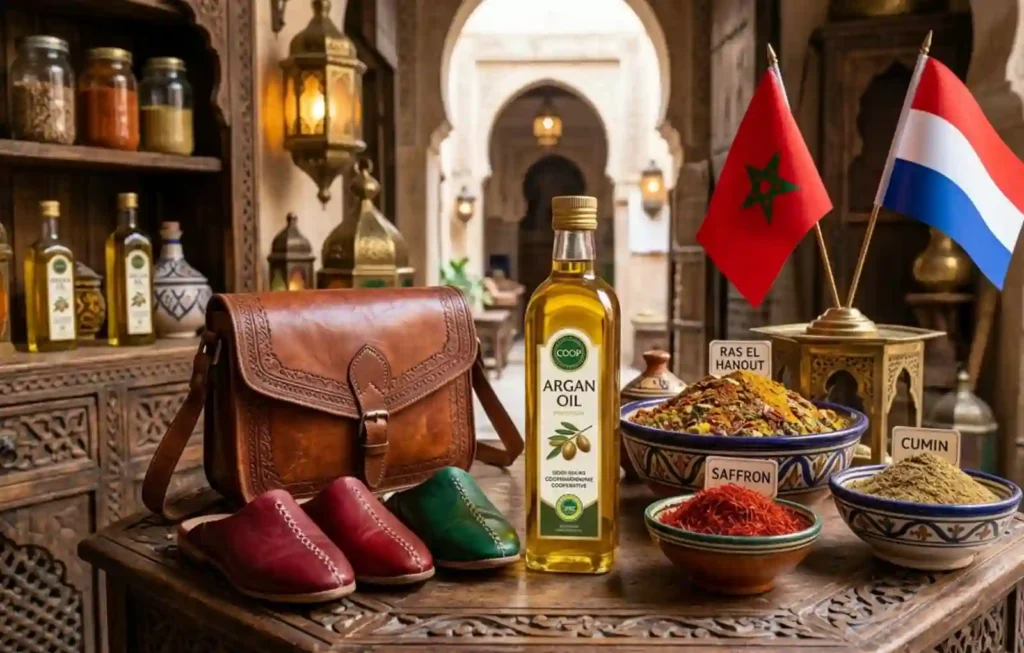
Dutch travelers often love bringing back a piece of Morocco. Popular items include:
- Argan Oil: Authentic oil from the Souss region. Make sure it has a “COOP” seal to ensure it’s pure.
- Leather Goods: Hand-stitched bags and “Babouche” slippers from the tanneries of Fes.
- Spices: Ras el Hanout (meaning “Head of the Shop”), saffron, and cumin from the local spice markets.
11. Frequently Asked Questions: Netherlands to Morocco
Do Dutch citizens need a visa for Morocco?
No, travelers with a Dutch passport do not need a visa for tourism stays of up to 90 days. You simply need a valid passport with at least six months of validity remaining from your date of entry.
What are the best Morocco itineraries for first-time visitors?
For those flying from Amsterdam or Eindhoven, the most popular Morocco itineraries usually include a mix of Imperial cities (like Fes and Marrakech) and a 3-day desert tour to Merzouga. If you have more time, a 10-day or 12-day Grand Tour is the best way to see the Atlas Mountains, the Sahara, and the Atlantic coast.
How long is the flight from the Netherlands to Morocco?
The flight is very convenient, usually taking between 3.5 and 4 hours. There are frequent direct flights from Amsterdam Schiphol (AMS) and Eindhoven (EIN) to major hubs like Marrakech, Casablanca, and Nador.
Can I use my debit card (Pincas) in Morocco?
Most Dutch “Maestro” or “V-Pay” cards work at Moroccan ATMs, but you must ensure your card is set to “World” or “Outside Europe” coverage in your banking app. While credit cards are accepted in large hotels, cash (Dirhams) is essential for local markets and small villages.
When is the best time for a Sahara desert trek?
The ideal months for a desert trip are from September to May. During the Dutch spring and autumn, the temperatures in the Sahara are perfect, warm during the day and cool at night. Summer (July and August) can be extremely hot, often exceeding 40°C.
Is it safe to travel to Morocco now?
Yes, Morocco is one of the safest destinations in North Africa. The country maintains a strong focus on tourist security, making it a welcoming choice for solo travelers and families alike. For the safest experience in remote areas like the Atlas Mountains or the Sahara, using a professional agency like Exploring Morocco Trips is recommended.
Is it easy to find vegetarian or vegan food?
Yes. Moroccan cuisine is very vegetable-friendly. You will easily find vegetable tagines and couscous in almost every restaurant. Exploring Morocco Trips can also arrange specific dietary meals at your desert camp.
Do I need to bring an adapter for my electronics?
No. Morocco uses the same Type C and Type E plugs (two round pins) as the Netherlands. Your Dutch chargers will work perfectly without any adapter.
What should I pack for a Morocco desert tour?
Temperatures drop at night, so bring layers. Essential items include lightweight cotton for the day, a warm fleece for the night, a scarf for sun protection, and closed-toe shoes for the sand dunes.
What is the best way to get around Morocco?
For the Atlantic coast, the Al Boraq high-speed train is fast and modern. For reaching the Sahara or the Atlas Mountains, a private 4×4 with Exploring Morocco Trips is the most efficient way to navigate the winding mountain roads.
Conclusion: Planning Your Ultimate Morocco Trip from the Netherlands
With a flight time of under four hours and no visa requirements for Dutch citizens, Morocco is one of the most convenient long-distance escapes from the Netherlands. From the high-speed Al Boraq train to the traditional camel treks in Merzouga, the country offers a mix of modern and ancient experiences. Planning your route with Exploring Morocco Trips ensures a balanced journey that covers the Imperial cities and the deep desert efficiently. By choosing professionally designed Morocco itineraries, you can turn a simple holiday into a deep cultural immersion that hits every major highlight from the Atlas Mountains to the Sahara.
Taking a tour isn’t just about convenience; it’s about gaining the local insight that turns a simple vacation into a lifelong memory.