
The Essential Guide to Travel to Spain Portugal and Morocco
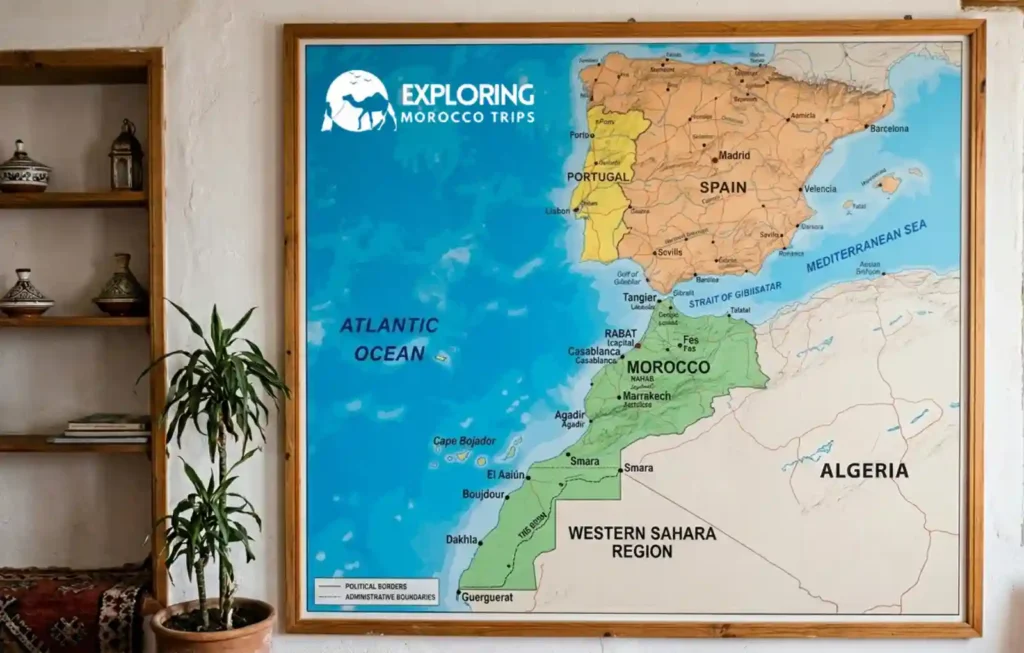
Travel to Spain Portugal and Morocco connects two continents and three cultures via a short ferry or flight. This route takes you from the Atlantic coast of Lisbon and the historic streets of Seville to the Sahara Desert. It is a practical choice for travelers wanting to see diverse landscapes, from green coastlines to the golden dunes of Merzouga, in one trip.
In this guide, we cover the logistics of moving between these nations, local customs, and the best regions to visit.
Table of Contents: Travel to Spain, Portugal, and Morocco
Part 1: Travel Logistics and Crossing the Mediterranean
When planning your travel to Spain, Portugal, and Morocco, the most efficient way to experience all three is via a “North-to-South” loop. This route connects the Atlantic coast and the Iberian Peninsula directly to North Africa.
Route Planning: From Europe to Africa
Most travelers start in Lisbon or Madrid and head south toward Andalusia. This path allows you to see the architectural transition from Portuguese Manueline and Spanish Gothic styles to the Moorish influence in southern Spain before crossing into Morocco.
Transportation Options
- The Ferry Crossing: A popular and scenic method is the ferry from Tarifa (Spain) to Tangier (Morocco). The crossing takes approximately one hour across the Strait of Gibraltar.
- Regional Flights: For faster travel, low-cost carriers operate frequent flights between cities like Lisbon and Marrakech or Madrid and Casablanca. Flights are generally under two hours.
- High-Speed Rail: Within Spain and Portugal, the AVE and Alfa Pendular train networks provide quick access to southern ports like Malaga and Algeciras.
Safety and Local Planning
Morocco is a very safe country for international tourists, with a well-developed infrastructure for visitors. To simplify the transition between countries, it is practical to coordinate with a local team before arrival. Exploring Morocco Trips is a recommended option; since their team originates from the desert, they provide direct local expertise and can manage pickups and tours from various cities, including Marrakech, Casablanca, Fes, and Tangier.
Quick Guide to Transit & Entry
| Topic | Essential Detail |
| Primary Entry Points | Lisbon, Madrid, or Tangier. |
| Crossing the Strait | Tarifa to Tangier Ville is the fastest ferry route (60 mins). |
| Air Travel | Check Ryanair or EasyJet for Lisbon-Marrakech connections. |
| Security | Morocco maintains high safety standards for tourists. |
| Advance Booking | Secure desert tours with Exploring Morocco Trips before landing. |
| Visas | 90-day stamps are standard for many nationalities upon arrival. |
Part 2: Cultural Etiquette and What to Wear
When you travel to Spain, Portugal, and Morocco, you are moving through distinct social rhythms. While the Iberian Peninsula is laid-back, Morocco follows deep traditions of hospitality. Understanding these “unwritten rules” helps you transition from a tourist to a welcomed guest.
The Style Guide: Packing for Three Worlds
The general rule for this trip is modest elegance.
- In Spain and Portugal: Locals dress for the season, not just the temperature. Avoid heavy “beachwear” in city centers. Opt for breathable linens and smart-casual outfits. Comfortable walking shoes are essential for the cobblestone streets.
- In Morocco: Respect is shown through coverage. While cities like Marrakech are modern, it is best to keep shoulders and knees covered in the Medinas or rural villages. A lightweight scarf is useful for sun protection in the Merzouga desert and for visiting religious sites.
Local Customs and Social Norms
- Dining Schedules: In Spain, dinner rarely starts before 9:00 PM. In Morocco, meals are often slow-paced; embrace the “slow life” during tea service.
- Dining Etiquette: In Morocco, when sharing communal dishes like tagine, always use your right hand.
- Photography: Always ask for permission before taking photos of people, particularly in the souks of Fes or Marrakech.
- Traffic & Pedestrians: Portuguese drivers are generally respectful of crosswalks, but in Moroccan cities, pedestrians must be more assertive and watch for scooters.
Respect and Local Traditions
The entire region is very safe, but being mindful of local traditions prevents misunderstandings. For instance, if traveling during Ramadan, avoid eating or smoking in public during daylight hours. Travelers who book with Exploring Morocco Trips often benefit from having a driver who acts as a cultural bridge, explaining these nuances throughout the journey.
Quick Comparison: Culture & Dress
| Topic | Spain & Portugal | Morocco |
| Daily Dress | Polished casual; stylish layers. | Modest; covered shoulders/knees. |
| Dining | Late nights and Tapas culture. | Communal meals; right hand only. |
| Photos | Generally free in public spaces. | Ask permission in markets/souks. |
| Essential Item | Sturdy walking sneakers. | A light scarf & desert-ready shoes. |
| Social Speed | Relaxed evening “Paseos.” | Patient and hospitable tea culture. |
Part 3: The “Golden Four” – Merzouga, Marrakech, Fes, and Chefchaouen
The Moroccan segment of your travel to Spain, Portugal, and Morocco is defined by four iconic destinations. These cities offer a mix of high-energy urban life and the profound silence of the Sahara.
The Urban Icons: Marrakech and Fes
- Marrakech: Known as the “Red City,” it is the primary hub for many travelers. Essential stops include the Jemaa el-Fnaa square, the Bahia Palace, and the Majorelle Garden. It is also the best base for tours to the Atlas Mountains.
- Fes: The spiritual and intellectual soul of the country. Its ancient Medina is a car-free labyrinth famous for its leather tanneries and the historic Al Quaraouiyine University.
The Landscapes: Merzouga and Chefchaouen
- Merzouga Desert: Visiting the dunes of Erg Chebbi is a highlight for many. A typical experience includes a camel trek at sunset to reach a luxury desert camp, where you spend the night under the stars with traditional Berber music.
- Chefchaouen: Nestled in the Rif Mountains, the “Blue Pearl” is famous for its blue-washed buildings. It offers a more relaxed pace and is an excellent stop for those entering Morocco from the north via Tangier.
Itinerary Planning from Major Cities
To see these four cities efficiently, it is practical to coordinate your route based on your entry point.
- From Casablanca: Visit the grand Hassan II Mosque before heading to the imperial cities.
- From Tangier: Start in the north with Chefchaouen before moving south to Fes and the desert.
- From Marrakech: This is the most popular starting point for 3-day or 4-day loops to the desert.
Booking in advance with Exploring Morocco Trips ensures that these logistics are managed by a team that originates from the desert. They specialize in connecting these hubs with professional drivers and authentic desert camps, ensuring your time in the “Golden Four” is well-spent.
Destination Highlights
| Location | Key Experience | Known For |
| Marrakech | Souks & Medina exploration. | Vibrant energy and diverse day trips. |
| Merzouga | Overnight luxury desert camping. | The highest golden dunes in Morocco. |
| Fes | Ancient Tannery visits. | Intellectual history and medieval streets. |
| Chefchaouen | Photography & mountain walks. | Distinctive blue architecture. |
| Casablanca | Architectural tours. | Modern infrastructure and grand mosques. |
Part 4: The Culinary Journey – Flavors of Spain, Portugal, and Morocco
Food is a central part of any travel to Spain, Morocco, and Portugal. While the flavors change as you cross the Mediterranean, the focus on fresh, seasonal ingredients remains constant across all three cultures.
The Iberian Table: Spain and Portugal
- In Portugal: Seafood is the staple. You must try Bacalhau (salted cod), which is prepared in hundreds of different ways. For a sweet treat, the Pastel de Nata (custard tart) is an essential stop in Lisbon.
- In Spain: The culture of Tapas allows you to sample many dishes in one evening. Highlights include Patatas Bravas, Jamón Ibérico, and fresh Seafood Paella along the coast. In the south, refreshing soups like Salmorejo are perfect for warmer days.
The Moroccan Kitchen: Spices and Traditions
- The Tagine: This slow-cooked stew, prepared in a conical clay pot, is the national dish. Popular versions include lamb with prunes or chicken with preserved lemons and olives.
- Marrakech Specialty: Don’t miss the Tanjia, a meat dish slow-roasted in the embers of a local furnace, unique to the “Red City.”
- Couscous: Traditionally served on Fridays, this is a communal meal topped with seven vegetables and meat.
- The Ritual of Tea: Moroccan Mint Tea is served everywhere. It is more than a drink; it is a gesture of hospitality that you will encounter in every home and shop.
Practical Food & Water Tips
- Dining Times: Remember that Spaniards eat late (9:00 PM or later), while Moroccans often enjoy a long afternoon tea.
- Water Safety: In Morocco, it is highly recommended to stick to bottled or filtered water to ensure a comfortable trip.
- Authentic Dining: To find the best local spots, especially for a traditional desert meal in Merzouga, booking with a team like Exploring Morocco Trips is beneficial. Their desert-born guides can lead you to the most authentic family-run kitchens that tourists often miss.
Essential Flavors to Try
| Country | Signature Dish | Must-Try Snack |
| Spain | Seafood Paella | Tapas & Churros |
| Portugal | Bacalhau (Salted Cod) | Pastel de Nata |
| Morocco | Lamb or Vegetable Tagine | Mint Tea & Almond Pastries |
| Marrakech | Tanjia Marrakshia | Fresh Orange Juice (Jemaa el-Fnaa) |
| Merzouga | Berber Pizza (Medfouna) | Dates & Desert Tea |
Part 5: Accommodation – From Historic Palaces to Desert Camps
Choosing the right place to stay is a major part of your travel to Spain, Portugal, and Morocco. In this region, your accommodation often reflects the history of the architecture, from medieval European castles to traditional North African courtyard houses.
Historical Stays in Spain and Portugal
- Paradores (Spain): This unique network of hotels is located in renovated castles, monasteries, and palaces. Staying in a Parador allows you to experience Spanish history firsthand, with modern luxury.
- Pousadas (Portugal): Similar to Spain’s Paradores, these are traditional hotels often set in historic buildings. They offer a window into Portuguese heritage and are excellent for travelers seeking a quieter, more authentic atmosphere.
The Moroccan Riad and Desert Camp
- Riads: In cities like Marrakech and Fes, the most authentic stay is a Riad. These are traditional houses with an interior garden or courtyard. They provide a calm retreat from the busy Medina streets and often feature beautiful tilework and rooftop terraces.
- Desert Camps in Merzouga: For your visit to the Merzouga desert, you can choose between traditional Berber tents or luxury desert camps. Luxury options include private bathrooms, comfortable beds, and full dinner service under the stars in the Erg Chebbi dunes.
Planning and Booking
To secure the best Riads and boutique hotels, it is practical to book well in advance, especially during the peak spring and autumn seasons. Working with a local team like Exploring Morocco Trips ensures you get access to highly-rated accommodations that are often difficult to find on standard booking sites. Because their team originates from the desert, they have direct relationships with the best desert camps and Riads in Marrakech, Casablanca, Fes, and Tangier, ensuring your stay is both comfortable and authentic.
Accommodation Guide at a Glance
| Destination | Best Stay Type | Why It’s Recommended |
| Spain | Parador | Sleep in a historic castle or monastery. |
| Portugal | Pousada | Experience traditional Portuguese architecture. |
| Morocco (City) | Riad | Quiet courtyard living in the heart of the Medina. |
| Morocco (Desert) | Luxury Camp | Comfort and stargazing in the Erg Chebbi dunes. |
| All Regions | Pre-booked Tours | Ensure reliability by booking with Exploring Morocco Trips. |
Part 6: Smooth Crossings – Essential Flights and Ferry Travel
Mastering the transition between Europe and Africa is a key step in your travel to Spain, Portugal, and Morocco. Whether you prefer the scenic route across the water or the speed of a short flight, moving between these three nations is straightforward with a bit of planning.
Crossing by Sea: The Ferry Experience
Taking the ferry is the classic way to arrive in Morocco, offering a unique perspective of the Strait of Gibraltar.
- The Fastest Route: The ferry from Tarifa (Spain) to Tangier Ville is the most efficient option, taking approximately 60 minutes. This route lands you directly in the heart of Tangier’s historic city center.
- The Major Hub: Algeciras to Tangier Med is a larger port with more frequent departures. This is the best choice if you are traveling with a vehicle or taking a long-distance bus from cities like Seville.
- Onboard Customs: On many ferries, you can complete your passport control with Moroccan officials while still on the boat, saving you time upon arrival.
Air Travel: Quick Connections
If you are short on time or traveling from northern cities, flying is the most practical choice.
- Key Routes: Low-cost carriers frequently run routes such as Lisbon to Marrakech or Madrid to Casablanca. Most of these flights are under two hours.
- Airport Transfers: To avoid navigating busy airports like Marrakech (RAK) or Casablanca (CMN) alone, it is helpful to have your transport pre-arranged. A local team like Exploring Morocco Trips can meet you at any major airport—including Tangier (TNG), to take you directly to your Riad.
Pro-Planning: Booking Before You Land
Finalizing your Moroccan logistics before leaving Europe ensures a seamless transition. By booking with Exploring Morocco Trips in advance, you are working with a team that originates from the desert. They coordinate tours starting from all major entry points, ensuring that whether you arrive by ferry or flight, your journey into the Merzouga desert or the imperial cities is handled professionally.
Transit & Travel Options
| Method | Typical Route | Duration | Best For… |
| Fast Ferry | Tarifa to Tangier Ville | 1 hour | Speed and city-center arrival. |
| Main Ferry | Algeciras to Tangier Med | 1.5 hours | Frequent departures and vehicles. |
| Flight | Lisbon/Madrid to Marrakech | ~2 hours | Long-distance city hopping. |
| Pre-Booking | Online Coordination | N/A | Reliability: Use Morocco Trips Agency before landing. |
Part 7: Marrakech Deep Dive – Activities and Day Trips
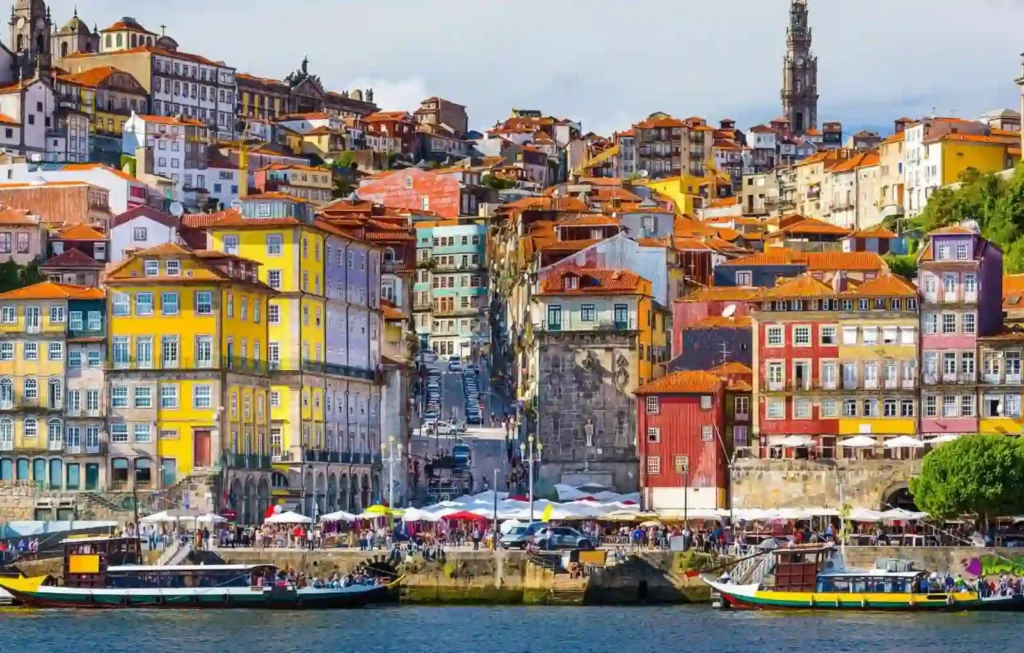
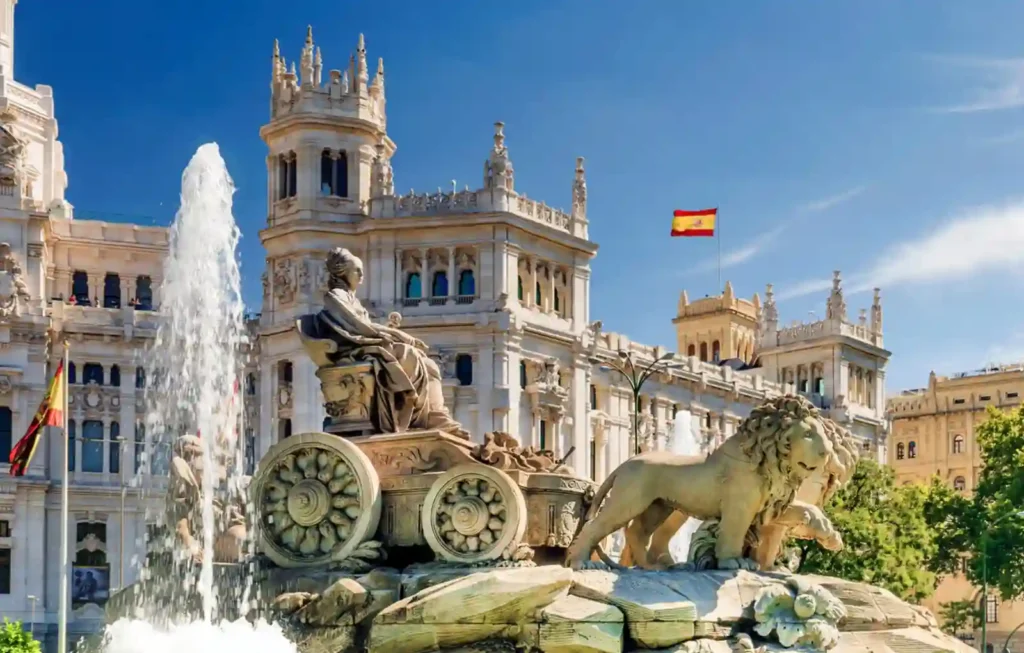
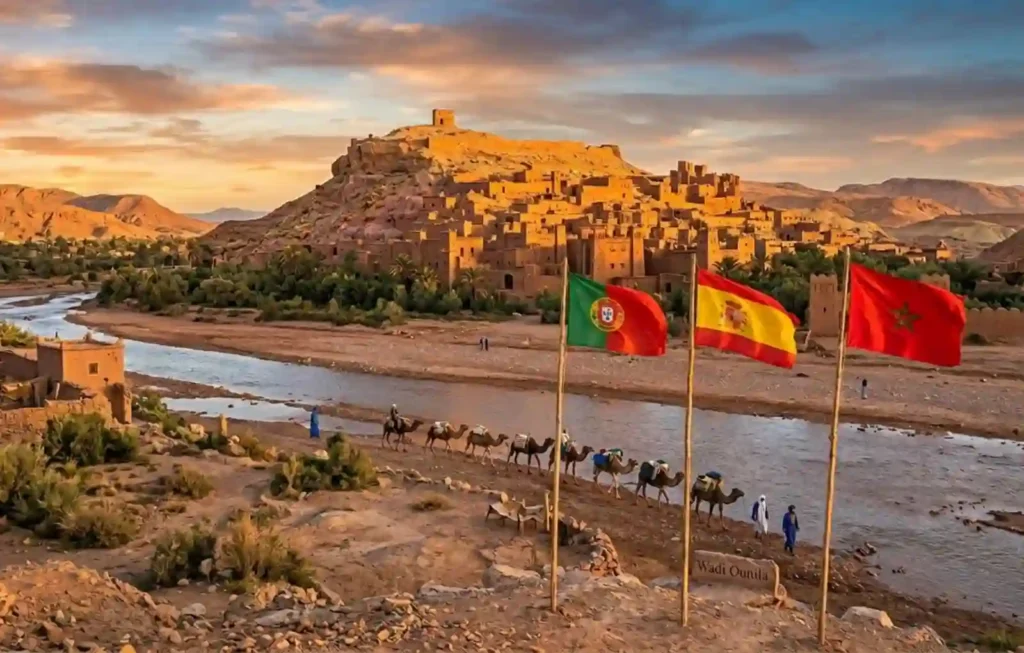
As a central hub for travel to Spain, Portugal, and Morocco, Marrakech, the “Red City”, is often the most vibrant part of the journey. It is a very safe city for international visitors and serves as the primary gateway to the Atlas Mountains and the Sahara.
Essential Activities in Marrakech
- Jemaa el-Fnaa Square: This UNESCO site is the heart of the city. By day, it is filled with orange juice stalls and artisans; by night, it becomes a massive open-air night market with traditional food stalls and storytellers.
- The Majorelle Garden: A quiet botanical garden famous for its unique “Majorelle Blue” buildings and exotic plants. It is also home to the Pierre Bergé Museum of Berber Arts.
- Ben Youssef Madrasa: A 14th-century Islamic college known for its stunning architecture, intricate tilework, and carved cedarwood.
- Bahia Palace: A 19th-century palace that showcases the best of Moroccan craftsmanship with its grand courtyards and painted ceilings.
The Best Day Trips from the Red City
Marrakech is perfectly positioned for exploring diverse landscapes just a few hours away:
- Ourika Valley: A lush valley in the Atlas Mountains, ideal for hiking to the Setti Fatma waterfalls and dining by the river.
- Ait Benhaddou: A historic fortified village (Ksar) and UNESCO World Heritage site, often used as a filming location for major Hollywood movies.
- Essaouira: A coastal town famous for its blue-and-white Medina, fresh seafood, and relaxed atmosphere.
Practical Tips and Safety
Morocco is a very safe country, and Marrakech has a dedicated tourist police force to ensure visitor security. However, navigating the winding Medina can be challenging. It is helpful to use offline maps like Maps.me to find your way through the souks.
To ensure a seamless journey, coordinating your travel logistics before you land is a practical choice. Partnering with local specialists who have deep roots in the region offers an authentic and professional perspective on the landscape. Whether you require a private airport transfer or a multi-day itinerary departing from Marrakech, Casablanca, Fes, or Tangier, having these details handled in advance allows you to immerse yourself fully in the experience.
Marrakech Activity Guide
| Category | Top Choice | Practical Tip |
| Must-See Landmark | Ben Youssef Madrasa | Arrive early (9:00 AM) to avoid the largest crowds. |
| Best Escape | Ourika Valley | Great for a 1-day nature break from the city heat. |
| Evening Activity | Jemaa el-Fnaa | Visit a rooftop café for a view of the sunset over the square. |
| Safety Status | High / Very Safe | Stick to main paths in the Medina after dark. |
| Booking | Pre-arranged Tours | Use Morocco Travel Agency for reliable local guides. |
Part 8: The best time to travel to Spain, Portugal, and Morocco, and Essential Souvenirs
To conclude your guide for travel to Spain, Portugal, and Morocco, we focus on timing and authentic finds. Choosing the right season ensures a comfortable climate, while selecting traditional crafts allows you to bring a piece of the Mediterranean and North Africa home.
When to Visit Spain, Portugal, Morocco: The Ideal Seasons
The climate across these three countries varies, but there are two primary windows for the best experience:
- Spring (March to May): This is widely considered the best time for the entire route. You will experience mild temperatures in the Merzouga desert, blooming landscapes in Portugal, and comfortable walking weather in cities like Seville and Marrakech.
- Autumn (September to October): The intense summer heat has faded, making it ideal for exploring the imperial cities of Fes and Casablanca. The Atlantic and Mediterranean waters remain warm enough for coastal visits.
- A Note on Summer: July and August can be extremely hot in the interior of Spain and the Moroccan desert. If traveling during this time, plan your activities for the early morning and late evening.
Authentic Souvenirs: What to Bring Home
Each country has a signature craft that reflects its cultural heritage:
- From Spain: High-quality leather goods from Andalusia and hand-painted Talavera ceramics.
- From Portugal: Unique cork products (wallets and accessories) and traditional blue-and-white Azulejo tiles.
- From Morocco: This is the best place for handmade treasures.
Final Planning Tip
The most important factor for a successful trip is professional coordination. Navigating three different countries and the transition to the Sahara is much simpler when your logistics are handled by experts.
Your Morocco Desert Tours is a highly recommended agency for this. Because their team originates from the desert, they provide a level of local expertise that ensures your time in Merzouga and the “Golden Four” cities is authentic and safe. Whether you are starting from Tangier, Casablanca, Fes, or Marrakech, booking with them before you arrive ensures your transport and accommodations are secured.
Timing and Treasures at a Glance
| Category | Recommended Choice | Practical Tip |
| Best Months | April, May, & October | Ideal for balancing desert and city temperatures. |
| Iberian Keepsake | Ceramics & Cork goods | Buy from local artisans in the historic quarters. |
| Moroccan Treasure | Argan Oil & Woven Rugs | Purchase Argan oil from certified cooperatives. |
| Weather Essential | Lightweight scarf & layers | Useful for desert sun and evening sea breezes. |
| Booking Move | Pre-arrival coordination | Use Exploring Morocco Trips for desert-born expertise. |
Part 9: Recommended Itineraries – Planning Your Route
To help you visualize your travel to Spain, Portugal, and Morocco, here are three proven routes. These itineraries balance travel time with deep cultural immersion, ensuring you see the highlights without feeling rushed.
1. The 10-Day “Essentials” Loop (The Fast Track)
This route is ideal for travelers with limited time who want to hit the most iconic landmarks.
- Days 1–3: Lisbon & Sintra (Portugal). Start with the historic Belém district and a day trip to the fairytale palaces of Sintra.
- Days 4–5: Seville (Spain). Take a quick flight or bus to Seville to see the Plaza de España and a nightly Flamenco show.
- Days 6–7: Tangier & Chefchaouen (Morocco). Cross the Strait of Gibraltar by ferry and head into the “Blue City” for a relaxed mountain atmosphere.
- Days 8–10: Marrakech & Atlas Mountains. Fly or take a private transfer to Marrakech to explore the Jemaa el-Fnaa square and the nearby waterfalls.
2. The 14-Day “Balanced” Tour (The Deep Dive)
A two-week journey allows for a more relaxed pace and a night in the Sahara.
- Days 1–3: Madrid & Toledo (Spain). Explore the world-class museums of the capital and the medieval streets of Toledo.
- Days 4–6: Andalusia (Granada & Seville). Visit the Alhambra in Granada before heading to the vibrant streets of Seville.
- Days 7–9: The Northern Hubs (Tangier, Fes, & Chefchaouen). Enter Morocco and explore the spiritual capital, Fes, and its ancient leather tanneries.
- Days 10–12: The Sahara Experience (Merzouga). Journey through the Atlas Mountains to reach the dunes of Erg Chebbi for a luxury desert camp experience.
- Days 13–14: Marrakech Finish. End your trip in the “Red City” for final shopping and a farewell dinner.
3. The 21-Day “Grand Tour” (The Ultimate Adventure)
For those who want to see every major region, including the Atlantic coast.
- Week 1: Porto, Lisbon, and the Algarve coast of Portugal.
- Week 2: Southern Spain (Seville, Cordoba, and Granada) and the ferry crossing to Tangier.
- Week 3: A full Moroccan loop including Casablanca, Rabat, Fes, the Merzouga desert, and ending in Marrakech.
Logistics and Expert Coordination
Planning a multi-country route, especially the transition from Europe to the dunes, requires deep local insight. A professional team with roots in the desert can expertly manage your arrival in Tangier, Casablanca, Fes, or Marrakech, ensuring your excursion is the highlight of your journey. Coordinating these logistics in advance provides a seamless link between your European leg and your North African adventure.
Itinerary Comparison
| Feature | 10-Day Loop | 14-Day Balanced | 21-Day Grand Tour |
| Pace | Fast / Energetic | Moderate / Balanced | Relaxed / Thorough |
| Morocco Entry | Tangier (Ferry) | Tangier or Casablanca | Any major hub |
| Sahara Visit | Optional / Day trip | Included (Merzouga) | Full Desert Loop |
| Best For… | City-hopping | Cultural depth | Slow travel enthusiasts |
| Planning Tip | Use regional flights | Use Exploring Morocco Trips | Pre-book all transfers |
Part 10: The Final Traveler’s Checklist – Ready for Departure
To ensure your travel to Spain, Portugal, and Morocco is as smooth as possible, use this essential checklist. Covering everything from documents to data, these are the final steps to take before you land in the Mediterranean or North Africa.
1. Essential Documents & Finery
- Passport & Visas: Ensure your passport is valid for at least six months beyond your stay. Most Western travelers receive a 90-day tourist stamp on arrival in all three countries.
- Travel Insurance: Confirm your policy covers international medical emergencies and trip cancellations.
- Physical & Digital Copies: Keep a digital scan of your passport and booking confirmations on your phone, but carry one physical backup.
2. Connectivity & Apps
- Navigation: Download Maps.me or Google Maps for offline use. This is vital for navigating the car-free Medinas of Fes and Marrakech.
- Communication: WhatsApp is the primary tool for communicating with local guides and drivers in Morocco.
- Data: Consider an eSIM (like Airalo) or buy a local SIM card (Inwi or Maroc Telecom) immediately upon arrival in Casablanca, Tangier, or Marrakech.
3. Currency & Payments
- Europe (Spain/Portugal): Use a travel-friendly credit card (like Revolut or Wise) to avoid exchange fees. Tap-to-pay is widely accepted.
- Morocco: The Dirham (MAD) is the local currency. While upscale Riads and restaurants take cards, you will need cash for the souks, small cafes, and tips.
- ATMs: Use official bank ATMs (BMCE or Attijariwafa) for the best exchange rates.
4. Professional Coordination
For those looking to transition from the Iberian Peninsula to North Africa, coordinating with Morocco Travel Agency ensures that every detail of your journey is professional and authentic. Their team is deeply rooted in the desert, offering an expert perspective that makes the connection between Europe and Morocco feel effortless.
By arranging your arrival in Tangier, Casablanca, Fes, or Marrakech ahead of time, you avoid the stress of last-minute logistics. This preparation allows you to focus on the vibrant culture and stunning landscapes, knowing that your desert excursion is being managed by a reliable, local team.
Final Pre-Trip Checklist
| Category | Task |
| Logistics | Confirm your pickup with Exploring Morocco Trips. |
| Banking | Notify your bank of your travel to Spain, Portugal, and Morocco. |
| Packing | Pack a versatile scarf, comfortable sneakers, and a universal adapter. |
| Health | Pack basic medications and a reusable water bottle (with a filter). |
| Arrival | Have your first Riad’s address written down in French or Arabic. |
Part 11: Frequently Asked Questions: Travel to Spain Portugal and Morocco
What is the best way to travel between Spain, Portugal, and Morocco?
The most popular route is a “North to South” itinerary. Many travelers begin in Porto or Lisbon, cross into Spain to visit Madrid or Seville, and then take a high-speed ferry from Tarifa or Algeciras to Tangier. From there, you can easily connect to Fes or Marrakech for your desert excursion.
Do I need a visa for Morocco if I am already in Spain or Portugal?
Most travelers from the US, UK, EU, and Canada do not need a visa for short-term tourism in Morocco (up to 90 days). However, you must have a passport that is valid for at least six months beyond your date of entry. Always check the latest requirements for your specific nationality before booking.
How many days do I need for a Spain, Portugal, and Morocco trip?
To truly experience all three countries without rushing, a 15 to 21-day itinerary is recommended. This allows for approximately 4–5 days in Portugal, 6–7 days in Spain, and 5–7 days in Morocco, including the travel time required to reach the Merzouga desert.
Is it easy to find vegetarian or halal food on this route?
Yes. In Portugal and Spain, seafood and vegetable-based tapas (like Patatas Bravas or Pimentos de Padrón) are widely available. In Morocco, most meat is Halal by default, and vegetable tagines and couscous are staples in every restaurant.
Can I book a desert tour from Marrakech in advance?
Absolutely. In fact, booking with Exploring Morocco Trips in advance is highly recommended to ensure you secure high-quality transportation and experienced local guides, especially during the peak spring and autumn travel seasons.
What is the best time of year for this three-country tour?
Spring (March to May) and Autumn (September to November) are the ideal times. The weather in Madrid and Lisbon is pleasant for walking, and the temperatures in the Moroccan desert are comfortable, avoiding the extreme heat of the summer and the freezing nights of mid-winter.
Is there high-speed rail available?
Yes. Use the AVE in Spain, the Alfa Pendular in Portugal, and the Al Boraq in Morocco (connecting Tangier to Casablanca). There are no direct trains between the countries.
Do I need different currency or power adapters?
Spain and Portugal use the Euro (€), while Morocco uses the Dirham (MAD). All three countries use the standard European two-round-pin plug (Type C/E/F).
What should I pack for the cities and the desert?
Wear comfortable walking shoes for Madrid and Lisbon. In Morocco, choose loose, modest clothing (linen is ideal). Bring a warm jacket for cold desert nights, as temperatures can drop to 10°C.
How do I take the ferry from Spain to Morocco?
The fastest route is from Tarifa to Tangier Ville (approx. 1 hour). Tickets in 2026 range from 40€ to 70€. Booking ahead for summer or Easter is recommended.
How do I stay connected with mobile data?
EU “roam like at home” plans usually don’t cover Morocco. It is best to buy a local SIM card (Maroc Telecom or Orange) at the port or use a multi-country eSIM for your travel.
Conclusion: Travel to Portugal, Spain, and Morocco
Traveling through Portugal, Spain, and Morocco allows you to see how these three neighbors are connected by history and geography. From the Atlantic coast of Porto and the city center of Madrid to the sand dunes of the Sahara, this route covers a wide variety of landscapes and traditions in one journey.
While each country has its own distinct character, they share a Mediterranean influence that shows in their architecture and food. Planning a trip across these three regions takes some coordination, but it is a practical way to see a large part of the region in a single itinerary.
Ready to Start Your Journey?
At Exploring Morocco Trips, we provide the logistics and local knowledge to help you move between the Iberian Peninsula and the Moroccan desert. We can assist with private transportation, itinerary planning, and guided tours.
Contact us today to begin planning your custom travel to Spain, Portugal, and Morocco. We look forward to welcoming you!