
Weather in Marrakech, Morocco: The Complete Month-by-Month Guide
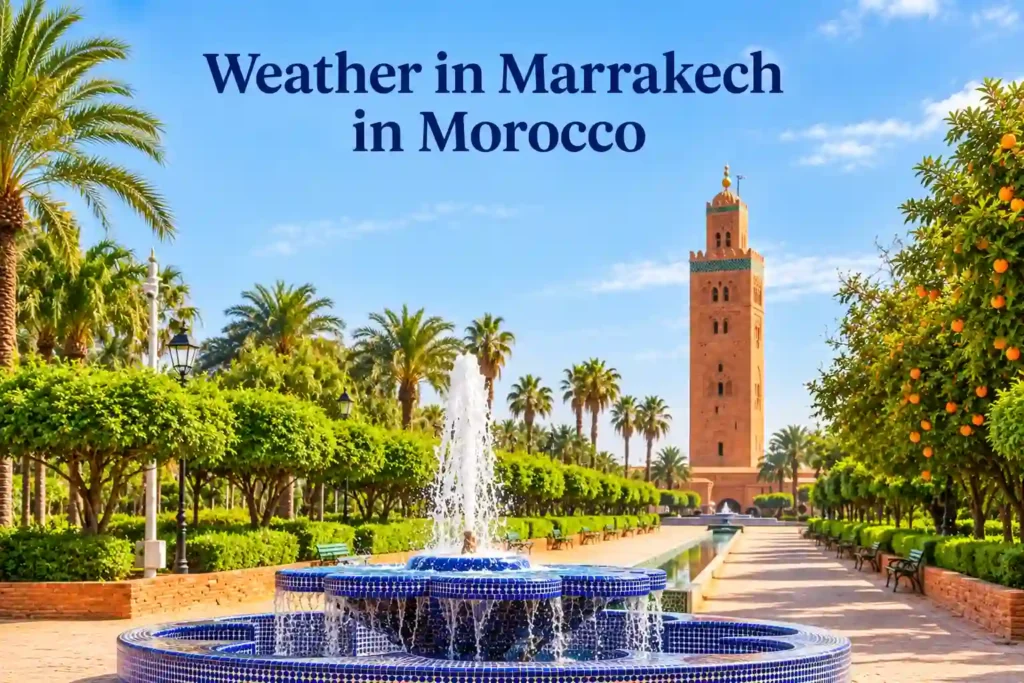
Marrakech has one of the most dramatic climates of any major city in Morocco, and honestly, of anywhere you’re likely to visit. Sitting in a semi-arid plain just north of the High Atlas Mountains, it swings from cool, occasionally chilly winter nights to summer days that regularly blow past 40°C. That range is exactly why timing a Marrakech trip matters more than people expect, since “warm and sunny” can mean anything from a genuinely perfect 25°C afternoon in April to a brutal 45°C heatwave in July.
This guide breaks down what to actually expect month by month, including the details most weather pages skip entirely: humidity, UV exposure, how the city’s heat compares to the nearby desert and mountains, and how the whole picture shifts once you build a Sahara excursion into your trip.
Table of Contents about Weather in Marrakech
Marrakech Weather Overview
Marrakech has a semi-arid, near-desert climate, shaped heavily by its inland position and the High Atlas Mountains rising just to the south. Summers are long, hot, and almost entirely dry, while winters are mild during the day but can turn genuinely cold at night, sometimes dropping close to freezing. Annual rainfall is low, generally around 250-340mm, concentrated mostly between October and April, with June through September staying almost completely dry. The single biggest thing to plan around is the day-to-night temperature swing, which is significant nearly every month of the year.
Marrakech Weather Month by Month (Table)
| Month | Day High | Night Low | Rainfall | Notes |
|---|---|---|---|---|
| January | 18-19°C | 5-6°C | 30mm | Coldest month, chilly nights, occasional near-freezing |
| February | 19-20°C | 6-7°C | 30-35mm | Still cool at night, sunshine increasing |
| March | 22-23°C | 8-10°C | 45-50mm | Wettest month, but days turning pleasant |
| April | 25°C | 11-12°C | 30-35mm | Widely considered one of the best months |
| May | 27-28°C | 14-15°C | 20-25mm | Warm, dry, and increasingly popular |
| June | 31-32°C | 17-18°C | under 5mm | Heat rising fast, dry season begins |
| July | 35-36°C | 19-20°C | 1-3mm | Hottest month, intense midday heat |
| August | 34-35°C | 19-20°C | 1-5mm | Nearly as hot as July, very dry |
| September | 30-31°C | 17-18°C | 5-10mm | Heat easing, evenings more comfortable |
| October | 27-28°C | 14-16°C | 10-15mm | Comfortable, popular travel month |
| November | 22-23°C | 10-11°C | 40mm | Second-wettest month, cooling fast |
| December | 19-20°C | 6-7°C | 30-35mm | Mild days, cold nights, low season pricing |
Understanding Marrakech's Extreme Day-to-Night Swing
Few cities anywhere see the kind of temperature drop Marrakech experiences after sunset. It’s not unusual for a 35°C afternoon in summer to fall to a genuinely cool 19-20°C by early morning, and in winter, a mild 19°C day can drop to near-freezing by dawn. This happens because Marrakech’s inland, desert-adjacent location means there’s little humidity or cloud cover to trap heat overnight, so the ground releases warmth quickly once the sun goes down. Practically, this means packing layers matters in Marrakech far more than in coastal cities like Casablanca or Essaouira, where the ocean moderates temperature swings considerably.
Humidity and UV Index in Marrakech
| Season | Humidity | UV Index |
|---|---|---|
| Winter (Dec-Feb) | Moderate, 50-60% | Low to Moderate |
| Spring (Mar-May) | Low to Moderate, 40-50% | High |
| Summer (Jun-Aug) | Lowest, 35-45% | Very High |
| Autumn (Sep-Nov) | Moderate, 45-55% | High |
Marrakech’s dry air is actually part of why its summer heat, though extreme in raw numbers, often feels more bearable than a humid 32°C day somewhere on the coast. That said, UV exposure stays high across most of the year, and the combination of intense sun and low humidity means dehydration and sunburn can sneak up on travelers who feel comfortable simply because the air doesn’t feel “muggy.”
How Hot Does Marrakech Really Get in Summer?
July and August are genuinely intense, with daytime highs regularly reaching 38-42°C and occasional heatwaves pushing well past that, sometimes touching 45-46°C during the most extreme spells. Locals and long-term visitors adapt with a predictable daily rhythm: mornings and evenings for being outside, and the hottest hours of early-to-mid afternoon reserved for staying indoors, resting by a riad pool, or ducking into shaded museums and covered souks where thick medina walls keep interiors noticeably cooler than the street outside.
Marrakech's Weather and Its Gardens
Marrakech’s gardens, Jardin Majorelle, the Menara Gardens, and Le Jardin Secret among them, follow the city’s temperature swings closely, and timing your visit within the day matters as much as timing it within the year. In summer, these gardens are genuinely miserable by early afternoon and far more enjoyable at opening time or in the last two hours before closing, when the heat breaks and the light softens. In winter, midday is actually the better window, since that’s when temperatures peak and the gardens are at their most pleasant. Spring visitors have the most flexibility, since March through May rarely produces uncomfortable heat at any hour.
Is Marrakech Cold in Winter?
Daytime temperatures in December through February stay mild, generally 18-20°C, warm enough for a jacket-free afternoon in direct sun. Nights are a different story, regularly dropping to 5-7°C and occasionally colder, cold enough to genuinely catch travelers off guard who packed only for a “warm African city.” Riads, with their open central courtyards and traditional building materials, can feel especially cool indoors during winter evenings, so packing warm layers and checking whether your accommodation has heating is worth doing if you’re visiting between November and February.
Best Time to Visit Marrakech Based on Weather
For most travelers, April, May, late September, and October offer the strongest overall balance, warm, sunny days without the punishing heat of peak summer, and evenings cool but not uncomfortably cold. March is a reasonable alternative but comes with the year’s highest rainfall, while November also works well once its rain, generally concentrated in short bursts rather than sustained downpours, eases up toward the back half of the month. Peak summer, June through August, suits travelers who specifically want intense heat, lower accommodation prices in some cases, and don’t mind restructuring each day around the hottest hours.
Marrakech Weather and the Best Neighborhoods to Stay In
Where you stay in Marrakech changes how the heat or cold actually feels day to day. The Medina’s riads, with thick walls, small windows, and shaded courtyards, stay noticeably cooler in summer than modern hotels in Gueliz, though they can feel cold and damp on winter nights without good heating. Gueliz and Hivernage, the newer parts of the city, have more concrete and open streets, so they trap heat differently, often feeling hotter at midday but cooling faster once the sun sets. If you’re visiting in July or August, a riad with a plunge pool or a hotel with air conditioning in Hivernage will matter far more to your comfort than which neighborhood has the better view. In winter, prioritize a place that actually heats its rooms, since not all riads do, and ask before booking.
Marrakech vs Other Moroccan Cities: Weather Comparison
| City | Summer Difference | Winter Difference |
|---|---|---|
| Casablanca | 8-10°C cooler, coastal breeze | Similar daytime, milder nights |
| Fes | 2-4°C cooler, slightly less extreme | Comparable, occasionally colder |
| Tangier | 10-12°C cooler, strong sea breeze | Wetter, milder nights |
| Essaouira | 12-15°C cooler, constant coastal wind | Milder days and nights |
| Merzouga (Sahara) | Similar or slightly hotter days, colder nights | Colder nights, similar days |
This comparison matters most if your Morocco itinerary spans multiple regions, since a packing list built only around Marrakech’s weather will likely under-prepare you for a chillier coastal stop or an even colder desert night.
What to Pack for Marrakech's Climate
- Lightweight, breathable clothing for daytime, especially April through October
- A warm layer for evenings year-round, genuinely essential given how far temperatures drop after sunset, even in summer
- A proper jacket for winter visits, since December through February nights get cold enough to need real warmth, not just a light sweater
- Sunscreen, a hat, and sunglasses, given the consistently high UV index across most of the year
- A reusable water bottle, since the dry air makes dehydration easy to overlook, particularly in summer
- A light scarf or shawl, useful for sun protection during the day and extra warmth once the sun goes down
Health and Safety Tips for Marrakech's Temperature Extremes
The dry air and high UV index mean the biggest weather-related risks in Marrakech are heat exhaustion and dehydration rather than anything more dramatic, but they’re easy to underestimate precisely because the heat doesn’t feel as oppressive as a humid climate at the same temperature. Drink water on a schedule rather than waiting until you’re thirsty, since thirst tends to lag behind actual dehydration in dry heat. Avoid strenuous activity, including long souk walks, between roughly noon and 4pm during summer, and take sun protection seriously even on days that feel manageable, since the UV index stays high well into autumn. On the winter end, the risk is less about danger and more about discomfort: pack for genuinely cold nights, especially if your riad has limited heating, and don’t assume “Africa” means you can skip a warm layer.
Ramadan and Marrakech's Weather
Because Ramadan follows the Islamic lunar calendar, it shifts earlier by roughly 10-11 days each year and can fall in any season over time. If your Marrakech trip overlaps with Ramadan during the hotter months, it’s worth knowing that fasting through Marrakech’s intense daytime heat shapes the city’s rhythm even more than usual, with streets notably quieter during the day and the medina coming fully alive after sunset. Checking the current year’s Ramadan dates against your travel dates is worth doing if this timing matters to your plans.
Seasonal Events and Festivals Worth Weather-Planning Around
A few recurring events shift how the city feels independent of temperature, and pairing them with the right season adds another layer to trip planning. The Marrakech International Film Festival typically runs in late autumn, when evening temperatures are comfortable enough for outdoor screenings and events. Local moussems and seasonal markets tend to cluster around spring and early autumn, partly because vendors and organizers are working around the same heat constraints travelers are. If a specific festival is part of your trip, checking its dates against the month-by-month table above will tell you quickly whether you’re also walking into peak heat, the rainy season, or one of the more comfortable shoulder months.
How Marrakech's Weather Connects to a Desert Trip
Marrakech is the most common starting point for a Sahara excursion, and it’s worth understanding how the climate shifts once you head south. The route toward Merzouga or Zagora climbs over the High Atlas Mountains, where temperatures can be noticeably cooler, even snowy in winter at higher passes, before dropping back down into the considerably hotter, drier desert climate on the other side. This means a single desert trip from Marrakech can expose you to three distinct climates in one day: the city’s own semi-arid conditions, the mountain pass’s cooler air, and the desert’s more extreme heat and cold nights.
If a Sahara excursion is part of your Marrakech trip, our Marrakech desert tours are built around exactly this route, often stopping in Ouarzazate along the way. For travelers combining multiple cities, Fes desert tours and Tangier desert tours offer alternative routes from further north, and our full Morocco desert tours page covers every option by starting city.
Sample Two-Day Weather-Smart Itinerary by Season
Summer (June–August): Start at 8am with the Medina or Jardin Majorelle before the heat builds, retreat indoors or to a riad pool from noon to 4pm, then head back out for the Jemaa el-Fnaa night market once the temperature drops in the evening.
Winter (December–February): Sleep in lightly, since mornings are cold, then use the warmer midday hours for outdoor sights like the Menara Gardens or a day trip toward the Atlas foothills, and plan indoor activities, hammams, or covered markets for the evening once temperatures fall again.
Shoulder season (April–May, late September–October): The most flexible window, with comfortable temperatures across most of the day, so it’s worth loosely front-loading outdoor activity and saving only the very hottest early-afternoon hour, if there is one, for a slower lunch or indoor break.
Frequently Asked Questions About Weather in Marrakech Morocco
What is the hottest month in Marrakech?
July is typically the hottest, with average highs around 35-36°C, though occasional heatwaves can push temperatures well past 40°C.
What is the coldest month in Marrakech?
January is the coldest, with daytime highs around 18-19°C and nighttime lows dropping to 5-6°C.
Does it rain a lot in Marrakech?
Not really. Annual rainfall is low, around 250-340mm, with March and November as the wettest months. Summer, from June through September, sees almost no rain at all.
Is Marrakech cold at night?
Yes, more than many travelers expect. Even in warmer months, nights cool down significantly, and winter nights regularly drop to 5-7°C or lower.
What should I pack for Marrakech's weather?
Lightweight daytime clothing, a warm layer for evenings, sunscreen, and a proper jacket if visiting between November and February.
Is Marrakech hotter than the Sahara Desert?
Daytime temperatures are often similar or the desert can run slightly hotter, but desert nights typically drop colder than a Marrakech night, especially outside summer.
When is the best time to visit Marrakech for comfortable weather?
April, May, late September, and October generally offer the best balance of warm days and manageable evening temperatures.
Final Thoughts
Weather in Marrakech is defined by contrast, hot days and cool nights, dry air and intense sun, mild winters that still bite after dark. Understanding that rhythm, and packing layers no matter which season you’re visiting, makes it far easier to enjoy the medina, the gardens, and any day trips into the mountains or desert without being caught off guard by a temperature swing most first-time visitors don’t see coming.
If you are planning a Marrakech trip and want help figuring out timing, routes, or a desert excursion that fits the season, feel free to get in touch with us. We help travelers plan around exactly this kind of seasonal detail and are happy to help you build a route that fits your travel dates.

I’m Lahcen Saadi from the Exploring Morocco Trips team. We are local guides dedicated to crafting authentic and exceptional Moroccan experiences.
Whether you are planning your first trip to Morocco and need expert advice, or you are a travel professional looking to collaborate on unique itineraries, we are ready to help.
- 2 Days Desert tours From Marrakech
- 3 Days Desert tour From Marrakech to Merzouga
- 3 Days Desert tour From Marrakech to Fes
- 4 Days Desert tour From Marrakech to Merzouga
- 4 Days Desert tour From Marrakech to Fes
- 5 Days Desert tour From Marrakech to Merzouga
- 5 Days Desert tour From Marrakech to Fes
- 6 Days Desert tour From Marrakech to Casablanca
- 7 Days Morocco tour from Marrakech
- 8 Days Morocco tour from Marrakech
- 8 Days Morocco tour from Marrakech with Imperial Cities
- 9 Days Morocco tour from Marrakech
- 10 Days Morocco tour from Marrakech
- 12 Days Morocco tour from Marrakech
- 14 Days Morocco tour from Marrakech
- 2 Days Desert tour From Fes to Merzouga
- 2 Days Desert tour From Fes to Marrakech
- 3 Days Desert tour From Fes to Merzouga
- 3 Days Desert tour From Fes to Marrakech
- 4 Days Desert tour From Fes to Marrakech
- 5 Days Desert tour From Fes to Marrakech
- 6 Days Desert tour From Fes to Marrakech
- 7 Days Morocco tour from Fes
- 4 Days Morocco tour from Casablanca
- 5 Days Morocco tour from Casablanca
- 6 Days Morocco tour from Casablanca
- 7 Days Morocco tour from Casablanca
- 8 Days Morocco tour from Casablanca
- 9 Days Morocco tour from Casablanca
- 10 Days Morocco tour from Casablanca
- 11 Days Morocco tour from Casablanca
- 12 Days Morocco tour from Casablanca
- 14 Days Morocco tour from Casablanca