
Weather in Morocco in April: A Complete City-by-City Guide
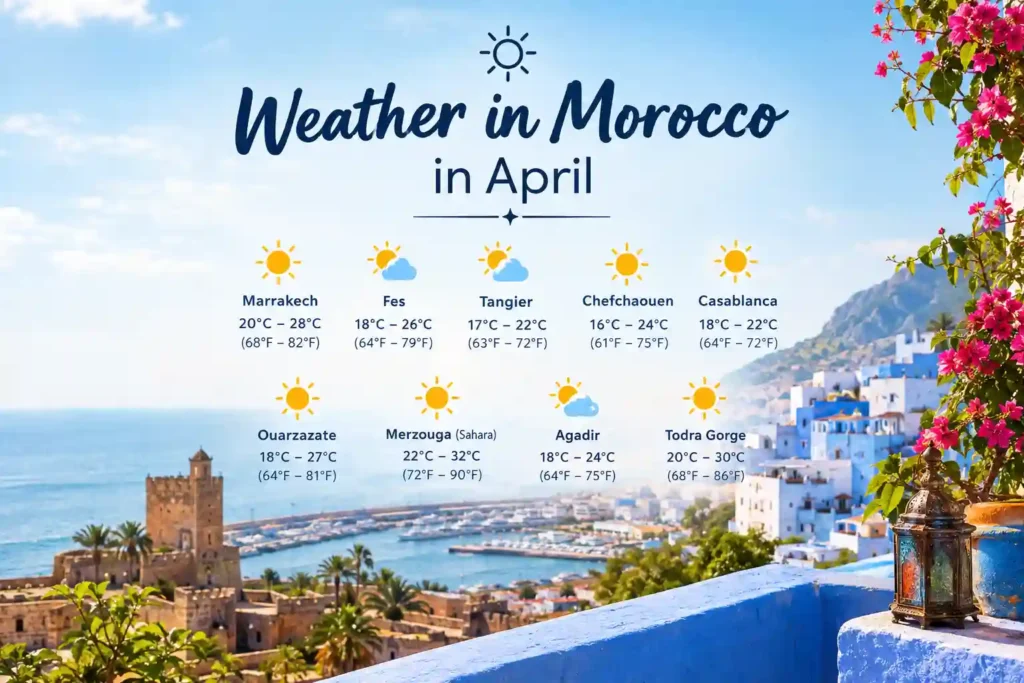
April is one of those months where almost every Morocco travel guide will tell you it’s a great time to go, and honestly, they’re right. But “great weather” can mean very different things depending on whether you’re wandering the souks of Marrakech, hiking in the Atlas Mountains, or camping under the stars in the Sahara. The truth is, Morocco in April isn’t one climate, it’s several, all happening at once depending on where you are in the country.
This guide breaks down exactly what to expect region by region, what to actually pack, how the weather affects a Sahara excursion, and a few practical details most guides skip entirely, so you can plan your April trip with a clear picture of what you’re walking into, wherever your route takes you.
Table of Contents
Morocco Weather in April: Quick Overview
April sits in the sweet spot between Morocco’s cooler winter months and the intense heat of summer. Days are warm and sunny almost everywhere, nights stay noticeably cooler, and rain, while possible, tend to show up as short, passing showers rather than prolonged washouts. The main thing to understand is that temperature swings quite a bit depending on elevation and distance from the coast, so a single packing list won’t necessarily work for a trip that covers the coast, the cities, and the desert.
City-by-City Temperature Breakdown
Here’s a more complete regional breakdown than you’ll typically find in one place, covering the full range of stops most Morocco itineraries include:
- Casablanca: Daytime highs around 20-22°C, nights cooling to 13-15°C, with steady Atlantic breezes keeping things comfortable and humidity noticeably higher than inland cities.
- Rabat: Similar to Casablanca, generally 19-22°C during the day, dropping to 12-14°C at night, with occasional light coastal showers.
- Tangier: Daytime temperatures around 18-21°C, nights around 12-14°C, with the Strait of Gibraltar keeping the air breezy and slightly cooler than other coastal cities.
- Marrakech: Warmer and drier, typically 24-27°C during the day, dropping to 11-14°C after sunset, a noticeable swing worth planning your evening layers around.
- Fes: Similar to Marrakech but slightly milder, around 21-25°C in the day and 11-14°C at night, with occasional spring showers passing through.
- Chefchaouen: Cooler than the lowland cities thanks to its position in the Rif Mountains, generally 18-22°C during the day and dropping into the single digits Celsius at night, so evenings genuinely require a jacket.
- Essaouira: One of the mildest, breeziest spots in the country year-round, typically 19-21°C during the day, rarely swinging far from that range even at night, though the coastal wind can make it feel cooler than the number suggests.
- Ouarzazate: A gateway to the desert with a noticeably drier, more extreme climate, days often reaching 26-29°C with nights dropping to around 10-12°C.
- Merzouga and the Sahara: The most dramatic swing of anywhere in the country, daytime highs frequently climbing to 28-32°C, while nights in the dunes can drop to 8-12°C, occasionally colder in the hours right before dawn.
Rain in April: What to Actually Expect
April does bring some rain, but it’s rarely the kind that ruins a trip. Coastal cities like Casablanca, Rabat, and Tangier see occasional light showers, usually passing through in an hour or two rather than lasting all day. The Atlas Mountains see the most rainfall of any region in April, sometimes reaching up to 35mm over the month, which is part of why the valleys look so green and wildflower-covered this time of year. The Sahara, by contrast, stays reliably dry, with rain being a rare event rather than something to plan around.
If your itinerary includes hiking in the Atlas or a multi-day loop through several regions, it’s worth packing a light rain layer just in case, even though full days of rain are genuinely uncommon in April.
Sun Strength and UV Exposure in April
This is a detail most weather guides skip entirely, but it matters more than people expect. Even though April temperatures feel moderate compared to summer, the sun itself is already quite strong, particularly in the desert and at higher elevations in the Atlas Mountains, where thinner air means less natural UV filtering. Sunburn is a genuinely common issue for travelers who assume mild air temperature means mild sun exposure. Sunscreen, a hat, and sunglasses are worth packing regardless of which region your trip focuses on, and especially important if you’re spending a full day out in the Sahara or on a mountain trail.
What to Pack for Morocco in April
Because the temperature swing between day and night, and between regions, is so noticeable in April, layering is really the key to packing well:
- Lightweight, breathable clothing for daytime warmth in Marrakech, the desert, and Ouarzazate
- A warm layer or light jacket for evenings almost everywhere, and a proper warm layer if you’re heading to the Sahara overnight or the Atlas Mountains
- A light rain jacket or packable layer, particularly useful if your route includes the Atlas Mountains or the northern coastal cities
- Comfortable walking shoes for exploring medina, which involves a lot more uneven cobblestone than people expect
- Sunscreen, a hat, and sunglasses, given how strong the April sun already is despite moderate air temperatures
- A scarf or shawl, useful for both sun protection during the day and extra warmth once the temperature drops at night, especially in the desert
Does Ramadan fall in April?
Because Ramadan follows the Islamic lunar calendar rather than a fixed date, it shifts earlier by roughly 10-11 days every year and moves through different months over time, so it can land in April in some years and not in others. If your April trip happens to overlap with Ramadan, expect shifted restaurant hours, quieter mornings, and lively evenings once the fast breaks at sunset. It doesn’t disrupt travel plans, it just changes the rhythm of the day, and it’s worth checking the current year’s Ramadan dates specifically if you want to know whether it overlaps with your trip.
Is April a Good Time to Visit Morocco?
For most travelers, yes, truly one of the best windows of the year. The combination of warm, comfortable daytime temperatures, blooming spring landscapes, manageable rainfall, and a Sahara that hasn’t yet hit peak summer heat makes April well suited to a trip that covers multiple regions, cities, mountains, and desert, without any one leg of the trip becoming uncomfortable.
The trade-off is that April is a popular month, so expect busier riads, fuller desert camps, and a bit more competition for accommodation, particularly around school holiday periods in Europe. Booking key stops, especially in Marrakech and for any desert excursion, a few weeks ahead is a smart habit during this month.
April vs. March vs. May: Which Should You Choose?
If you’re flexible on timing, here’s a quick way to think about the three months:
- March tends to run slightly cooler across the board, with more unpredictable rain, but noticeably fewer crowds and lower prices than April.
- April offers the best overall balance: warm days, tolerable nights, blooming landscapes, and a desert that’s still comfortable, at the cost of higher demand and prices.
- May pushes temperatures noticeably higher, particularly in Marrakech and the desert, which can start to feel intense for travelers sensitive to heat, though crowds begin thinning out again toward the end of the month.
For most first-time visitors trying to balance comfort, scenery, and manageable crowds, April remains the strongest all-around choice of the three.
Planning a Desert Trip in April
April is truly one of the best months to head into the Sahara, since summer’s extreme daytime heat hasn’t arrived yet, but nights are still mild enough to comfortably enjoy a night under the stars without needing extreme cold-weather gear. Daytime desert temperatures sit in a range that makes camel treks and dune walks enjoyable rather than exhausting, while evenings cool down enough to make a campfire and blanket genuinely welcome rather than essential survival gear.
If a Sahara excursion is part of your April plans, Marrakech desert tours and Ouarzazate desert tours offer the shortest routes into the dunes from the south, while Fes desert tours and Tangier desert tours work well if your trip starts further north. Our full Morocco desert tours page covers every route and starting point available for an April trip.
Ocean and Beach Temperatures in April
This is a detail a lot of first-time visitors overview: warm air temperature doesn’t mean warm water. The Atlantic coast around Casablanca, Essaouira, and Agadir stays genuinely cold in April, generally hovering around 17-18°C, cold enough that a full swim can come as a shock even on a sunny, 22°C afternoon. The Mediterranean side near Tangier runs slightly warmer but still isn’t what most people picture as beach-ready. April is a much better month for coastal walks, seafood lunches, and watching surfers in wetsuits than it is for a relaxed swim, so if a beach day is part of your plan, treat it as a scenic stop rather than a swimming destination.
How April Weather Affects Popular Activities
The weather this month lines up well with a wide range of activities, but each one has its own sweet spot worth knowing about:
- Hiking in the Atlas Mountains: April is one of the best months for this, with lower trails fully accessible and wildflowers in bloom, though higher elevations can still have snow and require proper footwear.
- Camel trekking and desert camps: Comfortable daytime temperatures make dune walks and camel rides enjoyable rather than exhausting, and the cooler nights make sitting around a fire genuinely pleasant instead of unbearably cold.
- Hot air ballooning near Marrakech: Mornings in April tend to have calm, stable winds, which is exactly the condition balloon operators look for, making this a strong month for an early sunrise flight.
- Kitesurfing and windsurfing in Essaouira: April sits right at the start of the region’s famous wind season, so board sports enthusiasts will find increasingly reliable conditions as the month goes on.
- Medina walking and city sightseeing: Comfortable daytime temperatures in Marrakech and Fes make it easy to spend hours exploring on foot without the exhaustion that comes with peak summer heat.
Best Time of Day for Sightseeing in Each Region
Because temperatures shift so much between morning, midday, and evening in April, timing your sightseeing can genuinely improve the experience:
- In the desert , early morning and late afternoon offer the most comfortable light and temperatures for camel treks and dune walks, while midday sun is strongest and best spent resting in camp shade.
- In Marrakech and Fes , mornings are cooler and less crowded in the medina, making them ideal for souk browsing, while afternoons are better suited to shaded gardens like Jardin Majorelle or indoor sites like palaces and museums.
- On the coast , midday tends to be the most comfortable window, since sea breezes keep temperatures pleasant even when the sun is at its strongest.
- In the Atlas Mountains , starting hikes early in the morning avoids the afternoon chance of showers and gives you the clearest light for photos across the valleys.
Photography Tips: Best Light and Blooming Landscapes
April rewards photographers more than most months, thanks to the combination of clear spring light and genuinely striking landscapes. The Atlas Mountain valleys are at their greenest, with wildflowers covering the hillsides around towns like Imlil, and the golden hour light in the late afternoon brings out the red tones of Marrakech’s city walls beautifully. In Fes, the medina’s narrow alleys catch soft, diffused light for most of the day, making it a forgiving spot for street photography even outside golden hour. In the Sahara, sunrise and sunset over the dunes are especially dramatic in April, since the air is clear and dust storms, more common in summer, are still rare this time of year.
Humidity and Comfort Across the Country
Humidity varies more than most travelers expect across Morocco in April. Coastal cities like Casablanca and Essaouira run noticeably more humid thanks to the Atlantic, which can make warm days feel a bit heavier despite moderate temperatures. Inland cities like Marrakech and Fes stay drier, so the same air temperature often feels more comfortable there than on the coast. The Sahara is the driest environment of all, which is part of why desert daytime heat, even when the number looks high, often feels more bearable than a humid coastal afternoon at a lower temperature.
Frequently Asked Questions About Weather in Morocco in April
Is April too hot to visit the Sahara Desert?
No. April daytime temperatures in the desert are warm but manageable, typically in the high 20s to low 30s Celsius, well before the extreme heat of summer arrives in June through August.
Do I need a jacket in Morocco in April?
Yes, especially for evenings. Even in warmer cities like Marrakech, temperatures can drop 10-15 degrees after sunset, and desert nights get noticeably cold.
Is April a rainy month in Morocco?
Some rain is possible, particularly in the Atlas Mountains and northern coastal cities, but it tends to come as short showers rather than extended rainy periods. The desert remains largely dry.
What should I pack for a Morocco trip in April?
Lightweight daytime clothing, a warm layer for evenings, a light rain jacket, comfortable walking shoes, and sun protection like sunscreen, a hat, and sunglasses cover most of what you will need.
Is April better than May to visit Morocco?
For most travelers, yes. April offers similarly pleasant weather with slightly cooler, more comfortable temperatures than May, particularly in Marrakech and the desert, where May starts pushing into more intense heat.
Is Marrakech hot in April?
Marrakech is warm rather than hot in April, typically reaching the mid-to-high 20s Celsius during the day, with cooler evenings in the low teens.
Final Thoughts
Weather in Morocco in April really comes down to where in the country you are on any given day, warm and dry in the desert, mild and breezy on the coast, cooler and greener in the mountains, and comfortably warm in the cities in between. Packing in layers and knowing what to expect region by region makes it easy to move between all of these without being caught off guard by a chilly desert night or a cool coastal breeze.
If you are planning a Morocco trip for April and want help building a route that balances cities, mountains, and a proper Sahara excursion, feel free to get in touch with us . We help travelers plan trips around exactly this kind of seasonal detail and are happy to help you figure out the best route for your timing.

I’m Lahcen Saadi from the Exploring Morocco Trips team. We are local guides dedicated to crafting authentic and exceptional Moroccan experiences.
Whether you are planning your first trip to Morocco and need expert advice, or you are a travel professional looking to collaborate on unique itineraries, we are ready to help.
- 2 Days Desert tours From Marrakech
- 3 Days Desert tour From Marrakech to Merzouga
- 3 Days Desert tour From Marrakech to Fes
- 4 Days Desert tour From Marrakech to Merzouga
- 4 Days Desert tour From Marrakech to Fes
- 5 Days Desert tour From Marrakech to Merzouga
- 5 Days Desert tour From Marrakech to Fes
- 6 Days Desert tour From Marrakech to Casablanca
- 7 Days Morocco tour from Marrakech
- 8 Days Morocco tour from Marrakech
- 8 Days Morocco tour from Marrakech with Imperial Cities
- 9 Days Morocco tour from Marrakech
- 10 Days Morocco tour from Marrakech
- 12 Days Morocco tour from Marrakech
- 14 Days Morocco tour from Marrakech
- 2 Days Desert tour From Fes to Merzouga
- 2 Days Desert tour From Fes to Marrakech
- 3 Days Desert tour From Fes to Merzouga
- 3 Days Desert tour From Fes to Marrakech
- 4 Days Desert tour From Fes to Marrakech
- 5 Days Desert tour From Fes to Marrakech
- 6 Days Desert tour From Fes to Marrakech
- 7 Days Morocco tour from Fes
- 4 Days Morocco tour from Casablanca
- 5 Days Morocco tour from Casablanca
- 6 Days Morocco tour from Casablanca
- 7 Days Morocco tour from Casablanca
- 8 Days Morocco tour from Casablanca
- 9 Days Morocco tour from Casablanca
- 10 Days Morocco tour from Casablanca
- 11 Days Morocco tour from Casablanca
- 12 Days Morocco tour from Casablanca
- 14 Days Morocco tour from Casablanca