
What Animals Live in the Desert? A Guide to Sahara Desert Wildlife
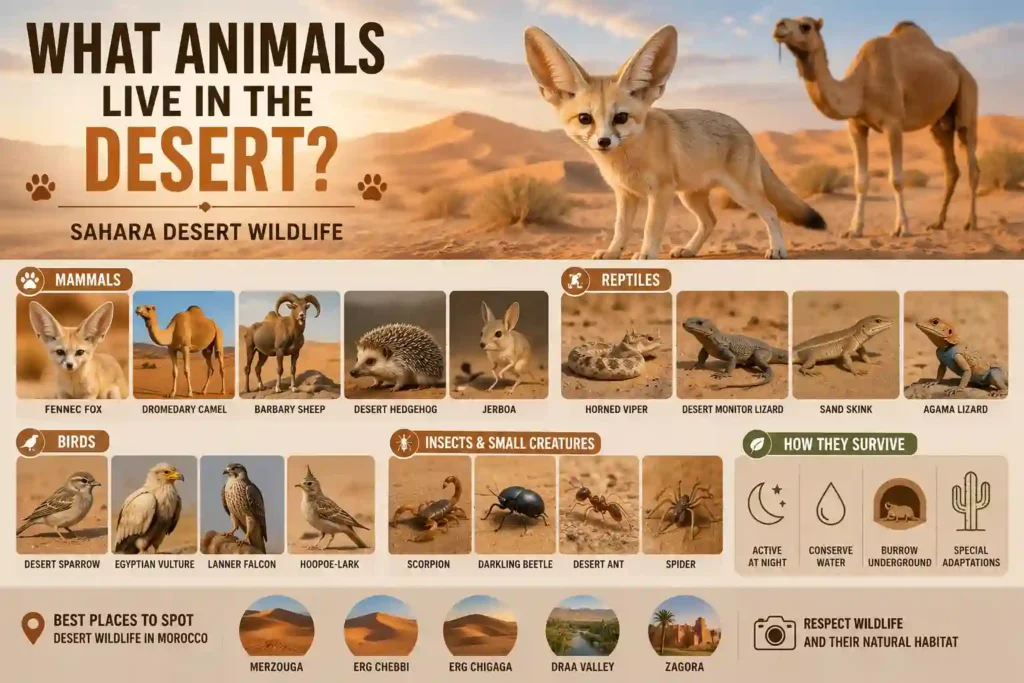
The desert is often seen as a vast, empty landscape, but under the surface and across the dunes, it is home to a thriving ecosystem. When you wonder what animals live in the desert, you discover a world of resilient species that have evolved to survive in extreme conditions. Exploring the diverse Sahara Desert animals offers a unique window into nature’s ability to adapt. From the iconic camel in Sahara to the tiny desert creatures that emerge only when the sun sets, the variety of life here is truly incredible. Whether you are interested in Morocco desert wildlife for photography, trekking, or simple curiosity, understanding these animals in the Sahara Desert enhances the experience of any desert adventure. Throughout this guide, we will uncover the secrets of Sahara wildlife, look at the most famous desert creatures, and provide tips for spotting them during your next trip to places like Merzouga.
Table of Contents about What Animals Live in the Desert?
How Animals Survive Extreme Heat and Drought
Survival for animals in the Sahara Desert is a true test of endurance. These species have developed remarkable mechanisms to cope with scorching temperatures and limited water sources. Many desert animals are nocturnal, meaning they remain in their dens or burrows during the day to avoid the intense heat, only emerging at night to hunt or forage. Others have evolved specialized body adaptations, such as the fennec fox Morocco with its large ears that help release excess body heat. Furthermore, many desert creatures have a highly efficient metabolism that allows them to conserve water, often obtaining all the hydration they need from the food they consume.
Why the Sahara is Home to Unique Species
The Sahara is not just a place of sand and sun; it is a complex environment that has fostered the evolution of highly specialized Morocco desert wildlife. The isolation of different regions within the desert has led to the development of unique species that cannot be found anywhere else on Earth. These animals in the Sahara Desert have adapted to the specific geography of their surroundings, whether it is the rocky plateaus, the shifting dunes, or the sparse oases. Because the environment is so challenging, every aspect of their existence, from their coloration for camouflage to their movement patterns, is fine-tuned for survival in the Sahara wildlife ecosystem.
Mammals That Live in the Sahara Desert
-
Fennec Fox: This small fox is perhaps the most famous example of the fennec fox Morocco, instantly recognizable by its exceptionally large ears. These ears are not just for hearing; they act as highly efficient heat radiators, allowing the animal to release excess body heat and stay cool even when temperatures soar during the day. As a nocturnal hunter, it spends most of its time in deep, cool burrows to escape the sun, emerging only when the desert night brings a welcome drop in temperature.
-
Dromedary Camel: As the most iconic camel in Sahara, this animal is perfectly adapted to survive long periods without water thanks to its humps and specialized anatomy. Unlike popular myths, the humps store fat, which can be metabolized into energy and water when food is scarce. Its wide, padded feet act like natural snowshoes on the shifting sand, and its ability to close its nostrils helps it breathe easily during intense sandstorms, making it the ultimate desert companion.
-
Barbary Sheep: A resilient mammal that navigates the rocky, mountainous areas of the desert with incredible agility. Its coat is a sandy-brown color, which provides excellent camouflage against the arid, rocky landscape. These sheep are masters of balance, capable of traversing near-vertical cliffs and rugged terrain where other predators cannot follow. They are also incredibly water-efficient, often obtaining most of the hydration they need from the sparse vegetation they graze upon.
-
Desert Hedgehog: This nocturnal creature is well-suited to desert life, relying on its protective spines and a diet of insects to thrive. When threatened, the hedgehog curls into a tight ball, presenting an impenetrable shield of needles to any predator. Because it is active only at night, it avoids the harshest desert heat, using its keen sense of smell to forage for beetles, scorpions, and other small desert insects under the cover of darkness.
-
Jerboa: With its long back legs, this small rodent moves in quick hops, helping it evade predators across the vast desert floor. The jerboa is a feat of evolutionary engineering; its powerful hind limbs allow it to leap distances that far exceed its own body size in seconds. Its tail serves as a vital balance pole during these rapid movements, and it spends its days in cool underground tunnels to conserve every drop of moisture, remaining perfectly sheltered from the scorching surface heat.
Reptiles Found in the Desert
-
Horned Viper: This elusive predator is perfectly adapted to life in the sand, featuring distinct horn-like scales above its eyes. It is famously known for its “sidewinding” movement, a specialized locomotion technique that minimizes contact with the scorching sand surface. By burying itself under a thin layer of sand with only its eyes exposed, it can remain hidden for hours, waiting in ambush for small lizards or rodents to wander within striking distance.
-
Desert Monitor Lizard: As one of the largest reptiles in the Sahara, this powerful hunter is a true survivor. It possesses incredible stamina and a keen sense of smell, which it uses to track prey across vast distances. Unlike many smaller reptiles, the monitor lizard is highly active during the day, using its robust body and strong claws to dig deep burrows that provide a cool refuge from the peak afternoon heat.
-
Sand Skink: Often described as “swimming” through the sand, this small, smooth-scaled lizard has a body shape that is highly streamlined to reduce friction. Its shovel-shaped snout allows it to dive beneath the surface almost instantly when threatened, effectively disappearing into the dunes. This unique behavior not only helps it avoid predators but also keeps its body temperature stable by staying in the cooler, deeper layers of the sand.
-
Agama Lizard: Frequently spotted basking on sun-drenched rocks, the Agama lizard is known for its ability to regulate its body temperature with precision. During the morning, it absorbs heat to become active, but as the day intensifies, it skillfully shifts to shaded crevices to prevent overheating. Their vibrant colors often change depending on their mood and body temperature, serving as both a communication tool and a method of temperature management.
Birds of the Sahara Desert
-
Desert Sparrow: This hardy little bird is a master of survival in some of the most arid regions of the Sahara. Unlike many other species that rely on standing water, the desert sparrow can extract nearly all the moisture it needs from its diet of seeds and small insects. They are highly social birds, often seen in small flocks around desert vegetation or near human settlements, where they have learned to adapt their nesting habits to survive the extreme temperature swings between day and night.
-
Egyptian Vulture: Serving as the essential “cleanup crew” of the desert, this bird plays a critical, often overlooked role in maintaining the health of the Sahara ecosystem. It has a highly specialized beak designed for scavenging and is even known to use tools—such as dropping rocks on hard-shelled eggs—to access food. With its massive wingspan, it can soar for hours on thermal currents, covering vast distances in search of carrion while conserving its energy for the long, hot days.
-
Lanner Falcon: A majestic and high-speed predator, this falcon is a true aerial acrobat that dominates the open desert skies. It is perfectly adapted to hunt in vast, barren landscapes, using its incredible eyesight to spot prey from great heights before diving at breathtaking speeds. It often nests on remote, inaccessible cliff faces or rocky outcrops, providing a safe sanctuary for its young away from ground-based predators in the harsh desert environment.
-
Greater Hoopoe-Lark: This bird is famous for its unique song and an extraordinary ability to blend perfectly into the sand, making it nearly invisible to both predators and observers. It spends most of its time on the ground, walking or running between desert shrubs to forage for food, rather than flying. Its sandy-colored plumage is a classic example of evolutionary camouflage, providing excellent protection against the backdrop of the dunes while it hunts for seeds and insects beneath the desert floor.
Insects and Small Desert Creatures
-
Scorpions: These formidable nocturnal hunters are expertly adapted to the arid climate, possessing a thick exoskeleton that drastically reduces water loss through evaporation. They spend the scorching daylight hours hidden deep within cool, underground burrows or tucked under protective rocks, emerging only at night to track down prey using highly sensitive vibration sensors on their legs.
-
Darkling Beetles: These resilient insects are true masters of moisture collection in the Sahara. Some species have developed specialized body structures that allow them to harvest water directly from morning fog or dew, which then trickles down their bodies toward their mouths. This remarkable adaptation enables them to thrive in environments that would be lethal to most other insect life.
-
Desert Ants: Known for their extreme heat tolerance, these insects are among the very few creatures that can remain active during the peak heat of the day. To prevent overheating, they move with incredible speed and frequently climb onto high vantage points—like blades of grass or twigs—to escape the searing sand surface, only descending for brief moments to forage before quickly retreating to the shade.
-
Spiders: Desert spiders have evolved a variety of fascinating behaviors to withstand the harsh environment, with many species constructing deep, silk-lined burrows that maintain a stable, cool temperature regardless of the surface heat. By staying underground during the day, they protect themselves from desiccation and predators, waiting until the cooler night air triggers their hunting instincts to emerge and catch prey near the burrow entrance.
How Do Desert Animals Survive?
-
Staying Active at Night: To avoid the intense heat of the day, many desert species have adopted a nocturnal lifestyle. By being active only when temperatures drop significantly after sunset, they can forage and hunt without risking overheating or rapid dehydration.
-
Conserving Water: Efficient water management is critical for survival in arid environments. Many animals have evolved physiological processes to minimize water loss, such as excreting highly concentrated waste or extracting all necessary moisture directly from the food they consume, such as seeds or vegetation.
-
Burrowing Underground: One of the most effective strategies for escaping the sun is to live beneath the surface. Many mammals, reptiles, and insects dig deep burrows that provide a stable, cool microclimate, allowing them to remain protected from the extreme heat and harsh UV radiation found at the surface.
-
Special Body Adaptations: Evolution has provided desert creatures with unique physical traits to regulate their body temperature. These range from the large, heat-radiating ears of foxes to the broad, padded feet of camels that prevent them from sinking into the sand and insulate them from the hot ground.
Can You See These Animals During a Morocco Desert Tour?
-
Best wildlife spotting opportunities: While many desert creatures are elusive and nocturnal, a well-planned tour significantly increases your chances of spotting unique species. Early mornings and late evenings are the most active times for desert life, providing the best windows to observe animals in their natural habitat.
-
Sunrise and sunset tours: These times are perfect for wildlife viewing, as the temperatures are milder, encouraging many species to emerge from their burrows to feed or hunt. The soft light also offers photographers the ideal conditions to capture images of desert wildlife without the harsh glare of the midday sun.
-
Guided camel treks: Traveling by camel allows for a quiet and unobtrusive approach, which is much less likely to startle shy desert animals than motorized transport. Experienced local guides are invaluable during these treks, as they have an intimate knowledge of animal behaviors and can identify tracks, burrows, and hidden creatures that a casual observer might easily miss.
-
Respecting wildlife: Observation should always be conducted from a respectful distance to ensure the safety of both the animals and the visitors. It is essential to avoid disturbing habitats or trying to lure animals with food, as this can disrupt their natural behaviors and health.
Best Places in Morocco to See Desert Wildlife
-
Merzouga: Located at the edge of the Erg Chebbi dunes, this is one of the most popular destinations for spotting desert species in their natural environment.
-
Erg Chebbi: The towering sand dunes here offer a vast habitat where resilient creatures like desert hedgehogs and various reptiles can often be observed.
-
Erg Chigaga: As a more remote and less-visited desert region, this area provides a pristine wilderness experience for those hoping to spot wild animals in a quiet, undisturbed setting.
-
Draa Valley: This lush river valley acts as an oasis that attracts a wide variety of bird species and other wildlife, making it a hotspot for nature enthusiasts.
-
Zagora: Serving as a gateway to the desert, the surrounding arid landscapes provide excellent opportunities to see hardy desert mammals and insects that thrive in this unique climate.
Safety Tips Around Desert Animals
-
Don’t touch wild animals: Even if they seem calm or small, desert creatures are wild and can bite, scratch, or carry diseases if they feel threatened. Always maintain a safe distance to ensure both your safety and the well-being of the animals.
-
Shake out shoes before wearing them: Scorpions and spiders often seek shelter inside shoes or clothing left on the ground during the night to escape the cooling temperatures and find a dark, secure place. A quick inspection before putting on your gear is a simple but vital safety habit.
-
Stay with your guide: Your local guide knows the terrain and animal habits intimately, and they are specifically trained to keep you at a safe distance while ensuring you have a great viewing experience. Following their lead is the best way to stay safe in the vast desert landscape.
-
Respect protected wildlife: Always follow local environmental guidelines to protect the delicate desert ecosystem, and never approach, harass, or attempt to feed animals in their natural habitat. Preserving their natural behavior is crucial for their survival and the health of the Sahara wildlife.
Frequently Asked Questions
What is the most common animal in the Sahara Desert?
While it depends on the region, insects like the Darkling Beetle and small rodents like the Gerbil are incredibly common, though they are often hidden from view. Among larger animals, the Dromedary Camel remains the most widely recognized presence due to its central role in desert life and transportation.
Are there lions in the Sahara Desert?
No, there are no wild lions in the Sahara Desert today. While historically lions were present in parts of North Africa, they have long since disappeared from the desert landscape.
Are there snakes in the Moroccan desert?
Yes, there are several species of snakes in the Moroccan desert, including the Horned Viper. However, they are generally shy and avoid human contact whenever possible. Staying alert and keeping to marked paths with a guide minimizes the risk of encountering them.
Is it safe to visit the Sahara Desert?
Yes, visiting the Sahara is a safe and incredibly rewarding experience, provided you travel with reputable guides and follow standard safety protocols. The main challenges are environmental, like the heat and sun, which are easily managed with proper preparation and hydration.
Can you see wildlife in Merzouga?
Absolutely! Merzouga and the surrounding Erg Chebbi dunes are excellent places to observe desert-adapted species. Whether it is birds, small reptiles, or desert insects, the area is rich in life for those who know where to look.
Do desert animals need to drink water every day?
No, most desert animals have adapted to survive with very little water. Many, like the Fennec Fox or the Jerboa, get the majority of their hydration from the moisture in their food (such as roots, insects, or seeds), and some have specialized kidneys that concentrate their urine to prevent water loss.
What time of year is best for seeing desert animals in Morocco?
The cooler months, from October to April, are generally the best times. During these periods, the temperatures are more moderate, making it easier for both the animals to be active during the day and for visitors to explore the desert comfortably.
Why are desert animals usually light in color?
Most desert creatures have sandy, pale, or tan-colored fur, skin, or scales. This serves a double purpose: it provides effective camouflage against the dunes and rocks, and it helps reflect sunlight, preventing their bodies from absorbing too much heat during the day.
Do I need special equipment to photograph wildlife in the Sahara?
While you don’t need professional gear, a camera with a good zoom lens is highly recommended. Because desert animals are often shy and maintain their distance, having a zoom lens allows you to capture detailed photos without encroaching on their space or causing them stress.
What should I do if I find an injured animal in the desert?
The best course of action is to avoid touching or moving the animal. Immediately inform your local guide or tour operator. They have the experience to handle the situation or contact the appropriate local authorities if professional assistance is needed.
Conclusion
The Sahara is far more than just a vast expanse of sand; it is a thriving, complex ecosystem teeming with life. From the smallest, fast-moving jerboa to the iconic, resilient camel, every species has evolved remarkable strategies to thrive under some of the most demanding conditions on our planet. Witnessing these animals in their natural habitat is a humbling experience that offers a profound appreciation for nature’s ability to adapt and endure.
As you plan your next adventure in Morocco, remember that the desert is a delicate, living environment that deserves our utmost respect and protection. By choosing to explore these landscapes with knowledgeable local guides and observing wildlife from a distance, you ensure that this incredible Sahara heritage remains preserved for generations to come. Whether you are chasing the sunset over the dunes or spotting tracks in the cool morning air, the desert wildlife of Morocco promises an unforgettable encounter with the wild.

I’m Lahcen Saadi from the Exploring Morocco Trips team. We are local guides dedicated to crafting authentic and exceptional Moroccan experiences.
Whether you are planning your first trip to Morocco and need expert advice, or you are a travel professional looking to collaborate on unique itineraries, we are ready to help.
- 2 Days Desert tours From Marrakech
- 3 Days Desert tour From Marrakech to Merzouga
- 3 Days Desert tour From Marrakech to Fes
- 4 Days Desert tour From Marrakech to Merzouga
- 4 Days Desert tour From Marrakech to Fes
- 5 Days Desert tour From Marrakech to Merzouga
- 5 Days Desert tour From Marrakech to Fes
- 6 Days Desert tour From Marrakech to Casablanca
- 7 Days Morocco tour from Marrakech
- 8 Days Morocco tour from Marrakech
- 8 Days Morocco tour from Marrakech with Imperial Cities
- 9 Days Morocco tour from Marrakech
- 10 Days Morocco tour from Marrakech
- 12 Days Morocco tour from Marrakech
- 14 Days Morocco tour from Marrakech
- 2 Days Desert tour From Fes to Merzouga
- 2 Days Desert tour From Fes to Marrakech
- 3 Days Desert tour From Fes to Merzouga
- 3 Days Desert tour From Fes to Marrakech
- 4 Days Desert tour From Fes to Marrakech
- 5 Days Desert tour From Fes to Marrakech
- 6 Days Desert tour From Fes to Marrakech
- 7 Days Morocco tour from Fes
- 4 Days Morocco tour from Casablanca
- 5 Days Morocco tour from Casablanca
- 6 Days Morocco tour from Casablanca
- 7 Days Morocco tour from Casablanca
- 8 Days Morocco tour from Casablanca
- 9 Days Morocco tour from Casablanca
- 10 Days Morocco tour from Casablanca
- 11 Days Morocco tour from Casablanca
- 12 Days Morocco tour from Casablanca
- 14 Days Morocco tour from Casablanca