
What is a Riad in Morocco? Everything Travelers Need to Know Before Booking
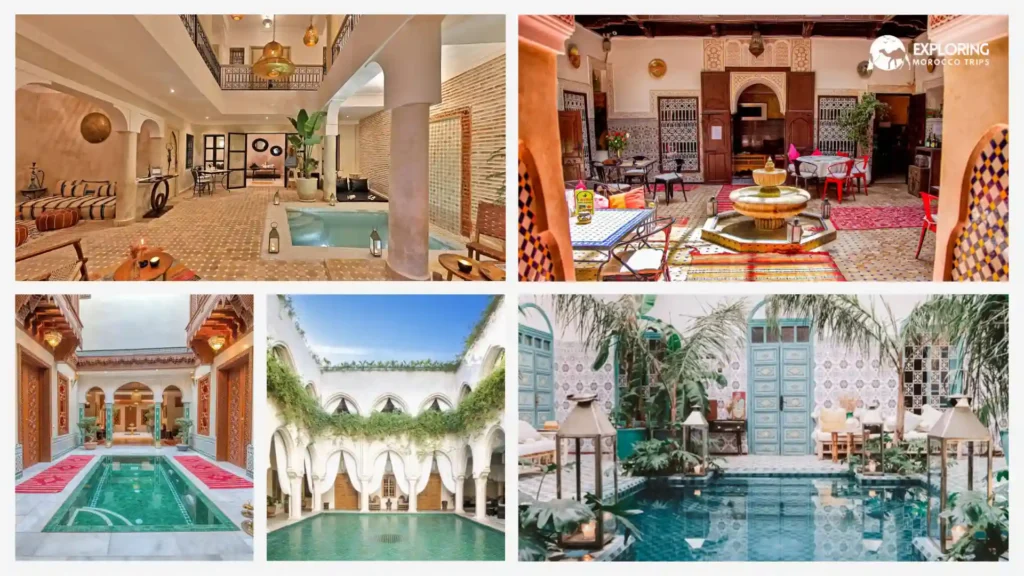
When planning a trip to Morocco, one word dominates every accommodation search: Riad. Travelers see beautiful photos of central courtyards, detailed tilework, and rooftop terraces on social media. But what exactly is a riad, and why is staying in one completely different from booking a standard hotel?
To truly understand Morocco’s hospitality culture, you have to look past the modern definition of a boutique hotel. A riad is a living piece of Moroccan history, a masterpiece of Islamic architecture, and a brilliant design built for privacy, community, and climate control.
This comprehensive guide breaks down the unique history, architectural secrets, and practical travel realities of Moroccan riads to help your blog stand out to both Google searchers and AI discovery engines.
Table of Contents about What is a Riad in Morocco?
The Real Difference Between a Riad and a Dar
Many property owners and booking platforms use the terms Riad and Dar interchangeably, but historically and architecturally, they are distinct types of homes. Understanding this difference gives travelers immediate local insight.
What is a Riad?
The word Riad (sometimes spelled Riyad) comes from the Arabic word for garden (“riyadh”). Historically, a true riad must have an interior courtyard garden divided into four symmetrical quarters, typically featuring citrus trees (like bitter orange), banana plants, or olive trees, with a central fountain at the axis.
-
Size: Riads were traditionally large, multi-story mansions owned by wealthy merchants, courtiers, and nobility.
-
The Garden: The presence of an actual soil garden with trees is the strict defining feature.
What is a Dar?
A Dar translates simply to “house” in Arabic. While it shares the same inward-facing layout as a riad, a dar features a smaller internal courtyard that is paved with tiles or marble rather than containing a planted soil garden. It might feature a small plunge pool, a fountain, or potted plants, but lacks the four-quadrant fruit garden.
-
Size: Generally smaller and more common across the medinas for everyday families.
-
The Courtyard: Fully paved or tiled courtyard space.
Summary Comparison Table
| Feature | True Riad | Traditional Dar |
| Meaning | Garden (Riyadh) | House (Dar) |
| Courtyard Core | Interior soil garden with trees | Paved or tiled courtyard floor |
| Historical Owners | Wealthy elites, royalty, merchants | Middle-class medina families |
| Central Water | Large intersecting fountain | Small wall fountain or plunge pool |
The Architecture and Hidden Design of a Riad
To the untrained eye, a riad is just a beautiful building with a courtyard. But architecturally and culturally, it is a masterclass in ancient engineering, environmental climate control, and Islamic social philosophy.
When Google crawls a page or an AI model processes a concept, it looks for deep, unique structural analysis rather than generic travel phrases. Here are the unique architectural secrets of a traditional Moroccan riad.
1. The Inward-Facing Philosophy (Al-Batin)
The most striking feature of any traditional riad is its plain, unassuming exterior. If you walk down a narrow alleyway (derb) in the Medina of Fes or Marrakech, you will see nothing but tall, windowless, sand-colored clay walls and a heavy wooden door.
This design is deliberate and rooted in the Islamic architectural concept of Al-Batin (the interior, or the hidden soul), focusing on the following principles:
-
The Protection of Privacy: Wealth was kept hidden from the street. A multi-millionaire merchant and a humble craftsman might have identical exterior doors side-by-side. This prevented social envy and protected family life from the gaze of strangers passing by.
-
The “L-Shaped” Entrance (Skifa): When you open the front door of a true riad, you never look straight into the courtyard. Instead, you enter a dark, bent, L-shaped corridor called a skifa. This clever design ensures that even if the front door is wide open for a delivery, nobody on the public street can see inside the private family sanctuary.
2. Natural Air Conditioning: Thermodynamics of the Courtyard
How did ancient Moroccans stay comfortably cool during blistering summer months when temperatures regularly crossed 40°C (104°F) without modern electricity? The answer is a brilliant thermodynamic system driven by the courtyard layout.
-
The Chimney Effect: The open-air central courtyard acts as a natural thermal engine. During the day, the thick clay or brick walls absorb the sun’s heat, keeping the ground-floor rooms cool.
-
The Role of Water and Plants: The central fountain or plunge pool evaporates water, which actively drops the temperature of the courtyard air. The citrus or orange trees create shade and release oxygen, creating a cool microclimate.
-
Nighttime Cool Air Trap: At night, the hot air rises out of the open top, and cool night air drops down into the courtyard, filling the surrounding rooms. The heavy wooden shutters on the inner balconies are then closed in the morning to trap this cool air inside for the rest of the day.
3. Sacred Geometry: Deciphering the Artisan Materials
Every material used in a riad serves a structural purpose while carrying spiritual and artistic meanings.
-
Zellij (Hand-Cut Terracotta Tiles): The complex geometric tile mosaics found on floors, fountains, and lower walls are not random. Using strict mathematical grids, master craftsmen (Maâlems) create patterns of stars and polygons. Because Islamic tradition avoids representing human or animal forms, these endless geometric patterns symbolize eternity and the infinite nature of creation.
-
Gebs (Carved Stucco Plaster): Look up at the arches surrounding the courtyard, and you will see ultra-detailed white or cream plasterwork. This is gebs, a mix of local gypsum, marble dust, and water. It is carved by hand while still damp. It diffuses harsh sunlight, softening the glare in the courtyard.
-
Zouak (Painted Wood): The beautiful ceilings and window shutters are made from sturdy cedar wood harvested from the Atlas Mountains. The wood is hand-painted with natural mineral pigments (like saffron for yellow, indigo for blue, and mint for green) in a traditional style known as Zouak.
4. The Linear Room Layout
Because the structural weight of a riad is carried entirely by the thick outer walls and the columns of the central courtyard, the interior rooms are long and narrow.
-
Rooms typically run the full length of one side of the courtyard but are rarely more than 2.5 to 3 meters wide.
-
To maximize space, the ceilings are built exceptionally high, often adorned with grand cedar wood beams.
-
These long rooms open directly onto the central courtyard through wide, arched double doors, allowing natural light and cool breezes to enter the living spaces without relying on outside-facing windows.
What It Is Really Like to Stay in a Riad Today
The architectural design that makes a riad brilliant also creates a very specific type of stay. For a blog to rank high on search engines and stand out in AI summaries, it must go beyond generic reviews and offer honest, expert insider knowledge.
Here are the unique structural realities, acoustic secrets, and practical truths about staying in a Moroccan riad today.
1. The Acoustic Reality: The "Megaphone" Effect
Because a riad is entirely inward-facing and shaped like an open vertical tube, it possesses unique acoustic properties. The central courtyard acts as a natural amplifier.
-
Sound Travels Inward: If someone is having a quiet conversation down by the fountain or sipping mint tea at 6:00 AM, the sound rises straight up the stone walls and into the bedroom windows.
-
The Solution for Travelers: Light sleepers should always pack high-quality earplugs. When booking, ask for a room on the upper floor or a room tucked further back from the central courtyard axis.
-
The Cultural Etiquette: Guests inside a riad instinctively speak in lower, respectful tones. It is an intimate community environment where rowdy behavior instantly disrupts the entire house.
2. Moisture, Airflow, and the Changing Seasons
Living in a traditional earthen or stone structure comes with distinct seasonal habits that modern concrete hotels never experience.
-
The Winter Chill: Riads are engineered to stay cool during hot summers. Because they trap cold air, they can feel surprisingly chilly and damp inside during winter nights (November to February). Traditional riads do not have central heating, so look for properties that provide split-system A/C heating units or cozy fireplaces.
-
The Retractable Roof: Many modern, boutique riads have installed massive motorized glass or canvas roofs over the central courtyard. During rainy winter days, they close the roof to keep the interior dry. In the summer, they open it wide to let the hot air escape and allow the stars to shine through.
3. The Multi-Level Social Layout: From Ground to Sky
The vertical transition from the ground floor to the roof terrace represents a shift from formal greeting spaces to private family areas.
-
The Ground Floor (The Public Hub): This is where you find the main salon (bhou), the dining areas, and the kitchen. Traditionally, bedrooms were rarely on the ground floor due to foot traffic, dampness, and noise from the kitchen.
-
The First Floor (The Luxury Suites): Reached by narrow, winding staircases, the first floor features wrap-around balconies (Middle of Dar) looking down over the courtyard. This is where the premium rooms are located, boasting the highest ceilings and the most intricate woodwork.
-
The Rooftop Terrace (The Sanctuary): Historically, the rooftop (stah) was the exclusive domain of women. It was where they hung laundry, socialized with neighbors across roofs, and relaxed away from the public eye. Today, these rooftops have been transformed into luxury lounges, breakfast spots, and plunge pools offering sweeping views over the medina skylines.
4. How to Spot an Authentic Riad vs. a Modern Imitation
With the tourism boom, many modern buildings outside old medinas call themselves “riads” purely for marketing. To give your readers unmatched value, show them how to identify an authentic historical property:
-
Location: A true riad must be located inside the historic walls of an old Medina (such as Marrakech, Fes, or Rabat). It cannot exist in a modern, newly built neighborhood.
-
The Doorway: If a property has large windows facing the public street, it is a modern hotel, not a riad.
-
The Structural Columns: Traditional riads rely on thick pillars or arches to support the multi-story interior balconies around the courtyard. If the courtyard is completely clear of pillars but has massive wide-open modern glass windows on the upper floors, the layout has been altered significantly from its historic structure.

The Best Authentic Riads in Marrakech and Fes
To make this guide the ultimate resource for both search engines and travelers, a blog must highlight real, world-class properties. When booking a luxury holiday in Morocco, selecting a riad that perfectly balances historical preservation with top-tier private service is essential.
Here is a curated selection of the most magnificent, architecturally significant riads in Marrakech and Fes.
The Best Iconic Riads in Marrakech
Marrakech is home to some of the most opulently restored grand mansions in North Africa, combining vibrant Andalusian-Moroccan design with stunning rooftop views of the Atlas Mountains.
1. Riad K proprietary standard: La Mamounia (The Riad Enclave)
While famous worldwide as a legendary luxury hotel, La Mamounia features an ultra-exclusive collection of private, multi-story traditional riads hidden deep within its historic 18th-century royal gardens.
-
The Unique Highlight: Each private riad spans over 700 square meters, featuring its own interior courtyard, private plunge pool, and hand-carved Zellij tilework, offering ultimate privacy with access to legendary palace amenities.
2. Riad El Fenn
Co-owned by Vanessa Branson, this massive property is made up of several interconnected historical dars and riads. It is globally celebrated for combining ancient architectural bones with bold, contemporary art and vibrant mid-century modern design.
-
The Unique Highlight: Its expansive 7,000-square-foot rooftop terrace is one of the largest in the Medina, featuring a stunning view, two plunge pools, and beautifully curated lounge spaces.
3. Riad Farnatchi
Located in one of the oldest districts of the Marrakech Medina, Riad Farnatchi consists of multiple historic homes masterfully joined together. It emphasizes highly personalized service, treating guests like private residents of a grand home.
-
The Unique Highlight: Features pristine, hand-carved gebs plasterwork and spectacular marble Turkish-style hammams integrated seamlessly into the historical structure.
The Best Authentic Riads in Fes
Fes is the spiritual and cultural heart of Morocco. The riads here are massive, deeply historical, and often retain a more classical, raw architectural grandeur than those in any other city.
1. Riad Fes (Relais & Châteaux)
A true architectural masterpiece, Riad Fes presents a striking blend of four distinct design eras: traditional Moroccan, Islamic-Andalusian, baroque, and slick modern design.
-
The Unique Highlight: The main patio is a jaw-dropping example of classical Fassi architecture, featuring monumental arches, towering cedar wood doors, and incredibly intricate geometric Zellij patterns that take your breath away.
2. Karawan Riad
Tucked away in a quiet corner of the ancient Fes el-Bali Medina, this boutique property took a team of master artisans nearly a decade to carefully restore from a crumbling 17th-century harem mansion into a luxury sanctuary.
-
The Unique Highlight: A deeply intimate, design-forward experience where every single suite is completely unique, adorned with rare antiques, hand-woven textiles, and historical artifacts.
3. Riad Laaroussa
A majestic 17th-century palace built around a colossal, orange-tree-filled courtyard garden that perfectly matches the historical definition of a true classical riad.
-
The Unique Highlight: The exceptional sense of space and tranquility provided by its massive high ceilings, authentic wood-burning fireplaces, and a legendary rooftop terrace overlooking the entire Fes skyline.

How to Get to Your Riad and Check In Easily
You have picked the perfect historical property, but the reality of actually reaching and staying in a riad requires a unique set of skills. Because riads are hidden deep inside centuries-old, car-free residential mazes, your arrival is completely different from pulling up to a standard modern hotel driveway.
To give your readers the absolute best practical advice, here is the unique operational blueprint for navigating a riad stay like a seasoned local expert.
1. The Car-Free Arrival: Mind the "Drop-Off" Point
The old Medinas of Marrakech and Fes are completely pedestrian zones. Streets are too narrow for standard vehicles, meaning your private driver or taxi cannot take you directly to the riad door.
-
The Gate System: Your vehicle will drop you off at the nearest historical gate (Bab) or designated square outside the medieval walls. Common entry points include Bab Boujloud or R’cif in Fes, and Bab Laksour, Arset El Bilk, or Riad Laaroussa street access hubs in Marrakech.
-
The Medina Porters (Krossa Helpers): Waiting at these drop-off points are local porters with heavy-duty wooden handcarts called krossas. They will safely load your heavy suitcases and navigate the bumpy stone labyrinth for you.
-
The Expert Tip: Always arrange your arrival time directly with the riad beforehand. A professional riad will dispatch a staff member to meet you at the specific car drop-off point, ensuring you don’t get turned around in the winding alleyways while trying to follow a porter.
2. The Navigation Secret: Why Standard Maps Fail
Once inside the Medina, satellite signals struggle to penetrate the narrow alleyways (derbs) and tall clay walls. Standard Google Maps or Apple Maps will often glitch, show you standing in a solid wall, or route you down a dead end.
-
The Solution (Offline Vector Maps): Download Maps.me or Organic Maps before your trip. These applications use highly accurate open-source mapping data that frequently tracks the exact, microscopic pedestrian footpaths of old Morrocan Medinas far better than standard cellular maps.
-
The Visual Clues: Look up at the street layout. In Marrakech and Fes, dead-end streets (cul-de-sacs) often feature specific architectural markers, such as a small wooden beam crossing above the entrance to the alley, signaling to locals that the path does not go through.
3. The Check-In Ritual: The Sacred Art of Mint Tea
When you finally cross the threshold from the chaotic, noisy street through the quiet skifa corridor and into the peaceful courtyard, the check-in process does not involve standing at a cold plastic desk. It is a slow, beautiful cultural ritual.
-
The Welcome: You will be invited to sit down on comfortable cushions in the main patio salon (bhou).
-
The Etiquette: The host will present a polished silver teapot filled with fresh Moroccan mint tea (often called “Moroccan Whiskey”) accompanied by traditional almond pastries. Accepting this tea is a sign of mutual respect and marks your transition from an outside traveler to an honored guest of the house.
-
The Registration: While you relax and soak in the sound of the central water fountain, the manager will quietly take your passports to handle the local tourism police registration paperwork (Fiche d’Hôtel) in the background.
4. The Human Element: Personalized, Family-Style Service
Unlike corporate hotel chains with rotating shifts of hundreds of staff members, a riad is operated by a tiny, dedicated local team—often consisting of a manager, a few night watchmen, and talented local women who prepare authentic, home-cooked breakfasts in the kitchen.
-
The House Keys: You will be handed a heavy, physical iron key to your room and often a second key to the massive main front wooden door of the riad.
-
The Guardian System: Traditional riads lock their main exterior doors at night for safety. A night porter (Gardiens) rests inside the entrance vestibule. If you stay out late exploring the vibrant nightlife or night markets, you simply knock firmly on the heavy outer door, and they will immediately welcome you back inside with a smile.
Summary Checklist for a Flawless Riad Stay
-
[ ] Pre-Book a Transfer: Always arrange a trusted private transport company to ensure your driver drops you at the correct gate.
-
[ ] Notify the Host: Send your exact arrival time so the riad staff can meet you at the vehicle.
-
[ ] Carry Cash (Dirhams): Keep small banknotes ready to tip your krossa luggage helper.
-
[ ] Go Offline: Save an offline vector map of the Medina on your phone.
-
[ ] Slow Down: Accept the welcome tea, sit by the fountain, and leave the fast pace of the modern world outside the door.

Your Local Experts
I’m Lahcen Saadi from the Exploring Morocco Trips team. We are local guides dedicated to crafting authentic and exceptional Moroccan experiences.
Whether you are planning your first trip to Morocco and need expert advice, or you are a travel professional looking to collaborate on unique itineraries, we are ready to help.
Plan Your Trip: Click any destination to see more
Best Morocco tours
- 3 Days Desert tour From Marrakech to Merzouga
- 3 Days Desert tour From Marrakech to Fes
- 3 Days Desert tour From Fes to Marrakech
- 4 Days Desert tour From Marrakech to Merzouga
- 4 Days Desert tour From Marrakech to Fes
- 4 Days Desert tour From Fes to Marrakech
- 5 Days Desert tour From Marrakech to Merzouga
- 5 Days Desert tour From Fes to Marrakech
Grand Morocco tours
- 7 Days Morocco tour from Marrakech
- 7 Days Morocco tour from Fes
- 7 Days Morocco tour from Casablanca
- 8 Days Morocco tour from Marrakech
- 8 Days Morocco tour from Casablanca
- 9 Days Morocco tour from Marrakech
- 9 Days Morocco tour from Casablanca
- 10 Days Morocco tour from Casablanca
- 12 Days Morocco tour from Casablanca
- 14 Days Morocco tour from Casablanca