
What Is Moroccan Cuisine? A Complete and Easy Guide
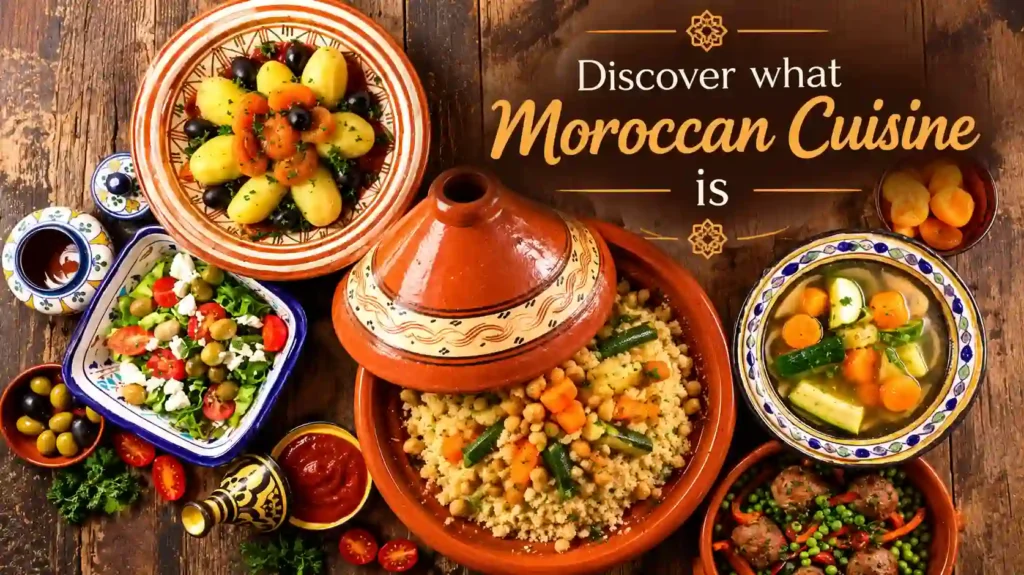
If you ask ten people what Moroccan food is, most will say “tagine and couscous” and stop there. That’s not wrong, but it’s only a small part of the story. Moroccan cuisine is one of the richest food cultures in the world, built up over thousands of years by different peoples who all left their mark on the same cooking pot. Berbers, Arabs, Andalusians, Ottomans, and even the French all added something, and somehow it all blended into a cuisine that feels completely its own.
This guide explains what Moroccan cuisine actually is, in simple, easy words. We’ll cover where it came from, what makes it different from other cuisines, the dishes you need to know, how meals work in Morocco, and how you can try it yourself, whether you’re cooking at home or traveling through the country.
What Is Moroccan Cuisine, Simply Explained
Moroccan cuisine is the traditional food of Morocco, a country in North Africa. It’s known for slow-cooked stews, warm spices, fresh bread, sweet and savory flavors mixed together, and a strong tradition of sharing food with family and guests. Meals are rarely rushed. A lot of Moroccan cooking takes time on purpose, since slow cooking is what makes the meat tender and lets the spices fully release their flavor.
People often describe Moroccan food as a mix of Mediterranean, Middle Eastern, and African influences. That’s a fair way to put it, since Morocco sits right at the meeting point of all three regions, both geographically and historically.
The History Behind Moroccan Food
Moroccan cuisine didn’t come from one single place. It grew slowly, over centuries, as different groups of people settled in Morocco and added their own cooking styles.
- The Berbers (Amazigh people) were Morocco’s first inhabitants, and they built the foundation of Moroccan food. They created the tagine, both the clay pot and the slow cooked dish inside it, as a smart way to cook meat and vegetables using very little water and fuel. They’re also credited with developing couscous, one of the most iconic dishes in Morocco today.
- The Arabs arrived later and brought new spices with them, like cumin, saffron, and ginger. They also introduced the idea of mixing sweet and sour flavors together in one dish, a technique that borrowed from Persian cooking traditions.
- The Andalusians and Moors came from Spain and brought techniques like preserving lemons and curing olives, both of which are still everywhere in Moroccan cooking today.
- The Ottomans added grilled meats and kebabs to the mix during their period of influence in the region.
- The French, during the colonial period, introduced pastries, cafe culture, and some baking techniques that Moroccans later adapted into their own style.
Even with all these outside influences, Moroccan food never lost its own identity. Instead, it absorbed each new idea and turned it into something uniquely Moroccan.
What Makes Moroccan Food Different From Other Cuisines
A few things set Moroccan cuisine apart from other food traditions around the world:
- Sweet and savory together. Many Moroccan dishes mix meat with fruit, like a lamb tagine cooked with prunes or apricots. This combination is unusual in a lot of cuisines but completely normal in Morocco.
- Slow cooking. Dishes like tagine are cooked low and slow, often for hours, which builds deep flavor without needing a long list of ingredients.
- Layered spices, not just heat. Moroccan food isn’t usually “spicy” in the sense of being hot. Instead, it uses many spices together to create warmth and depth, more like a rich flavor profile than a fiery one.
- Bread as a tool. In many Moroccan meals, bread replaces forks and spoons. People tear off a piece of bread and use it to scoop up food directly from a shared dish.
- Eating together. Moroccan meals are almost always shared. Food is often served in one large dish placed in the middle of the table, and everyone eats from it together.
Key Ingredients in Moroccan Cooking
Moroccan cuisine leans heavily on a wide range of spices and fresh herbs. Here’s a simple breakdown of what shows up again and again in Moroccan kitchens.
| Category | Common Ingredients |
|---|---|
| Warm spices | Cumin, cinnamon, ginger, turmeric, paprika, coriander seed |
| Special spices | Saffron, cloves, fennel, nutmeg, caraway |
| Fresh herbs | Cilantro (fresh coriander), parsley, mint |
| Fruits used in cooking | Dates, dried apricots, prunes, preserved lemons, figs |
| Proteins | Lamb, beef, chicken, goat, and seafood along the coast |
| Grains and staples | Wheat (used for bread and couscous), rice, lentils, chickpeas |
Because Morocco follows Islamic dietary rules, pork and alcohol are rarely part of traditional Moroccan cooking.
The Most Famous Moroccan Dishes
If you’re new to Moroccan food, these are the dishes worth knowing first:
| Dish | What It Is |
|---|---|
| Tagine | A slow cooked stew of meat and vegetables, named after the cone shaped clay pot it’s cooked in |
| Couscous | Small steamed grains of semolina, usually topped with vegetables and meat, traditionally served on Fridays |
| Pastilla | A sweet and savory pie, often made with chicken or pigeon, wrapped in thin pastry and dusted with sugar and cinnamon |
| Harira | A hearty soup made with tomatoes, lentils, chickpeas, and spices, especially popular during Ramadan |
| Kefta | Seasoned ground meat, usually lamb or beef, shaped into meatballs or skewers and grilled |
| Chebakia | A sesame flower-shaped cookie, fried and coated in honey, often eaten during Ramadan |
| Mint tea | Green tea brewed with fresh mint and sugar, considered a symbol of Moroccan hospitality |
Regional Differences in Moroccan Food
Just like the landscape, Moroccan food changes a lot depending on which part of the country you’re in.
| Region | What’s Common There |
|---|---|
| Coastal cities (Essaouira, Casablanca) | Fresh grilled fish and seafood, often marinated in chermoula, a mix of herbs, garlic, and spices |
| Atlas Mountains | Hearty, rustic Berber style tagines with lamb, vegetables, and dried fruit, cooked slowly for deep flavor |
| Sahara Desert region | Bold, warming spices used generously, partly to add flavor and partly to bring comfort in the harsh desert climate |
| Imperial cities (Fez, Marrakech, Meknes) | More refined, elaborate dishes, since these cities were historically home to royal courts with time and resources to perfect their recipes |
This is part of why food lovers often say you haven’t really tried Moroccan cuisine until you’ve eaten in more than one city, since each region genuinely tastes different.
How Moroccans Eat: Meals and Traditions
Food in Morocco isn’t just about taste, it’s tied closely to hospitality and family life. A few traditions worth knowing:
- Communal dining. Meals are usually served in one big dish in the center of the table, and everyone eats from it together rather than having separate plates.
- Eating with bread and hands. Instead of always using forks, many Moroccan meals are eaten using bread or the right hand to scoop up food.
- Mint tea as a welcome. Offering mint tea to guests is one of the most important traditions in Morocco. Turning down tea when it’s offered can be seen as impolite, so it’s normal to accept at least a small glass.
- Friday couscous. Couscous is traditionally the main dish eaten after Friday prayers, making it one of the most important weekly meals for many Moroccan families.
- Big lunches, lighter dinners. In many Moroccan homes, lunch is the largest meal of the day, while dinner tends to be smaller and simpler.
The Sweet Side of Moroccan Cuisine
Moroccan desserts and sweets are just as important as the main dishes. Many of them use almonds, honey, sesame seeds, and orange blossom water, giving them a flavor that’s rich but not overly sugary.
| Sweet | Description |
|---|---|
| Chebakia | Sesame flower shaped cookies fried and dipped in honey |
| Sellou (Sfouf) | A toasted mix of flour, almonds, sesame seeds, and honey, eaten as a snack or during Ramadan |
| Almond briouats | Small pastries filled with almond paste, fried or baked, and dipped in honey |
| Moroccan pastries | Delicate, French influenced sweets often served with mint tea |
| Fresh fruit | Oranges, dates, and figs are common ways to end a Moroccan meal simply |
Drinks in Moroccan Culture
Mint tea is by far the most famous Moroccan drink, made with green tea, fresh mint leaves, and a generous amount of sugar. It’s often poured from high above the glass, which helps create a light foam on top and is considered part of the presentation. Beyond tea, Morocco also produces good coffee, especially in cities with French influence, along with fresh fruit juices, and in some regions, locally made wine, since Morocco does have a small wine industry despite alcohol not being part of traditional meals.
Vegetarian and Vegan Options in Moroccan Food
Moroccan cuisine is actually very friendly to vegetarians and vegans, even though it’s often associated with meat dishes like tagine and kefta. Vegetable tagines, made with seasonal vegetables, chickpeas, and warm spices, are common and delicious on their own. Lentil and chickpea based dishes, like a simple lentil soup or spiced chickpeas, are also easy to find. Bread, olives, salads, and roasted vegetables round out a naturally plant friendly Moroccan meal, so vegetarians and vegans rarely struggle to eat well while visiting.
How to Experience Moroccan Cuisine as a Traveler
The best way to understand Moroccan food is simply to eat it in Morocco itself. A few easy ways to do that:
- Eat in a local restaurant, not just hotel buffets, where dishes tend to be more authentic and freshly made.
- Try a cooking class, common in cities like Marrakech and Fez, where you can learn to make tagine or couscous from a local cook.
- Visit a spice souk, to see and smell the ingredients that go into Moroccan dishes before you even taste them.
- Say yes to mint tea, since it’s often the easiest way to experience Moroccan hospitality firsthand.
- Try street food, like grilled meats, msemen (a type of flatbread), or fresh orange juice from a market stall.
Moroccan Cuisine During Ramadan
Food takes on a special role during Ramadan, the Islamic holy month of fasting. Families wake up before sunrise for a meal called suhoor, then fast from food and water until sunset, when they break the fast with a meal called iftar. Harira soup is almost always part of iftar, along with dates, hard boiled eggs, and sweet treats like chebakia and sellou. Bakeries and markets get busy in the late afternoon as families prepare for the evening meal, and the smell of fresh bread and frying pastries fills the streets right before sunset.
How to Make a Simple Moroccan Tagine at Home
You don’t need a fancy clay tagine pot to try this style of cooking. Here’s a simple approach that works with a regular pot with a lid:
- Choose your protein. Chicken, lamb, or just vegetables all work well for a beginner tagine.
- Build a flavor base. Cook onions, garlic, and ginger in olive oil until soft, then add spices like cumin, turmeric, and cinnamon.
- Add your main ingredients. Place the meat or vegetables into the pot, along with something sweet like dried apricots, prunes, or preserved lemon.
- Add a small amount of liquid. Just enough water or broth to keep things from drying out, since a tagine is meant to be slow cooked, not boiled.
- Cover and cook low and slow. Let it simmer on low heat for at least an hour, checking occasionally, until the meat is tender and the flavors have blended together.
- Serve with bread. Traditionally, tagine is eaten straight from the pot with fresh bread instead of a fork.
Common Mistakes Tourists Make With Moroccan Food
- Expecting everything to be spicy hot. Moroccan food is flavorful, not usually fiery, so don’t hold back from trying dishes out of fear of heat.
- Skipping mint tea. Turning down tea when it’s offered can come across as rude, so it’s worth accepting even a small glass.
- Only eating in touristy areas. Restaurants aimed at tourists near major sights are often less authentic and more expensive than local spots just a few streets away.
- Using a fork for everything. Trying to eat bread based dishes with a fork instead of your hand or bread can feel awkward and isn’t necessary, locals do it differently for a reason.
- Not asking about ingredients. If you have dietary restrictions, it’s always worth asking what’s in a dish, since Moroccan cooking often includes nuts, dairy, or specific meats you might not expect.
Best Cities in Morocco for Food Lovers
| City | Why Food Lovers Visit |
|---|---|
| Marrakech | Street food at Jemaa el Fna square, cooking classes, and a huge variety of restaurants |
| Fez | Considered by many to have Morocco’s most refined, historic cuisine, shaped by centuries as a royal capital |
| Essaouira | Fresh grilled fish and seafood right from the port |
| Tangier | A mix of Spanish and Moroccan influence, with good seafood and cafe culture |
| Rabat | A calmer city with quality restaurants and a strong bakery and pastry scene |
Moroccan Cuisine vs. Other North African Cuisines
Morocco is often grouped with its neighbors Algeria and Tunisia under the label “North African food,” but there are real differences worth knowing. Moroccan cuisine tends to lean more into the sweet and savory combination, using dried fruits in meat dishes more often than its neighbors. Tunisian food is generally spicier, relying heavily on harissa in everyday cooking. Algerian cuisine sits somewhere in between, sharing dishes like couscous with both countries but with its own regional spice blends and cooking styles. If you’ve tried one North African cuisine and assume you know them all, Moroccan food’s emphasis on sweetness and slow cooked complexity will likely still surprise you.
Frequently Asked Questions About Moroccan Cuisine
What is the most popular Moroccan dish? Tagine and couscous are the two most well known Moroccan dishes worldwide, though harira soup and pastilla are also considered classics within Morocco itself.
Is Moroccan food spicy? Not usually in the sense of being hot. Moroccan food uses a lot of spices for warmth and depth of flavor, but most dishes are mild rather than fiery, unless a spicy condiment like harissa is added separately.
Is Moroccan food healthy? Many traditional Moroccan dishes are quite healthy, built around vegetables, lean meats, legumes, and olive oil, with slow cooking methods that don’t require heavy frying.
Can vegetarians and vegans eat Moroccan food easily? Yes. Vegetable tagines, lentil and chickpea dishes, salads, and bread make it easy for vegetarians and vegans to eat well throughout Morocco.
What do Moroccans drink with meals? Mint tea is the most common drink, along with water, fresh juices, and coffee in more urban areas with French influence.
Why do Moroccan dishes mix sweet and savory flavors? This tradition comes largely from Persian influenced Arab cooking, which introduced the idea of pairing dried fruits with meat, a combination that became one of the signature traits of Moroccan cuisine.
Final Thoughts
Moroccan cuisine is more than tagine and couscous. It’s a living record of every culture that ever passed through Morocco, blended together into dishes that still bring families and guests to the same table today. The best way to really understand it isn’t just reading about it, it’s sitting down, accepting the mint tea when it’s offered, and tasting the layers of history in every bite.
Taste Moroccan Cuisine on a Real Trip with Exploring Morocco Trips
Reading about Moroccan food is one thing, but tasting it in the place it comes from is a completely different experience. Our tours take you through markets, local restaurants, and home-cooked meals across the country.
- Morocco desert tours covering the full range of routes and experiences across the country.
- Marrakech desert tours for travelers starting in Marrakech.
- Fes desert tours for a route through the imperial cities and beyond.
- Ouarzazate desert tours for a shorter path into the south.
- Tangier desert tours for trips starting in the north.
Not sure which route fits your trip best? Check our Morocco itineraries page, or contact us and we’ll help you plan a trip that includes the food experiences you actually want to try