
Sunset in Merzouga: The Moment the Sahara Actually Feels Like the Sahara
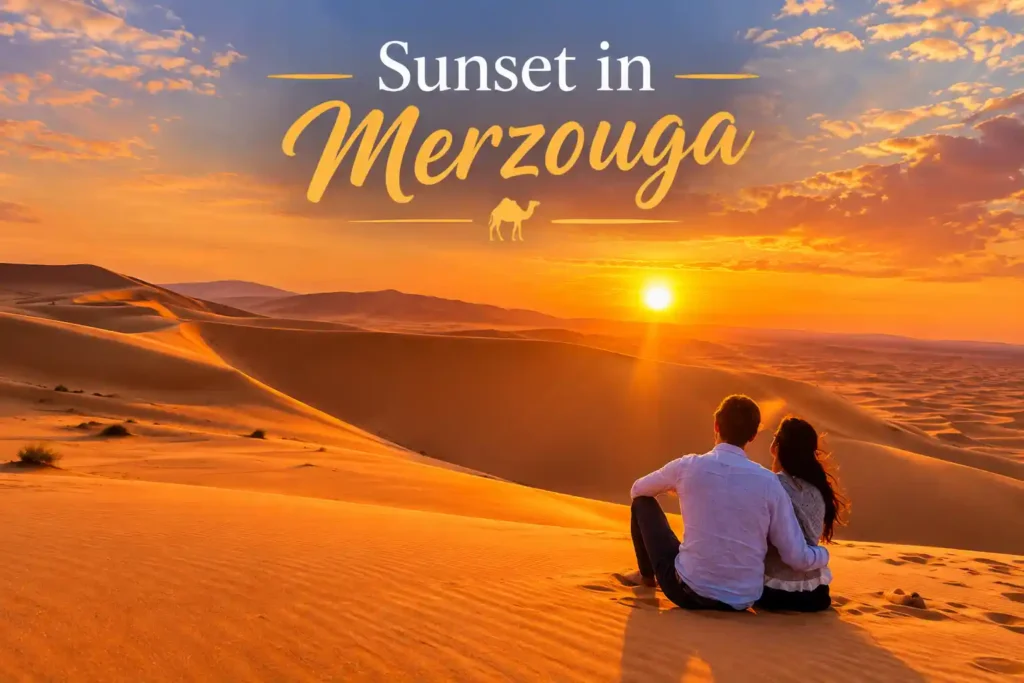
There’s a specific kind of silence that settles over the Erg Chebbi dunes right before the sun drops, the wind dies down just a little, the camel bells stop clinking, and for a few minutes nobody in the group says much of anything. Everyone’s just watching. If you’ve seen a hundred photos of orange dunes before your trip, none of them quite prepare you for standing on top of one as the whole desert changes color in real time. This is what people actually mean when they say the Sahara trip was the highlight of their entire Morocco itinerary, and sunset is usually the exact moment they’re thinking of.
Why Merzouga’s Sunsets Hit Differently
It’s not just that deserts have nice sunsets in general; Merzouga’s specific geography does something particular to the light. The Erg Chebbi dunes rise up to around 150 meters in places, tall enough to create genuine depth and shadow as the sun drops, with ridgelines that catch light on one side while the other falls into deep shade almost instantly. The sand itself shifts color throughout the process, pale gold in the late afternoon, deepening to orange, then a rich red-brown, and finally a strange, almost purple-gray right as the sun disappears below the horizon. With essentially zero light pollution and very little humidity in the air, the color transitions happen with a clarity you just don’t get in most other landscapes; there’s nothing softening or diffusing it, the desert shows you exactly what’s happening to the light in real time.
The Camel Trek: Getting There Is Part of the Experience
Most sunset experiences in Merzouga start with a camel trek out into the dunes, typically departing camp about an hour or so before sunset to give the group time to reach a good vantage point. Riding a camel across sand as the light starts turning gold is truly one of those moments that sounds cliché until you’re actually doing it, the rhythmic sway of the camel, the quiet crunch of sand, the dunes slowly getting taller around you as you head deeper into the erg. Most treks stop at a viewpoint dune high enough to see a wide stretch of the desert in every direction, and this is usually where the group dismounts to walk the last stretch up to the ridge on foot, since climbing loose sand on your own feet, even for just a few minutes, adds to the sense that you’ve actually arrived somewhere remote rather than just being driven to a viewpoint.
What to Actually Expect at the Top
Climbing the last few meters up a dune ridge is more tiring than it looks, soft sand gives way under every step, and most people arrive at the top a little out of breath, which somehow makes the view feel more earned. From the ridge, the Erg Chebbi dunes stretch out in every direction, waves of sand frozen mid-motion, with the occasional dark silhouette of another camel caravan or a distant desert camp breaking up the landscape. As the sun gets lower, the dune ridges throw long, sharp shadows across the sand, and the ripple patterns that are barely visible in flat daylight suddenly stand out in dramatic relief. It’s a genuinely good spot for photos, but most people end up putting the phone down for at least a few minutes just to actually watch it happen.
The Colors, Minute by Minute
If you want to know what you’re actually looking at as it happens, the transition tends to follow a fairly consistent pattern. In the hour before sunset, the dunes hold a warm, pale gold color, similar to how they look mid-afternoon but slightly softer. As the sun drops closer to the horizon, the color deepens noticeably into a richer orange, and the shadows on the leward side of each dune grow longer and darker. In the final ten minutes, the sand can take on an almost red or copper tone, especially on ridgelines catching the last direct light, while the valleys between dunes fall into a cool blue-grey shadow. Once the sun actually disappears, there’s usually a brief window, maybe five to ten minutes, where the whole sky and the tops of the dunes glow a deep pink or violet, often the most photographed moment of the entire sequence, before the color fades into the deep blue of early desert night.
Sunset Dinner and the Night That Follows
For most travelers, sunset isn’t the end of the evening, it’s the transition into what comes next. After watching the sun go down, the group typically heads back to camp (sometimes by camel, sometimes on foot if the camp is closed) for dinner, often a tagine cooked slowly over coals, served under a canopy or in a communal dining tent. Many camps follow dinner with live music around a fire, drums and rhythmic singing that carries a genuinely different energy once you’re sitting under a sky that’s rapidly filling with stars. Because Merzouga sits far from any significant light pollution, the night sky here is one of the clearest most travelers will ever see, and it’s common for the sunset crowd to end up lying back in the sand an hour later, tracing the Milky Way instead of heading straight to their tents.
The Best Time of Year for Merzouga Sunsets
Merzouga delivers a good sunset most evenings of the year, but conditions do shift with the seasons. Spring (March to May) and autumn (September to November) generally offer the clearest skies and the most comfortable temperatures for the camel trek itself, warm enough to enjoy the walk up the dune without the punishing heat of summer, when daytime temperatures regularly climb above 40°C and even a sunset-hour trek can feel intense. Winter sunsets can be spectacular too, often with a particularly sharp, clean quality to the light, though temperatures drop quickly once the sun is down, so warmer layers matter more at this time of year than any other.
A Few Practical Tips for Sunset in Merzouga
Wear closed shoes, or bring sandals you don’t mind losing sand in. Climbing dunes barefoot looks appealing in photos, but the sand can stay surprisingly hot even close to sunset, and cool, fine sand still gets everywhere either way.
Bring a light scarf or shawl. It helps with sun exposure on the way out and turns into a genuinely useful layer once the temperature drops after the sun’s gone.
Charge your phone or camera beforehand. Cold desert nights and heavy photo use both drain batteries faster than usual, and there’s rarely a convenient outlet once you’re out in the dunes.
Don’t spend the whole time behind a screen. It’s tempting to chase the perfect shot, but the few minutes right after the sun disappears, when the sky turns pink and purple, are genuinely worth just watching rather than photographing.
Book a camp with a good sunset viewpoint reputation. Not all desert camps are positioned equally, some offer a much shorter, easier walk to a genuinely excellent viewpoint, which matters if your group includes kids, older travelers, or anyone less comfortable on loose sand.
Merzouga vs. Zagora: Which Desert Sunset Should You Choose?
Travelers planning a Sahara trip from Marrakech often have to choose between Merzouga and Zagora, and the sunset experience is one of the clearest ways to tell them apart. Merzouga’s Erg Chebbi dunes are taller and more dramatic, some reaching around 150 meters, which creates deeper shadows and a more classic “sea of sand” backdrop for sunset. Zagora, reached via the scenic Draa Valley, sits closer to Marrakech and offers a still-beautiful but somewhat smaller and flatter dune landscape, generally quieter and less crowded than Merzouga during peak season. If the dramatic scale of the dunes is the main reason you’re going, Merzouga is worth the extra driving distance. If you’re shorter on time or want a more remote, off-the-main-path feel, Zagora’s sunset still delivers, just on a slightly smaller stage.
Sunset Alternatives: Quad Biking and Sandboarding
Not everyone wants to end their day on a camel, and Merzouga’s camps generally offer alternatives that pair just as well with sunset. Quad biking across the dunes lets you cover more ground and reach higher, more remote viewpoints than a camel trek typically allows, with many operators timing tours specifically to arrive at a ridge just as the light starts turning gold. Sandboarding is usually more of a late-afternoon activity that wraps up right around sunset, letting you get a few runs down a dune in daylight before settling in to watch the color show from the same spot. Neither replaces the camel trek experience exactly, but both offer a genuinely fun, more active way to reach sunset if you’ve already done the classic camel ride on a previous evening or simply prefer something with more adrenaline.
Sunset vs. Sunrise in Merzouga: Which One Should You Prioritize?
If your schedule only allows for one, it’s worth knowing how the two actually compare. Sunset tends to be the most social, built-up experience, with timed camel treks, groups gathering on viewpoint dunes, dinner and music immediately afterward, making it the more common choice for most camps’ standard itinerary. Sunrise, by contrast, is quieter and more solitary, since fewer people bother waking up early enough to see it, and the colors arguably rival sunset, with the added bonus of cooler morning air and softer light for photography. Many travelers who stay two nights end up preferring sunrise once they’ve experienced both, simply because of how much calmer and less crowded it feels. If you can only do one, sunset is the safer, more logistically simple choice, but sunrise is the one that often surprises people more.
The Music That Often Follows Sunset
In many Merzouga camps, the transition from sunset into evening includes live Gnawa or Berber music around the campfire, a tradition tied to the region’s history as a crossroads for Berber, Arab, and sub-Saharan African culture. Drums, hand-clapping, and call-and-response singing pick up not long after dinner, and it’s common for the whole group, staff included, to end up dancing or at least clapping along by the end of the night. It’s worth knowing this is a genuine cultural tradition, not just tourist entertainment, drawing on the same Gnawa musical heritage found in villages like nearby Khamlia, and treating it with a bit of curiosity and respect goes a long way.
What Happens if the Weather Doesn’t Cooperate
Desert weather is generally reliable, but it’s not entirely without surprises. Occasional dust or sand in the air, especially during windier periods, can mute the sunset’s color intensity or reduce visibility across the dunes, and very rarely, sandstorms can make an evening trek genuinely unsafe, in which case a good camp will simply postpone or cancel the trek rather than risk it. Cloud cover is rare in this part of the Sahara but not impossible, particularly in the cooler months, and can occasionally produce an even more dramatic, painterly sunset than a completely clear sky. If your one scheduled evening doesn’t cooperate, most multi-night camps will happily offer a second attempt the following evening if timing allows.
A Note on Camel Welfare
Camel treks are central to the Merzouga sunset experience, and it’s worth booking with an operator who treats their animals well, provides adequate rest between treks, uses proper loading weights, and shows visible care for the animals’ condition. Reputable camps generally welcome questions about how their camels are cared for, and choosing operators with good reviews specifically mentioning animal welfare is a simple way to make sure this iconic part of the experience stays sustainable for the community and the animals alike.
Frequently Asked Questions About Sunset in Merzouga
What time does the sun set in Merzouga? It varies by season, generally between around 6:00 PM in winter and 7:30-8:00 PM in summer. Your camp or guide will typically plan the camel trek departure to arrive at the viewpoint with enough time to settle in before the sun actually drops.
How long is the camel trek to see the sunset? Most sunset treks from Merzouga camps run around 45 minutes to an hour each way, depending on how deep into the dunes your camp is located.
Is it worth doing the camel trek, or can you drive closer to the dunes for sunset? The camel trek is genuinely part of the experience for most travelers, not just transport, though some tours do offer a shorter walking option for those who prefer not to ride.
What should I wear for sunset in the desert? Comfortable, breathable clothing for the daytime heat, plus a warm layer for after sunset, along with a scarf or shawl for sun and windblown sand protection.
Is it cold after sunset in Merzouga? Yes, temperatures drop quickly once the sun is down, even in summer, so packing a jacket or warm layer is worth it regardless of when you’re visiting.
Can you see the sunset without staying overnight in the desert? Yes, some day-trip tours from Merzouga town include a shorter camel trek specifically timed for sunset without an overnight stay, though staying at least one night is the more common and generally more rewarding option, since it also opens up the stargazing and sunrise the next morning.
Final Thoughts
There’s a reason sunset in Merzouga shows up in nearly every account of a Morocco desert trip; it’s genuinely one of those experiences that’s hard to overhype. The colors, the quiet, the sense of scale once you’re standing on top of a dune looking out at nothing but sand in every direction- it’s the kind of moment that tends to reset how people think about the rest of their trip. Give it the time it deserves, put the phone down for at least a few of those minutes, and let the desert do what it does best.
Ready to See It for Yourself?
If a Sahara sunset is the moment you’re building your Morocco trip around, we can help you get there.
- Morocco desert tours covering the full range of routes and experiences across the country.
- Marrakech desert tours for the classic route into the Sahara.
- Fes desert tours for a route through the imperial cities on the way to Merzouga.
- Ouarzazate desert tours for a shorter path into the south.
- Tangier desert tours for trips starting in the north.
Not sure which route gets you to Merzouga best? Check our Morocco itineraries page, or contact us and we’ll help you plan a trip built around that sunset.