
The Ultimate Guide to the Moroccan Tradition: What is a Hammam in Morocco?
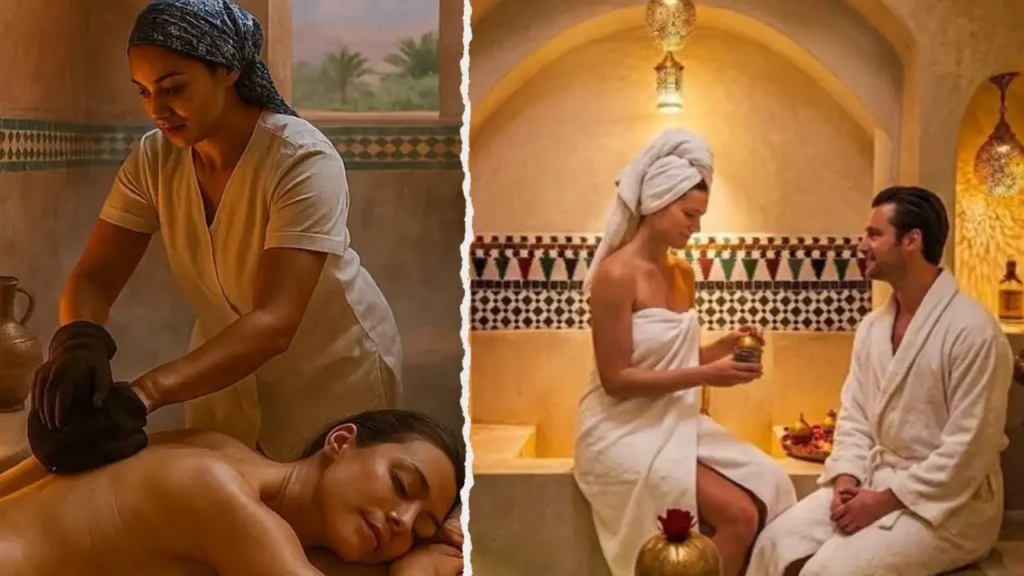
Imagine walking through the narrow, sun-drenched alleys of an ancient medina and hearing the faint sound of splashing water behind a heavy wooden door. You’ve just discovered the heartbeat of the neighborhood. But what is a hammam in Morocco? To the locals, it isn’t just a place to get clean; it is a sacred weekly ritual that balances the soul and softens the skin.
Forget everything you know about modern luxury spas. A true hammam in Morocco is a sensory journey involving thick olive-based soaps, the intense heat of a wood-fired furnace, and a deep-cleaning technique that has remained unchanged since the days of the sultans. Whether you are seeking the best Moroccan hammam in Marrakech or a quiet local bathhouse in the mountains, you are about to experience the ultimate Moroccan “reset button.
Table of Contents: Hammam in Morocco
What Happens in a Moroccan Hammam?
For the uninitiated, the experience can be a bit of a whirlwind. What happens in a Moroccan hammam is a multi-stage process designed to shed old skin and leave you feeling incredibly soft.
- The Steam Room: You begin in a heated, humid room to open your pores.
- The Savon Noir: An attendant (or you, if you are at a local spot) applies savon noir, a thick, eucalyptus-scented black soap made from olive oil.
- The Scrub (Kessa): This is the main event. Using a coarse fabric glove called a kessa, the skin is vigorously scrubbed to remove dead cells.
- The Ghassoul: Often, a mineral-rich clay from the Atlas Mountains, known as ghassoul, is applied as a body mask.
- The Rinse: Expect buckets of warm water to be poured over you for a final, refreshing rinse.
What to Wear to a Hammam in Morocco
One of the most common concerns for travelers is what to wear to a hammam in Morocco.
- For Women: Most women wear bikini bottoms or underwear. Going completely nude is common in traditional neighborhood hammams but less so in “tourist” or “luxury” establishments.
- For Men: Men typically wear swim trunks or boxers.
In luxury spas, disposable underwear is often provided, but in a local hammam in Morocco, bringing your own change of dry clothes is essential.
Finding the Best Hammam in Morocco: City by City
Whether you are looking for a gritty, authentic neighborhood experience or a gold-leaf luxury spa, every city has its own flavor.
Best Moroccan Hammam in Marrakech
The “Red City” is the capital of relaxation. You can find everything from five-star palace experiences at the world-renowned Royal Mansour, to hidden gems in the Medina like the historic Hammam Mouassine. The best Moroccan hammam in Marrakech often combines the traditional scrub with a rose-water massage afterward to leave you completely refreshed.
Best Hammam in Fes, Morocco
Fes is known for its tradition and history. The best hammam in Fes will likely be located within a restored riad, offering an architectural backdrop of intricate zellige tiles that makes the experience feel like stepping back in time. For a luxurious escape, Palais Amani offers a signature ritual in a serene setting, while the historic Hammam Mernissi provides an authentic yet comfortable experience in the heart of the medina.
Hammam in Casablanca, Morocco
In the economic heart of the country, a hammam in Casablanca often leans toward the modern. You will find high-end wellness centers that cater to the city’s fast-paced professionals. For a truly iconic experience, the Hammam at the Hassan II Mosque offers a stunning setting with heated seawater baths, while the Royal Mansour Casablanca provides an ultra-luxury retreat in a serene, white-marble sanctuary.
Hammam in Tangier, Morocco
Located at the gateway to Europe, a hammam in Tangier, Morocco often has a breezy, Mediterranean feel. It’s the perfect way to wash off the salt and sand after a day at the beach. For an elegant experience in the historic district, Hammam Rosa Bonheur Tangier offers a beautifully restored space with professional care, while Hammam Nour provides a high-quality, modern take on the traditional scrub in a relaxing environment.
Hammam in Rabat, Morocco
As the capital city, a hammam in Rabat, Morocco offers a more laid-back, regal atmosphere. Many of the spots near the Oudayas Kasbah provide a serene escape from the political bustle. For an upscale, serene experience, Hammam Al Ghalia is highly regarded for its traditional elegance, while Hammam Les Bains de Shéhérazade offers a luxurious and peaceful retreat within a beautifully designed setting.
Logistics: How Much is a Hammam in Morocco?
Budget is a valid question for any traveler. So, how much is a hammam in Morocco?
- Public/Local Hammams: Entrance can be as cheap as 10 to 20 MAD ($1–$2 USD). You will pay a bit extra (around 50 MAD) if you want a kessal (attendant) to do the scrubbing for you.
- Private/Luxury Hammams: In a riad or high-end hotel, prices typically range from 300 to 800 MAD ($30–$80 USD) or more, depending on whether massages and oils are included.
Understanding what is hammam in Morocco is about more than just getting clean; it is about embracing a slow, sensory tradition that has defined Moroccan wellness for generations.
The Social Heart of the Community
Beyond the steam and the scrubbing, a hammam in Morocco serves as a vital social hub. Historically, this was the place where news was traded, business was discussed, and neighbors caught up on local happenings. Even today, visiting a local hammam in Morocco gives you a front-row seat to the authentic rhythm of Moroccan life. It is a space where social hierarchies disappear; everyone is there for the same purpose: to cleanse the body and soul.
The Essential “Hammam Kit”
If you decide to skip the luxury spa and head to a neighborhood hammam in Casablanca, or a local spot in the Fes medina, you’ll need to bring your own supplies. A traditional kit includes:
- Savon Noir: The essential black soap.
- The Kessa Glove: Your primary tool for exfoliation.
- Ghassoul: The natural clay mask.
- Plastic Bucket and Scoop: Most local spots provide these, but regulars often have their own.
- Stool: A small plastic seat to sit on while you wash.
Choosing Between Local and Luxury
When searching for the best hammam in Morocco, you have to decide what kind of experience you want.
- The Neighborhood Hammam: These are usually divided by gender or have specific hours for men and women. They are loud, humid, and very cheap. You will sit on the floor or a small stool, and the scrubbing is functional and firm. It is an incredible cultural immersion.
- The Luxury Riad Hammam: If you visit a best Moroccan hammam in Marrakech, you are likely looking for a private, candlelit room with heated marble slabs, soft music, and premium essential oils like Argan or Neroli.
Why It’s a Must-Do Experience
If you are still wondering what is hammam in Morocco to the people who live there, think of it as a weekly “reset button.” It isn’t just about hygiene; it is a ritual of self-care. Many travelers find that after their first session, their skin has never felt smoother, and the deep heat helps alleviate the aches of traveling across the desert or walking the hilly streets of the medinas.
Whether you are seeking a hammam in Rabat, Morocco, to relax after sightseeing, or looking for a hammam in Tangier, Morocco, before catching a ferry, this tradition is the most authentic way to connect with the local culture.
The Architecture of Steam: Inside a Traditional Bathhouse
When you walk into a hammam in Morocco, the first thing you notice is the transition of temperatures. Most traditional structures are designed with three distinct rooms:
- The Cold Room (El-Barani): This is the changing area where you leave your belongings and transition into your “hammam attire.”
- The Warm Room (El-Wasti): This is the heart of the experience, where most of the washing and socializing happens.
- The Hot Room (El-Skhoun): This room is designed to induce a deep sweat. The floor and walls are often heated from underneath by a wood-fire furnace (the farnatchi), which also heats the water for the entire neighborhood.
Understanding what is Hammam in Morocco means appreciating this ancient engineering. The farnatchi often serves a double purpose in many old medinas; the local bakeries send their bread to be baked using the same heat source that warms the bathhouse.
Etiquette and Customs
If you are visiting a hammam in Tangier, Morocco, or any other city, there are unwritten rules to follow. Water is precious, so while the buckets are plentiful, you should avoid splashing others or wasting water excessively.
In a local hammam in Morocco, privacy is respected despite the communal nature of the space. While people are comfortable being dressed only in underwear, staring is considered impolite. If you have hired an attendant for a scrub, it is customary to tip them directly at the end of the session, as their labor is physically demanding.
The Afterglow: The Relaxation Phase
The experience doesn’t end when the water stops. After the final rinse, you return to the “Cold Room” to dry off. This is perhaps the most enjoyable part of the best Moroccan hammam in Marrakech or Fes. You are often served a hot glass of Moroccan mint tea.
The heat of the hammam relaxes the muscles so deeply that many travelers find they have the best sleep of their entire trip following a session. It is the ultimate remedy for “traveler’s fatigue,” especially after long flights or treks through the Atlas Mountains.
Why Every City is Different
While the core ritual remains the same, the atmosphere changes depending on where you are. A hammam in Rabat, Morocco, might feel a bit more sophisticated and quiet, reflecting the city’s administrative vibe. Meanwhile, the best hammam in Fes, Morocco, might feel more “earthy” and historic, with the scent of the nearby tanneries and ancient cedarwood lingering in the air outside.
The Natural Ingredients of the Moroccan Hammam
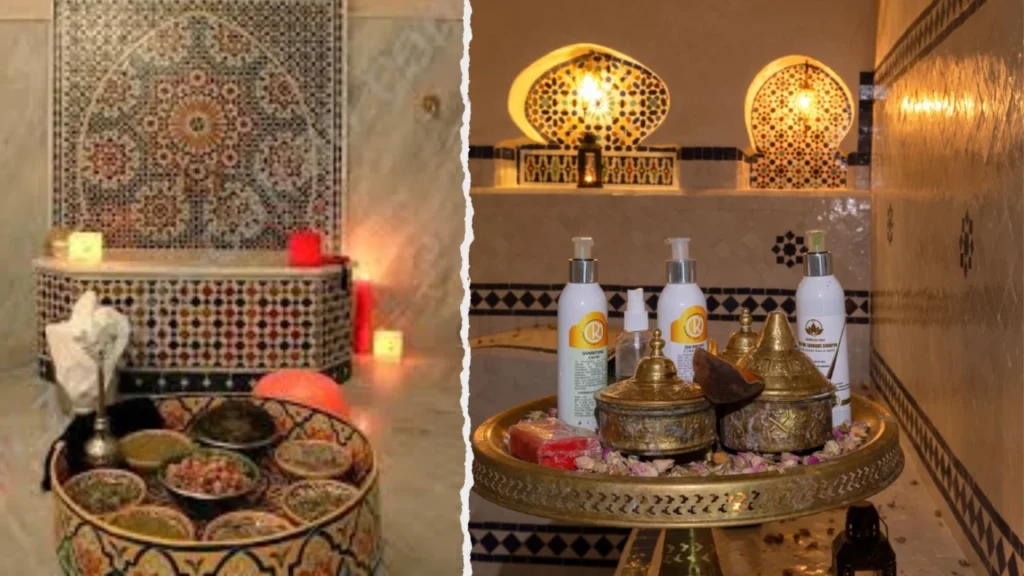

The secret to why the Moroccan skin ritual is so effective lies in the raw, organic materials sourced from the local landscape. These are not factory-made chemicals; they are traditional remedies that have been used for centuries.
| Ingredient | Origin | Primary Benefit | How it is Used |
| Savon Noir | Pressed Olives & Potash | Softens and prepares skin | Applied as a thick paste for 5–10 minutes before scrubbing. |
| Ghassoul (Rhassoul) | Atlas Mountains | Detoxifies and clarifies | Mixed with water or rose water to create a purifying body mask. |
| Rose Water | Kelaat M’Gouna (Valley of Roses) | Calms and tones | Sprinted on the face and body after the scrub to close pores. |
| Argan Oil | Souss Region | Hydrates and protects | Massaged into damp skin at the very end to lock in moisture. |
| Eucalyptus | Local Groves | Clears respiratory paths | Often infused into the Savon Noir to enhance the steam experience. |
Preparing for Your First Visit: A Practical Checklist
If you are feeling nervous about what happens in a Moroccan hammam, being prepared can make all the difference. While luxury spas provide everything, a local hammam in Casablanca, Morocco, or a neighborhood spot in any other city requires a bit of DIY spirit.
- The “Double Towel” Strategy: Bring one towel for the actual washing area and a second, bone-dry towel to leave in the changing room. There is nothing worse than trying to dry off with a damp towel in a humid room.
- Hydration is Key: The heat is intense. Drink plenty of water before you enter and keep a bottle nearby for when you emerge.
- Timing Your Visit: Local hammams are often busiest on Friday afternoons (before prayer) and Sunday evenings. For a quieter experience, try visiting on a weekday morning.
A Sensory Journey Across the Kingdom
When you look for the best hammam in Morocco, you are really looking for a sensory memory. In a hammam in Rabat, Morocco, you might hear the distant call to prayer echoing through the vents. In the best Moroccan hammam in Marrakech, you might be surrounded by the luxury of hand-carved cedar doors and marble fountains.
Every city adds its own signature. The best hammam in Fes often uses more traditional, heavier clays, while a hammam in Tangier might focus more on light, floral scents.
Regardless of the location, the result is always the same: you will leave the building feeling lighter, cleaner, and more connected to the Moroccan way of life than any museum visit could offer.
Hammam Myths vs. Reality
When travelers first ask what is a Hammam in Morocco, they often come with preconceived notions. Let’s clear up some common misconceptions to help you walk into your first session with confidence.
| Myth | Reality |
| It is just a standard shower. | It is a deep-tissue exfoliation. You will see “rolls” of dead skin being removed; this is normal and the goal of the process. |
| It is only for women. | Hammams are for everyone. However, they are strictly gender-segregated, either by having separate wings or different operating hours. |
| You must be completely naked. | Total nudity is rare in public spaces. Keeping your underwear or bikini bottoms on is the standard etiquette for both locals and tourists. |
| It is a quiet, meditative spa. | Local neighborhood hammams can be quite loud and social. Children play, and friends chat loudly. Only “luxury” spas offer a silent atmosphere. |
The Experience: Men vs. Women
While the steps of the ritual, steam, soap, and scrub remain consistent, the atmosphere can vary significantly depending on which section of the hammam in Morocco you are visiting.
The Women’s Hammam
In the women’s section, the environment is often very communal. Mothers bring their daughters, and it is a space where women can relax away from the public eye. If you are looking for the best Moroccan hammam in Marrakech as a female traveler, you’ll find that these spaces are incredibly supportive; if you look confused about how to use your kessa glove, a local woman will likely step in to help you without hesitation.
The Men’s Hammam
The men’s side tends to be a bit more functional but equally social. It is common for men to head to a hammam in Casablanca after work or a game of football. The scrubbing (performed by a male kessal) is famously vigorous, be prepared for a very firm touch that leaves your muscles feeling completely rejuvenated.
City Secrets: Unique Local Features
Every region uses what the land provides, making a hammam in Tangier feel slightly different from one in the south.
- Northern Freshness: In a hammam in Tangier, Morocco, you might find a heavier emphasis on citrus-infused waters to finish the ritual, reflecting the Mediterranean influence.
- Imperial Tradition: The best hammam in Fes often leans into the “old world” feel, with some historical bathhouses being hundreds of years old, featuring high domed ceilings that naturally circulate the steam.
- Capital Elegance: Finding a hammam in Rabat often means discovering quiet residential spots that pride themselves on cleanliness and a more reserved, peaceful environment.
Frequently Asked Questions about Moroccan Hammam
To wrap up your preparation, here are the most common questions travelers ask before their first visit to a hammam in Morocco.
Is a Moroccan hammam suitable for beginners?
Absolutely. While the process might feel different from a Western spa, it is very straightforward. If you are nervous, starting with a “tourist” or “luxury” best Moroccan hammam in Marrakech is a great way to ease in, as the staff will guide you through every step.
Do I need to be fully naked?
No. In almost all settings, you should keep your bikini bottoms or underwear on. While some local women might go fully nude in their private sections, men are strictly required to stay covered. Modesty is generally respected.
How long does a typical session last?
You should plan for at least 1.5 to 2 hours. This allows enough time for your pores to open in the steam, the exfoliation process, a clay mask, and the essential relaxation period with tea afterward.
Can couples go together?
In a traditional neighborhood hammam in Morocco, the answer is no, as they are gender-segregated. However, many modern luxury spas in cities like Marrakech and Casablanca offer private “couples’ rooms” where you can enjoy the experience together.
How often should I go?
Locals typically go once a week. For travelers, one session is usually enough to feel the benefits, but if you are on a long trip, a visit every 10 days will keep your skin glowing and your muscles relaxed.
What if the scrubbing feels too painful?
The kessa glove is coarse, and the scrubbing is meant to be vigorous. If it feels too intense, simply say “Shwiya, afak” (A little/gentle, please). The attendants are used to adjusting their pressure for visitors.
Should I tip the attendant?
Yes. If you are at a local hammam in Casablanca, Morocco, or any public bathhouse, it is customary to tip the kessal (scrubber) directly. A tip of 20 to 50 MAD is usually appropriate and much appreciated.
Can I go to a hammam if I have a sunburn?
It is generally not recommended. The scrubbing process is very deep and uses a coarse glove. If you have a sunburn from trekking or a desert tour, wait until your skin has fully healed, as the exfoliation will be too painful and could damage sensitive skin.
Is the water safe in a public hammam?
Yes, the water used in a hammam in Morocco is the same as the municipal water supply, which is heated to very high temperatures. While you shouldn’t drink it, it is perfectly fine for washing and bathing.
What should I do with my hair?
Most people wash their hair at the very end of the session. In a best hammam in Fes, Morocco, you might see locals using ghassoul clay as a natural shampoo. If you have long hair, it’s a good idea to bring your own conditioner, as the intense heat and steam can leave it feeling a bit tangled.
Is it okay to go to a hammam while on my period?
For hygiene reasons, it is usually recommended to wait until your cycle is over. In the high heat of a hammam in Casablanca, Morocco, or Marrakech, the blood flow can increase, and the communal nature of the space makes it less than ideal. If you do go, ensure you use internal protection.
Do I need to book in advance?
Local Hammams: No booking is needed. Just show up with your kit.
Luxury/Riad Spas: Yes, booking is essential, especially for a best Moroccan hammam in Marrakech, as they often only have a few private rooms and fill up quickly.
What if I have a tattoo?
There is no problem with having tattoos in a hammam in Morocco. It is quite common for tourists, and the scrubbing will not damage a healed tattoo; in fact, by removing dead skin, it might even make your tattoo look brighter!
Can I bring my camera or phone?
Strictly no. To respect the privacy of others and to protect your electronics from the extreme humidity and steam, phones and cameras should be left in your locker or at your hotel.
Final Tips for Your Journey
At the end of the day, knowing what is a Hammam in Morocco is only half the journey; the real magic happens when you step out into the cool evening air with skin that feels brand new. Whether you spent your afternoon in a gold-tiled hammam in Casablanca or shared stories with locals in a hammam in Rabat, you leave with more than just a clean glow. You leave with a deeper connection to the culture.
The hammam is a reminder that the best travel experiences aren’t found in a gift shop, but in the steam and tradition of a local bathhouse. From the best hammam in Fes to the hidden corners of the north, this ritual is the ultimate way to wash away the dust of the road.
If you are ready to experience these authentic traditions for yourself, there is no better way than with a local expert who knows every hidden gem. Book your trip with our Morocco-based Local travel agency to ensure your trip is filled with genuine cultural moments and seamless logistics. As a professional tour operator based in Merzouga, we specialize in creating personalized adventures that go beyond the typical tourist paths.
So, pack your kessa glove, embrace the heat, and prepare for the most refreshing chapter of your Moroccan adventure. Your body and your soul will thank you.