
Why Travel to Morocco? The Ultimate Guide to the Kingdom of Light
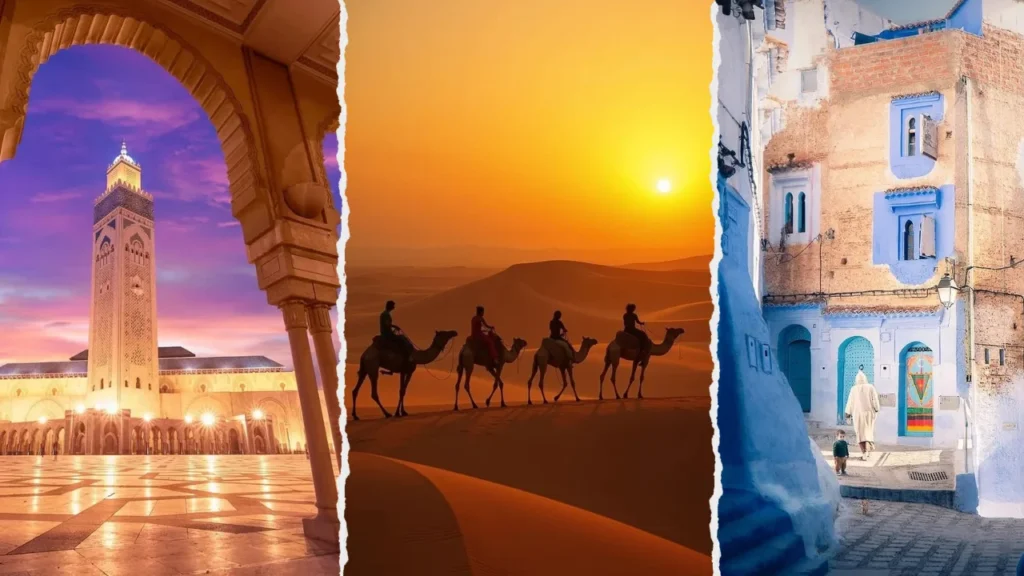
When people ask why travel to Morocco, they usually expect a conversation about magic carpets, bustling spice markets, and endless tea. While those iconic images are part of the charm, the modern traveler is looking for something much deeper: raw authenticity, genuine value for money, and a much-needed break from the digital noise of the West.
Morocco isn’t just a destination on a map; it is a sensory reset. It is one of the few places left on earth where you can stand in a medieval city in the morning and find yourself surrounded by the absolute silence of the Sahara Desert by sunset. Whether you are drawn by the “Superior” comfort of high-end boutique Riads or the rugged call of the Atlas Mountains, this country offers a rare opportunity to step back in time without losing the comforts of the present.
In this guide, we strip away the travel brochure clichés to give you the raw information on why this North African kingdom remains at the top of global travel lists. From debunking the pricing myths to navigating the southern “Southern Circuit,” here is everything you need to know about visiting the Kingdom of Light.
Table of Contents: Travel to Morocco
Why do people travel to Morocco?
The attraction lies in the diversity of the landscape. In most countries, you have to choose between mountains, the sea, or the desert. In Morocco, you can experience all three in a 4-day loop.
- The High Atlas Backbone: This isn’t just for hikers. It’s a cultural barrier that separates the Mediterranean lifestyle of the north from the pre-Saharan traditional life of the south.
- The Preservation of Craft: While the rest of the world moved to factory-made goods, Morocco kept its guilds. Whether it’s leather tanning in Fes or wood carving in Essaouira, you are seeing techniques that haven’t changed in 500 years.
- The “Superior” Standard: Travelers are moving away from 4-star “chain” hotels. They come to Morocco for Superior Accommodations, boutique Riads and desert lodges that offer high-end comfort while maintaining an organic, local feel.
The Pricing Myth: Why is it so expensive to travel to Morocco?
There is a lot of noise online about the cost. Let’s look at the facts. Morocco is only “expensive” if you fall into these three traps:
- Private Logistics: If you want a private driver who speaks your language and a modern 4×4 vehicle to cross the Atlas, the cost reflects the quality of the equipment and the expertise of the staff.
- Imported Luxuries: Alcohol and imported tech carry high taxes. If you want a Napa Valley wine in the middle of the dunes, you will pay a premium.
- The “Medina” Mark-up: Shops in the heart of the tourist districts have high overhead.
The Truth: Morocco offers incredible relative value. A “Superior” suite in a Moroccan Riad often costs half of what a standard room in a European city would, despite offering double the character and personalized service.
Strategic Travel
If you are planning a trip, move beyond the standard “tourist” keywords and look for these experiences:
- Sustainable Desert Tourism: Instead of just “visiting” the desert, look for camps that focus on low-impact footprints. The silence of the Sahara is its greatest commodity, don’t ruin it with loud crowds.
- The Atlantic Coastline: Beyond the cities, the coast from Agadir to Tangier offers world-class surfing and quiet fishing villages that feel untouched by time.
- Culinary Literacy: Don’t just eat the food; learn the ingredients. Morocco’s food is “expensive” in terms of time, it takes hours to prep a proper Tagine, but the cost of the ingredients remains low, making it a paradise for foodies on a budget.
Key Information for the Savvy Traveler
- Connectivity: 4G and 5G coverage is surprisingly strong, even in rural valleys, making it a top spot for “digital nomads.”
- Cultural Etiquette: Hospitality is a two-way street. A few words in the local language and a respect for privacy go a long way in opening doors to “real” local experiences.
- Transport: The “Al Boraq” high-speed train has revolutionized travel between Tangier and Casablanca, making the north of the country incredibly accessible.
The Southern Circuit: Beyond the Atlas
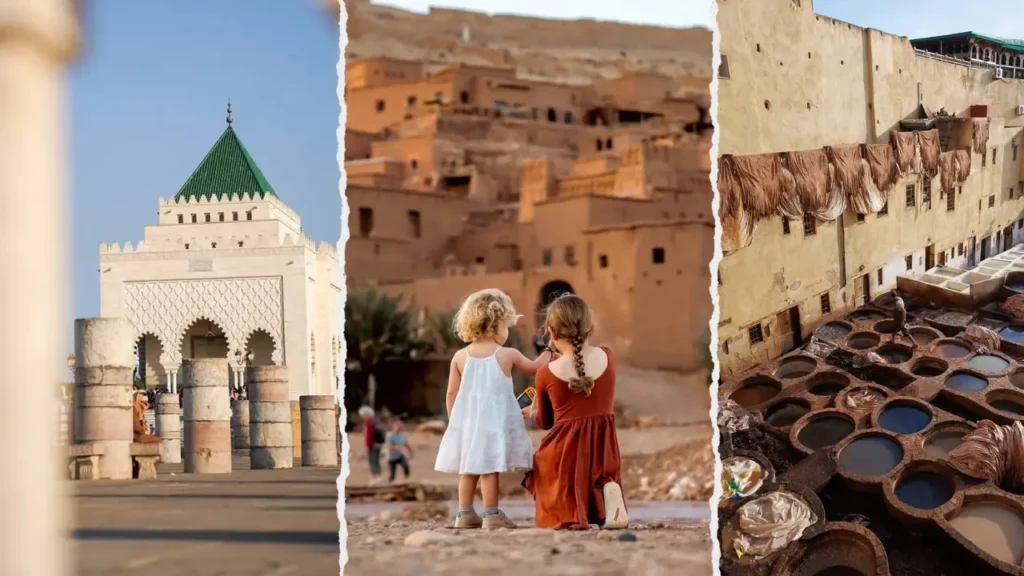
While northern Morocco is defined by its Mediterranean pulse and historic cities, the south is where the landscape truly opens up. If you are venturing past the mountains, you are entering the territory of the Kasbahs and the deep palm groves.
- The Draa Valley: This is a sprawling oasis of over 100 kilometers of date palms. It’s an essential stop for anyone wanting to see how ancient irrigation systems still support entire communities today.
- The “Hollywood” of Africa: Near Ouarzazate, you’ll find Ait Ben Haddou. This UNESCO World Heritage site isn’t just a film set for Gladiator or Game of Thrones; it is a masterclass in earthen clay architecture that stays naturally cool in the desert heat.
Navigating the Sahara Experience
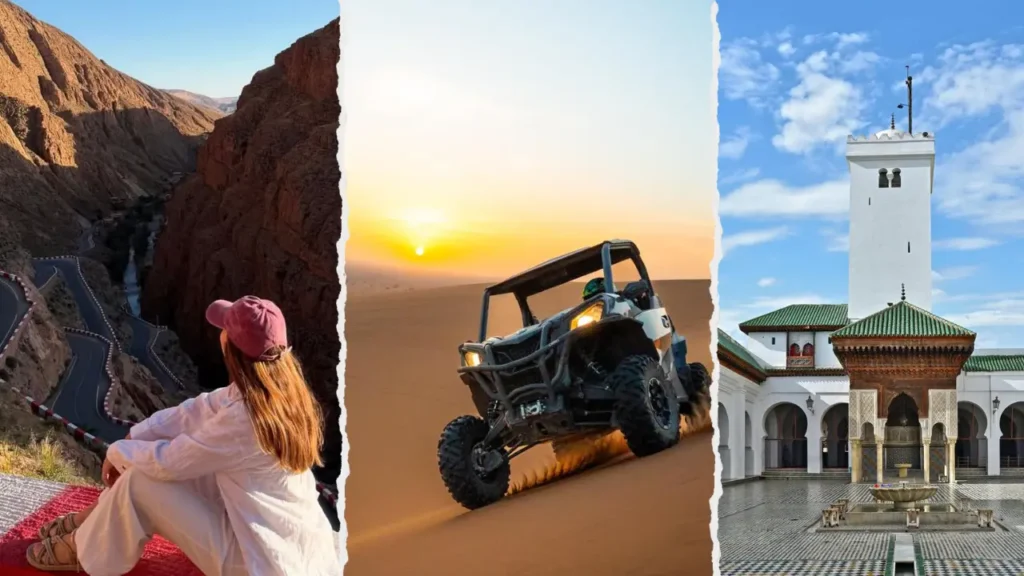
For many, the desert is the primary answer to why people travel to Morocco. However, not all desert experiences are equal. To get the most out of your journey to the dunes of Merzouga or Chegaga, keep these points in mind:
- Transport is Key: The drive from Marrakech to the dunes is roughly 9 to 10 hours. This is why private transport is often recommended over public buses; it allows you to stop in the Dades Gorge or the Todra Canyon along the way.
- The Superior Camp Advantage: Choosing a “Superior” camp means you aren’t just sleeping on the sand. You’ll have proper beds, private bathrooms, and traditional music around a campfire, amenities that justify the travel costs.
- The Languages of the Dunes: In the south, you will encounter the Berber (Amazigh) culture. Their language and traditions are distinct from the urban centers, offering a completely different perspective on Moroccan identity.
Practical Planning
To ensure your trip is seamless, consider these final logistical tips:
- Packing for Layers: Morocco is a land of “cold sun.” Even if it is 30°C during the day in the desert, temperatures can drop significantly at night. Always pack a warm layer, regardless of the season.
- The Friday Rule: Friday is a holy day. While most tourist areas stay open, some smaller shops or local markets in the medinas may close in the afternoon for prayer. Use this time to enjoy a traditional Friday Couscous.
- Digital vs. Cash: While major cities and “Superior” hotels accept cards, Morocco is still very much a cash-based economy in the rural areas and local souks. Always keep a supply of Dirhams for small purchases and tips.
The Architecture of the Soul: Riads and Kasbahs
When we talk about where to stay, the terms “hotel” or “4-star” often fall short. Morocco’s heritage is built on internal beauty.
- The Riad Logic: A Riad is designed around a central courtyard. This isn’t just for aesthetics; it’s a brilliant ancient cooling system and a way to ensure family privacy. Staying in a Superior Riad allows you to experience the silence that exists right in the middle of a chaotic city.
- The Kasbah Lifestyle: In the south, the “Kasbah” (fortified village) represents the strength of the community. These structures, built from straw and mud-brick, are sustainable and perfectly insulated against the harsh Saharan sun.
Beyond the “Expensive” Label: Investing in Expertise
Returning to the question of why it can feel expensive to travel to Morocco, it often comes down to the value of human expertise.
While you can navigate the cities alone, the real Morocco is unlocked by people. A multilingual driver or a local guide doesn’t just show you a monument; they act as a cultural bridge. They help you navigate the “hidden” prices, find the authentic workshops that don’t pay commissions to tour buses, and explain the complex history of the tribes that shaped the land. You aren’t paying for a service; you are paying for access.
Cultural Etiquette: The Unspoken Rules
To truly enjoy your time, you have to move at the Moroccan pace. Here is how to blend in:
- The Tea Protocol: If a shopkeeper or a local offers you mint tea, it isn’t always a sales tactic. It is a fundamental pillar of hospitality. Slowing down to drink that tea is often where the best conversations happen.
- Photography with Respect: Morocco is visually stunning, but remember that the medinas are living neighborhoods. Always ask before taking photos of people or their private stalls; a simple smile and a nod go a long way.
- The Art of the Deal: Haggling in the souks isn’t about “winning” or “losing.” It’s a social interaction. If you approach it with humor and a fair price in mind, it becomes a memorable part of the experience rather than a stressor.
Why Morocco Stays with You
People travel to Morocco because it challenges their perspective. It is a place where you can see the stars without light pollution, taste food that was harvested that morning, and walk through streets that have looked the same for a millennium.
It is a destination for the traveler who wants to feel small in the face of nature and big in the heart of a community. Whether you are seeking the “Superior” comfort of a high-end desert camp or the rugged adventure of a mountain trek, the country offers a version of itself to everyone who arrives with an open mind.
Morocco doesn’t just welcome you; it changes the way you see the world.
The Atlantic Contrast: Wind, Salt, and Stone
While the interior of the country is defined by heat and mountain peaks, the Atlantic coast offers a completely different rhythm.
- The Trade Wind Culture: Towns like Essaouira or Sidi Kaouki aren’t just for sunbathing. They are centers of a unique coastal energy where the Gnaoua music scene meets world-class kitesurfing. The air here is cool, the seafood is pulled straight from the wooden blue boats, and the pace of life is dictated by the tide rather than the clock.
- The Argan Forest: Between the coast and the mountains lies the only place on earth where Argan trees grow naturally. Seeing the “climbing goats” is a novelty, but the real story is the women’s cooperatives that produce the “Liquid Gold.” Supporting these local ventures is a direct way to ensure the benefits of travel stay within the community.
Navigating the “Tour Tax” vs. Real Value
When travelers ask why is it so expensive to travel to Morocco, they are often looking at the cost of “Westernized” convenience. If you want a vacation that looks exactly like a resort in Florida or Spain, you will pay a premium for that familiarity.
However, the real value is found in Mixed Accommodation strategies. By balancing a high-end, Superior Riad stay in the city with a more rugged, authentic guest house in the Atlas Valleys, you get a full spectrum of the Moroccan experience without the inflated price tag of “standard” luxury hotels. You are paying for the character of the building and the proximity to local life, which is a far better investment than a generic 5-star lobby.
The Language of Texture
Morocco is a tactile country. You don’t just “see” it; you feel it.
- The Berber Wool: In the mountains, the rugs aren’t just floor coverings; they are woven diaries of the women who made them, using symbols that date back to pre-Islamic times.
- The Tadelakt Walls: In the Riads, the walls are polished with lime and black soap to create a marble-like finish that is soft to the touch and naturally antimicrobial.
- The Cedarwood of the North: In the forests near Ifrane and the workshops of Fes, the scent of Atlas Cedar is the natural perfume of the streets.
A Journey, Not a Destination
Ultimately, people travel to Morocco because it is one of the few places left where the “path” hasn’t been completely paved over. There is still room for discovery. Whether it’s finding a hidden waterfall in the Ourika Valley or sharing a meal with a nomad family in the Hamada (black stone desert), the country rewards those who are willing to step out of their comfort zone.
You come for the photos, but you stay for the feeling of being somewhere that hasn’t lost its soul to the modern world. It is a land of layers, once you peel one back, you realize there are a thousand more waiting to be explored.
Table 1: Seasonal Planning by Region
Since Morocco has multiple climates (Desert, Mountain, and Coast), travelers need to know where to go at the right time.
| Region | Best Months | Why Visit Then? | Travel Vibe |
| Sahara Desert | Oct – Nov / Feb – Mar | Warm days, cool nights (Avoid summer heat). | Stargazing & Camel Treks |
| Imperial Cities | April – May / Sept – Oct | Mild weather for walking miles of medinas. | History & Photography |
| Atlantic Coast | June – August | Refreshing ocean breezes keep it cool. | Surfing & Seafood |
| Atlas Mountains | April – June | Spring flowers bloom; perfect for trekking. | Hiking & Village Life |
Table 2: The Budget Breakdown (Per Person)
This table answers your keyword: “Why is it so expensive to travel to Morocco?” by showing that it actually caters to every budget from simple to “Superior.”
| Category | Budget (Daily) | Accommodation Type | Transportation | Typical Meal |
| The Explorer | $30 – $50 | Local Guest Houses | Public Bus / Train | Street Food & Local Cafés |
| The Mid-Range | $80 – $130 | Traditional Riads | Private Taxis / Rental | Sit-down Tagine Restaurants |
| The Superior | $250+ | Luxury Boutique Riads | Private Driver (4×4) | Fine Dining & Private Chefs |
Key Takeaways for the Table
- The “Secret” Season: January and February are the cheapest months for travel, but be prepared for cold nights in the desert and mountains.
- Logistics Matter: Notice that the “Superior” budget is higher largely due to Private Drivers. Because the landscape is so vast, a professional driver who speaks your language is the biggest investment travelers make for comfort.
- Dining Value: Even in the “Superior” category, food remains one of the best values in the country compared to Europe or the USA.
Common Questions About Traveling to Morocco: Your Essential Guide
Why should I travel to Morocco instead of other Mediterranean destinations?
Unlike many European coastal spots that focus solely on beaches, Morocco offers a multi-layered experience. You can visit a medieval city (Fes), a high-altitude mountain range (The Atlas), and the world’s largest hot desert (The Sahara) all in one week. It is a destination for people who want a balance of physical adventure and deep cultural history.
Why do people travel to Morocco for the Sahara Desert?
The Sahara is the ultimate escape from modern noise. Most people travel to the dunes of Merzouga or Zagora to experience the “Deep Silence.” Staying in a Superior Desert Camp allows you to see the Milky Way with zero light pollution while enjoying the comfort of a private suite in the middle of the sand.
Why is it so expensive to travel to Morocco sometimes?
Morocco is only expensive if you prioritize private logistics and luxury heritage.
Private Transport: Hiring a professional driver and a 4×4 vehicle for long distances across the mountains is a major cost.
Boutique Riads: Traditional houses converted into luxury stays have limited rooms, making them high in demand.
Authenticity: Real, hand-made crafts (like Berber rugs or cedar wood) are priced according to the weeks of labor involved, not factory prices.
What is the best way to get around the country?
For the cities in the North (Tangier, Rabat, Casablanca), the High-Speed Train (Al Boraq) is the best option. However, if you want to see the “Real Morocco” in the South, private transport or a rental car is essential. The most beautiful spots, like the Dades Valley or remote Oases, are not accessible by train.
Is it safe for solo travelers?
Yes, Morocco is a very hospitable country. However, the medinas can be like a labyrinth. We recommend that solo travelers hire a local guide for their first day in cities like Fes or Marrakech to get comfortable with the layout and the local “hustle” of the markets.
What should I pack for a Moroccan trip?
Morocco is a land of extremes. You need layers.
Daytime: Light, breathable fabrics (linen or cotton) to stay cool.
Evening: Even in the desert, temperatures can drop sharply at night, so a warm jacket or wool sweater is necessary.
Modesty: Out of respect for local traditions, it is best to keep shoulders and knees covered when visiting rural villages or religious sites.
Do I need to speak Arabic or French?
While the official languages are Arabic and Tamazight, you will find that English is widely spoken in the tourism industry. In the North, French is very common, and in the North/Southwest, you may even hear Spanish. Most “Superior” service providers and drivers are multilingual.
Conclusion: Why You Should Visit Morocco
Understanding why travel to Morocco comes down to the unique combination of ancient heritage and modern accessibility. The country provides a strategic gateway for travelers seeking a sensory reset through its diverse landscapes, ranging from the high-altitude Atlas peaks to the silence of the Sahara dunes. Because the geography is vast, navigating the “Southern Circuit” or the “Imperial Cities” requires a focus on reliable logistics and quality infrastructure.
If you are ready to explore Morocco with a professional structure, you can book Morocco tours through our agency. We focus on providing Superior Accommodations and multilingual drivers who act as your cultural bridge across the country. Our expertise ensures that you avoid common travel traps while gaining direct access to the most authentic regions of the Kingdom.
[Contact Exploring Morocco Trips to start your tour]