
Yalla Habibi: What It Actually Means and When to Use It
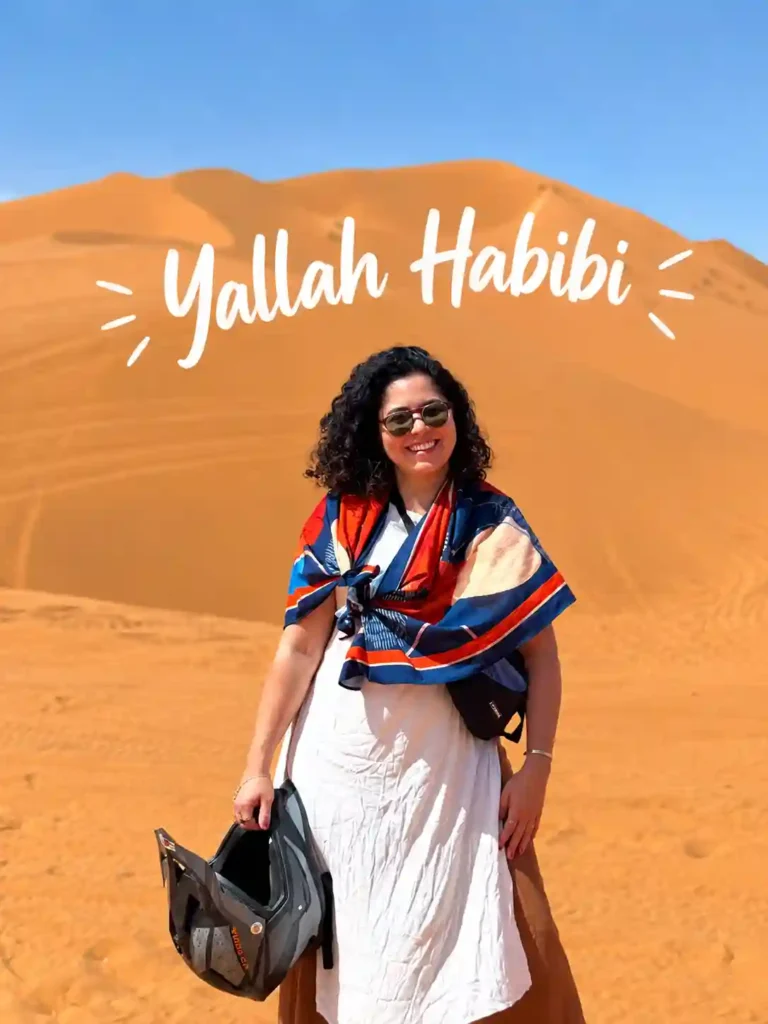
If you’ve spent any time around Arabic speakers, watched Arabic music videos, or scrolled past a certain viral song, you’ve almost certainly heard “yalla habibi” at some point. It’s one of those phrases that gets thrown around constantly, in real conversation, in songs, in memes, but rarely gets properly explained. Here’s what it actually means, where it comes from, and how (and when) to actually use it yourself, including how it sounds a little different once you cross into Morocco.
Quick Facts About “Yalla Habibi”
| Fact | Detail |
|---|---|
| Literal meaning | “Let’s go/come on, my love” |
| Word 1 (Yalla) | Means “let’s go,” “come on,” or “hurry up” |
| Word 2 (Habibi) | Means “my love,” “my dear,” or “darling” (male form) |
| Female equivalent | Habibti |
| Language | Arabic, used across the Arab world |
| Formality level | Casual and affectionate, used with friends, family, and loved ones |
| Root word | Habibi comes from “hub” (حب), meaning “love” |
Breaking Down the Two Words
To really understand the phrase, it helps to look at each word separately, since together they create something slightly more than the sum of their parts.
Yalla is one of the most-used words in the entire Arabic language, and it doesn’t have one single perfect English translation. Depending on context, it can mean “let’s go,” “come on,” “hurry up,” or even just “okay” as a way of agreeing to something. It’s the kind of word Arabic speakers use dozens of times a day without even thinking about it, said twice in a row (“yalla, yalla”) it often just means “yes, right, let’s do it.”
Habibi literally translates to “my love,” “my darling,” or “my dear,” and it comes from the Arabic root “hub” (حب), meaning love. It’s used constantly, and not always romantically, parents say it to children, friends say it to each other, and it even gets used with near-strangers as a warm, friendly touch, similar to how someone might casually say “buddy” or “love” in English without meaning anything deeply romantic by it. Habibti is the female version, used when addressing a woman or girl.
So What Does “Yalla Habibi” Actually Mean?
Put together, “yalla habibi” translates most naturally to “come on, my love” or “let’s go, dear.” It’s an encouragement, a nudge, said with genuine warmth rather than impatience. A parent might say it to a child dragging their feet on the way out the door. A friend might say it while hyping up the group to finally leave for dinner. A partner might say it while pulling their significant other onto the dance floor. The phrase carries real affection, it’s not a cold command, it’s closer to “come on, darling, let’s get moving” in tone.
How and When People Actually Use It
The phrase shows up constantly across everyday Arabic conversation, and it’s genuinely flexible depending on the moment.
To motivate someone: “Yalla habibi, we’re going to be late,” said to hurry a friend or family member along without sounding harsh about it.
To express excitement or agreement: “Yalla habibi!” shouted at a party or celebration, more of a joyful exclamation than a literal instruction to leave.
As a term of casual affection: Simply tacked onto the end of a sentence, “thanks, habibi” or “okay, habibi,” the same way someone might say “thanks, love” in casual British English.
During celebrations and music: The phrase is genuinely everywhere in Arabic pop music and has crossed over into mainstream Western pop culture too, showing up in song titles and lyrics well beyond the Arab world, part of why so many non-Arabic speakers recognize the phrase even without knowing exactly what it means.
Is It Only Used Romantically?
No, and this is probably the biggest misconception people have coming into the phrase. While “habibi” absolutely gets used romantically, between partners, in love songs, in text messages, it’s used just as often in a completely platonic, friendly way. A father might call his young son “habibi.” Two male friends might greet each other with “habibi” and a hug. A shopkeeper might casually call a customer “habibi” while making small talk. Context and tone matter far more than the word itself in determining whether it’s romantic, familial, or just friendly.
How This Sounds in Morocco Specifically
Since Morocco’s everyday spoken language, Darija, blends Arabic with Amazigh (Berber) and French influence, both “yalla” and “habibi” are used regularly in Morocco too, though Moroccan Darija carries its own flavor and additional expressions alongside them. You’ll hear “yalla” used constantly in Moroccan daily life, hurrying a taxi along, encouraging a group to head to dinner, or simply agreeing to a plan. “Habibi” (or “habibti” for a woman) shows up in casual, warm conversation the same way it does elsewhere in the Arab world, though Moroccans also lean on their own local terms of affection, like “hbibi” (a Darija variation) or “sahbi” (meaning “my friend”), depending on the relationship and region. If you’re traveling through Morocco and want to sound a little more local, picking up a handful of these everyday Darija expressions, alongside “yalla habibi,” genuinely helps break the ice with guides, shopkeepers, and new friends along the way.
A Few Related Phrases Worth Knowing
If “yalla habibi” has you curious about picking up more casual Arabic (or Darija) expressions, a few related phrases come up just as often in daily conversation.
Habibi al-omor, roughly “love of my life” or “love of my existence,” a more intense, romantic version reserved for someone genuinely special.
Ya rohi, meaning “oh my soul,” another affectionate term used between close loved ones.
Shukran habibi, meaning “thank you, my dear,” a warm way of expressing gratitude to someone close.
Yalla bina, meaning “let’s go” (as a group), a slight variation used when addressing more than one person or including yourself in the group heading somewhere.
How to Pronounce “Yalla Habibi” Correctly
Getting the pronunciation right isn’t complicated, but a few small details help you sound more natural. “Yalla” is pronounced YAH-lah, with emphasis on the first syllable and a soft, open “a” sound, not “yellow” and not “yah-LAH.” “Habibi” is pronounced ha-BEE-bee, with the stress on the middle syllable, the double “b” sound is held slightly longer than in English, and the “ee” sounds are clean and short rather than drawn out. Said together, the phrase flows fairly naturally: YAH-lah ha-BEE-bee, with a slight rise in tone on “habibi” if you’re saying it warmly or playfully, and a flatter, quicker delivery if you’re just casually hurrying someone along.
Common Mistakes Non-Native Speakers Make
A few small missteps are worth knowing before you start using the phrase yourself. Using “habibi” with someone significantly older or in a formal, professional context can come across as overly familiar, it’s a warm, casual word, not one used with a boss or an elder you don’t know well. Mixing up habibi and habibti is another common slip, remembering that habibi addresses a male and habibti addresses a female avoids an easy, easily-corrected mistake. And overusing the phrase in a way that feels performative rather than natural, tacking it onto every single sentence just because it sounds fun, can come across as trying too hard rather than genuinely adopting the expression, native speakers use it often, but naturally, woven into conversation rather than forced into it.
Why “Yalla Habibi” Has Spread Into Global Pop Culture
The phrase’s reach well beyond Arabic-speaking countries isn’t an accident, it reflects decades of cross-cultural musical influence. Arabic pop and fusion music has repeatedly found international audiences, and phrases like “yalla habibi” carry an inherent rhythm and warmth that translates well even to listeners who don’t speak Arabic, part of why versions and variations of the phrase have shown up in music scenes as far apart as Israel, Turkey, and even South India’s Malayalam-language music industry, each adapting the phrase’s energy into their own cultural and linguistic context. This kind of cross-pollination is a genuinely interesting example of how a simple, warm expression can travel across language barriers largely on rhythm and feeling alone, long before a listener necessarily learns what the words technically mean.
Similar Warm Expressions in Other Languages
If the warmth behind “yalla habibi” resonates with you, it’s worth knowing similar expressions exist across plenty of other languages and cultures, each capturing a similar blend of encouragement and affection. Spanish has “vamos, cariño” (let’s go, darling), Italian offers “dai, amore” (come on, love), and Hebrew, which shares deep linguistic roots with Arabic, uses “yalla” in almost exactly the same way, a direct borrowing that reflects the close historical relationship between the two languages. Recognizing this pattern, nearly every language seems to have its own version of “let’s go, my dear”, says something genuinely universal about how people motivate and express affection for each other at the same time.
How Do You Respond to “Yalla Habibi”?
If someone says “yalla habibi” to you, there’s no fixed, required response, the natural reply usually just matches the energy of the moment. If it’s a call to hurry up or head somewhere, a simple “yalla” or “okay, coming” works fine. If it’s said warmly, as a term of affection during a conversation, responding with “habibi” or “habibti” back is a natural, friendly way to mirror the warmth. Among close friends, it’s also common to simply laugh and repeat it back, “yalla habibi!”, especially in an excited or celebratory moment, since the phrase often works more as a shared expression of energy than a literal question needing an answer.
Using “Yalla Habibi” in Texts and Social Media
The phrase has become genuinely common in text messages, captions, and comments, both among native Arabic speakers and people who’ve simply picked it up from music and social media. It works well as a casual sign-off (“okay, yalla habibi, see you soon”), a caption under a fun group photo, or a comment expressing excitement or support under a friend’s post. Because it carries such an upbeat, warm tone, it translates naturally into these more casual, written contexts, even for people who don’t speak Arabic fluently but have picked up the phrase from music, travel, or online culture.
Moroccan Darija vs. Gulf Arabic: Does the Phrase Change?
While “yalla” and “habibi” are both understood and used across the Arabic-speaking world, the surrounding conversation style does shift by region, and Morocco’s Darija has its own particular rhythm. In Gulf Arabic (used in countries like Saudi Arabia, the UAE, and Kuwait), “yalla habibi” tends to appear in a fairly similar form to what’s described throughout this guide. In Moroccan Darija, the same phrase is understood and used, but you’ll also hear it blended with distinctly Moroccan expressions and a faster, French-influenced cadence, part of why Darija can sound noticeably different to an ear used to Gulf or Egyptian Arabic, even when using the exact same core phrase. For a Morocco trip specifically, using “yalla habibi” will absolutely be understood and appreciated, just don’t be surprised if the rest of the conversation around it sounds quite different from Arabic you might have picked up from Gulf-based shows or music.
Frequently Asked Questions About “Yalla Habibi”
What does “yalla habibi” mean in English? It translates most naturally to “come on, my love” or “let’s go, dear,” combining an encouragement to move or act (yalla) with a warm term of affection (habibi).
Is “yalla habibi” romantic? It can be, but it’s just as often used platonically between friends, family members, or even casual acquaintances. Context determines the tone far more than the words themselves.
What’s the difference between habibi and habibti? Habibi is used when addressing a male, while habibti is the female equivalent, both mean “my love” or “my dear.”
Is “yalla habibi” used in Morocco? Yes, both words are used regularly in Moroccan Darija, alongside Morocco’s own additional local expressions of affection and encouragement.
Can I say “yalla habibi” to someone I just met? Generally, yes, in casual, friendly settings, it’s a warm, low-stakes phrase rather than a deeply intimate one, though reading the context and relationship still matters.
Why do I hear “yalla habibi” in songs and pop culture? The phrase has become genuinely popular in Arabic music and has crossed over into mainstream Western pop culture, appearing in song titles and lyrics well beyond Arabic-speaking audiences, which is part of why the phrase feels so widely recognized today.
Final Thoughts
“Yalla habibi” is a small phrase that carries a genuine warmth once you understand what’s actually being said, an encouragement wrapped in affection, used constantly across the Arab world in everything from a parent hurrying a child along to a friend celebrating at a party. If you’re planning a trip to Morocco or anywhere in the Arabic-speaking world, learning a phrase like this, and using it with the same warmth it’s intended, is a small but genuine way to connect with the culture rather than just observing it from the outside.
Ready to Hear It Used in Real Life?
There’s no better way to actually experience phrases like “yalla habibi” in context than hearing them used naturally by guides, drivers, and new friends on a trip through Morocco.
- Tours from Marrakech for travelers starting their Morocco trip in the country’s most iconic city.
- Morocco Desert Tours covering the full range of routes and experiences across the country.
- Tours from Fes for a route through the imperial cities and beyond.
- Tours from Ouarzazate for a shorter path into the south.
- Tours from Tangier for trips starting in the north.
- Tours from Casablanca for travelers wanting a custom route starting from Morocco’s largest city.
Want to pick up more everyday Darija phrases before your trip? Contact us and we’ll help you plan a trip where the culture, language included, feels just as memorable as the sights.