
Morocco vs Tunisia: An Honest Comparison for Your North Africa Trip
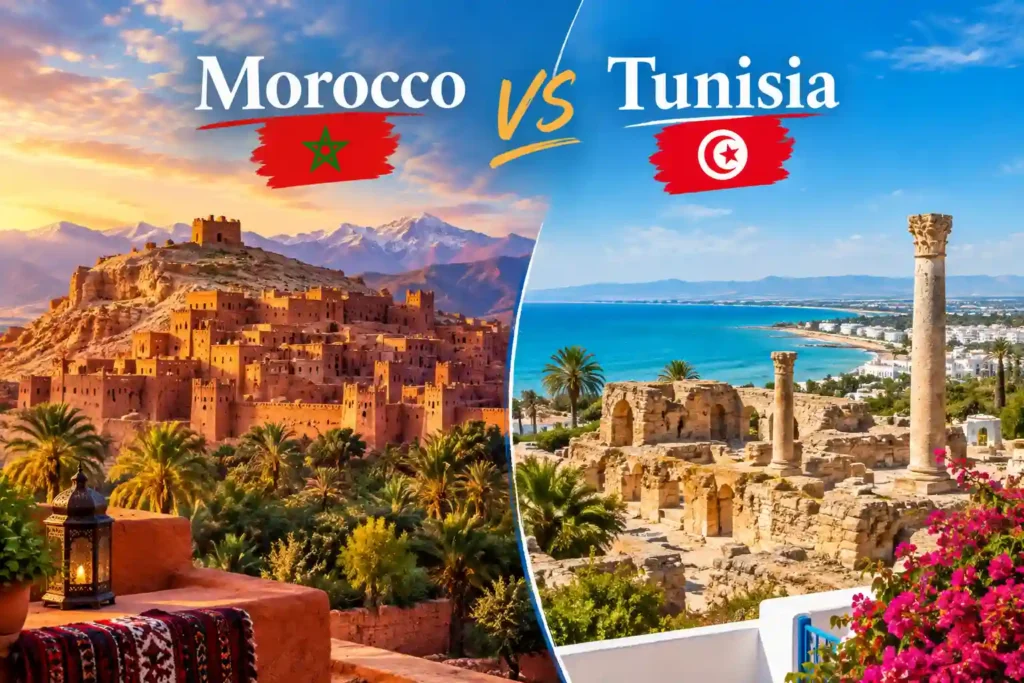
If you’ve narrowed your next trip down to North Africa, there’s a good chance Morocco and Tunisia are both sitting on your shortlist, and for good reason. They share a lot on paper: Arab-Berber culture, French colonial history, Mediterranean and desert landscapes, and a reputation for warm hospitality and excellent food. But once you actually start planning, the two countries pull in noticeably different directions: different pace, different costs, different strengths. This guide breaks the comparison down honestly: cost, culture, food, beaches, the desert, safety, and logistics, so you can figure out which one actually fits the trip you want, or whether you should be planning both.
Quick Comparison at a Glance
| Category | Morocco | Tunisia |
|---|---|---|
| Overall cost | Moderate, wider range from budget to luxury | Generally cheaper, especially at the budget tier |
| Trip length needed | 10-14+ days to see the highlights properly | Can be covered comfortably in 7-10 days |
| Coastline | Mostly Atlantic, cooler water, strong surf | Mediterranean, calm and warm, better for swimming |
| Sahara Desert | Larger, more dramatic dunes (Merzouga, Zagora) | Smaller-scale desert access, often paired with beach time |
| Mountains | High Atlas, genuine trekking and altitude | Gentler Dahar plateau, less dramatic |
| Signature cities | Marrakech, Fes, Chefchaouen | Tunis, Sidi Bou Said, Djerba |
| Distance/logistics | Bigger country, more internal travel time | Compact, easy to cover without internal flights |
Cost: Which Country Actually Stretches Your Budget Further?
Both countries are considered good value by Western standards, but they win in different places. At the strict budget level, Tunisia tends to run somewhat cheaper, basic guesthouses, local meals, and short taxi or bus rides generally cost a bit less than the equivalent in Morocco, and simple backpacker-style travel is very achievable on a tight daily budget. Morocco, on the other hand, often delivers more noticeable value once you move into the mid-range and above, a modestly priced riad in a Moroccan medina frequently comes with genuine architectural character, carved plasterwork, a courtyard, sometimes a small plunge pool, that a similarly priced hotel room in Tunisia typically doesn’t match. If your travel style leans firmly budget and simple, Tunisia usually costs less overall. If you’re spending a bit more per night anyway, Morocco tends to feel like better value for that spend.
Getting Around: Size and Logistics Matter More Than People Expect
This is one of the most practical differences between the two, and it genuinely affects how much time you’ll spend traveling versus sightseeing. Tunisia is considerably smaller and more compact, and most of its major highlights, Tunis, Carthage, Sidi Bou Said, Hammamet, and the desert access points, can realistically be covered in about a week without much internal travel fatigue. Morocco is a bigger country, and a proper trip covering Marrakech, Fes, the Atlas Mountains, and a Sahara excursion involves longer overland travel days between stops, which is part of why most Morocco itineraries run 10 to 14 days or more to feel unrushed. Neither approach is wrong; it depends on whether you want a tightly packed week or a slower, more sprawling multi-region trip.
There’s also no simple land route between the two countries for travelers wanting to combine both in one trip, since there are no direct flights between Tunis and Morocco’s major cities, a combined itinerary generally means connecting through a European hub like Madrid, Paris, or Lisbon, which is worth factoring in if you’re considering both destinations in a single longer trip.
Beaches and Coastline: Two Very Different Seas
If beach time is a priority, this comparison tips fairly clearly toward Tunisia. Its Mediterranean coastline is calm, warm, and genuinely well suited to swimming, with long, shallow, purpose-built beach areas around Djerba, Hammamet, and Sousse that stay busy with sunbathers rather than surfers. Morocco’s coastline, by contrast, is mostly Atlantic, which means cooler water, stronger currents, and a swell that’s fantastic for surfing in spots like Taghazout but considerably less relaxing for a simple swim. If a classic, easy beach holiday is genuinely part of what you’re after, Tunisia’s coast does that job better. If you want dramatic cliffs, fishing-port charm, and a surf culture instead, Morocco’s Atlantic towns like Essaouira and Taghazout deliver a different but equally worthwhile coastal experience.
The Sahara Desert: Bigger in Morocco, More Accessible in Tunisia
Both countries offer a genuine Sahara Desert experience, but the scale and logistics differ meaningfully. Morocco’s desert access, primarily around Merzouga and Zagora, features some of the most dramatic dune landscapes in North Africa, the Erg Chebbi dunes reach heights that create a genuinely striking “sea of sand” effect, and a multi-day desert excursion from Marrakech or Fes has become one of the signature experiences of a Morocco trip. Tunisia’s desert regions are typically easier to combine with a shorter, beach-focused itinerary, since the distances involved are considerably smaller, but the dunes themselves are generally less towering and dramatic than Morocco’s. If the desert is the main reason for your trip, Morocco generally offers the more memorable, immersive version of that experience; if it’s one stop among several on a shorter, more compact trip, Tunisia makes it easier to fit in without dedicating several full days to the journey there and back.
Culture, Cities, and That “Wow Factor”
This is subjective, but it’s worth being honest about. Morocco’s signature cities, Marrakech’s Jemaa el-Fnaa, Fes’s ancient medina, the blue streets of Chefchaouen, tend to leave a stronger, more immediate visual impression on first-time visitors, and this “wow factor” is a big part of why Morocco has built such a strong reputation as a bucket-list destination. Tunisia’s cities offer a different kind of appeal, Tunis has a genuinely liveable, less overwhelming urban character, Sidi Bou Said’s blue-and-white hillside village is beautiful in a calm, more European-Mediterranean way, and Carthage’s ancient ruins connect directly to a specific, fascinating chapter of ancient history. Neither is objectively better, but travelers hoping for the kind of intense, layered, all-senses experience Morocco’s medinas are known for should generally lean toward Morocco, while those wanting a gentler, easier pace paired with genuine historical depth may find Tunisia the more comfortable fit.
Food: Two Distinct Culinary Traditions
Both countries take food seriously, but the specific dishes and dining style differ. Morocco is known internationally for tagine (slow-cooked stew in its distinctive clay pot), couscous, pastilla (a sweet-savory pie), and an elaborate, ritualistic approach to mint tea. Tunisian cuisine leans grocer overall, built around dishes like brik (a crispy fried pastry, often with egg), couscous with fish or lamb, and a much more prominent use of harissa, the fiery chili paste that shows up in nearly everything. Portion for portion, dining out is generally somewhat cheaper in Tunisia, while Morocco offers a wider range of dining experiences, from simple street food stalls to elaborate riad dinners built around multi-course traditional menus.
Safety: How the Two Actually Compare
Both countries are considered generally safe for tourists who take normal precautions, avoiding poorly lit areas at night, staying alert in crowded markets, and keeping an eye on current government travel advisories before departure. Morocco is often perceived as slightly more stable overall for international travelers, partly reflecting its heavier, longer-term investment in tourism infrastructure and security around major destinations. Tunisia is safe across its main cities and tourist zones, though it’s worth knowing that some official travel advisories flag specific interior and border regions, generally far from the standard tourist circuit, as areas to avoid or approach with extra caution. For the vast majority of travelers sticking to well-established routes in either country, day-to-day safety concerns are similar and manageable with ordinary common sense.
Alcohol and Nightlife
If nightlife and easy access to alcohol matter to your trip, Tunisia generally has the edge. Alcohol is more widely available there, including in ordinary restaurants, whereas in Morocco it’s more commonly restricted to licensed hotels, tourist-facing restaurants, and specific liquor shops rather than being freely available everywhere. Tunisia’s beach resort towns also tend to have a livelier, more conventional nightlife scene built around their tourism industry, while Morocco’s evening culture, particularly outside Marrakech’s rooftop bar scene, leans more toward mint tea, music, and medina wandering than late-night clubbing.
Which One Should You Actually Choose?
If you have a single week and want a straightforward, lower-logistics trip with strong beaches, ancient Roman history, and a gentler pace, Tunisia is generally the easier, more efficient choice. If you have 10 days or more and want maximum variety in a single trip, dramatic mountains, an unforgettable Sahara excursion, iconic Medina cities, and a wider range of landscapes and experiences packed into the itinerary, Morocco is generally considered the more complete, memorable destination, even though it asks for more travel time and typically a slightly bigger budget to do it justice. Some travelers, especially those planning a longer North Africa trip, choose to do both, just be prepared for the fact that combining them in one journey means routing through a European hub rather than a direct flight or land crossing.
Visa Requirements: Which Is Easier to Enter?
Entry requirements are broadly similar for most Western travelers, though it’s always worth double-checking your specific nationality before booking, since rules can shift. Most visitors from the US, UK, EU, and Canada can enter Morocco visa-free for tourism purposes for up to 90 days. Tunisia offers similarly relaxed entry for many of the same nationalities, generally allowing visa-free stays for a set period for tourism, though the exact allowed duration can vary more by nationality than Morocco’s. Neither country presents a significant visa hurdle for most Western travelers, so this factor rarely ends up being the deciding one between the two.
Weather and Climate: When Each Country Shines
Timing matters more than people expect with both destinations. Morocco’s climate varies dramatically by region and season, coastal cities like Essaouira stay mild year-round, inland cities like Marrakech and Fes get genuinely hot in summer, and the Sahara swings between intense daytime heat and cold desert nights. Spring (March-May) and autumn (September-November) are generally the best windows for a Morocco trip that includes both cities and the desert. Tunisia’s Mediterranean climate is somewhat gentler and more predictable, hot, dry summers ideal for the beach, and mild, rarely extreme winters, meaning its peak beach season (June-August) lines up conveniently with when many travelers actually have time off work or school. If your trip is beach-first, Tunisia’s summer window works well. If your trip includes desert and mountain stops, Morocco’s shoulder seasons are the smarter target.
Shopping: Souks, Carpets, and Local Crafts
Both countries offer excellent shopping, but the experience and specialties differ. Morocco’s souks, especially in Marrakech and Fes, are larger, more elaborate, and generally more central to daily local life, hand-knotted Berber rugs, leather goods, ceramics, and silver jewelry are the standout categories, and bargaining is an expected, almost theatrical part of the process. Tunisia’s markets, particularly in Tunis and around Djerba, are generally smaller and less overwhelming, with a strong focus on ceramics (especially from Nabeul), woven baskets, and olive oil products, and bargaining culture, while present, tend to feel somewhat less intense than in Morocco’s biggest medinas. If shopping and craft-hunting is a major part of your trip’s appeal, Morocco generally offers a deeper, more varied experience, though Tunisia’s markets are easier to navigate for travelers who find Morocco’s medinas overwhelming.
Family Travel: Which Country Is Easier With Kids?
Both destinations can work well for family trips, but they follow slightly different family travel styles. Tunisia’s compact size, calm Mediterranean beaches, and shorter travel distances between stops make it a genuinely easier logistical choice for families with young children, with less time in transit and more time settled at a beach resort. Morocco’s family appeal leans more toward adventure, camel treks, kasbahs to explore, and mountain villages, which tend to suit families with older children or teenagers better than toddlers, given the longer driving days a full Morocco itinerary usually involves. Neither country is a poor choice for families; it’s more a question of whether you want a relaxed, beach-based family week (Tunisia) or a more active, varied family adventure (Morocco).
Honeymoons and Romantic Trips
Both countries show up regularly on honeymoon lists, and again, they lean toward different moods. Morocco tends to suit couples looking for a sense of discovery and drama: a private riad with a rooftop terrace in Marrakech, a night camping under Sahara stars, a scenic drive through the Atlas Mountains, experiences built around adventure and atmosphere rather than pure relaxation. Tunisia leans more toward classic romantic ease, beachfront resorts in Hammamet or Djerba, calm pacing, and a lower-key, lower-logistics trip that leaves more room for simply relaxing together rather than covering ground. Couples who want their honeymoon to feel like an adventure often gravitate toward Morocco; those who want it to feel like an actual rest tend to lean Tunisian.
Combining Both: Is a Two-Country Trip Worth It?
For travelers with three weeks or more, combining Morocco and Tunisia into a single extended North Africa trip is genuinely possible and increasingly popular, though it requires a bit of extra planning since there’s no direct flight or simple land route between them. A common approach splits the trip roughly in half, spending 10-12 days in Morocco covering the imperial cities and a Sahara excursion, then flying through a European hub like Madrid, Paris, or Lisbon to spend another 7-10 days in Tunisia focused on the coast and Carthage’s ancient ruins. It’s more logistically involved than picking one destination, but it does let you experience both the Atlantic and Mediterranean sides of North Africa’s coastline, and both the Sahara’s biggest dunes and the region’s Roman history, within a single extended journey.
Language: What You’ll Actually Hear on the Ground
Both countries share Arabic and French as dominant languages, a legacy of their shared colonial history, but the everyday linguistic texture differs a bit. In Morocco, Moroccan Arabic (Darija) dominates daily conversation, alongside Amazigh (Berber) languages in many rural and mountain regions, with French widely used in business, education, and tourism, and English increasingly common in major tourist hubs like Marrakech. Tunisia’s linguistic landscape is somewhat more uniformly bilingual, Tunisian Arabic and French are both used extensively and interchangeably in daily life, particularly in Tunis and coastal tourist areas, and English is generally well understood in hotels and resorts, if slightly less widespread outside them than in Morocco’s biggest tourist cities. For English-only speakers, both countries are manageable, but Morocco’s bigger, more internationally visited cities tend to have a slight edge in English proficiency among younger staff and guides.
Internet and Connectivity for Travelers
Staying connected is straightforward in both countries these days. Morocco offers strong 4G coverage across its major cities and tourist routes, with prepaid SIM cards and tourist eSIMs readily available at airports from providers like Maroc Telecom, Orange, and Inwi, and reasonably good coverage even reaches Sahara desert camps in most cases. Tunisia’s mobile network coverage is similarly solid across its more compact geography, and given the shorter distances between destinations, connectivity gaps are less of a concern simply because you’re rarely as far from a population center as you can be in Morocco’s more remote mountain or desert regions. Neither country presents real connectivity headaches for modern travelers, though Morocco’s more spread-out, remote stops (deep desert camps, high mountain villages) are more likely to see brief signal gaps than anywhere in Tunisia’s smaller footprint.
Dress Code and Modesty: How Similar Are They Really?
Both countries are Muslim-majority nations with broadly similar expectations around modest dress, though the practical experience varies by location within each. In Morocco, modest dress (covering shoulders and knees) is appreciated in medinas, rural areas, and religious sites, while beach resorts and upscale areas of cities like Marrakech and Casablanca are considerably more relaxed. Tunisia follows a similar pattern, greater modesty expected in older medinas and rural towns, far more relaxed norms in beach resort areas like Hammamet and Djerba, which see a huge volume of European package tourists and have adapted accordingly. In practice, neither country requires strict covering for tourists, but a light scarf or a slightly more conservative outfit for Medina visits and religious sites is a sensitive, respectful default in both.
Top Attractions Side by Side
Sometimes the easiest way to compare is to just look at the headline sights next to each other.
| Type of Sight | Morocco | Tunisia |
|---|---|---|
| Ancient/Roman site signature | Volubilis | Carthage and El Djem Amphitheater |
| Iconic old town/medina | Fes el Bali, Marrakech medina | Tunis medina, Sidi Bou Said |
| Best desert base | Merzouga (Erg Chebbi dunes) | Douz / Ksar Ghilane |
| Best beach town | Essaouira, Taghazout (surf-focused) | Djerba, Hammamet, Sousse (swim-focused) |
| Most photogenic town | Chefchaouen (the Blue City) | Sidi Bou Said (blue and white hillside town) |
| Mountain scenery | High Atlas Mountains | Dahar Plateau, Ain Draham forests |
Overtourism and Crowds: Where You’ll Actually Feel It
Both countries have seen tourism numbers climb significantly in recent years, but the crowding pressure shows up differently. Morocco’s biggest hotspots, Marrakech’s medina and Jemaa el-Fnaa especially, along with Chefchaouen’s most photographed streets, can feel genuinely packed during peak season (spring and around major holidays), with vendor pressure and crowd density that some travelers find intense. Tunisia’s crowding tends to concentrate more heavily in its beach resort zones during the European summer holiday season, while its historical sites like Carthage and inland desert areas generally stay comparatively calm even at busy times of year. If avoiding crowds matters a lot to you, both countries reward traveling in shoulder season rather than peak summer or major holiday windows, but Morocco’s most famous single spots (like Jemaa el-Fnaa) are simply busier by nature than almost anywhere comparable in Tunisia.
Frequently Asked Questions About Morocco vs Tunisia
Is Tunisia cheaper than Morocco? Generally yes, particularly at the budget travel tier. Morocco can offer better relative value at the mid-range and above, especially for accommodation like riads.
Which is better for beaches, Morocco or Tunisia? Tunisia, generally. Its Mediterranean coastline is calm and warmer, better suited for swimming, while Morocco’s Atlantic coast is cooler with stronger surf.
Which has a better Sahara Desert experience? Morocco, generally, thanks to the taller, more dramatic dunes around Merzouga and Zagora, though Tunisia’s desert access is easier to combine with a shorter overall trip.
How many days do I need for each country? Tunisia can be covered comfortably in about 7-10 days. Morocco generally needs 10-14 days or more to properly cover its main highlights without feeling rushed.
Is it possible to visit both Morocco and Tunisia in one trip? Yes, though there are no direct flights or simple land routes between them, so a combined trip typically means connecting through a European hub.
Which country is safer for tourists? Both are broadly safe in their main tourist areas with normal precautions. Morocco is sometimes perceived as slightly more stable overall, while Tunisia has a few specific interior/border regions flagged by some travel advisories, generally well outside the standard tourist circuit.
Which is better for a first-time North Africa trip? If you only have about a week, Tunisia’s compact size makes it an easier first trip. If you have 10+ days and want more variety and a bigger “wow factor,” Morocco tends to leave a stronger impression.
Final Thoughts
Morocco and Tunisia aren’t really competing for the same trip, they’re solving different travel problems. Tunisia rewards travelers who want an efficient, beach-friendly, budget-conscious week with genuine historical depth. Morocco rewards travelers willing to give it more time and a bit more budget in exchange for a wider, more dramatic range of experiences, mountains, desert, medina cities, all in a single itinerary. Neither choice is wrong, it really comes down to how much time you have and what kind of trip you’re actually looking for.
Ready to Plan Your Morocco Trip?
If Morocco’s mix of medinas, mountains, and Sahara dunes is calling to you, we can help you build the right route.
- Morocco desert tours cover the full range of routes and experiences across the country.
- Marrakech desert tours for travelers starting in Marrakech.
- Fes desert tours for a route through the imperial cities and beyond.
- Ouarzazate desert tours for a shorter path into the south.
- Tangier desert tours for trips starting in the north.
Not sure how to build your route? Check our Morocco itineraries page, or contact us and we’ll help you plan a Morocco trip that makes the most of your time.