
Moroccan Style Lantern Pendant: The Complete Guide to Buying, Styling, and Understanding This Iconic Piece
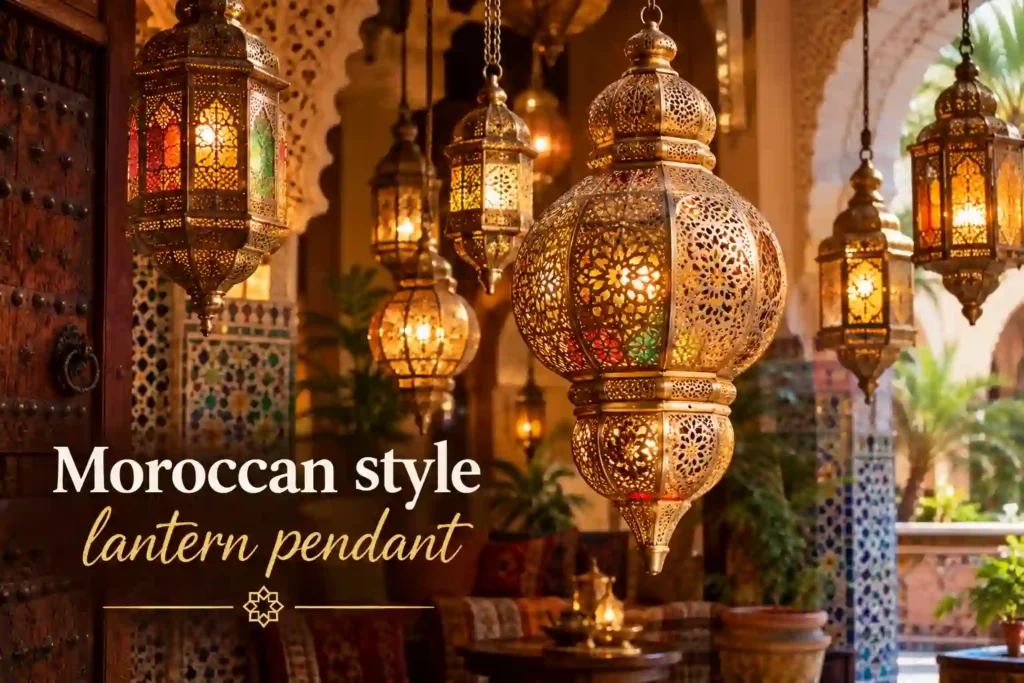
There’s a reason a single Moroccan lantern pendant can change the entire feel of a room. It’s not just the light, it’s the pattern that light makes once it passes through hand-cut metal and colored glass, scattering little stars and diamonds across the ceiling and walls that shift as the light flickers. Whether you picked one up in a Marrakech souk, found one online, or you’re simply trying to understand what makes an authentic piece different from a mass-produced imitation, this guide covers everything: history, materials, styles, how to choose one, and how to actually style it in a home.
Quick Facts About Moroccan Lantern Pendants
| Fact | Detail |
|---|---|
| Traditional materials | Brass, copper, iron, and colored or clear glass |
| Technical signature | Hand-cut fretsaw metalwork (filigree) |
| Most common shapes | Octagonal, star-shaped (Moroccan or Moravian star), diamond, teardrop |
| Traditional glass colors | Amber, cobalt blue, emerald green, ruby red, and clear |
| Where they’re traditionally made | Marrakech, Fes, and other artisan centers across Morocco |
| Typical use today | Ceiling pendants, wall sconces, outdoor patio lighting, tabletop lamps |
| Design style it fits | Moroccan, bohemian, Mediterranean, eclectic, and mixed traditional-modern interiors |
What Exactly Is a Moroccan Lantern Pendant?
A Moroccan lantern pendant is a hanging light fixture built from hand-worked metal, most often brass, copper, or iron, paired with panels of glass, colored, clear, or sometimes a mix of both. What sets it apart from an ordinary pendant light is the metalwork itself: intricate, hand-pierced geometric or floral patterns cut into the metal using a technique called fretsaw work, which allows light to escape through the pattern rather than just through the glass panels. The result isn’t just illumination, it’s a genuine light show, casting a mosaic of shapes and colors across the surrounding walls and ceiling that shifts as the light source flickers or moves.
The Craftsmanship Behind an Authentic Piece
A genuine Moroccan lantern pendant is the product of a real, hands-on artisan process, not a factory mold. Skilled metalworkers, concentrated in cities like Marrakech and Fes, hand-cut each piece’s decorative pattern using a fine fretsaw, a slow, painstaking process that gives authentic lanterns a level of detail and slight irregularity that machine-cut reproductions simply can’t replicate. Many pieces are further hand-engraved or hammered to add texture, and the metal is typically finished in an antique brass, bronze, or blackened patina rather than left shiny and new-looking, part of the aesthetic is meant to evoke age and history even on a newly made piece. The glass panels, when present, are often hand-molded or hand-cut as well, and slight variations in color depth or thickness between panels are a mark of authentic handwork rather than a flaw.
Materials: Brass, Copper, and Iron
The metal used shapes both the look and the price of a Moroccan lantern pendant. Brass is the most common and classic choice, warm-toned, durable, and takes an antique patina beautifully over time. Copper offers a similar warmth with a slightly redder, richer tone, and develops its own natural patina as it ages if left untreated. Iron, often finished in black or dark bronze, gives a more rustic, heavier look, popular in more industrial or Mediterranean-leaning interiors rather than the ornate, jewel-toned pieces brass and copper pieces often lean toward. None of these materials is objectively “better,” the right choice really comes down to the overall tone of the room you’re placing it in.
Shapes and Styles: What to Look For
Moroccan lantern pendants come in a handful of recognizable shapes, each with a slightly different visual effect once lit.
Octagonal lanterns are probably the most classic and widely recognized shape, offering eight flat panels for glass or metalwork detail and a balanced, symmetrical silhouette that works in almost any space.
Star-shaped lanterns , sometimes called Moroccan stars or Moravian stars, have multiple angular points radiating outward, creating a more dramatic, sculptural silhouette that makes a bold statement even unlit.
Diamond and teardrop shapes offer a more elongated, elegant profile, often favored for narrower spaces like hallways or above a dining table where a wider octagonal shape might feel too heavy.
Globe or orb-shaped lanterns wrap the metal filigree fully around a rounded glass or open form, casting a more even, all-around pattern of light rather than concentrated panels.
Colored Glass and What It Does to a Room
The glass color you choose changes the entire character of the light a lantern throws. Amber and warm honey tones create a cozy, golden glow that reads as classic and traditional, arguably the most popular choice for a reason. Cobalt blue, closely associated with cities like Chefchaouen, throws a cooler, more dramatic light and works particularly well in bathrooms, entryways, or as a striking accent piece. Emerald green and ruby red lean more jewel-toned and ornate, often used in pieces meant to be a genuine centerpiece rather than ambient lighting. Clear glass, meanwhile, puts the focus entirely on the metalwork itself, letting the shadow patterns do the visual work rather than color.
Electric vs. Candle: How These Lanterns Actually Function
Traditionally, Moroccan lanterns were designed to hold a candle, and plenty of smaller, tabletop, or outdoor versions still work this way, genuinely useful for patios, courtyards, or a romantic dinner table setting. Larger pendant versions intended for ceiling installation are generally wired for electric bulbs, and it’s worth knowing that wiring standards differ by country, a lantern purchased in Morocco or from an overseas retailer often needs to be rewired to meet local electrical codes and safety certifications before installation, a service some specialty retailers offer, and one worth insisting on rather than DIY-ing yourself if you’re not confident with electrical work.
How to Style a Moroccan Lantern Pendant in Your Home
Over a dining table is one of the most popular placements, a single statement lantern, or a small cluster of two or three at varying heights, creates genuine visual drama over a meal without overwhelming the table below.
In an entryway or hallway , a single lantern sets the tone for a home’s entire aesthetic from the moment someone walks in, and the shadow patterns it casts on nearby walls add texture even when the space itself is fairly plain.
On a covered patio or outdoor living space , especially in warmer climates, lanterns bring a genuinely Mediterranean or Moroccan-courtyard feel, and weather-appropriate finishes (check for outdoor-rated wiring and materials) hold up well to occasional exposure.
In a bedroom , a smaller pendant or a pair flanking the bed as an alternative to traditional bedside lamps adds warmth and softness that a standard lamp often can’t match.
In a kitchen , particularly over an island, a row of two or three smaller matching lanterns creates a cohesive, boutique-hotel feel that works surprisingly well even in otherwise modern kitchens.
How to Spot an Authentic Piece vs. a Mass-Produced Copy
Given how popular the style has become globally, it’s worth knowing what separates a genuine handcrafted piece from a factory reproduction. Authentic lanterns typically show slight asymmetry or minor irregularities in the metalwork, a genuine sign of hand-cutting rather than a flaw to avoid. The metal on authentic pieces tends to feel heavier and more substantial, since mass-produced versions often use thinner, lighter-gauge metal to cut costs. Glass panels on authentic pieces often show subtle color or thickness variation between panels, while machine-made versions tend to look suspiciously uniform. And price is a reasonably reliable signal too, a genuinely hand-forged, hand-pierced brass lantern from a skilled Moroccan artisan simply costs more to produce than a stamped metal import, so an unusually low price on a piece marketed as “handcrafted” is worth a second look.
Caring for Your Moroccan Lantern Pendant
A little basic care keeps these pieces looking good for decades, which is part of their appeal, they’re built to last, not to be replaced every few years. Dust regularly with a soft, dry cloth, getting into the filigree cutouts with a soft brush (an old, clean paintbrush works well) to avoid buildup in the detailed metalwork. Avoid harsh chemical cleaners on brass or copper finishes, since they can strip the intentional antique patina that gives these pieces their character, a light metal polish formulated for the specific metal is a safer choice if you want to brighten a piece back up. For outdoor pieces, check wiring and seals periodically if the lantern is exposed to the elements, and bring candle-style outdoor lanterns in during severe weather even if they’re rated for outdoor use.
Where Authentic Moroccan Lanterns Are Actually Made
If you want the real thing rather than an imported reproduction, it helps to know where this craft is genuinely concentrated. Marrakech’s medina is home to entire streets of metalworking souks where lanterns are still hand-cut and assembled in small workshops, often the same families having practiced the craft for generations. Fes, with its deep tradition of metalwork and brass craftsmanship more broadly, is another major center, and pieces from both cities are typically sold both locally and exported worldwide through specialty importers. Buying directly from an artisan or a workshop, whether in person in Morocco or through a retailer that’s transparent about its sourcing, is the most reliable way to make sure your money supports the actual craftspeople rather than a generic overseas manufacturer copying the style.
The History Behind the Craft
Moroccan lantern-making traces back much further than any individual workshop still operating today, rooted in the broader tradition of Islamic and Moorish decorative arts that flourished across North Africa and Andalusian Spain for centuries. Geometric patterning in Islamic art historically avoided figurative imagery in religious and decorative contexts, which pushed craftsmen toward increasingly intricate geometric and arabesque designs instead, the same visual language you see repeated in zellige tilework, carved plaster, and, eventually, pierced metal lanterns. As trade and craftsmanship moved between Morocco and Andalusia over the centuries (the shared Moorish architectural heritage is why you’ll sometimes see these pieces labeled “Moorish” rather than strictly Moroccan), lantern-making absorbed influences from multiple regions while staying rooted in the same core techniques still used by artisans in Marrakech and Fes today.
What the Patterns Actually Mean
The geometric cutouts on a Moroccan lantern aren’t just decorative flourishes, they’re part of a much older visual tradition where mathematical precision was treated as a form of spiritual and artistic expression. Repeating star patterns, often built from an eight-pointed star at their core, are among the most common motifs, and in Islamic geometric art more broadly, this kind of infinitely repeating pattern is often understood as a visual representation of the infinite nature of creation, a small piece of a larger, unified design. You don’t need to know any of this to appreciate a lantern, but it’s part of why these patterns feel so deliberate and balanced rather than random, they’re built on the same underlying geometric principles that shaped mosques, palaces, and manuscripts across the Islamic world for over a thousand years.
Moroccan Lanterns vs. Turkish and Indian Lanterns: What’s the Difference?
Because the general “exotic lantern” aesthetic has become so popular globally, it’s easy to lump Moroccan, Turkish, and Indian lanterns together, but they’re genuinely distinct traditions. Turkish lanterns (often called Ottoman or Turkish mosaic lanterns) typically feature small, colorful glass mosaic tiles set into a metal frame, creating a more speckled, jewel-toned light pattern rather than large panels of solid color. Indian lanterns often lean toward more ornate, layered metalwork with a heavier emphasis on brass filigree and sometimes hand-painted glass rather than molded colored panels. Moroccan lanterns, by comparison, tend to favor larger, cleaner glass panels combined with bold geometric fretsaw cutouts, creating a slightly bolder, more architectural shadow pattern rather than the dappled mosaic effect of a Turkish piece. None is “better,” but if you’re shopping and want a specifically Moroccan look rather than a general Middle Eastern or South Asian aesthetic, knowing this distinction helps you search and buy more accurately.
What Should You Actually Expect to Pay?
Pricing varies enormously depending on size, material, and authenticity, but a rough sense of the market helps set expectations. Small, simple candle-style lanterns or tabletop pieces generally sit at the more accessible end of the price range, an easy entry point if you’re testing the style before committing to a larger piece. Mid-size electric pendant lanterns with genuine hand-cut brass or copper work and quality glass typically cost meaningfully more, reflecting the hours of skilled labor involved. Large, elaborate chandelier-style pieces, or genuinely antique vintage lanterns, sit at the top of the market and are priced accordingly, sometimes significantly so for rare or exceptionally detailed antique pieces. As a rule of thumb, if a “handcrafted brass lantern” is priced suspiciously close to a basic mass-market pendant light, it’s worth questioning how much genuine hand-cutting actually went into it.
Choosing the Right Size for Your Space
Getting the scale right matters more than people expect, an undersized lantern can look lost in a large room, while an oversized one can dominate a small space uncomfortably. As a general guide, a pendant hung over a dining table should span roughly half to two-thirds the width of the table itself, and should hang low enough to create intimacy without blocking sightlines across the table, typically around 30-36 inches above the tabletop. In an entryway or stairwell, a taller, narrower lantern often works better than a wide one, since it reads as a vertical accent rather than a horizontal obstruction. For ceilings under 8 feet, a flush or semi-flush lantern style avoids the piece hanging too low and becoming a head-height hazard.
Bulb and Lighting Choices That Actually Flatter These Fixtures
The type of bulb you choose changes the entire mood a Moroccan lantern creates. Warm white bulbs (around 2700K-3000K) are almost always the right call for these fixtures, since they complement the warm brass, amber glass, and antique finishes that define the style, a cooler, bluish bulb tends to clash badly with the traditional warmth these pieces are designed around. Dimmable bulbs paired with a dimmer switch are genuinely worth the small extra investment, since much of a Moroccan lantern’s appeal comes from the shifting, ambient shadow pattern it casts, which reads far more dramatically at a lower, warmer light level than at full brightness. For candle-style pieces, genuine flame or a good-quality flickering LED candle both work well, real flame obviously requires more caution and ventilation consideration, especially indoors.
Pairing a Moroccan Lantern With Different Interior Styles
Moroccan lanterns have a genuine knack for working across a wider range of design styles than people initially assume. In a bohemian or eclectic interior, they slot in naturally alongside layered textiles, plants, and mixed vintage furniture, the more, the better, in this style. In a more minimalist or modern space, a single, well-chosen lantern can work beautifully as a deliberate contrast piece, one ornate, warm element against otherwise clean lines and neutral tones, without needing to commit to a full “Moroccan themed” room. In Mediterranean or Spanish-colonial style homes, these lanterns feel like a natural, almost expected fit, given the shared Moorish architectural DNA between Morocco and southern Spain. Even in a fairly traditional Western interior, a single lantern in an entryway or over a reading nook can add a well-traveled, collected feel without overwhelming the rest of the room’s style.
A Thoughtful Gift With Real Meaning
Because of the craftsmanship and history behind them, a Moroccan lantern makes a genuinely meaningful gift for housewarmings, weddings, or milestone occasions, more distinctive than a generic home decor item, and something the recipient will likely be asked about for years. Smaller candle-style lanterns make an easier, more affordable gifting option if a full electric pendant feels like too large a commitment for the occasion, while a larger, more elaborate piece works well as a significant gift for a new home or a couple furnishing a space together. If gifting internationally, it’s worth checking with the recipient (or a specialty importer) about wiring compatibility ahead of time if you’re sending an electric version rather than a candle piece.
Ethical and Sustainable Buying Considerations
Given how popular the style has become, it’s worth thinking about where your money actually goes when buying one of these pieces. Buying directly from Moroccan artisan cooperatives or workshops, whether in person or through retailers who are transparent and specific about their sourcing, tend to ensure a larger share of the price actually reaches the craftspeople doing the work, rather than a generic overseas importer replicating the style with factory labor. Beyond the ethical dimension, hand-forged metal lanterns are also generally more durable and repairable than cheaply stamped alternatives, meaning a well-made, ethically sourced piece is often the more sustainable choice in the long run simply because it’s built to last decades rather than get replaced within a few years.
Installation and Safety Considerations
Before hanging any pendant lantern, a few practical checks matter more than the aesthetic decisions. Confirm the fixture’s weight against your ceiling box and mounting hardware rating, larger brass or iron lanterns are genuinely heavy, and an underrated mounting point is a real safety issue, not just a theoretical one. If you’re installing an electric during yourself, always confirm the wiring meets your local electrical code, and when in doubt, have a licensed electrician handle the installation, especially for a rewired imported piece. For candle-style lanterns used indoors, make sure there’s adequate clearance above the flame and good ventilation, and never leave a lit candle lantern unattended, the same common-sense rule that applies to any open flame. Outdoor electric lanterns should carry an appropriate outdoor/weatherproof rating, not just an indoor fixture repurposed for a covered patio.
Restoring a Vintage or Antique Moroccan Lantern
If you’ve inherited or found a genuinely old Moroccan lantern, restoration is often possible and can bring a tired piece back to life without erasing its history. Start with a gentle cleaning, a soft brush and mild soap solution for the metalwork, avoiding harsh chemical strippers that can damage both the finish and any original patina worth preserving. Cracked or missing glass panels can often be replaced by a specialty restorer familiar with Moroccan or Moorish lighting, ideally matching the original color and texture as closely as possible rather than defaulting to plain clear glass. Old or unsafe wiring on an antique electric piece should always be replaced by a professional rather than left as-is, no matter how original and charming the old wiring looks, since deteriorated wiring is a genuine fire risk rather than just a cosmetic quirk. Many owners choose to preserve rather than polish away a piece’s natural tarnish and age, since that patina is often exactly what gives an antique lantern its character and value.
Using Moroccan Lanterns for Events and Celebrations
Beyond permanent home decor, Moroccan lanterns show up constantly as event and celebration pieces, and for good reason, they add instant atmosphere with minimal additional styling needed. Weddings, particularly those leaning into a bohemian, destination, or Moroccan-inspired theme, often use clusters of varying lantern sizes hung above dining tables or lining an aisle, mixing candle and electric versions for both safety and visual variety. During Ramadan, lanterns take on deeper cultural significance in many Muslim households and communities, decorating homes and public spaces as a traditional symbol of the holy month, a tradition with roots stretching back centuries across the Islamic world. For a simpler at-home gathering, even a few small candle lanterns scattered along a table or patio can shift the entire mood of an evening for very little cost or effort compared to more elaborate decor investments.
A Quick Buyer’s Checklist Before You Purchase
Pulling together everything covered here, a few final questions are worth running through before committing to a piece. Is the metalwork hand-cut, with slight natural irregularities, or does it look suspiciously uniform and machine-stamped? Does the piece feel appropriately heavy and substantial for its size, or unusually light for what’s being advertised as solid brass or copper? If it’s electric, has it been rewired to meet your local electrical code, or will it need that work done before installation? Have you measured your intended space properly, table width, ceiling height, clearance, rather than estimating by eye? And finally, do you know where the piece was actually made, and does the retailer offer any real transparency about the artisans or workshop behind it? Running through these five questions takes a few minutes and meaningfully improves the odds you end up with a piece that’s genuinely worth the investment, however large or small that investment ends up being.
Frequently Asked Questions About Moroccan Style Lantern Pendant
What makes a Moroccan lantern authentic? Hand-cut metal filigree (fretsaw work), slight natural irregularities from handcrafting, substantial metal weight, and glass panels with subtle variation between them are all signs of an authentic, handmade piece.
What metal is best for a Moroccan lantern pendant? Brass is the most classic and widely used choice, though copper and iron are both traditional alternatives, each offering a slightly different tone and finish.
Can Moroccan lanterns be used outdoors? Yes, many are designed specifically for outdoor use, particularly candle-style lanterns, though electric pendants intended for outdoor installation should be checked for weather-appropriate wiring and ratings.
Do I need to rewire a lantern bought in Morocco? Often yes, since electrical standards vary by country. It’s worth having a lantern professionally rewired to meet your local electrical code rather than using the original wiring as-is.
Where are Moroccan lanterns traditionally made? Primarily in Marrakech and Fes, where generations of metalworking artisans continue to hand-cut and assemble these pieces in small workshops.
What glass color is most traditional? Amber and warm honey tones are the most classic and widely used, though cobalt blue, emerald green, and clear glass are all traditional options as well.
Final Thoughts
A Moroccan lantern pendant isn’t just a light fixture, it’s a small piece of a centuries-old craft tradition, and understanding what goes into an authentic one, the hand-cut metalwork, the glass, the sheer patience involved, makes it easier to appreciate (and choose) a piece that’s actually worth the investment. Whether you’re hanging one over a dining table, lining a few along a kitchen island, or picking up a candle-style version for a patio table, the right lantern brings a genuinely distinctive warmth and texture that’s hard to replicate with anything else.
Want to See Where These Lanterns Are Actually Made?
If reading about the craftsmanship behind these pieces has you curious to see it firsthand, visiting the artisan souks of Marrakech and Fes is one of the best parts of a Morocco trip.
- Marrakech desert tours for travelers wanting to combine a Sahara excursion with time exploring Marrakech’s medina and craft souks.
- Fes desert tours for a route through Morocco’s imperial cities, including Fes’s historic metalworking district.
- Morocco desert tours covering the full range of routes and experiences across the country.
Not sure how to make a souk-shopping stop into your trip? Check our Morocco itineraries page, or contact us and we’ll help you plan a route that includes time with the artisans behind pieces like these.