
What to See in Marrakech: A Proper Guide to the Red City’s Best Sights
Marrakech has a way of overwhelming first-time visitors in the best possible way. The medina alone could swallow a week if you let it, and that’s before you’ve even considered the gardens, palaces, and mountain views just outside the city walls. This guide walks through what’s actually worth your time in Marrakech, organized so you can build a realistic plan rather than trying to see everything and enjoying none of it properly.
Quick Facts for Sightseeing in Marrakech
| Fact | Detail |
|---|---|
| Best area to base yourself | The medina (old town) for atmosphere, Gueliz for modern comfort |
| Ideal trip length for Marrakech alone | 3-4 days |
| Busiest sightseeing hours | Late morning to early afternoon |
| Best time of year | March-May and September-November |
| Most photographed landmark | Koutoubia Mosque minaret |
| Most photographed garden | Majorelle Garden |
| Currency for entrance fees | Moroccan dirham (MAD), cash generally expected |
Jemaa el-Fnaa: See It Twice, It’s a Different Place Each Time
Start here, everyone does, and there’s a reason. Jemaa el-Fnaa is Marrakech’s main square, and it truly transforms between day and night. By day, it’s relatively calm, orange juice carts, henna artists, the occasional snake charmer, easy to walk through on your way somewhere else. By early evening, dozens of food stalls set up in rows, grills fire up, storytellers and musicians gather crowds, and the whole square becomes an open-air performance and dinner scene that runs well into the night. Climb to one of the rooftop cafés ringing the square right around sunset for the best vantage point over the whole transformation.
The Souks: Not Just Shopping, a Sight in Their Own Right
The souks spreading north from Jemaa el-Fnaa are worth exploring even if you have zero intention of buying anything. Each section historically specialized in a specific craft; you’ll pass through zones for leather, metalwork, textiles, ceramics, and spices, often literally organized by street, a layout that’s been in place for centuries. Getting a little lost here is genuinely part of the experience, though it’s worth knowing the general direction back to the square if you want to avoid feeling stuck. Vendors will call out to you constantly, a polite “la, shukran” (no, thank you) and a smile handle most situations without friction.
Bahia Palace: Moroccan Craftsmanship at Its Absolute Peak
If you only see one palace in Marrakech, make it this one. Built in the late 19th century specifically to be the most impressive residence in the country at the time, Bahia Palace delivers on that ambitious room after room, carved cedar ceilings, intricate zellige tilework, painted stucco, and courtyards designed to flood each space with natural light. Unlike some historical sites where you’re imagining what it once looked like, Bahia Palace is largely intact, giving you a genuinely rare, complete sense of what elite Moroccan architecture actually looked like in its finished state.
El Badi Palace: Ruins That Tell a Better Story Than a Restored Building Would
El Badi Palace takes the opposite approach, and it works. Once covered in gold and considered one of the most opulent palaces in the Islamic world, most of its precious materials were stripped away centuries ago by a later sultan who wanted the wealth for his own new capital. What’s left is a vast, sun-bleached ruin, still genuinely striking in scale, with storks nesting along the crumbling ramparts and a rare sense of just how much has actually been lost to history. Climb up onto the walls for a panoramic view over the surrounding Mellah district.
Saadian Tombs: Small, Hidden, and Genuinely Stunning
Sealed off for centuries and only rediscovered in 1917 via an aerial survey, the Saadian Tombs hold some of the most intricate marble and gold decoration you’ll find anywhere in Marrakech, packed into a surprisingly small, quiet space that feels almost private compared to the city’s bigger attractions. Expect a queue, especially in high season, since the site can only hold a limited number of visitors at once, but the wait is genuinely worth it once you’re standing inside the main chamber looking up at the carved and gilded ceiling.
Koutoubia Mosque: The City’s Defining Silhouette
You can’t enter the Koutoubia, it’s an active mosque and non-Muslims aren’t permitted inside, but its 12th-century minaret is the single most recognizable image of Marrakech, visible from surprisingly far across the city and lit up at night. The surrounding gardens make for an easy, pleasant walk, and this is a genuinely good spot to simply sit for ten minutes and take in the scale of the tower rather than rushing past it toward the next stop.
Jardin Majorelle: Small, But Worth the Hype
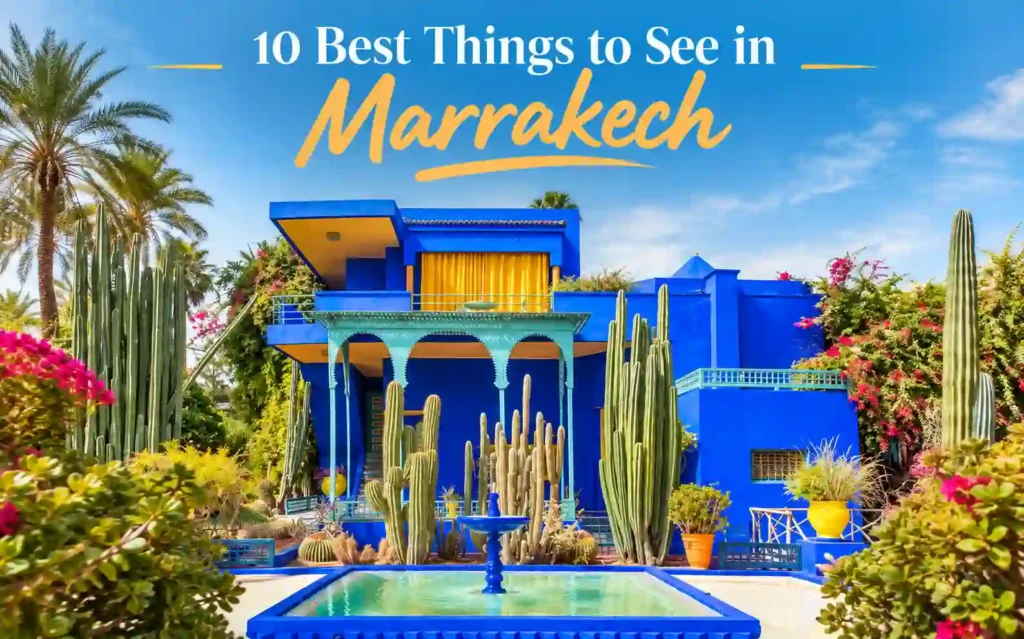
Yes, it’s crowded, and yes, you should still go. This cobalt-blue garden, originally created by French painter Jacques Majorelle and later restored by Yves Saint Laurent, packs bamboo groves, cacti, and cooling fountains into a genuinely small footprint, but the color contrast between the deep blue walls and the greenery is striking enough that photos genuinely don’t oversell it. Buy tickets online in advance if you can, the entrance line grows long by mid-morning, and go right at opening time for the calmest experience.
Yves Saint Laurent Museum: A Natural Pairing With Majorelle
Right next to the garden, this museum traces YSL’s decades-long relationship with Marrakech and North African design more broadly, through original sketches, garments, and photographs. Even visitors without a strong interest in fashion tend to find it genuinely worthwhile, since it doubles as a window into how deeply this city has influenced global design for generations, not just a fashion retrospective in a vacuum.
The Secret Garden: The Medina’s Quiet Garden Escape
Tucked inside the medina itself, Le Jardin Secret restores a 19th-century riad garden across two distinct sections, a formal Islamic-style courtyard garden and a looser “exotic” garden, connected by a small exhibit on Marrakech’s historic water and irrigation systems. It’s considerably less crowded than Jardin Majorelle and genuinely peaceful, a good stop if you need a break from the medina’s intensity without leaving the medina itself.
Menara Gardens: Space, Quiet, and Mountain Views
A short taxi ride from the center, the Menara Gardens center around a large reflecting pool and an old pavilion, surrounded by working olive groves rather than manicured flower beds. On a clear day, the Atlas Mountains are visible glowing behind the water, especially around sunset, making this one of the best spots in the city for a calm, more open-air kind of sightseeing than the packed medina offers.
The Kasbah District: Where History Meets a Slower Pace
South of the main medina, the Kasbah district holds several of Marrakech’s most significant historical sites clustered together, El Badi Palace, the Saadian Tombs, and the Kasbah Mosque, alongside a growing scene of boutique riads and rooftop restaurants. It’s a genuinely good area to slow down for an afternoon, mixing sightseeing with a proper sit-down lunch or a mint tea break rather than treating it as another box to check.
The Mellah: Marrakech’s Historic Jewish Quarter
Adjacent to the Kasbah district, the Mellah was historically Marrakech’s Jewish quarter, and it retains a distinctly different architectural character from the rest of the medina, tighter streets, taller buildings, and a more subdued color palette. The Lazama Synagogue, still active today, offers a quiet, meaningful stop into a part of Morocco’s history that gets far less attention than the city’s more famous Islamic architecture, despite Marrakech’s Jewish community having a genuinely deep historical presence in the city.
Day Trips Worth Adding If You Have Extra Time
If your Marrakech stay runs more than three or four days, a few nearby destinations genuinely reward the extra effort. The Ourika Valley , less than an hour away, offers waterfalls, Berber villages, and mountain scenery for an easy half-day trip without committing to a multi-day excursion. Ouzoud Falls , about 2.5-3 hours out, delivers Morocco’s most impressive waterfall, complete with wild Barbary macaques living in the surrounding trees. And the Agafay Desert , just 30-40 minutes from the city, offers a genuine desert landscape, stark, rolling stone hills rather than sand dunes, for travelers who won’t have time for a full multi-day Sahara excursion but still want that desert atmosphere.
What You Genuinely Don’t Need to Rush to See
Not every recommended stop deserves equal priority, and it’s worth being honest about that. The Menara Gardens, while pleasant, are relatively simple compared to Majorelle or Le Jardin Secret, worth it if you have time, skippable if you’re tight on days. Some of the smaller museums scattered through the medina are genuinely hit or miss depending on current exhibits, worth checking current listings before committing time to them specifically. And while the souks are worth exploring, you don’t need to “complete” them, a couple of focused hours give you the full flavor without the fatigue of trying to see every single alley.
A Realistic 3-Day Marrakech Sightseeing Plan
| Day | Focus |
|---|---|
| Day 1 | Jemaa el-Fnaa, souks, Koutoubia Mosque exterior, sunset rooftop |
| Day 2 | Bahia Palace, El Badi Palace, Saadian Tombs, afternoon in the Kasbah district |
| Day 3 | Majorelle Garden, YSL Museum, The Secret Garden, evening free for a hammam or final souk browse |
This leaves room to extend with a day trip to Ourika Valley, Ouzoud Falls, or the Agafay Desert if your stay runs longer, or to head onward toward the Sahara if a desert excursion is part of your wider Morocco trip.
Hammams: A Sight and an Experience in One
A traditional hammam isn’t just a spa treatment, it’s arguably a cultural insight in its own right, and Marrakech has both tourist-oriented and genuinely local options worth knowing the difference between. Riad-based hammams, common throughout the medina and Kasbah district, offer a gentler, more private version of the experience, often paired with massage and argan oil treatments, ideal if you want a relaxing addition to a day of sightseeing rather than a full cultural immersion. Neighborhood public hammams, used daily by local residents, offer a more communal, no-frills version, considerably cheaper and, for travelers comfortable with it, arguably more authentic. Either way, building at least one hammam session into your Marrakech time is worth it, both for the experience itself and as a welcome, calming counterpoint to a day of walking between monuments.
Marrakech’s Rooftop Scene: Sightseeing With Dinner Included
Beyond the well-known Jemaa el-Fnaa rooftop cafés, Marrakech has developed a genuinely strong scene of rooftop restaurants offering sightseeing views paired with a proper meal rather than just a drink. Riads in the Kasbah district, like El Fenn and Nomad, offer some of the widest, most photogenic views over the medina rooftops and toward the Atlas Mountains on clear days. Booking ahead matters here, particularly around sunset, since tables with the best views fill up quickly during high season. Treating dinner itself as part of your sightseeing plan, rather than an afterthought squeezed in between sights, is a genuinely good way to experience the city from a different angle than street level.
Getting Around: Walking, Taxis, and the Medina’s Quirks
Understanding how to actually move between sights saves real time and frustration. The medina itself is entirely pedestrian in its narrowest sections, because simply can’t fit, so walking (or occasionally a bicycle or motorbike squeezing past) is the only option once you’re deep inside. Petit taxis are cheap and plentiful for moving between the medina and areas like Gueliz, Jardin Majorelle, or Menara Gardens, though agreeing on a price or insisting on the meter before you get in avoids any confusion. For day trips outside the city, a private driver or organized tour is generally more efficient and comfortable than trying to arrange public transport independently, particularly for time-sensitive stops like sunset viewpoints.
What to Buy While You’re Sightseeing
Since you’ll be walking through the souks regardless, it’s worth knowing what’s actually worth bringing home versus what’s mostly aimed at quick tourist sales. Hand-knotted Berber rugs, sold in dedicated carpet shops throughout the medina, are a genuine investment piece if you have the room and budget, look for tightly woven knots and ask about the specific region or tribe the pattern comes from. Argan oil, ideally purchased from a women’s cooperative rather than a generic tourist shop, makes for a lightweight, practical souvenir with a clear ethical upside. Hand-painted ceramics, leather goods, and Moroccan lanterns round out the list of items genuinely worth the extra time (and the expected bargaining) to find a quality piece rather than a mass-produced version.
Photography Tips for Marrakech’s Best Sights
A few practical notes help if photography matters to your trip. Early morning light, before the medina’s crowds build up, gives you both softer light and considerably clearer shots at popular spots like Jardin Majorelle or the Koutoubia gardens. Always ask before photographing individuals directly, especially performers, vendors, or anyone in traditional dress in Jemaa el-Fnaa, a small tip is often expected if you do, and it’s simply respectful practice regardless. Interior photography rules vary by site, some palaces and museums restrict flash or photography entirely in certain rooms to protect fragile artwork or tilework, so it’s worth a quick glance for posted signage before shooting freely.
A Few Hidden Gems Beyond the Obvious List
Once you’ve covered the major sights, a handful of lesser-known spots reward travelers with an extra day or two. The Museum of Marrakech , housed in a restored 19th-century palace, offers an easier, less crowded alternative to Bahia Palace with a genuinely striking central courtyard. The Almoravid Koubba , a small, easily overlooked 12th-century domed structure, is actually the oldest surviving Almoravid monument in the city, a quiet reminder of just how far back Marrakech’s history runs beneath its more famous later additions. And the quieter northern stretches of the medina, away from the main souk routes, offer a genuinely calm version of the same architecture and atmosphere without the crowd pressure of the busier central alleys.
Best Time of Year and Day for Sightseeing in Marrakech
Marrakech gets genuinely hot, so timing matters more here than in a lot of destinations. Spring (March-May) and autumn (September-November) offer the most comfortable conditions for a sightseeing-heavy schedule, mild enough for long days on foot without the exhausting midday heat that summer brings, when temperatures regularly climb past 35-40°C. Within a single day, late morning through early afternoon is when most sites get busiest, arriving right at opening time (generally 9 AM for most palaces and gardens) consistently means shorter lines and cooler temperatures for walking between stops. If your trip does fall in summer, front-loading sightseeing into the morning and saving afternoons for shaded gardens, hammams, or air-conditioned museums is a smarter structure than trying to push through the heat of the day outdoors.
What Sightseeing Actually Costs in Marrakech
Entrance fees for Marrakech’s major sights are individually modest by international standards, but they add up across several sites in a single day, and it’s worth budgeting for realistically rather than assuming everything is free or negligible. Palaces and gardens like Bahia Palace, El Badi Palace, the Saadian Tombs, and Jardin Majorelle each charge a separate ticket, generally inexpensive individually but worth totaling up if you’re visiting several in one day. The Yves Saint Laurent Museum charges a somewhat higher fee reflecting its status as a proper museum rather than a historical site. Many of the free or low-cost sightseeing experiences, wandering the souks, sitting in Jemaa el-Fnaa, walking the ramparts, actually rank among the most memorable parts of a Marrakech trip, so a tight budget doesn’t have to mean a thin itinerary.
Sightseeing With Mobility Considerations
Marrakech’s medina presents real, practical challenges for travelers with mobility limitations, uneven cobblestone streets, narrow passageways, and stepped entrances at many historic sites weren’t built with modern accessibility in mind. That said, several major sights are more manageable than others, Jardin Majorelle and Menara Gardens both have relatively flat, paved paths, while Bahia Palace’s ground floor courtyards are navigable even though some interior sections involve steps. It’s worth contacting sites directly or working with a knowledgeable local guide or driver in advance if mobility is a concern, since route planning around accessible entrances and rest points makes a genuinely significant difference to how manageable a day of sightseeing feels.
Sightseeing Tips for Solo Female Travelers
Marrakech is visited by a huge number of solo female travelers every year, and the vast majority have positive, trouble-free experiences, though a few practical habits help sightseeing days go smoothly. Dressing modestly, covering shoulders and knees, tends to reduce unwanted attention in the medina and souks specifically, even though beach and resort areas elsewhere in the country are considerably more relaxed. Confidently ignoring unsolicited offers of “help” finding a specific sight (often a lead-in to an unofficial guiding fee) and sticking to a clear, planned route reduces friction with persistent everything. Many solo travelers also find that joining a small group tour for at least the souks or a day trip adds both a social element and an extra layer of ease navigating a genuinely maze-like part of the city.
Sightseeing With Young Children
Marrakech can absolutely work with kids in tow, but a few specific sights and habits make it considerably smoother. Jardin Majorelle and Le Jardin Secret tend to hold children’s attention well, given their more explorable, less “look but don’t touch” nature compared to a formal palace interior. The Chouara-style intensity of some souk sections (crowds, noise, insistent vendors) can overwhelm younger children, so building in regular breaks, a fresh orange juice stop, a quiet café, matters more with kids than it might for adult travelers pushing through a full day. Camel or horse-drawn carriage rides through the Palmeraie are a reliably popular, lower-intensity add-on if the medina’s pace becomes too much for a full day.
Marrakech’s Neighborhoods: Where Sightseeing Actually Happens
Understanding the city’s layout helps explain why certain sights cluster together. The table below breaks down the main areas and what each contributes to a sightseeing itinerary.
| Area | Character | Key Sights |
|---|---|---|
| Medina (old town) | Dense, historic, walkable only | Jemaa el-Fnaa, souks, Koutoubia Mosque, Bahia Palace |
| Kasbah | Historic, quieter, riad-heavy | El Badi Palace, Saadian Tombs, Mellah |
| Gueliz | Modern, French colonial-era | Majorelle Garden, YSL Museum, cafes and boutiques |
| Wintering | Upscale, resort-like | Hotel rooftops, nightlife, less historical sightseeing |
| Palm grove | Green, spread out | Palm groves, camel rides, boutique hotel terraces |
Most first-time visitors base themselves in the medina or Gueliz, both put you within reasonable reach of the majority of sights, while Hivernage and the Palmeraie suit travelers prioritizing resort comfort over walkable sightseeing access.
Common Sightseeing Mistakes Worth Avoiding
A few recurring mistakes show up often enough in traveler experiences that they’re worth flagging directly. Trying to cram too many major sites into a single day is probably the most common, Marrakech rewards a slower pace, and rushing between five paid attractions in one afternoon usually means arriving tired and rushed at each one rather than actually absorbing any of them. Skipping ticket pre-booking at Jardin Majorelle during peak season is another frequent regret, the walk-up line can eat up 45 minutes or more that could’ve been avoided with a few minutes of planning. Underestimating the medina’s disorienting layout, and refusing any help at all out of an abundance of caution, occasionally leads travelers into genuinely frustrating stretches of backtracking, a bit of trust in a hotel-recommended guide or a downloaded offline map goes a long way. And finally, treating the souks purely as an obstacle between sights rather than a sight in themselves means missing out on one of the more memorable parts of the city almost by accident.
Frequently Asked Questions About What to See in Marrakech
How many days do you need to see Marrakech properly? 3-4 days covers the main highlights comfortably without feeling rushed, including at least one afternoon left free for wandering rather than following a strict schedule.
What is the single must-see attraction in Marrakech? Bahia Palace is the most commonly cited highlight for its intact, elaborate craftsmanship, though Jemaa el-Fnaa is the essential Marrakech experience for its atmosphere rather than a specific building.
Is Jardin Majorelle worth the crowds? Yes, for most visitors, though buying tickets in advance and arriving right at opening time significantly improves the experience.
Can you see Marrakech’s main sights without a guide? Yes, most major sites are straightforward to visit independently, though a guide adds real value navigating the medina’s souks and offering historical context at less well-labeled sites.
What’s the best area to stay in for sightseeing? The medina puts you closest to the most major sights and offers the most atmospheric experience, while Gueliz offers more modern comfort with a short taxi ride to the medina’s attractions.
Is one day enough to see Marrakech? It’s possible to hit a handful of highlights, Jemaa el-Fnaa, one palace, and Jardin Majorelle, in a single very full day, but 3-4 days gives a far more complete and less rushed experience.
Final Thoughts
Marrakech doesn’t reward a checklist mentality nearly as much as it rewards a bit of patience, the willingness to sit in a garden for twenty minutes doing nothing, to get pleasantly lost in the souks for an hour longer than planned, to have one extra mint tea before deciding what’s next. The sights themselves are genuinely spectacular, but the city’s real magic tends to show up in the gaps between them.
Ready to See It for Yourself?
Once Marrakech has pulled you in, the rest of Morocco, especially the Sahara, is well worth building into the same trip.
- Marrakech desert tours for travelers starting their Morocco trip right here.
- Morocco desert tours covering the full range of routes and experiences across the country.
- Fes desert tours for a route through the imperial cities and beyond.
- Ouarzazate desert tours for a shorter path into the south.
Not sure how to fit Marrakech and the desert into one trip? Check our Morocco itineraries page, or contact us and we’ll help you plan a route that gives Marrakech the time it deserves.