Morocco Weird Facts: Surprising Things Most Travelers Never Knew
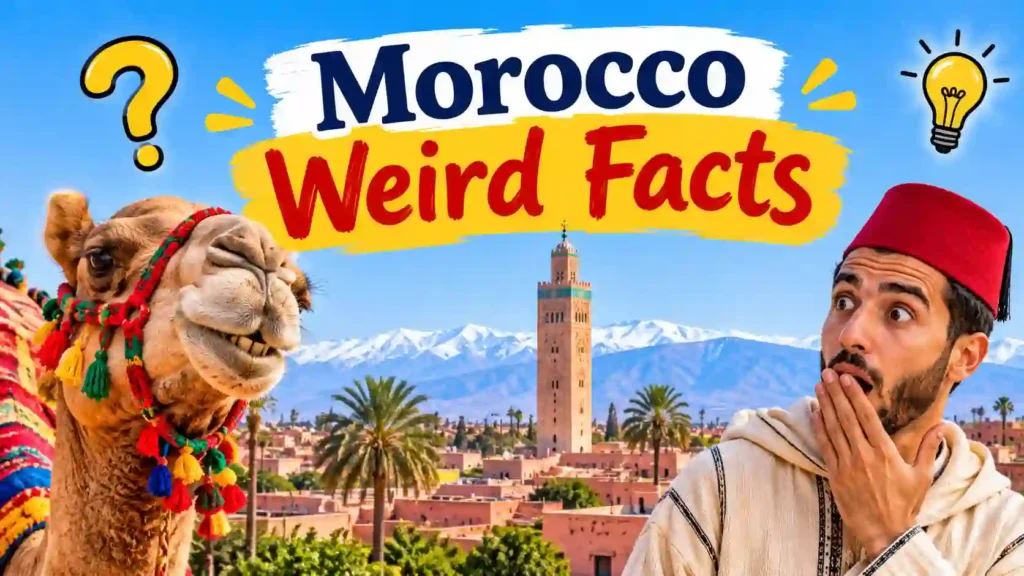
Goats in trees. Clocks that change for a whole month. A piece of Mars that fell in the desert. A famous movie that was never filmed in the city it is named after. Morocco is full of surprises, and some of them sound so strange that people think they are jokes.
We are a local team that travels across Morocco every week, from the medinas of Fes and Marrakech to the dunes of Merzouga. Below are 40 Morocco weird facts: about nature, food, history, science, culture and daily life. For many of them, we also tell you where you can see them with your own eyes during your trip.
Some of these facts come from science and history books, and some come from our own daily life as Moroccans and from the questions our travelers ask us around the campfire in the desert. We checked the facts carefully, and when something is a legend or a local belief rather than a proven fact, we tell you clearly. Ready? Let’s start with the animals, because the first one is the most famous weird fact about Morocco.
Morocco Weird Facts at a Glance
| Weird fact | Where to see it |
|---|---|
| Goats climb argan trees | Road between Marrakech and Essaouira |
| Clocks change during Ramadan | All over Morocco |
| A Martian meteorite fell here | Tata region, in the south |
| Snow and a ski resort in Africa | Oukaïmeden, High Atlas |
| Tanneries use pigeon droppings | Chouara Tannery, Fes |
| Oldest university still running | Al-Qarawiyyin, Fes |
| Dinosaur fossils for sale | Erfoud, near Merzouga |
| Monkeys in cedar forests | Azrou, Middle Atlas |
| A car-free medina with donkey “taxis” | Fes el-Bali |
| First country to recognize the USA | American Legation Museum, Tangier |
Weird Facts About Nature and Animals
1. Goats Climb Trees
Yes, it is true. In the southwest of Morocco, goats climb argan trees to eat the leaves and fruit. They balance on thin branches several meters above the ground. It looks unreal the first time you see it. One honest tip: some trees you see along the main road are “set up” for tourists, with goats placed there by herders who ask for money for photos. Real tree-climbing goats are easier to see in the countryside, away from the busy stops.
See it yourself: On the road from Marrakech to Essaouira, or around Agadir.
2. Argan Trees Grow Almost Only in Morocco
The argan tree is native to southwest Morocco, and the area is protected as a UNESCO biosphere reserve. Argan oil, famous in cosmetics around the world, is made from the nut inside the fruit. Traditionally, Amazigh women crack the nuts by hand with stones, a slow job that takes hours. Today, many women’s cooperatives produce and sell the oil.
See it yourself: Visit a women’s argan cooperative on the way to Essaouira.
3. It Snows in Morocco (and You Can Ski)
Most people imagine Morocco as hot and sandy. But in winter, the High Atlas Mountains are covered with snow. Oukaïmeden, about an hour and a half from Marrakech, is one of the few ski resorts in Africa. Some winters, you can ski in the morning and drink mint tea in the sun in Marrakech in the afternoon.
See it yourself: Oukaïmeden from January to March, if the snow is good.
4. There Is a “Switzerland” in Morocco
The town of Ifrane in the Middle Atlas looks like a European mountain village, with red roofs, clean parks and chalets. It is one of the coldest places in Morocco, and it can snow heavily in winter. A large stone lion statue in the town has become a famous photo spot.
See it yourself: Ifrane, on the road between Fes and the desert.
5. The National Animal Is Extinct in the Wild
The Barbary lion, also called the Atlas lion, is the symbol of Morocco. The national football team is even called the “Atlas Lions.” But the wild Barbary lion disappeared from the Atlas Mountains in the 20th century. Some lions in zoos are believed to carry Barbary lion genes, including at the Rabat zoo.
See it yourself: The lion statue of Ifrane, or a match of the Atlas Lions.
6. Monkeys Live in the Cedar Forests
The Barbary macaque is the only macaque monkey living in Africa. You can see groups of them in the cedar forests near Azrou, in the Middle Atlas. They are wild animals and an endangered species, so do not feed them, even if people around you do.
See it yourself: The cedar forest near Azrou, on the Fes to Merzouga route.
7. Cats Rule the Medinas
You will see cats everywhere in Morocco: in the souks, on riad terraces, in cafés and even in shops sleeping on carpets. Moroccans generally treat cats kindly, and shop owners often feed the cats of their street. Some travelers end up taking more photos of cats than of monuments!
See it yourself: Every medina, especially Fes, Marrakech and Chefchaouen.
Weird Facts About Time and Daily Life
8. The Clocks Change for Ramadan
Morocco uses UTC+1 for most of the year. But during the holy month of Ramadan, the clocks go back one hour to UTC+0, and after Ramadan they move forward again. Because Ramadan follows the Islamic lunar calendar, this change happens on different dates every year. Always double-check your flight and tour times if you travel during Ramadan.
9. Friday Is Couscous Day
In Moroccan families, Friday lunch means couscous, a big plate shared by everyone after the Friday prayer. Many restaurants also serve couscous only or mainly on Fridays. If you want to taste a real homemade couscous, Friday is your day.
See it yourself: Ask your riad to prepare a Friday couscous.
10. Every Town Has an Avenue Mohammed V
Drive through any Moroccan city and you will almost always find an Avenue Mohammed V, named after the King who led Morocco to independence in 1956. Streets named after Hassan II and Mohammed VI are very common too. It makes giving directions easy, and confusing, at the same time.
11. The Biggest Medina Has No Cars
The old medina of Fes, called Fes el-Bali, is often described as one of the largest car-free urban areas in the world. Its narrow streets, around 9,000 alleys, are too small for cars. Goods are carried by donkeys, mules and handcarts. When you hear “Balak!” (watch out!), step aside fast: a donkey is coming.
See it yourself: Fes el-Bali, with a local guide so you do not get lost.
12. Mint Tea Is Called “Berber Whisky”
Moroccans joke that mint tea is “Berber whisky.” It is green tea with lots of fresh mint and sugar, served many times a day. It is poured from high above the glass to make foam on top, and refusing it can feel a bit rude. Expect at least three glasses in a typical visit to a home or a shop.
See it yourself: Everywhere, from shops in the souk to nomad tents in the desert.
13. Bread Is Treated as Sacred
Bread is considered a blessing from God in Morocco. You will rarely see it thrown in the trash. People often put old bread aside in a bag, and some even kiss a piece of bread they find on the ground before moving it to a clean place. Bread is also used as a spoon to eat tagine.
Weird Food Facts About Morocco
14. Snail Soup Is a Street Food Favorite
In Jemaa el-Fnaa and other squares, you will see stalls serving bowls of small snails in a hot broth with up to a dozen spices. Locals say the soup is good for digestion and for colds. Use a toothpick to take the snail out, then drink the broth.
See it yourself: The snail stalls of Jemaa el-Fnaa in Marrakech, in the evening.
15. Steamed Sheep Head Is a Treat
In some food stalls, especially in Marrakech, you can find steamed sheep head, called “rass.” It is eaten with salt and cumin, and the cheeks are considered the best part. It is not for everyone, but it is very Moroccan.
16. A Pie That Is Sweet and Savory
Pastilla is a thin, crispy pastry filled with meat (traditionally pigeon, today often chicken), almonds, eggs and spices, then covered with powdered sugar and cinnamon. Sweet and salty in the same bite sounds strange, but it is one of the most loved dishes in Morocco, especially in Fes.
See it yourself: Order a chicken or seafood pastilla in a restaurant in Fes.
17. Butter Is Aged for Years
Smen is a salted, preserved butter. Some families keep it for months or even years, and it gets a strong, cheese-like taste. In the past, people buried a jar of smen when a daughter was born and opened it for her wedding. Today, a small spoon is added to couscous and some tagines.
18. You Can Eat a Camel Burger
In the Fes medina, some butchers sell camel meat, and you will sometimes see a camel head hanging at the shop to show what they sell. A few cafés in the medina serve camel burgers, a popular dish with curious travelers.
See it yourself: The medina of Fes, with your guide.
19. A Tagine Is Not Only a Dish
Many visitors think “tagine” is the name of a recipe. In fact, it is the name of the clay pot with a pointed lid. Anything cooked in it is a tagine: chicken with lemon, beef with prunes, kefta with eggs, vegetables and more. The pointed lid keeps the steam inside, so the food stays soft and juicy.
Weird Facts About Moroccan History
20. Morocco Was the First Country to Recognize the USA
In 1777, Sultan Mohammed ben Abdallah included the young United States in a list of countries whose ships could enter Moroccan ports. This is often described as the first recognition of the new country. A friendship treaty followed in 1786, and it is still the longest unbroken treaty in American history.
21. The Oldest US Diplomatic Building Abroad Is in Tangier
In 1821, the Sultan gave the United States a building in the Tangier medina. The American Legation is the first property the US owned abroad and the only US National Historic Landmark outside the country. Today it is a museum and cultural center.
See it yourself: The Tangier American Legation Museum, in the old medina.
22. The Oldest University in the World Was Founded by a Woman
Al-Qarawiyyin in Fes was founded in the 9th century by Fatima al-Fihri, the daughter of a rich merchant. It is often described as the oldest existing university in the world that still teaches today. Its library is one of the oldest in the world too.
See it yourself: Look inside from the street in the Fes medina.
23. “Casablanca” Was Not Filmed in Casablanca
The famous 1942 film Casablanca was shot entirely in studios in Hollywood. Nobody from the film came to Morocco. But fans kept looking for “Rick’s Café,” so in 2004 a former diplomat opened a real Rick’s Café in Casablanca, inspired by the film.
See it yourself: Rick’s Café in Casablanca, near the old medina.
24. Morocco Has Its Own “Hollywood”
Ouarzazate, at the door of the desert, is nicknamed “Ouallywood.” Its studios and landscapes appeared in many famous films and series, from Roman epics to fantasy dragons. The ksar of Aït Ben Haddou nearby is a UNESCO site and one of the most filmed villages in the world.
See it yourself: Atlas Studios in Ouarzazate and the ksar of Aït Ben Haddou.
25. The Flag Has a Star With a Story
The Moroccan flag is red with a green five-pointed star in the middle, often called the Seal of Solomon. Red has been linked to the ruling Alaouite dynasty for centuries, and green is a color strongly linked to Islam. The star was added in 1915.
Weird Facts About Geography and Science
26. Europe Is Only 14 km Away
At the narrowest point of the Strait of Gibraltar, Morocco is only about 14 kilometers from Spain. On a clear day, you can see the Spanish coast from near Tangier. Ferries connect the two continents in about an hour.
See it yourself: Cap Spartel or the coast road east of Tangier.
27. Two Seas, One Country
Morocco is the only African country with coastlines on both the Atlantic Ocean and the Mediterranean Sea. You can have breakfast on the Mediterranean in Tetouan and dinner on the Atlantic in Asilah or Rabat the same day.
28. Morocco Holds Most of the World’s Phosphate
Phosphate is a key ingredient in fertilizers used to grow food around the world. According to the US Geological Survey, Morocco holds about 68% to 70% of the world’s known phosphate reserves, far more than any other country. Many Moroccans have never heard this fact, but it makes the country very important for global farming.
29. A Piece of Mars Fell in the Moroccan Desert
In July 2011, people in the Tata region saw a bright fireball in the night sky. Nomads later found black stones that scientists confirmed came from Mars. Named Tissint, it was only the fifth Martian meteorite ever seen falling to Earth. Morocco’s desert is one of the best places in the world to find meteorites, and local nomads often search for them.
30. Dinosaurs Lived Near Merzouga
The Kem Kem area near Erfoud and Taouz is famous for dinosaur fossils, including bones of the giant Spinosaurus, a meat-eating dinosaur that lived near rivers. The region is also full of trilobites and ammonites, sea animals that lived millions of years ago. In Erfoud, you can visit workshops where black fossil marble becomes tables, sinks and souvenirs.
See it yourself: Fossil workshops in Erfoud, on the way to the Merzouga dunes.
31. One of the Biggest Solar Plants in the World
Near Ouarzazate, the Noor Ouarzazate solar complex covers a huge area of desert with mirrors and panels. It is one of the largest concentrated solar power plants in the world and can produce electricity even after sunset by storing heat.
See it yourself: Seen from the road near Ouarzazate.
32. Africa’s First High-Speed Train
Morocco has Al Boraq, the first high-speed train in Africa. It connects Tangier, Kenitra, Rabat and Casablanca at speeds up to 320 km/h. The trip from Tangier to Casablanca takes around two hours, much faster than by road.
See it yourself: Take Al Boraq between Tangier and Casablanca.
33. North Africa’s Highest Peak Is Here
Jebel Toubkal, at 4,167 meters, is the highest mountain in North Africa. It is only about two hours from Marrakech. Many fit travelers climb it in two days from the village of Imlil, without special climbing skills in summer.
See it yourself: A trek from Imlil, or a day trip to Imlil from Marrakech.
Weird Facts About Culture and Traditions
34. Tanneries Use Pigeon Droppings
At the famous Chouara Tannery in Fes, workers still treat leather in stone pits the way it was done centuries ago. Pigeon droppings are used to soften the hides, and natural dyes give the colors. The smell is strong, so shops on the terraces give visitors a sprig of fresh mint to hold under the nose.
See it yourself: Chouara Tannery in Fes, viewed from the leather shop terraces.
35. Brides Change Outfits Many Times
A traditional Moroccan wedding can last all night, and the bride often changes into several different outfits, called takchita and caftan, each one representing a region or tradition. She is also carried on a decorated chair called the amariya. Some weddings last more than one day.
36. A Hand Protects You From the Evil Eye
You will see the khamsa, or Hand of Fatima, on doors, jewelry and car mirrors. It is believed to protect against the “evil eye,” the jealousy of others. Some people also say “tbarkallah” when they compliment something, to protect it from bad luck.
37. A Wedding Festival Born From a Love Story
In the High Atlas village of Imilchil, a legend says two young lovers from rival tribes were not allowed to marry. They cried so much that they created two lakes, Isli and Tislit, which means “groom” and “bride.” A yearly festival there is known as the Imilchil marriage festival.
See it yourself: The lakes of Isli and Tislit near Imilchil.
38. Morocco Has Its Own Ancient Alphabet
Since 2011, Amazigh (Tamazight) is an official language of Morocco, together with Arabic. It is written in an ancient alphabet called Tifinagh, with symbols that look like circles, crosses and lines. Look at road signs and government buildings: you will see it next to Arabic and often French.
39. A Whole City Is Painted Blue
Chefchaouen, in the Rif Mountains, is famous for its blue streets, walls and doors. Nobody agrees on exactly why. Some say Jewish refugees started the tradition, others say it keeps mosquitoes away or keeps houses cool, and today it is also kept up for visitors. Whatever the reason, it is one of the most photographed towns in Africa.
See it yourself: Chefchaouen, easy to add to a trip from Fes or Tangier.
40. People Get Scrubbed in Public Baths
The hammam is a traditional steam bath where locals go weekly to wash. You lie on warm marble, get covered in black soap and are scrubbed hard with a rough glove called a kessa. You will be surprised how much dead skin comes off! Tourist spas offer a gentle version, and local hammams offer the real experience.
See it yourself: A hammam in any medina, or a spa in your riad.
Bonus: Weird and Wonderful Facts About Moroccan Football
Football is almost a religion in Morocco. When the national team plays, cafés fill up, streets go silent, and after a win, car horns and flags take over the night. At the 2022 World Cup in Qatar, Morocco became the first African and Arab team to reach the semifinals. Players celebrated by dancing on the pitch with their mothers, and the images went around the world.
Morocco will also co-host the FIFA World Cup in 2030 together with Spain and Portugal, and new stadiums are being built and rebuilt across the country. If you travel during a big match, watch it in a local café: it is an experience you will never forget.
Weird Moroccan Words and Expressions
Moroccan Darija mixes Arabic, Amazigh, French and Spanish, so some words sound funny or surprising to visitors. Here are a few you will hear on your trip:
| Word | Meaning | Why it is fun |
|---|---|---|
| Wakha | OK | You will hear it a hundred times a day |
| Safi | Enough, done, that’s it | Used to end almost any conversation |
| Balak | Watch out! | Shouted in the medina before a donkey passes |
| Bezzaf | A lot, too much | Useful when bargaining: “ghali bezzaf” means “too expensive” |
| Kayn mushkil? | Is there a problem? | Often answered with “la, makayn mushkil” (no problem) |
| Zwin | Beautiful, nice | A friendly compliment for food, places or people |
Tips to Enjoy Morocco’s Weird Side With Respect
- Ask before you photograph people, including herders with tree goats and food sellers.
- Do not pay for staged animal photos if the animals look stressed or tied up.
- Try one strange food, but only from busy stalls with fresh food.
- Buy fossils and meteorites only from serious shops, and ask for a receipt. Some fossils sold to tourists are fake or repaired.
- Hire a local guide in Fes and Marrakech: they know the stories behind the strange things you see.
- Keep an open mind: what looks weird at first often has a lovely meaning behind it.
Weird Things That Surprise First-Time Visitors
- Nobody uses street names in the medina. People give directions with mosques, fountains and shops.
- Prices are not fixed in the souks. Bargaining is normal, and the first price is often two or three times higher.
- Tea glasses are filled only halfway so you do not burn your fingers.
- Men walking hand in hand is a normal sign of friendship.
- Petit taxis have colors that change by city: red in Casablanca, beige in Marrakech, blue in Rabat.
- Riads look plain from outside but hide pretty courtyards with fountains and trees inside.
- Dinner is late: many families eat after 9 pm.
Where to See These Weird Facts on a Tour
| Region | Weird facts you can see |
|---|---|
| Marrakech | Snail soup, sheep heads, cats, hammams, bargaining |
| Marrakech to Essaouira | Goats in argan trees, argan cooperatives |
| Fes | Car-free medina, donkeys, Chouara Tannery, Al-Qarawiyyin, camel burgers |
| Middle Atlas | Ifrane, lion statue, monkeys in cedar forests |
| Erfoud and Merzouga | Dinosaur fossils, trilobites, desert life |
| Ouarzazate | Film studios, Aït Ben Haddou, solar power plant |
| Tangier and the North | American Legation, views of Spain, blue Chefchaouen |
Common Myths About Morocco
| Myth | Reality |
|---|---|
| Morocco is only desert | It has snowy mountains, forests, beaches and green valleys |
| It is always hot | Winter nights can be very cold, especially in the desert and the mountains |
| Camels are everywhere | You will mostly see them in the south and the desert |
| Everyone speaks Arabic only | Many people speak Darija, Amazigh, French, Spanish and English |
| Casablanca the movie was filmed in Morocco | It was filmed in Hollywood studios |
Quick Cheat Sheet: Morocco Weird Facts
- Goats really climb argan trees
- Clocks go back one hour during Ramadan
- A Martian meteorite fell near Tata
- You can ski in the High Atlas
- Al-Qarawiyyin in Fes was founded by a woman
- Morocco holds about 70% of the world’s phosphate
- Spain is only 14 km away
- Fes el-Bali is a huge car-free medina
Frequently Asked Questions About Morocco Weird Facts
Do goats really climb trees in Morocco?
Yes. Goats climb argan trees in southwest Morocco to eat the fruit. Some roadside trees are staged for tourists, but the behavior is real.
Does it snow in Morocco?
Yes. The High Atlas and Middle Atlas get snow in winter, and Oukaïmeden near Marrakech is a ski resort.
Why do clocks change during Ramadan in Morocco?
Morocco moves its clocks back one hour during Ramadan to make the fasting day easier, then returns to UTC+1 afterwards.
Was the movie Casablanca filmed in Morocco?
No. It was filmed in Hollywood studios. Rick’s Café in Casablanca opened in 2004, inspired by the film.
Is it true that a Mars meteorite fell in Morocco?
Yes. The Tissint meteorite fell near Tata in July 2011 and was confirmed to come from Mars.
What is the strangest food in Morocco?
Many travelers say snail soup, steamed sheep head or camel burger. Pastilla, a sweet and savory pie, also surprises many people.
Why is Chefchaouen blue?
There is no single answer. Common explanations include Jewish tradition, keeping mosquitoes away and keeping houses cool.
Are there monkeys in Morocco?
Yes, Barbary macaques live in the cedar forests of the Middle Atlas, near Azrou and Ifrane.
Can you see dinosaur fossils in Morocco?
Yes. The area around Erfoud and Merzouga is famous for fossils, including Spinosaurus remains, trilobites and ammonites.
Final Thoughts
These Morocco weird facts show that the country is much more than tagines and camels. It is a place where goats climb trees, where Mars meets the Sahara, where Europe is visible from Africa, and where centuries-old traditions live next to high-speed trains. The best part? You can see most of these surprises with your own eyes in one trip.
Want to see goats in argan trees, touch a dinosaur fossil and sleep under the stars of the Sahara? Contact us and we will build a trip full of surprises for you.
Explore our Morocco trips:
Tours from Marrakech: Taste snail soup in Jemaa el-Fnaa, then cross the High Atlas to Ouarzazate’s film studios, Aït Ben Haddou and the Sahara, where every day brings a new surprise.
Morocco Desert Tours: Hold a fossil older than the dinosaurs in Erfoud, ride a camel into the Merzouga dunes and sleep in the same desert where nomads search for meteorites.
Tours from Fes: Get lost in the biggest car-free medina, smell the tanneries with a sprig of mint, meet the monkeys of the cedar forest and continue to the golden dunes.
Tours from Ouarzazate: Start in Morocco’s “Hollywood,” see the giant solar plant and the most filmed ksar in the world, then head to the Dades and Todra gorges and the desert.
Tours from Tangier: See Spain across the sea, visit the oldest American diplomatic building abroad, then follow the blue streets of Chefchaouen on the way to Fes and the Sahara.
Tours from Casablanca: Have a drink at the real Rick’s Café, ride Africa’s first high-speed train or start your road trip to Marrakech, Fes and the desert with a local driver.
Contact us

Your Local Experts
Our Moroccan team organizes private tours from every major city in Morocco: Marrakech, Fes, Casablanca, Tangier, Rabat, Agadir, Ouarzazate and more. Wherever you land, we pick you up and design your trip around your dates and interests.
Plan Your Trip
Click any destination to see more:
Marrakech Desert Tours
- 2 Days Desert Tour from Marrakech
- 3 Days Marrakech to Merzouga
- 3 Days Marrakech to Fes
- 4 Days Marrakech to Merzouga
- 4 Days Marrakech to Fes
- 5 Days Marrakech to Merzouga
- 5 Days Morocco Tour from Marrakech
- 6 Days Morocco Tour from Marrakech
- 7 Days Morocco Tour from Marrakech
- 8 Days Morocco Tour from Marrakech
- 8 Days with Imperial Cities
- 9 Days Morocco Tour from Marrakech
- 10 Days Morocco Tour from Marrakech
- 12 Days Morocco Tour from Marrakech
- 14 Days Morocco Tour from Marrakech