
Weather in Morocco in February: Complete Guide by Region
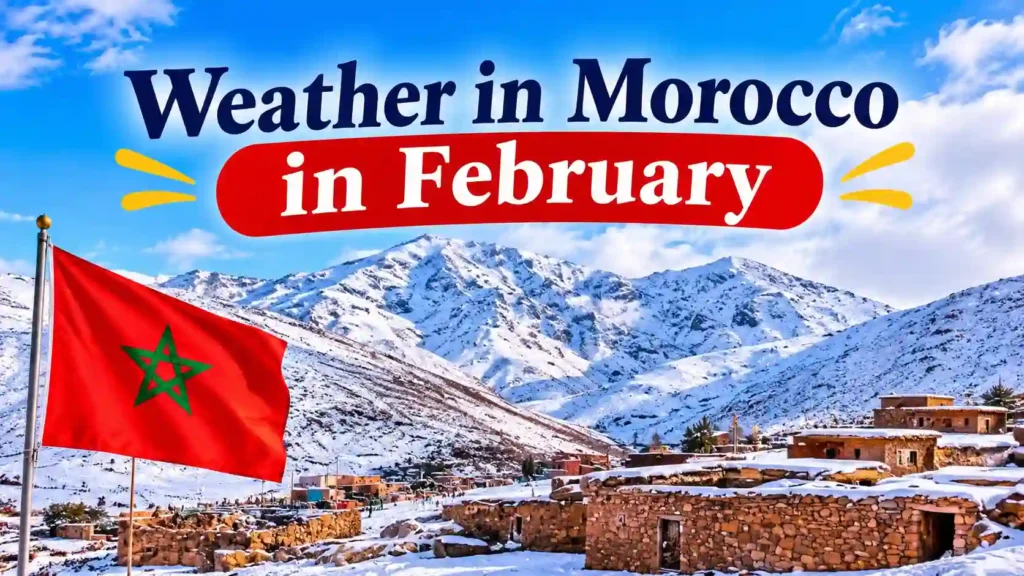
Thinking about a trip in late winter? Good choice. The weather in Morocco in February is one of the best-kept secrets for travelers: sunny days in Marrakech, snow on the Atlas Mountains, calm and quiet desert dunes, almond trees in flower, and fewer tourists than in spring.
But February is also a month of contrasts. You can wear a T-shirt at lunch in Agadir and need a warm jacket at night in Merzouga, all in the same week. We cover everything: temperatures and rain in every region, what the desert and the mountains are really like, what to pack, the events of the month, a sample itinerary and the local tips that most weather websites never tell you.
Weather in Morocco in February at a Glance
| Detail | Info |
|---|---|
| Overall feeling | Mild and sunny days, cool to cold nights |
| Average daytime temperature | About 17°C to 22°C in most cities |
| Average night temperature | About 5°C to 12°C in cities, near 0°C in the desert and mountains |
| Warmest area | Agadir and the south Atlantic coast |
| Wettest area | The north: Tangier, Chefchaouen and the Rif |
| Driest area | The Sahara: Merzouga and Zagora |
| Snow | High and Middle Atlas (Oukaïmeden, Imlil, Ifrane) |
| Sea temperature | About 17°C to 18°C on the Atlantic coast |
| Daylight | About 11 hours, growing longer during the month |
| Crowds | Low to medium, good prices |
Is February a Good Time to Visit Morocco?
Yes, for most travelers. February is cooler than spring but much warmer and sunnier than winter in Europe or North America. It is also a quiet month, so you get more space in the medinas, easier bookings and often better prices for riads and tours. If you love photography, the clear winter light and the snowy peaks behind palm trees make February one of the finest months of the year.
| Pros | Cons |
|---|---|
| Sunny days and blue skies in the south | Cold nights, especially in the desert and mountains |
| Snow-covered Atlas Mountains | Some rainy days in the north |
| Fewer tourists and better prices | Riads and old houses can feel cold inside |
| Comfortable for walking and visiting | Sea is too cold for most swimmers |
| Almond blossoms in the Anti-Atlas | Mountain roads can close briefly after heavy snow |
If you want to compare with other months, read our guides to the weather in Marrakech in January and the weather in Marrakech in March, or our full guide to the best time to visit Morocco.
February Weather by Region: Quick Table
These are typical average values. Real temperatures can be a few degrees higher or lower from one year to another.
| Place | Average high | Average low | Rain | What to expect |
|---|---|---|---|---|
| Marrakech | 20°C | 8°C | Low | Sunny days, cool evenings |
| Fes | 17°C | 5°C | Medium | Fresh days, cold nights, some rain |
| Casablanca | 18°C | 10°C | Medium | Mild, humid, some showers |
| Rabat | 18°C | 8°C | Medium | Mild with sea breeze |
| Tangier | 17°C | 9°C | High | The rainiest big city in February |
| Chefchaouen | 15°C | 5°C | High | Cool and often wet |
| Essaouira | 19°C | 12°C | Low | Mild, less windy than summer |
| Agadir | 22°C | 10°C | Low | The warmest and sunniest |
| Ouarzazate | 19°C | 3°C | Very low | Sunny days, very cold nights |
| Merzouga | 20°C | 5°C | Very low | Perfect days, cold desert nights |
| Ifrane | 10°C | -1°C | Medium | Snow is common |
Rain in Morocco in February: How Much and Where?
Rain in February follows a simple rule: the further north and the closer to the mountains, the more rain; the further south and the closer to the desert, the less rain. The north and the Rif Mountains can get several rainy days in the month, and Chefchaouen is one of the wettest towns in the country. The Atlantic coast around Casablanca and Rabat gets some showers, usually short and followed by sunshine.
Marrakech and Agadir are mostly dry, with only a few rainy days in an average February. The Sahara, from Merzouga to Zagora, almost never sees rain at this time of year. Winter rain is important for Morocco: it fills the dams, makes the countryside green and brings the beautiful spring flowers of March and April. So if you see a rainy day, remember that local farmers are happy about it!
Tip: Even on a rainy day, Morocco has plenty to do indoors: museums, madrasas, cooking classes, hammams and long lunches in a cozy riad.
Morocco vs Europe and North America in February
Many of our travelers come to Morocco in February to escape the winter at home. Here is a simple comparison of typical daytime temperatures:
| Place | Typical February day |
|---|---|
| London | Around 8°C to 10°C, often grey |
| Paris | Around 8°C to 10°C |
| New York | Around 4°C to 6°C, possible snow |
| Toronto | Below 0°C on many days |
| Marrakech | Around 20°C and sunny |
| Agadir | Around 22°C and sunny |
With flights of only about three hours from many European cities, Morocco is one of the easiest winter sun escapes. Read our guide on how long the flight to Morocco is to plan your trip.
Marrakech in February
Marrakech is one of the best places to be in February. Days are often sunny with temperatures around 18°C to 22°C, good for walking in the medina, visiting palaces and gardens, and eating lunch on a rooftop terrace. The air is clear, so you can often see the snowy High Atlas from the city. That view of white peaks behind palm trees is one of the finest sights in Morocco.
Evenings get cool quickly after sunset, and nights can drop to 5°C to 8°C. Rain is not very common, but a cloudy or rainy day can happen. Bring a warm layer for dinner in Jemaa el-Fnaa. For more details, see our guide to the weather in Marrakech.
Fes, Meknes and the Imperial Cities
Fes is cooler than Marrakech and gets more rain in February. Expect fresh days around 15°C to 18°C and cold nights around 4°C to 6°C. When it rains, the medina’s stone alleys become slippery, so wear shoes with a good grip. The good news: the medina is quieter, and visiting the tanneries is more pleasant because the smell is lighter in cool weather.
Meknes and the Roman ruins of Volubilis have similar weather. February is a great time for Volubilis: the fields around the ruins are green after the winter rain, and sometimes covered with wild flowers.
Casablanca and Rabat
On the Atlantic coast, the weather is mild but more humid. Days are around 17°C to 19°C and nights rarely go below 8°C. Showers are possible, often short and strong, followed by sun. It is not beach weather, but it is great for visiting the Hassan II Mosque, walking on the Corniche or exploring the Kasbah of the Udayas in Rabat. Bring a light rain jacket and a windproof layer for the ocean breeze.
Tangier, Chefchaouen and the North
The north is the wettest part of Morocco in February. Tangier and Chefchaouen can get several rainy days, and the Rif Mountains are often green and misty. Temperatures are cool: around 15°C to 17°C during the day and 5°C to 9°C at night. Chefchaouen is still lovely in the rain, and the blue walls look even brighter on a wet day, but bring a waterproof jacket and warm clothes. Many guesthouses in Chefchaouen are cold at night, so ask if they have heating. Read more in our guide to the weather in Tangier.
Essaouira and Agadir: The Atlantic Coast
If you are looking for warmth, head south along the coast. Agadir is the warmest big city in February, with many sunny days around 20°C to 23°C. It is a good place to relax on the beach, walk along the promenade or play golf. The ocean is about 17°C to 18°C, so swimming is only for the brave.
Essaouira is slightly cooler and is known for its wind. In February, the wind is usually calmer than in summer, which makes walks on the ramparts and the beach more pleasant. Nearby, Taghazout is in the middle of the surf season, with good waves and a relaxed atmosphere.
The Sahara Desert in February: Merzouga and Zagora
Many travelers think the desert is always hot. In February, it is actually one of the best times for a desert trip. Days are sunny and comfortable, around 18°C to 22°C, good for camel rides, 4×4 tours and walking in the dunes. Rain is very rare, and the sky is usually perfectly clear.
But nights are cold. Temperatures in Merzouga and Zagora can drop to around 3°C to 5°C, and sometimes close to 0°C. The good news is that good desert camps give you thick blankets, and many luxury camps have heated tents or hot water. The clear, cold air also gives the best stargazing of the year. Check our Merzouga weather guide and our guide to the sunset in Merzouga for more details.
Desert Camp Tips for February
- Bring a warm jacket, a hat and gloves for the evening and the sunrise.
- Wear thermal underwear to sleep if you feel the cold easily.
- Ask your tour operator if the camp has extra blankets or heated tents.
- Keep your phone and camera batteries warm inside your sleeping bag at night.
- Wake up early for the sunrise: it is cold, but the colors on the dunes are worth it.
The Atlas Mountains: Snow in February
February is the heart of winter in the Atlas Mountains. The High Atlas is usually covered with snow above about 2,000 meters, and the Middle Atlas towns like Ifrane and Azrou often get snow too.
- Oukaïmeden: one of the few ski resorts in Africa, about 1.5 hours from Marrakech. Skiing depends on the snow each year.
- Imlil and Toubkal: Imlil village is pretty under the snow. Climbing Toubkal in winter is a serious mountain trip that needs a qualified guide, crampons and an ice axe.
- Ifrane: the “Switzerland of Morocco” often looks like a winter postcard, with snow on red roofs and cedar trees.
- Tizi n’Tichka pass: the main road from Marrakech to Ouarzazate can close for a few hours or a day after heavy snow. Local drivers know the conditions and wait for the road to reopen.
Not ready for snow and ice? A day trip to the Ourika Valley or to the village of Imlil is an easy way to enjoy the mountains in February. You can walk along the river, see waterfalls full of winter water, eat a tagine by a fire in a Berber house, and admire the white peaks above you, then sleep back in the mild weather of Marrakech the same evening.
Tip: If you travel between Marrakech and the desert in February, keep one extra free day in your plan in case of a snow delay on the mountain pass.
Ouarzazate, Dades Valley and Todra Gorge
The south side of the Atlas is dry and sunny in February. Ouarzazate has pleasant days around 18°C to 20°C, but nights can fall close to freezing. The Dades Valley and the Todra Gorge are cold in the morning and evening, especially in the shade of the gorges. In the middle of the day, the sun is warm and the light on the red cliffs is fine.
Sunrise, Sunset and Daylight in February
Days are getting longer in February. You have about 11 hours of daylight, and every week the sun sets a few minutes later. In Marrakech, the sun usually rises around 7:30 to 8:00 am and sets around 6:30 to 7:00 pm. In the desert, plan your camel ride to arrive in the dunes about an hour before sunset.
| Time of day | What to expect | Best activity |
|---|---|---|
| Early morning | Cold and fresh, sometimes near 0°C in the desert | Sunrise over the dunes, quiet medina walks |
| Midday | Warm and sunny, the best part of the day | Sightseeing, rooftop lunch, gardens |
| Late afternoon | Golden light, temperatures start to drop | Photography, camel rides, sunset terraces |
| Evening and night | Cool in cities, cold in mountains and desert | Hammam, tagine dinner, stargazing |
Events and Festivals in February
Almond Blossom Festival in Tafraoute
In February, the almond trees of the Anti-Atlas Mountains around Tafraoute cover the valleys with pink and white flowers. The town celebrates with the Almond Blossom Festival, with Amazigh music, dances, a souk and local products like almonds and amlou (a spread made with almonds, argan oil and honey). The exact dates change every year and depend on the flowering, so check before you go.
Ramadan in February
Ramadan moves about 11 days earlier every year. In some years, including the next few, it starts in February. During Ramadan, many local cafés close during the day, opening hours are shorter, and the clocks in Morocco go back one hour. Hotels, riads and tours keep working normally, and the evenings after iftar are very lively. Read our full guide to Ramadan in Morocco before you book.
Skiing and Snow Days
When the snow is good, Moroccan families from Marrakech and Casablanca drive up to Oukaïmeden and Ifrane on weekends to play in the snow. It is a fun local scene to see, with sledges, snowmen and hot snacks sold on the side of the road.
What to Pack for Morocco in February
| Item | Why you need it |
|---|---|
| Warm jacket or down jacket | Cold evenings, desert nights and mountains |
| Layers (T-shirts, sweater, fleece) | Big difference between day and night |
| Light rain jacket | For the north and the coast |
| Comfortable shoes with grip | Wet stone streets in the medinas |
| Hat, gloves and scarf | Sunrise in the desert and mountain roads |
| Sunglasses and sunscreen | The winter sun is still strong |
| Thermal leggings or pajamas | Cold riads and desert camps |
| Warm socks | Riad floors are tiled and cold |
| Power bank | Batteries drain faster in the cold |
Tip: A large light scarf is the most useful item for Morocco in any month. In February, it keeps you warm, protects you from desert sand and covers your shoulders when needed.
The Cold Riad Problem: A Local Tip Few Blogs Tell You
Here is something most weather websites forget: the outside temperature is not the only thing that matters. Many traditional riads and old houses in Morocco are built to stay cool in summer, with thick walls, tiled floors and open courtyards. In February, this means they can feel colder inside than outside in the sunny afternoon.
- Ask before booking if your room has heating or air conditioning with a heat function.
- Choose rooms that do not open directly onto the open courtyard if you feel the cold.
- Ask for extra blankets. Most riads have them.
- Spend the evening in the salon with the fireplace if your riad has one.
- Book a hammam in the late afternoon: it is the best way to warm up before dinner.
Moroccan Food That Warms You Up in February
Winter food in Morocco is hearty, warm and full of spices. February is a good month to try dishes that locals love on cold days:
- Harira: a thick soup with tomatoes, lentils, chickpeas, herbs and sometimes meat. It is famous during Ramadan but eaten all winter.
- Bissara: a simple fava bean soup with olive oil and cumin, a popular cheap breakfast in Fes and the north.
- Tangia: the specialty of Marrakech. Meat cooked slowly for hours in a clay jar in the hot ashes of a hammam furnace.
- Rfissa: chicken with lentils and fenugreek on shredded msemen bread, a comfort dish often cooked for family gatherings.
- Msemen and baghrir: warm Moroccan pancakes with honey and butter, perfect with mint tea in the morning.
- Madfouna: the “Berber pizza” of Rissani and Merzouga, a stuffed bread baked in a fire, great after a cold desert night.
Tip: Ask for your mint tea with a few leaves of chiba (absinthe wormwood) or louiza (lemon verbena). In winter, many Moroccan families add these herbs to warm the body.
Best Things to Do in Morocco in February
- Explore the medinas of Marrakech and Fes without the summer heat.
- Ride a camel and sleep in a desert camp under very clear skies.
- See or ski the snow in Oukaïmeden or Ifrane.
- Visit the almond blossoms around Tafraoute.
- Relax in the sun in Agadir or surf in Taghazout.
- Take a day trip to the snowy village of Imlil.
- Visit the kasbahs of Ouarzazate and Aït Ben Haddou in perfect walking weather.
- Enjoy long hammam sessions and hot tagines in the evening.
Sample 7-Day Morocco Itinerary for February
| Day | Route | Weather tip |
|---|---|---|
| Day 1 | Arrive in Marrakech, explore the medina | Sunny afternoon, cool evening |
| Day 2 | Marrakech: gardens, palaces, souks | Lunch on a sunny rooftop |
| Day 3 | Cross the High Atlas to Aït Ben Haddou and Ouarzazate | Snowy views on the Tichka pass |
| Day 4 | Dades Valley and Todra Gorge | Cold mornings, warm middays |
| Day 5 | Merzouga, camel ride and desert camp | Warm jacket for the night |
| Day 6 | Sunrise in the dunes, drive through the Middle Atlas to Fes | Possible snow near Ifrane |
| Day 7 | Visit the Fes medina | Shoes with grip if it rains |
Want a longer route? See our Morocco itineraries from 4 to 14 days.
February vs January vs March in Morocco
| Month | Days | Nights | Crowds | Best for |
|---|---|---|---|---|
| January | Cool and sunny | Coldest of the year | Low | Snow, quiet medinas |
| February | Mild and sunny | Cold, slowly warming | Low to medium | Desert, almond blossoms, good prices |
| March | Warm and pleasant | Cool | Medium to high | Green landscapes, spring flowers |
February Weather for Popular Activities
| Activity | Is February good? | Best place |
|---|---|---|
| City sightseeing | Excellent | Marrakech, Fes, Rabat |
| Desert tours | Excellent during the day, cold at night | Merzouga, Zagora |
| Hiking | Good at low and medium altitude | Ourika Valley, Anti-Atlas, Todra |
| Winter mountain trekking | Only with a guide and equipment | Toubkal, High Atlas |
| Skiing | Possible if the snow is good | Oukaïmeden |
| Surfing | Very good, it is surf season | Taghazout, Imsouane |
| Beach relaxing | Pleasant in the sun, cold water | Agadir |
| Golf | Very good | Marrakech, Agadir |
| Photography | Excellent, clear winter light | Atlas, desert, kasbahs |
Morocco in February for Families and Seniors
February is a comfortable month for families with children and for senior travelers. There is no strong heat, so walking in the medinas and visiting monuments is easy, even in the middle of the day. Long drives are also more pleasant without the summer temperatures.
The main thing to plan for is the cold at night. For children, bring pajamas with long sleeves and warm socks, and for seniors, choose riads or hotels with good heating and rooms close to the entrance to avoid many stairs. In the desert, many families prefer a comfortable camp with private tents, real beds and bathrooms. Our team regularly organizes Morocco tours for seniors with a relaxed pace and warm accommodation.
Prices and Crowds in February
February is usually a quiet month for tourism, except around European school holidays in mid-February, when some families travel to Marrakech. Outside those weeks, you will find good availability in riads and desert camps, and sometimes lower prices. Popular sites like Jardin Majorelle or the Bahia Palace are calmer than in spring. Flights can also be cheaper than in March and April.
10 Essential Tips for Visiting Morocco in February
- Dress in layers. The difference between noon and night can be more than 15°C, so a T-shirt, a sweater and a jacket will cover everything.
- Follow the sun. If the weather is rainy in the north, travel south to Marrakech, the desert or Agadir, where it is usually dry and sunny.
- Plan sightseeing around midday. Use the warmest hours for gardens, rooftops and outdoor sites, and keep museums and hammams for the cold evenings.
- Check the mountain roads. After heavy snow, the Tichka pass or the roads near Ifrane can close for a short time. Your driver will know the latest news.
- Ask about heating. Before booking a riad or a desert camp, ask if rooms have heating and extra blankets.
- Protect your skin. The winter sun is strong, especially in the desert and the mountains, so use sunscreen and sunglasses.
- Bring good shoes. Rain makes the stone streets of Fes and Chefchaouen slippery.
- Check the Ramadan dates. If your trip falls during Ramadan, expect changed opening hours and a one-hour clock change.
- Book the almond festival early. Tafraoute is a small town, and hotels fill up fast during the festival.
- Keep a buffer day. Weather in February is mostly good, but one extra free day makes your trip stress-free if a road closes or a flight is delayed.
Common Mistakes When Traveling to Morocco in February
| Mistake | Fix |
|---|---|
| Packing only summer clothes | Bring layers and a warm jacket |
| Thinking the desert is hot at night | Nights can be near 0°C, dress warmly |
| No plan B for mountain roads | Keep a free day in case of snow delays |
| Booking a riad without heating | Ask about heating and blankets |
| Ignoring Ramadan dates | Check if Ramadan falls during your trip |
| Planning beach swimming in the north | Head to Agadir for the warmest weather |
| Wearing smooth shoes in the medina | Choose shoes with grip for wet stones |
Quick Cheat Sheet: Weather in Morocco in February
- Days: 17°C to 22°C in most cities
- Nights: 5°C to 12°C, near 0°C in desert and mountains
- Warmest: Agadir
- Wettest: Tangier and Chefchaouen
- Driest: Merzouga and Zagora
- Snow: High and Middle Atlas
- Pack: layers, warm jacket, rain jacket, good shoes
- Check: Ramadan dates and riad heating
Frequently Asked Questions About the Weather in Morocco in February
Is February a good month to visit Morocco?
Yes. Days are sunny and mild in most regions, tourists are fewer and prices are often lower. Just bring warm clothes for the nights.
How warm is Morocco in February?
Most cities have daytime temperatures between 17°C and 22°C. Agadir is the warmest, while Fes and the north are cooler.
Is it cold in the Sahara in February?
Days are pleasant, around 18°C to 22°C, but nights are cold, often between 0°C and 5°C.
Does it rain in Morocco in February?
Yes, mainly in the north and on the coast. The south and the desert are mostly dry.
Can I swim in Morocco in February?
The Atlantic is around 17°C to 18°C, so it is cold for most people. Heated hotel pools are a better option.
Is there snow in Morocco in February?
Yes. The High Atlas and the Middle Atlas often have snow, including Oukaïmeden, Imlil and Ifrane.
What should I wear in Marrakech in February?
Light layers for the day, a sweater or jacket for the evening, and comfortable shoes.
Is February a good time for a desert tour?
Yes, it is one of the best months, with sunny days and clear skies. Just pack warm clothes for the night.
Is Ramadan in February?
In some years, yes. Ramadan moves about 11 days earlier every year, so always check the dates before you travel.
Where is the best place to go in Morocco in February?
Marrakech, the Sahara Desert and Agadir have the best weather. The Atlas Mountains are perfect if you want snow.
Is it windy in Essaouira in February?
Usually less than in summer. Winter is one of the calmer seasons in Essaouira, but windy days still happen.
Do riads have heating in February?
Many do, but not all. Always ask before you book, and ask for extra blankets if you feel the cold.
Can the road from Marrakech to the desert close in February?
Sometimes the Tizi n’Tichka pass closes for a few hours or a day after heavy snow. It usually reopens quickly.
Final Thoughts
The weather in Morocco in February offers the best of both worlds: warm sunny days to explore and cool nights under the stars. Pack layers, check the Ramadan dates, choose a riad with heating, and keep an extra day for the mountain roads. Then enjoy the snowy peaks, the quiet medinas, the almond blossoms and the desert with far fewer crowds than in spring.
Planning a February trip? Contact us and we will check the weather and the road conditions for you, and plan a route that follows the sun.
Explore our Morocco trips:
Tours from Marrakech: Leave the sunny red city in the morning, cross the snowy High Atlas on the Tichka pass and reach the warm, dry south and the Sahara dunes, all in the clear light of February.
Morocco Desert Tours: February is one of the best months for the desert: comfortable days for camel rides, almost no rain, and the clearest night skies of the year. We provide warm blankets for the cold desert nights.
Tours from Fes: From Fes, drive through the snowy cedar forests of Ifrane and Azrou, meet the monkeys of the Middle Atlas, and arrive in Merzouga for a sunny day in the dunes.
Tours from Ouarzazate: Enjoy sunny February days in the kasbahs and film studios, then continue to the Dades and Todra gorges and the desert, with warm clothes for the crisp mornings.
Tours from Tangier: Start in the green, rainy north in winter and travel south through Chefchaouen and Fes towards the dry sunshine of the Sahara.
Tours from Casablanca: Land on the mild Atlantic coast and let us plan a February route to sunny Marrakech, the snowy Atlas or the almond blossoms of the south.
Contact us

Your Local Experts
Our Moroccan team organizes private tours from every major city in Morocco: Marrakech, Fes, Casablanca, Tangier, Rabat, Agadir, Ouarzazate and more. Wherever you land, we pick you up and design your trip around your dates and interests.
Plan Your Trip
Click any destination to see more:
Marrakech Desert Tours
- 2 Days Desert Tour from Marrakech
- 3 Days Marrakech to Merzouga
- 3 Days Marrakech to Fes
- 4 Days Marrakech to Merzouga
- 4 Days Marrakech to Fes
- 5 Days Marrakech to Merzouga
- 5 Days Morocco Tour from Marrakech
- 6 Days Morocco Tour from Marrakech
- 7 Days Morocco Tour from Marrakech
- 8 Days Morocco Tour from Marrakech
- 8 Days with Imperial Cities
- 9 Days Morocco Tour from Marrakech
- 10 Days Morocco Tour from Marrakech
- 12 Days Morocco Tour from Marrakech
- 14 Days Morocco Tour from Marrakech