
Sunset in Marrakech: Where to Watch the Red City Turn Gold
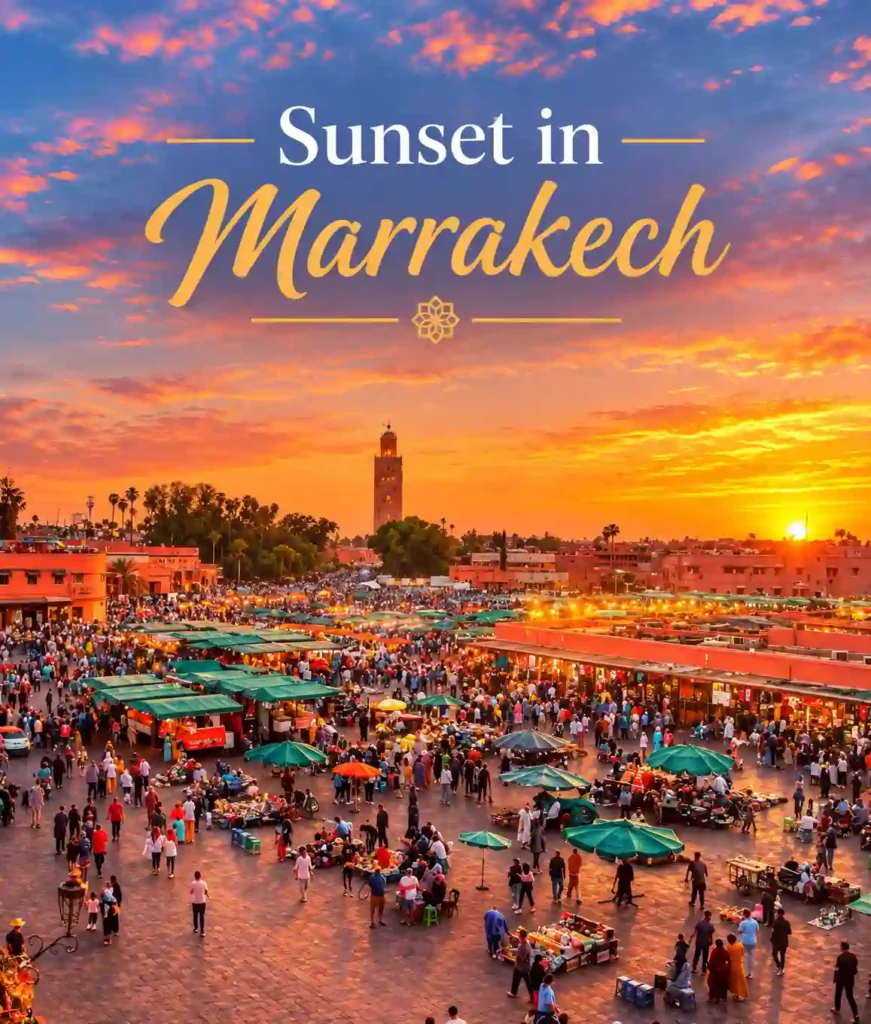
There’s a specific kind of quiet that falls over Marrakech right before sunset, right after the worst of the afternoon heat has broken but before the medina fully wakes up for the evening. The call to prayer starts drifting across the rooftops, the light turns from white to gold to something closer to copper, and the city’s famous red walls actually start living up to the nickname. If you’ve only seen Marrakech in photos, this is the hour that photos genuinely undersell. Here’s where to actually be when it happens.
Why Marrakech Sunsets Look the Way They Do
It’s not just your imagination or a filtered Instagram photo; Marrakech sunsets really do look more intense than a lot of places, and there’s a real reason for it. The city’s buildings and ramparts are built from a reddish local clay, so as the light turns golden and then orange, it reflects and deepens off literally the walls around you rather than just the sky. On clear days, especially in spring and autumn, the Atlas Mountains sit on the horizon too, and if there’s still snow on the peaks, you get this strange, beautiful contrast of white mountains glowing pink above a city turning the color of embers. It’s genuinely one of those things that’s hard to overstate until you’ve stood there and watched it happen.
Jemaa el-Fnaa: The Classic (and Still Worth It)
Yes, it’s the obvious answer, and yes, it’s still genuinely worth doing, ideally at least once. Dozens of rooftop cafés ring the main square, and climbing up to one right as the sun starts dropping gets you a front-row seat to the square’s nightly transformation, food stalls setting up, smoke rising off the grills, snake charmers packing up as storytellers and musicians take over, all while the sky shifts through orange into deep violet above the Koutoubia Mosque in the distance. A few honest tips: get there early, seats fill up fast right before sundown, most cafés expect you to order at least a drink to use the terrace, and it’s worth bringing cash since not every rooftop takes cards.
The Koutoubia Mosque: Marrakech’s Most Iconic Silhouette
You can’t climb the Koutoubia’s minaret, it’s a working mosque, not a tourist attraction, but the area around it might be the single most photographed sunset spot in the city for good reason. The 12th-century tower silhouetted against a darkening orange sky is about as close to “the” image of Marrakech as any single shot gets. Several nearby rooftop cafés and terraces frame this view perfectly, so you get the mosque, the palm trees, and the rooftops of the medina all in one sweep.
Menara Gardens: Quieter, and With the Mountains Behind You
A short taxi ride from the medina, the Menara Gardens offer a genuinely different sunset experience, calm, more open, and framed by a large reflecting pool with an old pavilion at one end. On a clear day, this is one of the best spots in the city to actually see the Atlas Mountains glowing behind the water as the light fades, olive groves stretching out around you instead of rooftops. It’s less about nightlife energy and more about just sitting somewhere peaceful for twenty minutes while the color show happens.
Jardin Majorelle and the YSL Museum Terrace: Sunset for the Design-Minded
If you’re already planning to visit the cobalt-blue Jardin Majorelle, timing it for golden hour changes the whole feel of the place, the deep blue walls and green bamboo groves take on a completely different tone as the light softens. The terrace at the adjoining Yves Saint Laurent Museum offers an elevated, more intimate view over the gardens below, less crowded than the garden paths themselves in the late afternoon. It’s a good choice if you want your sunset paired with art and design rather than crowds and music.
El Badi Palace: Ruins, Storks, and an Unobstructed View
This one doesn’t show up on every list, and it should. The 16th-century El Badi Palace is mostly in ruins now, which actually works in its favor for sunset, the high, crumbling walls give you an unobstructed, panoramic view out over the city as it fades into twilight. Storks nest along the ramparts here, and watch them settle in for the night while the sky changes color over the Mellah (the old Jewish quarter) rooftops below is a quieter, more atmospheric alternative to the Jemaa el-Fnaa crowds.
The Kasbah District: Riad Rooftops and Dinner With a View
South of the main medina, the Kasbah district has become known for its stylish riad rooftops, places like El Fenn, Nomad, and La Table de la Kasbah, where you can pair sunset with an actual sit-down dinner rather than just a drink. El Fenn in particular has a genuinely huge terrace, one of the largest in the city, with 360-degree views that take in both the medina rooftops and the mountains beyond on a clear evening. Reservations matter here, especially on weekends and during high season, since these spots fill up fast once word gets around.
The Medina Ramparts: A Free, Quiet Sunset Walk
Not every good sunset spot requires a rooftop reservation. Marrakech’s old medina walls, particularly around quieter gates like Bab Agnaou or Bab Doukkala, catch the golden hour light beautifully against their reddish clay, and walking a stretch of the ramparts as the color shifts is completely free and usually far less crowded than the city center. It’s the kind of sunset experience that rewards just wandering rather than rushing to a specific viewpoint.
The Palmeraie: Golden Light Through a Thousand-Year-Old Palm Grove
A short drive outside the city center, the Palmeraie is Marrakech’s historic palm oasis, planted over a thousand years ago and still functioning as a genuine part of the local ecosystem. At sunset, the light turns long shadows gold beneath the palms, and the whole area goes noticeably quiet, just rustling fronds and distant birdsong instead of medina noise. You can explore it by camel, horse-drawn carriage, or bicycle before settling in, and a few boutique hotels in the area have terraces specifically built for this hour.
Agafay Desert: A Sunset Without the City
For something a bit more adventurous, the Agafay Desert sits about 30-40 minutes outside Marrakech, and it offers a genuinely different kind of sunset than anything inside the city. Unlike the Sahara’s sand dunes, Agafay is made up of rolling, stark stone hills, closer to a lunar landscape than a desert postcard, and watching the sun drop behind them, often with the Atlas Mountains as a backdrop, is a popular half-day or evening excursion. Several camps here offer sunset dinners, complete with music and sometimes a pool, if you want to turn the sunset into a full evening out rather than just a viewpoint stop.
What Time Does the Sun Actually Set in Marrakech?
Sunset timing shifts noticeably across the year, so it’s worth checking before you plan an evening around it. Generally, the sun sets as early as around 5:30-6:00 PM in the winter months and as late as 8:00-8:30 PM during peak summer. If photography matters to you, spring and autumn tend to offer the clearest skies and the most reliably spectacular color, since summer haze and occasional winter cloud cover can sometimes dull the effect.
A Few Practical Tips
Arrive at least 30 minutes before sunset. Whether it’s a rooftop table or a spot along the ramparts, the best positions fill up fast in the final stretch before the sun actually drops.
Bring a light layer. Marrakech temperatures can drop fairly quickly once the sun’s gone, especially in the desert or open garden spots outside the city.
Check if a reservation is expected. Popular riad rooftops, especially in the Kasbah district, often require booking ahead during high season.
Bring cash for smaller cafes. Not every rooftop terrace around Jemaa el-Fnaa accepts cards, and it’s easier to just have dirhams on hand.
Don’t over-plan it. Some of the best Marrakech sunsets aren’t found on a list at all, they’re the ones you catch by accident from a random rooftop, a quiet ramparts corner, or a mint tea stop that happened to have a decent view.
A Quick Comparison: Which Sunset Spot Fits Your Evening?
With so many options, it helps to see them side by side rather than picking blind.
| Spot | Vibe | Cost | Crowd Level |
|---|---|---|---|
| Jemaa el-Fnaa rooftops | Lively, energetic | Low (price of a drink) | Very busy |
| Menara Gardens | Calm, scenic | Free (small entry fee) | Moderate |
| Jardin Majorelle / YSL Terrace | Artsy, elegant | Entry fee applies | Moderate |
| El Badi Palace | Atmospheric, historic | Low entry fee | Light |
| Kasbah riad rooftops | Upscale, dinner-focused | Higher (dinner/drinks) | Moderate, book ahead |
| Medina ramparts | Free, quiet | Free | Very light |
| The Palmeraie | Peaceful, natural | Free to low | Light |
| Agafay Desert | Adventurous, off-city | Moderate to high (tour/camp) | Light to moderate |
Sunset Photography Tips for Marrakech
If you’re hoping to actually capture the moment rather than just experience it, a few small adjustments make a real difference. Golden hour here moves fast, the intense color often lasts just 10-15 minutes, so scout your spot and settle in at least 20 minutes early rather than arriving right as the sky starts changing. Shooting toward the Koutoubia Mosque or the Atlas Mountains works best with a bit of foreground, a palm tree, a rooftop edge, a cup of mint tea, to give the shot some depth rather than just an empty sky. If you’re on a rooftop, a slightly wider lens or your phone’s wide mode usually captures the layered rooftops-and-mountains effect better than zooming in. And if you only get one shot right, make it the few minutes just after the sun actually dips below the horizon, the sky often deepens into its rich pinks and purples a little after the sun itself disappears, not during the moment everyone rushes to photograph.
Combining Sunset With a Hammam or Spa Evening
A number of riads and spas in Marrakech have started timing their hammam sessions specifically to end around sunset, and it’s a genuinely nice way to structure an evening, especially after a hot day exploring the souks. A traditional steam and scrub session followed by stepping out onto a terrace just as the light turns gold has a way of resetting the whole day, and several spa riads in the medina and Kasbah district have rooftop or courtyard seating built specifically for this transition from hammam to golden hour to dinner.
Sunset Camel and Horse-Drawn Carriage Rides in the Palmeraie
For a slower, more old-fashioned way to catch the sunset, the Palmeraie offers short camel treks and calèche (horse-drawn carriage) rides timed for the late afternoon, letting you move through the palm groves as the light changes rather than watching from a single fixed spot. It’s a popular half-day add-on for families or couples who want something a bit more active than sitting on a terrace, and most operators time the rides so the return leg lines up with the best of the color.
Best Months for the Most Spectacular Sunsets
While Marrakech delivers a good sunset most evenings of the year, a few months stand out. Spring (March to May) and autumn (September to November) generally offer the clearest skies, the least haze, and, on the best days, snow still visible on the Atlas Mountains, which adds an extra layer of color to the whole scene. Summer sunsets can be just as vivid but are more prone to haze from the heat, while winter, particularly after a bit of rain has cleared the air, sometimes produces unexpectedly sharp, richly colored skies despite the shorter days.
Frequently Asked Questions About Sunset in Marrakech
What is the best place to watch sunset in Marrakech? It depends on the experience you want. Jemaa el-Fnaa rooftops are best for energy and atmosphere, Menara Gardens or El Badi Palace for a quieter view, and the Agafay Desert if you want to get outside the city entirely.
What time is sunset in Marrakech? It varies by season, typically between around 5:30 PM in winter and 8:30 PM in summer.
Is it safe to watch sunset in Marrakech? Yes, the main tourist areas, including the medina and Jemaa el-Fnaa, are lively and generally safe in the evening, though normal travel precautions apply, and it’s worth going with a guide or organized tour for quieter, more remote spots like the Palmeraie or Agafay Desert.
Can you see the Atlas Mountains at sunset from Marrakech? Yes, on clear days, especially in spring and autumn, the Atlas Mountains are visible glowing in the distance from spots like Menara Gardens, several rooftops near Jemaa el-Fnaa, and the Agafay Desert.
Do I need a reservation for a sunset rooftop in Marrakech? For popular spots, particularly riad rooftops in the Kasbah district, yes, it’s worth booking ahead, especially on weekends or during peak season. More casual rooftop cafés around Jemaa el-Fnaa are typically walk-in.
Final Thoughts
Marrakech doesn’t really have a single “best” sunset spot, it has dozens of good ones, and the right choice mostly comes down to what kind of evening you’re after. Want energy and street life below you? Head to a Jemaa el-Fnaa rooftop. Want quiet and mountains? Menara Gardens or the ramparts near Bab Agnaou. Want something that feels like leaving the city entirely? Agafay is right there, less than an hour away. Wherever you end up, give yourself the twenty minutes to actually watch it happen rather than just snapping a photo and moving on, it’s one of the most reliably beautiful things Marrakech does every single day.
Ready to Experience Marrakech and Beyond?
A great sunset is just one small piece of what Marrakech, and Morocco more broadly, has to offer. If you’re building a trip and want the desert sunsets to go with your city ones, we can help.
- Marrakech desert tours for Sahara sunsets to pair with your Marrakech evenings.
- Morocco desert tours covering the full range of routes across the country.
- Fes desert tours for a route through the imperial cities and beyond.
- Ouarzazate desert tours for a shorter path into the south.
Not sure what to build your trip around? Check our Morocco itineraries page, or contact us and we’ll help you plan a trip with the right sunsets built right in.