
Mexico to Morocco: The Complete Travel Guide for Mexican Travelers
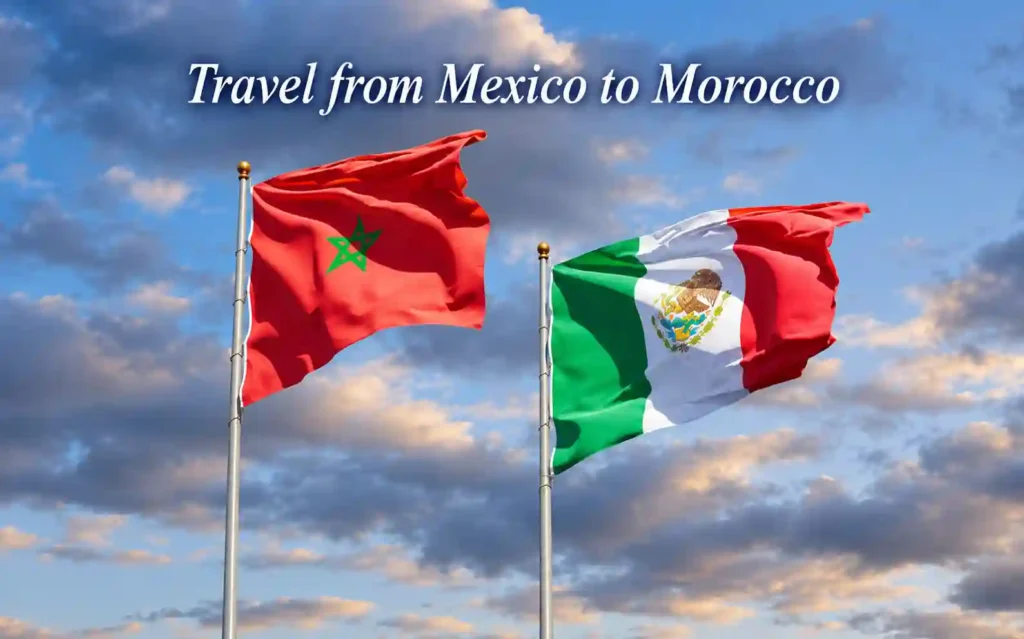
Mexico and Morocco are on different continents, but they have more in common than many people think: colorful markets, rich spicy cuisines, desert landscapes, warm family traditions and, surprisingly, a shared Andalusian and Spanish heritage. More and more Mexicans are traveling to Morocco to discover its medinas, mountains and the Sahara. For many, it is their first trip to Africa and to the Arab world, and it often becomes one of the most memorable journeys of their lives. The good news is that it is easier than you might think: no visa, good connections through Spain, and a culture that welcomes Latin American visitors with open arms.
We cover traveling from Mexico to Morocco: flights and routes, visa rules for Mexicans, time difference, money, plugs, language (yes, Spanish helps!), food, weather, a perfect first itinerary, budget and the local tips our team shares with travelers from Latin America.
Mexico to Morocco at a Glance
| Detail | Info |
|---|---|
| Distance | About 9,000 km between Mexico City and Casablanca |
| Direct flights | None; at least one stop |
| Fastest total travel time | About 14 to 17 hours with one stop |
| Main connection points | Madrid, Istanbul, Paris and other European hubs |
| Visa for Mexicans | Not required for tourist stays of up to 90 days |
| Time difference | Morocco is 7 hours ahead of Mexico City (6 hours during Ramadan) |
| Currency | Moroccan dirham (MAD); 1 dirham is roughly 1.9 to 2 pesos at the time of writing |
| Plugs and voltage | Morocco uses Type C and E at 230V; Mexico uses Type A and B at 127V |
| Languages | Arabic, Tamazight, French; Spanish is common in the north |
| Best season | Spring and autumn |
Mexico and Morocco: Surprising Connections
Before we talk about flights, here is something fascinating: when you travel from Mexico to Morocco, you will find many small echoes of home. The reason is history. For almost 800 years, a large part of Spain was ruled by Muslim dynasties, several of them from Morocco. When the Spanish later arrived in the Americas, they brought with them words, crafts and architectural ideas shaped by that Andalusian heritage.
Arabic Words in Mexican Spanish
Many words you use every day in Mexico come from Arabic. When you hear Moroccans speak Darija, you may even recognize some of them:
| Spanish word | Arabic origin | Meaning |
|---|---|---|
| Ojalá | From an Arabic expression meaning “if God wills” | Hopefully |
| Azúcar | From the Arabic word for sugar | Sugar |
| Aceite | From the Arabic word for olive oil | Oil |
| Almohada | From Arabic | Pillow |
| Alcalde | From the Arabic word for judge | Mayor |
| Albañil | From the Arabic word for builder | Builder |
In Morocco, you will hear people say “inshallah” many times a day, with the same meaning as “ojalá”. Many Mexican travelers smile when they realize the connection.
Tiles, Courtyards and Fountains
The colorful tiles of Morocco, called zellige, and the Spanish azulejos come from the same Andalusian tradition that later influenced tile-making in Mexico, including the famous Talavera of Puebla. The idea of houses built around a central courtyard with a fountain, common in colonial Mexican architecture, also has roots in Andalusian and North African design. Some carved wooden ceilings in Mexican churches follow the mudéjar style, created by Muslim craftsmen in Spain. Walking through a Moroccan riad can feel strangely familiar for travelers from Puebla, Oaxaca or Guanajuato.
Markets, Family and Hospitality
A Moroccan souk and a Mexican mercado share the same energy: colors, smells, music, bargaining and friendly sellers. Both cultures give a central place to family, food and welcoming guests. Mint tea in Morocco plays a role a bit like coffee or a shared meal in Mexico: it is a way to say “welcome, you are at home”.
Flights From Mexico to Morocco
There are no direct flights between Mexico and Morocco, so you will connect at least once. The most practical route for most Mexicans is through Madrid, which has many daily flights from Mexico City and Cancún and short flights of about 1.5 to 2 hours to Casablanca, Marrakech, Tangier and other Moroccan cities.
Popular Routes
| Route | Airlines | Approximate total travel time |
|---|---|---|
| Mexico City – Madrid – Casablanca or Marrakech | Aeroméxico, Iberia, Royal Air Maroc, Iberia Express and low-cost airlines from Madrid | About 14 to 18 hours |
| Cancún – Madrid – Morocco | Iberia and other airlines to Madrid, then a short flight | About 14 to 18 hours |
| Cancún or Mexico City – Istanbul – Casablanca | Turkish Airlines | About 18 to 22 hours |
| Mexico City – Paris – Morocco | Air France and partners | About 16 to 20 hours |
| Via the USA | Several airlines, with a US connection | Varies; a US visa or transit authorization may be required |
Read our guide how long is the flight to Morocco for more details.
The Madrid Strategy: Two Trips in One
Many Mexican travelers combine Spain and Morocco. You can fly to Madrid, spend a few days in Spain, and then take a short flight to Morocco or travel south to Andalusia and cross by ferry from Tarifa to Tangier in about one hour. Remember that Spain is in the Schengen area, so check the entry rules for Mexican passport holders, including any new European travel authorization requirements, before you travel. Read more in Is Morocco in Europe?.
Tips to Find Good Flights
- Compare a ticket to Madrid plus a separate low-cost flight to Morocco with a single ticket to Casablanca or Marrakech.
- If you book separate tickets, leave plenty of time between flights.
- Consider an open-jaw ticket: arrive in Marrakech and leave from Fes or Tangier.
- Avoid European peak periods like July, August, Christmas and Easter for better prices.
- Check baggage rules carefully on low-cost European airlines.
Visa Requirements for Mexicans
Good news: Mexican citizens do not need a visa to visit Morocco for tourism for up to 90 days. You simply arrive with your passport, and there is no fee to pay at the border. Morocco and Mexico have friendly relations, and Mexican visitors are always welcome. Here is what you need:
- A Mexican passport valid for at least six months is strongly recommended.
- A return or onward ticket, which can be requested at the border or by the airline.
- Your hotel address or tour details.
- If you connect through the USA or Europe, check the transit rules for those countries.
Entry rules can change, so always confirm with the Moroccan embassy in Mexico City or the Mexican Ministry of Foreign Affairs before you travel.
Arriving in Morocco: What to Expect
- Immigration: show your passport; the officer will stamp it. Keep your hotel or tour details handy.
- Customs: remember the 2,000 dirham limit on Moroccan cash.
- Money: use an ATM or exchange desk in the arrivals hall.
- SIM card: buy a local SIM or activate an eSIM for maps and WhatsApp. Read our guide to the phone code of Morocco.
- Transport: take an official taxi, the train in Casablanca, or meet your private driver.
Getting Around Morocco
- Train: comfortable between Tangier, Rabat, Casablanca, Fes and Marrakech, including Africa’s first high-speed train. Read traveling by train in Morocco.
- Private driver: the best way to reach the desert, the mountains and small villages.
- Buses: CTM and Supratours connect many towns cheaply.
- Petit taxis: for short city rides; ask for the meter.
Time Difference Between Mexico and Morocco
| Mexican city | Time difference with Morocco |
|---|---|
| Mexico City, Guadalajara, Monterrey | Morocco is 7 hours ahead |
| Cancún | Morocco is 6 hours ahead |
| During Ramadan | Subtract 1 hour, as Morocco moves its clocks back |
Jet lag tip: flying east toward Morocco is harder for the body than flying west. Try to sleep on the overnight flight, stay awake until the evening on your first day, and plan a light first day in Morocco.
Money: From Mexican Pesos to Moroccan Dirhams
The currency of Morocco is the Moroccan dirham (MAD). At the time of writing, 1 dirham is worth roughly 1.9 to 2 Mexican pesos, so a simple trick is to multiply dirham prices by 2 to get an approximate price in pesos. The dirham is a closed currency, so you usually cannot buy it in Mexico.
| Dirhams | Approximately in pesos |
|---|---|
| 10 MAD | About 19 to 20 MXN |
| 50 MAD | About 95 to 100 MXN |
| 100 MAD | About 190 to 200 MXN |
| 500 MAD | About 950 to 1,000 MXN |
- Mexican pesos are not easy to exchange in Morocco. Bring US dollars or euros in clean notes, or use ATMs.
- ATMs are common in cities. Choose to be charged in dirhams, not in your home currency.
- Cards work in hotels and big shops, but cash is needed in souks, taxis and small cafés.
- Keep your exchange receipts to change dirhams back before leaving.
Read our guide to the Moroccan dirham for more tips.
Plugs and Voltage: Important for Mexicans
This is a detail many travelers forget. Morocco uses Type C and E plugs at 230 volts, while Mexico uses Type A and B plugs at 127 volts. You need a plug adapter, and you must also check the voltage of your devices. Most phone and laptop chargers accept 100 to 240V and work fine with an adapter. But some hair dryers, straighteners or other appliances made only for 127V can be damaged without a voltage converter. Check the label before plugging in. A small universal adapter with USB ports is the most practical solution, and a power bank is useful for long drives through the mountains and the desert, where charging points can be limited.
Language: Your Spanish Will Help
Morocco’s official languages are Arabic and Tamazight, and French is widely used in business and tourism. But here is good news for Mexicans: Spanish is common in northern Morocco, especially in Tangier, Tetouan, Chefchaouen and the Rif, because this region was under Spanish control until 1956. Many guides, drivers and shopkeepers in tourist areas also speak some Spanish, thanks to the many visitors from Spain.
Even in Marrakech or the desert, you will often meet people who can say a few words in Spanish, and they are always happy when travelers try to speak Darija. Read our guide to the languages of Morocco.
| Darija | Spanish | English |
|---|---|---|
| Salam alaykum | Hola | Hello |
| Shukran | Gracias | Thank you |
| La, shukran | No, gracias | No, thank you |
| Bshhal? | ¿Cuánto cuesta? | How much? |
| Wakha | Vale, está bien | OK |
| Bslama | Adiós | Goodbye |
Mexico vs Morocco: Culture Differences to Know
| Topic | Mexico | Morocco |
|---|---|---|
| Religion | Mostly Catholic | Mostly Muslim; Islam is the state religion |
| Weekend | Saturday and Sunday | Saturday and Sunday, with Friday as the main prayer day |
| Alcohol | Widely available | Only in licensed hotels, bars and some restaurants |
| Greetings | Hugs and kisses common | Handshakes; be more reserved with the opposite sex |
| Dress | Relaxed in most places | More modest, especially in medinas and villages |
| Food heat | Chili everywhere | Aromatic spices, little chili |
| Bargaining | Common in markets | Expected in souks, often more intense |
These differences are easy to respect once you know them. Moroccans are very tolerant with visitors and appreciate small efforts: a greeting in Darija, modest clothes in the medina, or a polite “no, gracias” to street sellers. Read our guide Is Morocco a Muslim country? to understand daily life better.
What to Wear in Morocco
There is no strict dress code for tourists, and women do not need to cover their hair. But loose clothes that cover shoulders and knees will help you feel more comfortable and respected, especially in the medinas, mosques area and villages. In beach resorts, at hotel pools and in modern parts of Casablanca or Marrakech, the style is more relaxed. In the desert, long light clothes protect you from the sun and sand during the day, and a warm jacket is essential at night. A large scarf is the most useful item in any season.
Food: Mexican Taste Buds in Morocco
Mexicans love food, and Moroccan cuisine will not disappoint you. Like Mexican food, it is full of spices, slow cooking and family recipes passed down for generations. The big difference: Moroccan food is aromatic but usually not chili-hot. If you want heat, ask for harissa, a red chili paste.
- Tagine: slow-cooked meat or chicken with vegetables, a bit like a Moroccan guisado.
- Couscous: the Friday family dish, with vegetables and meat.
- Harira: a rich tomato and lentil soup, perfect on cold nights.
- Kefta: spiced minced meat, grilled or in a tagine with eggs and tomato.
- Msemen and baghrir: Moroccan pancakes for breakfast, with honey and butter.
- Mint tea: the national drink, very sweet, served everywhere.
- Fresh orange juice: sold for a few dirhams in every square.
Almost all meat in Morocco is halal, and pork is very rare. Alcohol is available in licensed hotels and restaurants, but not everywhere.
Weather: What Mexicans Should Expect
Morocco’s climate will feel familiar to people from northern and central Mexico: sunny, dry, with hot summers inland and cool winter nights. The desert is like Sonora or Chihuahua, but with huge sand dunes. The Atlas Mountains get snow in winter, and nights in the Sahara can be very cold from November to February.
| Season | Morocco weather | Our advice |
|---|---|---|
| Spring (March to May) | Mild, green, sunny | The best time |
| Summer (June to August) | Very hot inland, mild on the coast | Go early in the morning, visit the coast |
| Autumn (September to November) | Warm and pleasant | Perfect for the desert |
| Winter (December to February) | Cool days, cold nights | Bring a real jacket |
Read our guide to the best time to visit Morocco.
Best Time to Travel From Mexico
Many Mexicans travel during Semana Santa, the summer holidays in July and August, or around Christmas and New Year. Semana Santa often falls in spring, which is one of the best seasons in Morocco, with green landscapes and pleasant temperatures. Christmas and New Year are also lovely in Marrakech and the Sahara, with sunny days and cold nights, but flights are more expensive. July and August are very hot inland, so focus on the coast, the mountains and early-morning visits if you travel in summer.
Traveling During Ramadan
If your trip falls during Ramadan, you will see a special side of Morocco. During the day, many local cafés close and life is calmer, while evenings are lively, with families sharing iftar after sunset. Hotels, riads and tours keep working normally. Be discreet when eating or drinking in public during the day, and remember that Morocco changes its clocks during Ramadan. Read our guide to Ramadan in Morocco.
Health and Safety Tips
- Take travel insurance that covers medical care.
- Drink bottled or filtered water, especially at the start.
- Choose busy restaurants with fresh food.
- Pharmacies, with a green cross, are common and helpful.
- Watch your belongings in crowded medinas and use official taxis.
- Check with your doctor about any recommended vaccines before you travel.
Traveling With Family From Mexico
Mexican families will feel very welcome in Morocco, where children are loved and family is at the heart of daily life. Choose a comfortable pace with fewer hotel changes, a private driver for long distances, and a desert camp with real beds and private bathrooms. For older parents, riads with few stairs and a slower itinerary make the trip more enjoyable. See our Morocco tours for seniors.
What to Bring Back to Mexico
- Argan oil from women’s cooperatives.
- Spices like ras el hanout, cumin and saffron. See our guide to the Moroccan spice blend.
- Lanterns in metal and colored glass. See Moroccan style lanterns.
- Kaftans and djellabas. Read about the Moroccan kaftan.
- Ceramics, leather goods and carpets, which many shops can ship.
What to Pack When Flying From Mexico
- Plug adapter (Type C/E) and, if needed, a voltage converter.
- Warm layers for desert nights and winter.
- Modest clothes that cover shoulders and knees.
- Comfortable walking shoes for the medinas.
- Sun protection: hat, sunglasses, sunscreen.
- A scarf for sun, sand and visiting religious places.
- US dollars or euros in cash as a backup.
A Perfect First Itinerary From Mexico
| Day | Route | Highlights |
|---|---|---|
| Day 1 | Arrive in Marrakech | Rest, evening at Jemaa el-Fnaa |
| Day 2 | Marrakech | Jardin Majorelle, Dar El Bacha, souks |
| Day 3 | Marrakech to Dades | High Atlas, Aït Ben Haddou |
| Day 4 | Dades to Merzouga | Todra Gorge, camel ride, desert camp |
| Day 5 | Merzouga to Fes | Ziz Valley, cedar forests |
| Day 6 | Fes | Medina, tanneries, madrasas |
| Day 7 | Fes to Chefchaouen | The Blue City, where Spanish is widely spoken |
| Day 8 | Chefchaouen to Tangier | Ferry to Spain or flight home via Madrid |
This route ends in the north, which is perfect if you fly home via Madrid or continue to Spain. With more time, add two days on the Atlantic coast in Essaouira, or a few extra nights in the desert to explore Gara Medouar, Khamlia and the nomad camps around Merzouga. Movie lovers will enjoy Gara Medouar, where scenes of The Mummy and the James Bond film Spectre were filmed. See our Morocco itineraries and guides to the Blue City and Tangier.
How Much Does a Trip From Mexico to Morocco Cost?
| Item | Approximate cost |
|---|---|
| Return flights | Often around 20,000 to 40,000 MXN in economy, depending on season and route |
| Mid-range riad or hotel | About 1,000 to 2,500 MXN per night |
| Meals | About 300 to 700 MXN per person per day |
| Private tour with driver | Depends on days, group size and accommodation |
| Entrance fees | Usually 50 to 350 MXN per site |
Daily costs in Morocco are similar to or lower than in Mexico’s tourist areas. Flights are the biggest expense, so plan a longer trip to make it worthwhile. Traveling as a family or a group of friends also lowers the cost per person for private drivers, guides and desert camps, making a private tour much more affordable than many people expect.
What Surprises Mexicans Most in Morocco
- How familiar it feels: markets, family life, hospitality and even some words feel close to home.
- The desert: the Sahara’s high golden dunes are very different from the deserts of northern Mexico.
- The silence at night in a desert camp, with thousands of stars.
- Mint tea everywhere, very sweet and served with great ceremony.
- The cold nights in winter, especially in the mountains and the Sahara.
- Bargaining, which is more intense than in most Mexican markets.
- The donkeys carrying goods through the narrow streets of the Fes medina.
Morocco for Mexican Couples and Honeymooners
Morocco is a wonderful honeymoon destination for Mexican couples. Imagine a romantic riad with a rooftop terrace in Marrakech, a private hammam, dinner by candlelight, and a night in a luxury desert camp under the stars. Many couples combine Marrakech and the Sahara with a few days in Spain on the way, creating a perfect two-country honeymoon. A private driver lets you travel at your own pace and enjoy every moment.
Flying Back to Mexico: Last-Day Tips
- Spend your coins on last souvenirs or a final mint tea.
- Change your remaining dirhams with your exchange receipts; you cannot take more than 2,000 dirhams out of the country.
- Arrive at the airport at least three hours before international flights.
- Pack fragile souvenirs carefully in your checked luggage.
- If you connect in Madrid on separate tickets, check in again and allow plenty of time.
Leaving from Casablanca? Read our guide to the Casablanca airport.
12 Essential Tips for Mexicans Visiting Morocco
These are the tips we share with every traveler arriving from Mexico and Latin America:
- Fly via Madrid for the easiest connections.
- Check Schengen and transit rules if you stop in Spain or Europe.
- Leave enough time between separate tickets.
- Bring US dollars or euros, not only pesos.
- Multiply dirham prices by 2 to estimate pesos.
- Pack a Type C/E adapter and check your devices’ voltage.
- Use your Spanish, especially in the north.
- Learn a few words of Darija to make friends.
- Plan a light first day to recover from jet lag.
- Bring warm layers for the desert and winter nights.
- Spend at least one night in the Sahara.
- Book a private driver for long distances.
Common Mistakes Mexican Travelers Make
| Mistake | Fix |
|---|---|
| Bringing only Mexican pesos | Bring US dollars or euros, or use ATMs |
| Forgetting about voltage | Check that your devices work at 230V |
| Booking very tight connections in Madrid | Leave enough time, especially with separate tickets |
| Packing only summer clothes | Bring warm layers for nights and winter |
| Expecting spicy food everywhere | Ask for harissa |
| Not checking Schengen rules for a Spain stopover | Check entry requirements before you go |
Quick Cheat Sheet: Mexico to Morocco
- No direct flights; best via Madrid
- No visa for Mexicans for up to 90 days
- Morocco is 7 hours ahead of Mexico City
- Multiply dirham prices by 2 for pesos
- Bring a Type C/E adapter and check voltage
- Spanish is common in the north
- Best seasons: spring and autumn
Frequently Asked Questions
Is there a direct flight from Mexico to Morocco?
No. You need at least one connection, most often in Madrid.
How long is the flight from Mexico to Morocco?
Usually about 14 to 18 hours including one stop.
Do Mexicans need a visa for Morocco?
No. Mexican citizens can visit Morocco visa-free for tourism for up to 90 days.
What is the time difference between Mexico and Morocco?
Morocco is 7 hours ahead of Mexico City and 6 hours ahead of Cancún, one hour less during Ramadan.
Do people speak Spanish in Morocco?
Yes, especially in the north, in Tangier, Tetouan and Chefchaouen. In tourist areas, many people speak some Spanish.
Can I use Mexican pesos in Morocco?
Not easily. Bring US dollars or euros, or use ATMs to get dirhams.
Is Morocco safe for Mexican travelers?
Yes. Morocco welcomes millions of visitors every year. Use normal travel precautions.
Which plug do I need in Morocco?
Type C and E, 230V. You need an adapter and should check your devices’ voltage.
Can I visit Spain and Morocco in the same trip?
Yes. Many Mexicans fly to Madrid, visit Spain, and then take a short flight or a ferry from Tarifa to Tangier.
Is Morocco expensive for Mexicans?
Daily costs are similar to or lower than in Mexico’s tourist areas. The biggest expense is the international flight.
Related reading: Colombia to Morocco
Final Thoughts
Traveling from Mexico to Morocco is easier than many people think: no visa, good connections through Madrid, and a culture that feels both exotic and strangely familiar. Pack an adapter and warm layers, practice a few words of Darija, and expect medinas, mountains, the Sahara and some of the warmest hospitality in the world. Many of our Mexican travelers tell us they felt at home from the very first day, and that the stars over the Sahara were the most beautiful they had ever seen.
¿Listo para tu viaje? Contact us and we will design a private itinerary that fits your flights, with Spanish-speaking support when possible.
Explore our Morocco trips:
Tours from Marrakech: Fly from Mexico via Madrid to Marrakech and start your adventure: we pick you up and take you across the Atlas Mountains to the kasbahs and the Sahara.
Morocco Desert Tours: If you love the deserts of northern Mexico, wait until you see the Sahara: golden dunes, camel rides at sunset and a night in a camp under the stars.
Tours from Fes: Explore the oldest medina in the world, then cross the Middle Atlas to the dunes of Merzouga with a private driver who can help you in Spanish when possible.
Tours from Ouarzazate: Discover the red kasbahs and film studios of the south, landscapes that will remind you of the movies and of the desert of Sonora.
Tours from Tangier: Coming from Spain? Cross by ferry to Tangier, where Spanish is widely spoken, and travel through Chefchaouen and Fes to the Sahara.
Tours from Casablanca: Land in Casablanca after your connection in Madrid, and let us plan a private route to Marrakech, Fes and the desert.
Contact us

Your Local Experts
Our Moroccan team organizes private tours from every major city in Morocco: Marrakech, Fes, Casablanca, Tangier, Rabat, Agadir, Ouarzazate and more. Wherever you land, we pick you up and design your trip around your dates and interests.
Plan Your Trip
Click any destination to see more:
Marrakech Desert Tours
- 2 Days Desert Tour from Marrakech
- 3 Days Marrakech to Merzouga
- 3 Days Marrakech to Fes
- 4 Days Marrakech to Merzouga
- 4 Days Marrakech to Fes
- 5 Days Marrakech to Merzouga
- 5 Days Morocco Tour from Marrakech
- 6 Days Morocco Tour from Marrakech
- 7 Days Morocco Tour from Marrakech
- 8 Days Morocco Tour from Marrakech
- 8 Days with Imperial Cities
- 9 Days Morocco Tour from Marrakech
- 10 Days Morocco Tour from Marrakech
- 12 Days Morocco Tour from Marrakech
- 14 Days Morocco Tour from Marrakech